Column: Why We Play - 'All The World's A Sandbox'
[“Why We Play” is a weekly column by NYC freelance writer Chris Plante that discusses how video games benefit us when we are away from them, in the real world, and what brings us back. This time he finds peace in the sandbox.]
If there’s one thing I’ve learned, it’s we must obey the rules of the game. We can pick the game, Niko Bellic, but we cannot change the rules.
-Dimitri Rascalov, GTA IV
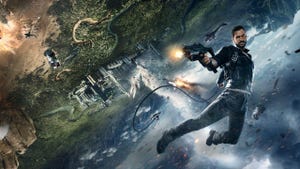
With college out of the way and my job search begun, I’ve had a fair amount of time to play GTA IV, and, strangely, return to Crackdown. The more time I spend in Liberty City, the more I miss the opportunity to scale buildings in a single bound. It’s not that I don’t love GTA IV’s narrative, or even that I feel it would be bettered by Crackdown’s superhero’s agilities, rather they are like beer to chips, wine to cheese, or coffee to bagels—they perfectly complement one another.
What I enjoy about these particular games, especially Crackdown, is their willingness to give the player complete freedom to the open world. But what, if anything, does this freedom cost the game’s narrative? And why do I find this freedom, unique to the sandbox genre, so damn appealing?
Applying My Diploma
To dig in, let’s take a brief pit stop in narrative theory. From Aristotle to Arthur Miller, a well-structured narrative should always progress by continually re-applying what the audience learns from previous scenes. Like in a detective story, each scene must act as a clue, a small semblance to a cohesive whole.
At the narrative’s climax, the audience should be able to step-away and feel they have all the pieces before them, but that they alone can’t perfectly put them together; yet, when the pieces congeal, when the climax occurs, the story must also feel inevitable, that these pieces were carefully crafted to fall into their particular places. As Hedda must shoot herself, as Major Kong must ride the bomb, as Brody must give the stink palm—the narrative (or fate) has led them to these decisions.
Generally, games obey this cause-effect method tooth-and-nail. Your completion of each level rewards you the next level, the next puzzle piece, more difficult than the last. On a micro-level, the game gradually increases its difficulty by adding and layering mechanics. The designers carefully pace your introduction to skill-sets, weapons, or abilities to complete the game.
While I won’t explore this concept in non-narrative games, they obey similar rules. Tetris increases speed and pieces. Guitar Hero adds another fret.
Continue reading "Column: Why We Play - 'All The World's A Sandbox'" »

[“Why We Play” is a new weekly column by freelance writer and
[“Why We Play” is a new weekly column by freelance writer and
[ “Why We Play” is a new weekly column by freelance writer and