« April 2009 | Main | June 2009 »

May 31, 2009

Sound Current: 'Dog Ear Records and Cello Quartet Remixes of Final Fantasy'

[Now that Final Fantasy music supremo Nobuo Uematsu has a Japanese record label, Dog Ear Records, GameSetWatch contributor Jeriaska catches up with label boss HIroki Ogawa to discuss cello quartet Final Fantasy remixes, Uematu's plans, and more.]

Hiroki Ogawa is the director of Dog Ear Records, the record label founded by Final Fantasy series composer Nobuo Uematsu. Updating the company’s DERBLOG weblog in both English and Japanese under the pseudonym "Wappa," he has participated in the organization of live performances of the music of Lost Odyssey, Blue Dragon and The Black Mages.

Dog Ear Records has sought to foster familiarity between listeners and musicians by organizing music events in the Tokyo area. The second edition of their performance and meet-and-greet event, called Shinzoku Kaigi, took place recently and included the appearance of CELLYTHM.

A quartet of cellists, the group performs impassioned arrangements of Final Fantasy tunes such as Gilgamesh’s character theme “Battle on the Big Bridge” and “Those Who Fight Further” from Final Fantasy VII - samples of the music are available on their official website in WMA form.

In addition to publishing an album of music by CELLYTHM, Dog Ear Records released an EP this month on iTunes worldwide from Uematsu’s new project “NOBIYO Uematsu and the Dog Ears.” Ogawa is currently working together with Aniplex Records on preparing the soundtrack for the animated series Guin Saga, featuring over fifty original themes by Uematsu.

In this interview, Ogawa discusses the company’s new music projects, their current foray into the territory of televised animation and their album of cello-remixed videogame songs:

Among the projects by Dog Ear Records, a DVD of The Black Mages' Darkness and Starlight concert has gone on sale recently in Japan. What were some of the major challenges organizing the rock concert?

Hiroki Ogawa, Director of Dog Ear Records: For the concert, music from the opera scene from Final Fantasy VI was included. There were some twenty actors on stage, which was very unusual. Previously there were just the Mages in front of the audience. We could only rehearse in a small studio with everyone packed together, so the day of the concert was the first time everyone was on stage together.

The opera went successfully, despite these challenges. You can tell by watching the encore "Neo EXDEATH" that the musicians were really pumped to pull it off.

The DVD is all-regions, making it easy to import. Are there any plans on distributing the the product outside of Japan?

I'm not certain about the DVD, but I would like to discuss it. I’m always asked about it when I visit other countries for the Distant Worlds tour.

What are some of the primary differences you would point to between concerts like "The Black Mages: Darkness and Starlight" and the Shinzoku Kaigi events?

The Black Mages concerts keep to tight schedules and the audience's attention is fixed on what is happening on stage. The Shinzoku Kaigi events have a warmer atmosphere. For this reason, we allow for not keeping to the schedule: the event was planned for two hours, but went nearly thirty minutes over.

The feeling of these gatherings changes depending on the audience, and that’s the whole point of organizing them. It allows for the opportunity to communicate with the audience directly, going as far as lining up and shaking hands afterward.

The term Shinzoku Kaigi suggests a kind of family gathering. How would you describe the motivations underlying the event series?

The first Shinzoku Kaigi was held in November of last year in Daikanyama, [a district of the ward of Shibuya, Tokyo]. The concert hall's capacity seated about one hundred people, though this time around we were expecting 250 to show up at DUO in Shibuya.

The meeting serves as both a promotional event for the artists who have created music distributed by our label and as a memorable occasion for those who listen to the records. As far as participants, they included Suika Yonezawa, a vocalist whose music was debuted on iTunes. Also, Manami Kiyota is known for her participation on Final Fantasy Song Book Mahoroba.

Following these performances, CELLYTHM played. There was also a discussion led by Tsutomu Narita, an arranger on Guin Saga. At the end of the event, there was a presentation by Michio Okamiya and Kenichiro Fukui from The Black Mages.

The original soundtrack for Guin Saga is being prepared for a June 24 release. Is this a different kind of project for Dog Ear Records because it is an animated series?

Uematsu's music for Guin Saga has turned out very well. Of course the major difference between games and animation is that in the former the music loops. For example, in a game a song will start when you set foot inside a village, but the game creators have no control over when you leave the village, so the music is constructed to continue playing indefinitely. On the other hand, in anime, the production side has minute control over the timing. For this reason the fundamental process behind making music for games and anime is quite different.

How did it come about that Dog Ear Records partnered with Aniplex on the soundtrack album?

We received a request from [Henry] Goto at Aniplex, a producer of Guin Saga. He was already determined to find the perfect composer for the project and one day heard the battle theme from Lost Odyssey playing at the Aniplex office. He found out it was by "Nobuo Uematsu" of Final Fantasy and decided that this was the perfect sound for the project.

You write blog entries for the Dog Ear Records website under the name Wappa. Is there a general difference in the duties you conduct as Wappa and as Ogawa-san?

This is sort of meaningless information, but you know how in Japanese people like to put “ppa” and “cchi” at the end of nicknames? Well, at a previous job I became known as "Ogawappa." That's all there is to it.

I think I am known both as "Wappa" and "Ogawa." Maybe some people think they are two separate individuals. (laughs) Well, there’s a story behind this. Back when I first started work at the company, for organizational purposes we considered dividing the duties of taking customer calls from writing the company blog. I used two names for these two separate duties for the company. These days more people know me as "Wappa," and I'm hoping more people outside of Japan will come to know me as Wappa, too. (laughs)

You previously mentioned CELLYTHM. The cello is not normally associated with hard rock, but many of their pieces are adapted from The Black Mages. How was it determined that this quartet was right for hard rock arrangements of music from the Square Enix game series?

CELLYTHM began when we were considering the opening act for The Black Mages Darkness and Starlight concert. Ante [of Final Fantasy Remix] was already planning an appearance, but one additional group was required.

Uematsu had previously heard Apocalyptica, a Finnish heavy metal band that consists of three cellists and a drummer. He liked this sound and thereby got the idea of finding a cello ensemble. The composer loves the wide range of the cello and its similarities to the sound of the human voice. The idea was to find four women who could play rock material on cello, covering The Black Mages and some other 70's and 80's rock songs.

One of the main criteria was the ability to play aggressively to an extent many classically trained musicians might not be used to. Eventually we settled on one male and three female members of the group. In the opening act of The Black Mages concert they played three arranged songs from Final Fantasy.

Who was responsible for arranging the music from The Black Mages for the cello?

For the concert, all arrangement was done by CELLYTHM. For their album, Cellythm - Those Who Distorted, the arrangement was done by L.Gallardo of Anata wo Yurusanai, Narita of Guin Saga and Okamiya of The Black Mages.

Will the album be available on iTunes like many of Dog Ear Records' previous releases?

We have been discussing that as a possibility recently. It is always a priority of ours to distribute music outside of Japan.

What can you tell us about "NOBIYO" Uematsu and the Dog Ears, the future project currently on the horizon for Dog Ear Records?

This is a lighthearted album, which is currently set to include a composition with original lyrics that Uematsu wrote in junior high school. With work there is not always the opportunity to do exactly what you want to do, so for this project Uematsu is writing the music he wants to write.

The album is meant to be accessible to younger listeners, and the composer is following the style of his early composition for the entirety of the album. We are currently in the preparatory stage, but one track composed recently ["Here comes Conga Boy"] is completed and on iTunes.

This is 100% what Uematsu wants to do now. He has been writing videogame music for over twenty years, and this kind of project becomes especially meaningful after years of hard work, so I think he’s really enjoying this project in particular.

[Images courtesy of Aniplex Records and Dog Ear Records. This article is available in French on Squaremusic and in Italian on Gamesource.it. Translation by Ryojiro Sato. Photos by Jeriaska]

Interview: Titmouse Games -- 'Just F*cking Go For It'

[In the final pre-E3 interview we're rolling out, Metalocalypse animator turned Seven Haunted Seas developer Titmouse Games talks to Brandon Sheffield about creative-led studios, game biz pay, and making what you want without getting screwed.]

Los Angeles-based animation firm Titmouse, known for animating the Metalocalypse Adult Swim series, and which also did the cutscenes for the Guitar Hero games, has added a game studio, Titmouse Games, as announced back in March.

The company has already released one title so far, the iPhone voodoo doll pestering sim Doctor Zomba. Also announced is Seven Haunted Seas, an action RPG staring a maligned pirate - and Fistful of Blood, based on the Heavy Metal-published graphic novel of the same name.

Recently, we talked with Titmouse Games creative director Aaron Habibipour, previously with Sammy, High Moon, and Neversoft, and Keith Fay, VP of Titmouse Inc. about starting the new company, and how to be a creative-led company without letting your egos ruin your finances.

There's no beating around the bush here - they know what they're good at, and what limitations they will likely run up against. But for now, the studio is very much operating under the Nike policy: "Just do it":

Beginnings

How did this whole venture get started? I heard a little bit about it, but...

Keith Fay: Well, you know, Titmouse has been doing animation for years and years. And we all play games, and we did all the in-game cinematics for all the Guitar Hero games. I was a writer on the original God of War games, so it's sort of always been in our matrix.

And it's one of those things... Chris P., the owner of the studio, and myself have been constantly like, "One of these days, we got to start Titmouse Games." And we were really, really, really ready to commit at the end of the year and found out that Aaron had left Neversoft, and it was just like serendipity. It was like, "Holy shit. Let's get that guy."

And we went from sort of like, "Hey, this is cool. Let's start a game company," to, "No, we are a game company. We're making games right now." So, it was really, really cool. And we've got great momentum, and we're really excited about it.

And how much is your animation stuff going to cross over into game stuff?

KF: I think quite a bit actually, just in terms of using the artists and things like that. I mean Aaron has the entire studio at his disposal. So, for instance, like the Seven Haunted Seas trailer, that's Titmouse's best people, the best and brightest working on that, and we're really passionate about that.

And then again, in terms of our IPs, as we create more shows and get more projects made, video games are just going to be part of that world. It's not just an animated movie or just an animated series, it's a property that spans a bunch of platforms, and games are just a huge part of that now.

Are you going to have to grow as a studio for this?

KF: That's an interesting question. Yeah, we'll have to grow in terms of sort of expanding the game division. And the company itself is growing just kind of constantly. We've sort of been on a steady arc thus far. But not in a way there that I think will hurt our creativity at all. And I think that that's the core.

No matter what we do, it's got to be cool, it's got to be weird, it's got to be dark, it's got to be edgy, it's got to be fun, it's got to be silly, it's got to be strange. And that's not something you can blow up too fast. We can't become McDonald's in a year. We sort of have to be careful about our brand. We're kind of precious about the stuff we do right now.

Aaron Habibipour: One of the best things about going from a larger company to sort of guerilla style game making is just the fact that we're all so hands on and we can realistically talk about things, we can talk to each other. It doesn't become communication that's lost through...

KF: Very DIY. It's like quitting Journey and starting a punk band. You know what I mean, it's like, "I went through this weird corporate thing where nothing I wanted to do could get done. And suddenly like every cool idea I have, I can do."

AH: And that's the greatest thing about it. We can all sit there and work and really sit there and go like, "Hey, this is really fucking cool." It's great to be agile enough to be able to turn on a dime and be able to explore ideas, be able to do things, or be able to bring up things that might be edgy or risky and be able to do it anyway -- regardless, or because of.

That's one of the cool things that we like. That's what I love about these guys, that they’re willing to take risks, big time.

You still have to be financially solvent at the end of the day.

AH: Yes, of course. But I think the thing is that you can concentrate on making good games. That's always up for debate, and that's always like... It's always subjective to the individual, the reviewer, or whatever.

I think the best thing that we can do is take the ideas that we really love and try to make those into really good games, and worry less about statistics and demographics and sponsors and all this other kind of stuff, and concentrate on what we really think is fun.

Because honestly, I think, when you see all the groundbreaking games, and when you see all the things that really set the trends out there in the industry, you're looking at people who had passion products and people who really wanted to do things that they wanted to see done, rather than just build thing from a formula.

There have been a lot of entertainment companies from outside of games come into games, but usually they are either so big that you can't necessarily care about it, or they're not very interesting. Whereas you guys are actually coming from a place of having street cred -- so would you say there are higher expectations from you?.

KF: Absolutely. Right. We're super cognizant of that, and we're really paranoid about that. Everything we put out, like I said, we're super precious about her brand, and we want to make sure, "Does this have the right tones? Does it have the right vibe? Are we sending the right message?" We're our own like toughest critics, really.

But if it gets through us, and we say, "Hey, that sounds cool to us," we just gotta trust the people that believe in our brand and have known our stuff and gravitated towards it, are going to gravitate towards the next thing.

Who's the Boss?

AH: So far, it's been everybody that we've had come into the studio that we wanted to talk to about doing something, whether it's an original idea or whether it's something that we wanted the license -- like let's say the Heavy Metal stuff with Kevin Eastman, the people that we've had come in have all clicked with us, and we clicked with them.

And there has been, like, blinded ideas. We immediately start riffing off each other. And that's always a really good sign of something having a lot of promise, the ability for creators... Honestly, when you're in a big corporate environment, creators don't necessarily get to talk to each other.

It's like, "I licensed it from you, and so I have to go through your manager to sit down... I have to run this through six people. Six people get to change it and do whatever they want to it before it gets to the other guy, and then he's got to approve it to send it back."

And four of those six people don't actually understand what it is.

AH: Exactly.

KF: But they have to add their comments to it regardless.

AH: The coolest thing is that so far, and the best thing that I like about this, is that everyone that we've talked to, we've maintained a direct line of communication with.

We’re actually starting to build a little bit of a circle of creative people that are outside of just games in general as well that are really wanting to work on projects together. You hear about this all the time in the film industry. Judd Apatow (Superbad) works with the same people all the time. Tim Burton works all the same people all the time, and they're all working on creative projects together.

I'm hoping we can do that same thing with games and bridge that gap between games and entertainment in the same way.

KF: There is no line for me. Entertainment, games, cartoons, movies, television -- it's kind of all the same things. Whether or not I'm controlling it and making it run around a field, or whether I'm watching it and laughing about it. It's story. It's characters. It's narrative. That's what we do.

Are you working toward the kind of Hollywood model then in terms of being able to partner with certain people specifically for the right project and then moving on?

AH: Well, yes. For instance, like Kevin has... It wasn't just Fistful of Blood that we talked to Kevin about. We've also talked to Kevin about writing for Seven Haunted Seas, which he's totally interested in. So, we're like, "Kevin, dude. We're going to do Fistful of Blood together. And then Kevin, why don't you come in and write like a cool side-quest storyline for Seven Haunted Seas?"

He was totally up for that and totally down for that. Those are the kinds of relationships that we want to have with the people that we work with. And it's not necessarily about licensing something or working with someone or a specific thing, and then moving on. I hope that we can create a relationship with the people that we work with and do multiple projects.

How many people do you have in the games bit of the studio?

AH: There are about eight people right now that are working in the Titmouse games side, and in the animation side, it's of course about 80 people. It's a fairly large studio.

How large do you think you're going to grow on the pure games side?

AH: That's kind of a tough question to answer because it always depends on the game, right? You know, doing console games, for instance, almost requires a publisher to get done.

And so, if we set up a publisher deal for Seven Haunted Seas, for example, there's an expectancy to get it done in a certain amount of time, and there's also getting it done in a certain amount of time for profitability, and all those sorts of things, and that's going to dictate how many people we hire.

But I ultimately would love to keep it as small as possible, because there's something about growing too big and losing communication with the people you work with and having the entire team lose sight of what the direction and the goal is.

KF: I mean, I hate to turn boutique -- it's such a weird term -- but in essence, that's kind of what it is. We have like a core group of people that are the real creatives. I mean, you staff up for different projects and things, but we like to sort of assemble a creative core that is our ten, twenty people that are the guys, you know what I mean.

It’s like any of the shows we do. Black Panther, we're doing for Marvel right now. It's like we bring in all the great artists that we find for this particular project, but when it really comes down to it, the directors and the writers and things like that are the Titmouse group. We hope to keep that same sort of creative control on the game side as well.

AH: In that sense, it actually is more of a Hollywood model in terms of the studio that you're talking about earlier, where we do keep a core group of people on staff that are sort of like the creative force behind what we're doing, and we staff up sort of as needed for the project.

You're going to staff up or you're going to outsource, do you think?

AH: That's where it depends. I've kind of done both over the last eight or so years, and I sort of... There are two things. One, outsourcing is kind of, "You get what you pay for" sort of deal. Working cheaper doesn't necessarily mean working better.

AH: But then you have to understand that it's not in your best interest financially to hire all these people on team and bring them in. But there are other outsourcing solutions for that sort of thing. I mean, there's definitely, especially these days, I think, a lot of talented people and a lot of talented companies out there here on the stateside that are doing great work.

Like Brain Zoo, for example, who I've worked with several times. Those guys always create super quality work, and they outsource as well, and they're a solution for us as well, too. I just think that you could do that and still come up with really quality work. There are all sorts of communication issues going overseas, there are all sorts of management issues. You can't get feedback in time. One comment turns into three days of work.

Yeah, I didn't mean outsourcing overseas necessarily. There are a lot of outsourcing options here as well, especially with the economy sucking.

AH: Absolutely. Sure. That's totally an option. I think that those things all need to be kept on the table. You find a group of people that you really like to work with, and then you always send work back and forth, and start doing it that way. You can have just as much synergy with a group like that as you can have with having a full-time team in-house.

Creators For the Win

American games have become much more competitive with Japanese games than they've been historically, but one thing I feel they've lacked is a sense of a director, of cohesive vision -- and the result is good experiences that sometimes lack a full, emotional narrative.

AH: I know what you're talking about, and I feel the exact same way as you do. It's something that I've talked about in the past as well, and I think that that absolutely needs to happen with games. It absolutely needs to happen. You need to have a guy who is there to maintain the vision every day and to make sure that he's looking at every aspect of the game as is necessary to really sort of judge whether these things are coming together the way they should or not.

Too many times now, you really don't have people in those positions that understand the process of each department and how they need to work as well as they possibly should. They are either too busy to make good calls, or they just don't know enough to do it.

I think that's where it's lacking, and I think that's where the game industry can take a lot of really good direction from the film industry. I think that we're really going to work on that.

I think one factor the existing pay structure we have within games, wherein a game's director, lead designer or specific creative director has nowhere to go career-wise but executive level, and then they stop actually having direct influence on the game.

AH: The answer that I have for that is that the games industry has sort of taken on this corporate structure that Hollywood doesn't really have when they work on films, right? In the corporate structure, you're moved up, and you're constantly moved up. And the thing that I don't think the corporate structure takes into account is that the best artist doesn't make the best manager.

And so, what ends up happening is that you get a bunch of really good artists. You get a guy who's just a phenomenal artist, and you make him a manager of other artists. Is he really qualified to be a manager of other artists? No, probably not, because he's a really good artist, and artists are artists, right? They're not necessarily managers.

And then he doesn't get to actually do art anymore.

AH: Exactly. And so you lose access.

KF: So, they get frustrated.

AH: It really needs to be the way that you're talking about, right? Where the director is the director, who's the director every time. The producer is the producer, who's the producer all the time. And if he does a good job, you just pay the dude more. That's the way it is. I hope that we sort of structure things the same way.

KF: Look at... Imagine Films is actually an example for that because you've got Brian Grazer and Ron Howard. You've got the great producer, the great director, and that's what they do. They find projects they're passionate about, and then they direct and produce it. They're not, "Now, we're the exec, and we're gonna shuttle this project and hire a director."

It's like, "No, we fucking do these things." And that's the mentality we want to have. We find a great idea, we come up with a great idea or a great IP, I want Aaron fucking making the game. I don't want him sitting there hiring somebody to make the game.

In Hollywood model, like the situation you're talking about with Imagine Films, for the logistics in all that, they hire people below them to deal with it. Whereas in games, you have people above you dictating that. And that’s pretty weird.

KF: Exactly. It's very backward. That's the one weird advantage that Titmouse Games has. We're not used to that model. We're used to that other model where it's creative driven. When a guy like Aaron comes in who's very passionate and very creative, we're not telling him, "No, you can't do that," we're saying, "Of course you can do that. Can you push that further?"

We come from the right side of the brain, not the left side of the brain. We don't understand the limitations just yet. Eventually, I'm sure the business will dictate that. Right now, we're just, "fucking go for it."

AH: When we worked on the Guitar Hero cinematics together, what was really cool about working with these guys is that I would write some of the cinematics, and I would just totally just go from here to here. And we knew there were budget constraints, budget limits, or whatever, but I wrote it out to here, and then we all sort of looked at it and said, "Okay, well then this is what we can do."

There was a lot of good synergy -- I hate using that word -- between us and being able to work creatively together, which I think was awesome about coming together.

KF: Right. Good collaborations. He would form the story beats, and we'd say, "We need to go from here to here to here to here. This is my vision of it." And then we'd get our directors, out storyboard artists, our writers, and we'd go, "Hey, how about this or this, and we can go from here."

And it was very much like, "Yeah, sure, great! That sounds great!" It wasn't like, "No, I wrote it like this. Do it like that." It was a really creative, collaborative kind of thing, and that's what we're doing now.

AH: Part of being creative and part of the whole process is trusting the people that you hire to get the job done. And I think there is a lot of -- and I've seen it sort of in the game industry -- mistrust in that I have these five artists working underneath me, but I kind of feel like I have to be on top of them all the time or they're not going to get it done. And that's just simply not the truth, you hire talented people because you need to trust them in order to get their job done.

Who Hired You Again?

Well, the issue there is -- not to interrupt you, but I did [laughs] -- sometimes, maybe I as a producer or director didn't hire these guys myself.

KF: But I'm in charge of them now. Or if you've got a studio that's making the cutscenes, and, "Okay, I wrote this, but somebody else hired them, so I don't like their ideas. I wanted to work with someone I wanted to work with."

AH: You're right about that. And one of the coolest things about Titmouse is we never have to outsource any of that stuff. We have a full-on animation studio here. We have top-notch graphic designers. We have top-notch concept artists. Like, we can do everything from the game to the commercial to the animated series that's going to go along with it.

KF: Another thing, too, if Aaron's designing the game and I'm writing the cutscenes, he walks around the corner to my office and says, "Dude, that's not right. I don't like that." There's no like email chain back and forth for weeks going, "Can you get his agent on the phone? I need to tell him. I've got notes." It's like, "No no no, tell me dude. You're off message." "Oh, you want it like that? Cool. We can do that."

Having a creative studio -- I think that is kind of a solution to a lot of that stuff, but obviously you need the biz side very much. To make a death clock analogy, you need the dude in the suit who's actually looking out for everyone.

AH: We understand. [laughs]

KF: Yeah. You know, it's funny, we do have the parents at the studio. You're obviously right.

But as long as they know that they aren't necessarily making creative decisions.

KF: That's the thing. And we have twenty people saying that. "I've got an idea!" And "I've got an idea!" As opposed to, "Well, our budget says you can only do this." No, we don't.

AH: There are a lot of practical things about game development that you sort of have to keep in mind in order to ship a game in time, and that is you don't redesign things halfway through, that you stick with your vision and you do focus testing to improve and iterate on the things you've done, right?

KF: You make that work.

AH: Yeah, you make what you have work. You don't scrap things and start them over. Honestly, I've got to say that one of the coolest things is that part of the process is that in your head, you think something is really cool, and you think this is a really good idea.

Well, you prototype it and give yourself a cut-off date. "This is my first playable. At my first playable, if the features work, they're in it. If they don't work and if they're not going to make it, then we cut them and they go away." It's harsh, but that's the way I think it should be done.

To the Quick

But you're mostly saying you should scrap early, right? I don't want to get you on record saying scrapping things is bad because that's how Blizzard has been so successful.

AH: Sure, sure, sure.

Like when StarCraft Ghost doesn't turn out to be what they thought, it's going away.

KF: An analogy might be that it's just like an episode of Metalocalypse. I mean, it's like we animate the show, we have a certain percentage of retakes we can do, and it's like, "Pick your battles dude. You want to fix this scene, this scene, and this scene? Great, we can redo all that shit.

But at the end of the day, our deadline's here, we drop here, we air here. Let's get it done. Let's make it work." And if everybody at the end of the day is willing to go, "Well, if I had a couple more months, I would have done this and that, but you know what? I don't. So, it's all good, and I believe in the show we delivered." And that's the way with the games, too.

AH: I will say that on the feature side, just to clarify the whole scrapping thing, it's like you basically take your framework and you go, "Here are all the features that I want." And then you order them in priority up until a certain day.

Let's call it a first playable, right? You take all those things and your order them, and you try to get them done. And you prioritize them from what's most important to the game to the least important to the game. If you can't make it by this first playable date, then it's a pretty good sign that it probably won't make it in the game, or if it does, it will be half-assed.

So, you get what you can up to the first playable date, and then you do a solid review, and you say, "Hey, is this working or is this not working? Is it fun? Is this not fun?" You bring in a couple people to focus test it. If it's fun, you keep moving with it. If it's not fun, you drop it and you go.

KF: And to keep that Blizzard mentality, if something comes along in the creative process, like, "Hey, wouldn't it be really cool if we did this?" "Well, that's not in the GDD, but it'd be cool. We can roll with that, too." We're very into kind of improvising.

With the analogy again to Deathklok, it's like we go into the booth with the scripts, what comes out at the other end is pretty much 40 percent different from the script. We're all about that, but we're reasonable. We're a small company, we want to be smart, all the money shows up on the screen right now.

There's not a bunch of overhead, there's not a bunch of waste. So, yeah, we have to make creative decisions and kind of stick to them. But they'll shift and stretch and things like that. Like, "Wow, we didn't know we could do this. Let's do it like that!"

We're not the Simpsons. We're Metalocalypse. But that's okay for us, dude. We're fucking happy because we're proud of that shit, and we love it, and it's got its own niche. And that's what we do, and that's our brand. Games, the same way. We might not be Guitar Hero, but the shit we put out, Seven Haunted Seas, is going to be fucking badass. And the people that appreciate badass will love it.

AH: And a Deathklok analogy that I keep bringing up is that either people have no idea what Metalocalypse is or Deathklok, or they do and they love it. It's a really interesting dichotic...

KF: And we're comfortable. Like, if my mom doesn't know the game we put out, I'm okay with that. But if my brother knows it, fucking right on, you know? "Oh, I don't quite get it, but if these Titmouse guys are doing it, I'm sure it's going to be pretty interesting," you know what I mean? It's kind of that thing.

Yeah, well you better do it, or else I'm going to be very disappointed.

KF: We're doing it! [laughs] We're doing it just for you, Brandon.

COLUMN: 'Game Mag Weaseling': Mag Roundup 5/31/08

['Game Mag Weaseling' is a weekly column by Kevin Gifford which documents the history of video game magazines, from their birth in the early '80s to the current day.]

playletter.jpg

It's sub-renewal time for me! Here's a kind letter I received from my good friend Dave Halverson in the mail earlier this month. I can tell that he wrote it personally, to me, because he makes the same sort of grammar errors that I see in his magazine all the time.

The fortunes of the print-magazine business being what they are these days, publishers in all fields are falling over themselves inventing ways to retain their subscriber base. A lot of the mags I subscribe to (including Wired and all of Future's publications, until recently) begin sending subscriber renewal notices to me starting about six issues into my subscription. This is merely annoying, but some slightly more unscrupulous mags are even worse.

I subscribed to Armchair General a while back and let the subscription expire earlier this year. Two months later, I received a very official-looking "bill" from the publisher, talking about how "payment is due" for another year's subscription and failure to send this payment would damage "my personal credit" with the company, whatever that means. I, of course, didn't owe the publisher anything, something I confirmed when I contacted customer support and told them to stop bothering me. From this, I can only conclude that Armchair General's circulation department is looking to confuse the elderly military nuts who are the mag's main audience by thinking they are past due on a bill when they're actually just getting an invitation to resubscribe.

No publication in the game biz has gone this low, fortunately, and so I am resubscribed once again to everything that I can in the genre. Read on to find out about every game mag that's come out in the past couple weeks (and that I care about). Things are generally pretty slow in this month's stack, given how there wasn't much to talk about before the E3 rush:

Game Informer June 2009

gi-0906.jpg

Cover: Modern Warfare 2

I understand that Captain "Soap" MacTavish's return is big news these days. What I don't understand is how GI can print target renders and call 'em screenshots in the table of contents.

I don't envy GI's position here, being a long-lead mag covering a blockbuster game that isn't gonna be done for months from a publisher that wants to keep a tight lid on for advertising reasons. But this feature really tells you nothing that the trailers haven't -- that, and the newest trailer actually had some in-game play, at least. Is it asking too much to look at a game preview feature and ask for it to be about a game, as opposed to some renders and Infinity Ward's president talking about how awesome it's gonna be? Or am I just being a crusty bastard?

(Also, there's a house ad for GameStop's Modern Warfare 2 presale campaign later on in the mag. Am I a crusty bastard for mentioning that, too?)

The DJ Hero subfeature is a great deal more interesting to read and filled with actual information on the product and what's going on behind the scenes. It's the highlight for what's otherwise a bit of a slow pre-E3 issue. Classic GI is really unique, too, for the first time I can remember -- it's a look at the game Oddworld Inhabitants was doing pre-production work on before closing in 2005.

Play June 2009

play-0906.jpg

Cover: Bayonetta

Shockingly, Play covers a video game starring a fetching young woman and Dave Halverson isn't the writer. Hideki Kamiya's a fun guy to listen to, and there's a ton of him in here. And, er, that's about it, actually.

GamePro June 2009

gp-0906.jpg

Cover: The most dangerous games of 2009

I let my GamePro subscription lapse by accident, so I'm a bit late gettin' this one in -- doubly shameful, because this is the issue that includes the 20th-birthday retrospective I wrote. I was always a little sad that the 20th-anniversary piece I contributed to EGM never saw the light of day, so I'm happy to be more fortunate this time around.

Other than my part of the mag (which is absolutely brilliant, you can trust me on that), this is mainly a review/preview edition. You may be a tad surprised to open the issue up and discover that GP's opening game in the "dangerous" feature is Madden NFL 10, but then again, football is pretty dangerous, I suppose. There's a much neater roundup of "little" games afterward, most of which are PSN titles.

PC Zone June 2009

pczone-0906.jpg

Cover: Mafia 2

The May '09 issue of PC Zone never made it to my source bookstore (sob), but I'll swallow my bitter tears for two reasons: this awesome cover, and an equally awesome feature inside where they test the durability of three PC mice by taping them to the soles of their sneakers and walking around all day. One of them actually survives, even.

Retro Gamer Issue 64

retrogamer64.jpg

Cover: The Last Ninja

The front end of Retro Gamer has been redesigned a bit, with a bit less boring old news and some more columns and flashier-looking visual thingies. (One of them is a new regular piece by Iain Lee, a British celebrity of some variety that I've never heard of, but his writing's quite funny.)

The highlight of the issue is the interview with John Twiddy, the programmer of the first two Last Ninja games -- a series that one could argue marked the pinnacle of the Commodore 64 as a gaming platform. It's hopelessly twiddly (har! get it?!) to play by today's standards, but back in '88, nothing was more atmospheric, I don't think. There's also a making-of for the one and only Frankie Goes to Hollywood game which is a joy to read, especially if you've actually tried playing the thing.

Tips & Tricks July/August 2009

tt-0907.jpg

Cover: Halo Wars

T&T keeps on truckin'. The strategies seem sound, the codes code-y, the previews preview-y, the Jamster ad spread on the back eye-catching. I noticed that T&T doesn't seem to offer subscriptions any longer.

Summer Movie Game Guide

summermoviegameguide.jpg

It's OXM's special for the summer! And judging by the coverlines, the editors seem to have a pretty pessimistic attitude about the Summer Movie Games! Not that I can blame 'em! If I had to write an entire special on this topic, I'd be the same way!

This is a remarkably well put together special, believe it or not. There are the usual plain-Jane previews, yes, but a number of original features, too -- a complete timeline of Batman games, reviews of every movie-game on modern consoles, a great big guide to movies based on games (did you know Tony Jaa was in MK: Annihilation?), and a rundown of the worst scenes from Uwe Boll films. Congratulations, Mikel Reparaz, for watching every Uwe Boll film for our entertainment. You deserved whatever you were paid to write this.

[Kevin Gifford breeds ferrets and runs Magweasel, a site for collectors and fans of old video-game and computer magazines. In his spare time he does writing and translation for lots and lots of publishers and game companies.]

May 30, 2009

Gamasutra Expert Blogs: From Atari 7800 Sales To A.I. Awards

In big sister site Gamasutra's weekly Best of Expert Blogs column, we showcase notable pieces of writing from members of the game development community who maintain Expert Blogs on Gamasutra.

Member Blogs -- also highlighted weekly -- can be maintained by any registered Gamasutra user, while the invitation-only Expert Blogs are written by development professionals with a wealth of experience to share.

We hope that both sections can provide useful and interesting viewpoints on our industry. For more information about the blogs, check out the official posting guidelines.

This Week's Standout Expert Blogs

And the Award for Best Artificial Intelligence Goes To...
(Dave Mark)

A.I. is a pervasive discipline that permeates throughout numerous aspects of a game, but Dave Mark feels that advancements in A.I. development aren't as recognized as prominently as they should be. The tiniest slip-up in a game's A.I. can render a game virtually useless, he says, so shouldn't the industry start awarding stellar A.I. alongside writing and game design?

Atari 7800 Sales Figures (1986 - 1990)
(Matt Matthews)

Graph wiz and regular Gamasutra contributor Matt Matthews picks through some recently-released Atari documents to find sales figures for the company's third major console, the Atari 7800. Launched in 1986, it fell victim to competition from Nintendo and Sega -- but Matthews finds that it sold a surprising amount of units nonetheless.

The Origin Of Serious War-Gaming
(Stephen Dinehart)

Stephen Dinehart, narrative designer and lead writer at Fracture developer Day 1 Studios, writes a brief history of war-gaming, from chess and its predecessors to Risk to Company of Heroes. A must read, especially for fans of classic board wargames.

Accessible Provocation
(Adam Saltsman)

Adam Saltsman is back another week, this time with a post examining films that are both accessible and provocative on varying levels. But can more video games strike the balance?

Design Tool Programmers Have No Excuses Any More
Borut Pfeifer

Borut Pfeifer, lead AI and game programmer for EALA, offers a couple of tips and useful links for programmers. He says adding P4.Net and ExcelPackage API to design tools can simplify the development process and save time. Click through for more info...

Round-Up: Gamasutra Network Jobs, Week Of May 29

In this round-up, we highlight some of the notable jobs posted in big sister site Gamasutra's industry-leading game jobs section this week, including positions from Microsoft's Halo team to a level designer for Blue Castle's Dead Rising 2.

Each position posted by employers will appear on the main Gamasutra job board, and appear in the site's daily and weekly newsletters, reaching our readers directly.

It will also be cross-posted for free across its network of submarket sites, which includes content sites focused on online worlds, cellphone games, 'serious games', independent games and more.

Some of the notable jobs posted in each market area this week include:

Gamasutra.com - Game Industry Jobs

Microsoft Game Studios — Redmond: Artist
"Microsoft Game Studios’ Halo team is looking for a sharp eye and a deft hand to help breathe a fresh vision into a new Halo experience. Teamwork, innovation, attention-to-detail and unbridled passion are characteristics we look for in all of our artists. If you are a talented 3d modeler looking for an exciting, high profile project to challenge you, this is where you need to be."

Radical Entertainment / Activision: Wii Gameplay Designer
"Radical Entertainment, an operation of Activision Blizzard, Inc. is a leading developer of interactive entertainment. We are proud to have released hit titles such as Scarface: The World is Yours, Hulk Ultimate Destruction and Crash of the Titans."

Blue Castle Games Inc.: Technical Level Designer
"We have a new opportunity available to work on one of the most highly anticipated game titles - Dead Rising 2. A Technical Level Designer at Blue Castle has level design experience coupled with the expertise and a passion for developing tools that help and streamline the process for other Level Designers to make the game."

Budcat / Activision: Producer
"Premium Iowa-raised Games. Budcat Creations is a developer of quality entertainment software for the PC and console markets. With over eight years of development experience and more than fifteen published titles under its belt, Budcat stands ready to deal with anything thrown its way. A game studio in Iowa? Sounds like trickery. But, I assure you, we’re not actually a farm who has mistaken themselves as a game development studio. As far you will ever know, at least."

WorldsInMotion - Online Games

Vigil Games: Sr. Programmer
"In 2006, Vigil Games in Austin, TX became a part of the rapidly expanding THQ family. We are at work on the next-gen title Darksiders and the Warhammer 40K MMO. We at Vigil are on a mission to develop the kind of experience that gamers remember forever. If this sounds like your kind of place and you are a talented and passionate game developer, please take a look at our currently open positions and apply today."

Tencent Boston: Animator
"Tencent Boston is an exciting new start-up with a focus on creating top quality on-line games. To achieve this goal we are looking for outstanding individuals with passion, talent and a team focused mindset. We are located in the Boston area and offer competitive salaries, superb benefits and profit sharing. This is your chance to get in on the ground floor of a great new development studio with the goal of being one of the best studios on the east coast."

To browse hundreds of similar jobs, and for more information on searching, responding to, or posting game industry-relevant jobs to the top source for jobs in the business, please visit Gamasutra's job board now.

Opinion: 'Be A Wiener'

[In his new column, following his ruminations on resumes, Reset Generation/Pocket Kingdom co-creator Scott Foe examines the complexity of human relations in the developer's workplace, and recalls the lessons of former Sega exec Gerard Wiener to light the way.]

"Gerard Wiener is PR person of the show. There was something very human about how he talked. He had nice blue eyes that pierced right through Josh, Brandon, and myself when we were chuckling it up at the Rifts trailer. (Okay, so we were more like laughing our asses off.)

He was wearing a white shirt a size too big, and when he took the mic, Brandon and I - vegetarians who know much of skinny arms - figured out why: his arm inflated like a suddenly-stuffed football. The man was ripped. He had guns. I christen them the biggest guns of E3, even bigger than those in Halo 2.

I beheld those guns, and I spoke: 'That's the most Gerard Wiener I've ever seen!'"

That was the write-up from Insert Credit's Tim Rogers at Electronic Entertainment Expo 2004. I was there, at that press event, and I can confirm from my own memory that it was indeed the most Gerard Wiener that anybody had ever seen.

In 2004, Gerard Wiener was the number-one ranked squash player in Northern California. I don't know why they call the game "squash," because a game of squash is more physically demanding than menage a seven, and playing squash results in the bodily opposite of "squashing."

I first met Gerard Wiener long before Escapist Magazine described him as "Harvard-trained lawyer turned operations wizard," long before he was awarded, "the biggest guns of E3." He was a Vice President of Business Development at Sega, and, at that time, our group was looking for ways to monetize Sega's back-catalog of games.

It was decided that if we had a Genesis (Megadrive, for you Euro-spenders) emulator, we could sell some of our old content on Windows personal computers. Requests-for-proposals were written and development studios were interviewed, the lowest bid coming in at an astoundingly scant sum - less than it would have cost us in-house for a San Francisco-man-year of engineering time.

Even at the bargain price, there was a voice in my head, nagging that we were not on the correct course. You have two choices when confronted with a voice in your head, and I wasn't about to audition for reality television.

Gerard was clear-eyed and relaxingly postured, with an air of royalty about him - an air of royalty heightened by the elegant, painted Japanese screen that lined the back wall of his top-floor office. It was intimidating, sitting there in my 40-inch JNCO's - you remember rave pants -- nervously twisting at the temples of my dyed-blue hair, at audience with a man who could use his index finger to snap my career, my neck, or both, in either order.

"Why pay somebody to write emulator code when we can just pay hackers for their emulators, get the hackers' emulators right now, emulators that have seen a lot of use and have the bugs worked out?"

"This is good," Gerard smiled. "Make it happen." I had always joked that Gerard Wiener has a "love ray" that, if weaponized, would secure America's military superiority for now and in the future - he is so genuine and so deep that you cannot help but want to be friends with the man.

There I was, man-crush-in-bloom, consumed in the full brunt of the love ray, not the least bit expecting or prepared for what happened next, once I had contacted and opened negotiations with the college student who had written the emulator that we ended up acquiring: "We're going to let this kid keep the rights to his emulator code-base; we're only going to take this release. There's no need to be greedy."

The Mental Anguish Of Business-Humans

Peter Drucker, the father of modern management, wrote that, when it comes to organizations, "The tree rots from the top down." Well, I've heard it estimated that 70% of workers around the globe hate their bosses, and, if that's the case, that's a lot of rot.

I'm going to go out on an organizational tree-limb and say that that's a quantity of hate that, if left unchecked, could someday rival the world's racial, religious, or sexual prejudices. The only difference being that, in a lot of cases, this boss-hate should not be considered criminal.

The German philosopher Arthur Schopenhauer put forth the notion that we humans are consigned to suffer mental anguish due to the fact that we are attracted to our mates based on who will yield the biologically best children, not mates who will be the most satisfying intellectually, emotionally, and spiritually for ourselves.

In much the same way, business-humans are consigned to suffer mental anguish in that we are biased toward promoting managers based on who is most apparently effective, not managers who are actually effective.

The Dark Side of Charisma, by Robert Hogan, Robert Raskin, and Dan Fazzini, is a psychology treatise that posits the over-representation of three very flawed personality types climbing the trunks and swinging from the branches of organizational trees the world-over.

The Narcissist: "It's not my fault, unless it's awesome: Then it's my fault." Narcissists are everywhere, quietly shifting the blame and loudly hogging the credit. Brimming with "you don't know what I know"-confidence, Narcissists are natural leaders, because that's what Narcissists say they are.

Homme de Ressentiment: Fancy European talk for "The Man who Hates," the Homme de Ressentiment is oozing with charm and smiles on the outside, but at the Tootsie-Roll-center of his being, there is nothing but ashen hatred. It's fair to note that while over-represented in corporate management, the Homme de Ressentiment is still quite rare. It's best to lure a suspected Homme de Ressentiment over by the water cooler to see if it boils before pointing one's finger and accusing.

The High Likability Floater: If this were Super Mario's Management Parable, the High Likability Floater would be the Shy Guy, wearing his expressionless mask, floating high into the organization by not betraying opinion. The High Likability Floater is a guy who never puts his pecker under the hammer: He never disagrees with anybody, and avoids real decision making in an attempt to never cause friction. We tend to like and appreciate people who tend to like and appreciate us.

As if the malignance of these three personality types is not enough to drive your average cube-dweller into Salem-like state of paranoia, there are also The Peter Principle and The Aura of Competence of which to take note.

The Peter Principle, so named for Dr. Laurence Peter, states that every employee tends to rise to his level of incompetence - just because somebody makes a great tester does not mean that that same somebody will make a great test manager. The Aura of Competence, a phrase conceived by Nassim Nicholas Taleb in his should-be-book-of-the-decade, Fooled by Randomness, warns of the illusion of competence: It is possible to guess a coin-flip correctly ten times in a row, giving you the appearance of one who is psychic - even though you really just got lucky.

Scrum And General Patton

There was a stuffed monkey sitting on Gerard Wiener's desk, and when you pressed a button on the monkey's hand, you were assaulted with apish sounds, "Oh! Oh! Ah! Ah! Ah! Ah! Ah!" Whenever one of our co-workers was misbehaving (a lot of times, me), Gerard would squeeze the monkey's hand and then flail his arms about his head, grinning, "Oh! Oh! Ah! Ah! Ah! Ah! Ah!"

There is an intense empathy to the man, like he can see into your belly, see both your passion for your mission and the ugliness of your half-digested breakfast. He knows people, knows that something a little-bit-monkey rests inside all of us, knows that monkeys will throw their own scat as unabashedly as major league pitchers throw baseballs.

The agile production methodology Scrum, and production methodologies like it, have been the talk of the games industry for the last few years. Scrum eliminates the need for heavy management, in essence allowing the implementing team to become the manager, and producing a transparency that not only shows what work got done, but which also makes each individual team member feel truly responsible for his/her contribution to the work.

Scrum is lauded and applauded for its management of complexity in workflow, its leveraging of the Surowieckian Wisdom of Crowds to result in better decision making. But where the hammer really meets the nail is that Scrum does a lot to trivialize the flawed monkey in all of us.

Well, what's good for the developer is also good for the publisher. How many times have you heard of a project put at risk because, "Our publisher wanted us to switch to an engine that didn't suit our purposes mid-project." Or, "Our publisher insisted that we stop everything to add a certain feature." The stories are litany. And in the end of the stories, it's usually the developer and/or the consumer who have suffered the most, which is probably why publishing organizations look today a lot like they looked yesterday: No pain, no change.

Also litany are the incessant comparisons of "business," to "warfare." General George S. Patton knew a lot about warfare, was considered one of the greatest battlefield commanders in history. In the movies, General Patton can be seen rallying his men, "When you stick your hand into a pile of goo that used to be your best friend's face, you'll know what to do!"

The movies have done the world a disservice: General Patton's greatest quote is, "Don't tell people how to do something: Tell them what you want and let them surprise you."

I'm by no means suggesting that we crash Amazon.com with the world's largest order for books about Scrum, but wouldn't it be great if more organizations ran by not telling how but by telling what? Wouldn't we achieve more great things more often if organizations observed the military doctrine of Commander's Intent?

Wouldn't it be great if we could all be Wieners?

Hitch Your Wagon To A Star

I'm sure that somebody is expecting a twist-ending; I'm sure that somebody is expecting that Gerard Wiener showed his teeth while eating my lunch. I'm sorry to disappoint somebody. I cannot recommend strongly enough that you hitch your wagon to a star - find yourself an industry mentor who knows enough of the ropes to show you how to climb the tree, one who likes you well enough not to tie a noose for you.

For years, the very best years of my career to date, Gerard Wiener was my boss, nonpareil - patient, brilliant, and kind - yes, to be clear, we're talking here about both the vice president and then the general manager of a publisher.

At the dusty and decrepit age of thirty-five, Gerard retired to travel the world. But he left me with something indelible, pieces of him to manage by, pieces which I now proudly share with you. (He also left me his stuffed monkey.)

The 12 Laws of Wiener

1. Be Part of the Solution, Never a Part of the Problem. Quite simply, it's much easier to be critical than it is to be correct. If you can't to help solve problems, then leave so quickly that there is nothing left but a you-shaped hole in the wall.

2. First, Do No Harm. You have to treat each decision as if you are a physician: First, do no harm. Make sure that while you're being part of the solution, you're not causing other problems as a side-effect.

3. It's the People, not the Products. Intellectual Property and hard assets are nice, but talent is the most valuable part of your organization - and talent should be treated as such. Ten smart people in an empty room can do more and better than a hundred dumb people charged with the care of a great product.

4. Align Utilities To get the best from people (and, to wit, the best from other organizations), their utilities must be aligned with your own. Create win/win situations and you will win, win, win some more.

5. There are No Laurels What you did yesterday doesn't entitle you to bad office coffee: It's what you are doing tomorrow that makes all difference to the team.

6. Execution, Execution, Execution The road to hell is paved with pretty PowerPoint slides. You have to be honest in your ability to execute on a strategy, and then you have to execute on that strategy and then execute some more.

7. Remove Obstacles A manager is there to remove obstacles to execution: Let other people run with the ball while you block for them.

8. You'll Have to get Blood on Your Hands. If an obstacle to organizational execution is a member of the organization, you're going to have to get blood on your hands - you're going to have to remove or reposition that person, even if doing so causes immediate pain.

9. One-on-One Gets it Done. The best way to make a decision is to poll individuals in one-on-one conversations - where individuals are more likely to give you the straight beef. Speak to as many people as is possible, synthesize, and react.

10. Do the Due. Preparation, preparation, preparation - do your due diligence. Know what you're talking about: If you've been asked for a meeting concerning a topic about which you know nothing, it's time to hit the books like the books owe you money.

11. C.Y.A. Saves the Day. Always cover your ass - know who your attackers will be and what weapons they will use against you. Have your shields ready. My favorite corollary to this is the evidentiary hearing: Never make one complaint. If you are going to complain about something, be ready to lay down a stack of evidence supporting your concerns.

12. Mea Culpa. The three sweetest words in the English language are not, "I love you," but, "it's my fault." If you've screwed things up, you have to bite the bullet, bite it in half.

[Scott Foe was creator/producer of Nokia’s critically acclaimed cross-platform game Reset Generation, and has worked on titles including Sega’s Pocket Kingdom: Own the World, the first global, massively multiplayer mobile game. Foe began his decade-long industry career as a member of the Dreamcast product development team at Sega. Foe also tries hard to be a Wiener.]

GameSetLinks: Zombies Versus Shareware

[GameSetLinks is GameSetWatch's daily link round-up post, culling from hundreds of weblogs and outlets to compile the most interesting longform writing, links, and criticism on the art and culture of video games.]

Well, as we near the end of a rather eventful week, time to catch up on the GameSetLinks. Not entirely sure what we'll be doing for E3 next week in terms of GSW coverage, but expect updates with show ephemera, the odd crosspost or two, and a general state of 'oo, Los Angeles and announcements!' euphoria.

In the meantime, let's mop up some of the neatest links, including Eurogamer on the shareware revolution, a fun Plants Vs. Zombies interview, bad science and health games, the rise of news games, and lots more.

Mic ro phone:

From Madoff to Sully, news events inspire video games - CNN.com
Nice to see some mainstream coverage of this type of thing, I think.

Nick Schager | IFC.com
Kindly pointed out to me by Alex Litel, IFC.com is running a decent new column on the video game/movie crossover - here's all the columns to date, I would check out the Braid one and the Iraq one for starters.

The Shareware Age Article - Page 1 // Retro /// Eurogamer
Nice article, and neat timing, given that we released the shareware-tastic Tim Sweeney piece on the same day.

Community Games: Creation Myths | Edge Online
Interesting piece, not least because it seems to have a lot of counterspin on XNACG by talking to some of the top devs. On XNACG, I still think the curve of success vs. not is quite iPhone-y, ie extreme, and also (like Super Monkey Ball at iPhone launch) some of the sales numbers early on were inflated by lack of available titles. We'll see.

Chilling warning to parents from top neuroscientist - Bad Science
Criticism of video games, while endorsing her own, super-expensive mind sharpening game. Wacky.

Interview with Plants vs. Zombies creator George Fan | Gamezebo
'One of the critical points in the design process was when it was pointed out that the sun collection mechanic was hard to learn for players who had never played Real-Time Strategy games. These players would plant peashooters but not enough sunflowers, and often lose because of that.'

ihobo: Eden (Concept document)
Shame this didn't get made, though I'm increasingly of the mind that docs like this should be replaced by actually making the thing, esp. if you're in the position to be indie and pick up tools yourself. (They're getting more userfriendly.) The final section about adoption methods is either amusing or genius, also.

Mania’s Arcania » *tap tap tap* Is this thing on?
I find this interesting because, heck, just collecting pets in World of Warcraft seems to be amazingly compelling in itself, as vocalized here. The imagined breadth of ecosystem for that world is just amazing.

May 29, 2009

Denki Verbosely Announces Quarrel's Scrabble Dictionary

The sesquipidalians at Scottish digital toy and game company Denki (Denki Blocks!) revealed that its forthcoming XBLA title, Quarrel, will include the Collins Official Scrabble Dictionary, so that players will have a wide selection of words (over 114,000) to choose from in this boardgame mix of Risk, Countdown, and Scrabble.

In Quarrel, up to four players "strive for dominance through the creation of the most complex and valuable words to capture and colonise the territories formerly held by their contemporaries".

“I cannot begin to express adequately my satisfaction with the conclusion of this transaction,” says Denki's managing director Colin Anderson. "I am quite literally ‘cock-a-hoop’, or jubilant if you will."

He continues, in borderline twee Belle and Sebastian style: "The primary concern of the individuals who have become party to our plans for the future of Quarrel has been the provenance and credibility of the vocabulary within the aforementioned product. The accord with Collins provides our game with the ne plus ultra of dictionaries within this particular bailiwick. Instantly rendering this query non applicable.”

COLUMN: Bell, Game, and Candle - "Other E3 Surprises Spoiled Before Their Announcement"

[In the final ever instalment of 'Bell, Game, and Candle', a GameSetWatch-exclusive column by writer Alex Litel, he follows up the the NSFW Reggie Fils-Aime E3 keynote to provide a sneak peek of other important bombshells to be revealed at the E3 Expo in Los Angeles next week.]

E3 2009 scoops? Sure, I've got plenty of them. Here's what's really being announced at the LA Convention Center (or thereabouts!) in just a few short days:

Star Wars: Chewbacca Origins: A Bar-Mitzvah and A Baptism: Even though I’m not a fan of Star Wars, I have seen all of the movies, and I’m pretty sure last year’s hit game Star Wars: Chewbacca Origins contradicted everything I had remembered about the films. And as many of you know, it turns out that Chewbacca was a typical kid growing up in Cincinnati in the early 1970s that accidentally tripped into his neighbor’s time machine and ended up in the past in a far-off galaxy.

This downloadable expansion episode tells the story of the half-Jewish/half-Christian twelve-year-old Chewy attempting to manage and deal with having both a Baptism and a Bar Mitzvah to prepare for. The content, which is dated for September, will be a timed exclusive for the Xbox 360 until early next year.

Dude Casual: The astounding success of Ubisoft’s girl-targeted brands such as Imagine got Tony Key, the company’s Senior VP of Sales and Marketing, asking himself, “How do you replicate this sort of success with typically non-gaming males?” Even though brands such as Prince of Persia and Tom Clancy have been successful, Key did not feel they those brands attracted the 17-36 male demo in the same that the extended family of the Frat Pack has.

Thus, the solution: the French game giant will put $50 million behind a encompassing branding initiative and multiyear campaign called “Dude Casual.” Starting with the late June release of Call of Juarez: Bound in Blood, the company will take to the cinemas and nontraditional venues with new spokesperson Zach Galifianakis, who has reportedly never played a video game, in attempts to lure an expanded male market to their products.

In addition, Ubi optioned the rights to Todd Phillips’ crass Vegas comedy The Hangover, and has put Frédérick Raynal’s team in Montpellier on the project, which is planned for release in summer 2011.

Wii Sports: The Movie Game: Based on Steven Soderbergh’s holiday 2010 3D adventure-comedy-fantasy-musical tentpole based on the historic smash game, little is known about this adaptation from the soon-to-be Apple Games Japan other than it will be announced at the Apple keynote and it delves beyond the filmic lore of the Stephen Gaghan-penned film.

Helghan: Sony will issue an apology for the branding of Killzone, calling it “a condescending, insulting mark that perpetuates the assumption that gamers are perennial asocial virgins.” Execs at the company realized the name was completely generic as well as something that no one would ever admit to playing in a non-gamerly social situation. The company will re-release revised versions of all of the games in the Guerrilla-developed sci-fi shooter series with Helghan in place of Killzone and a new multimillion dollar ad campaign.

Sony has also dropped plans to release Team Ico’s next project as A Game Featuring A Big Fucking Giant Flying Muskrat.

Buzzword Fetish: Blue-chip interactive entertainment innovator Activision-BIizzard’s top-shelf go-to UK-based automotive gaming whiz corp Bizarre Creations blitzkriegs with Buzzword Fetish, the eagerly anticipated follow-up to their top-line car metropolis Project Gotham Racing. But really sets this high-speed racing championship is the revolutionary and evolutionary procedurally generated prog game 3.0 Facebook-influenced avant social story experience, which will unveiled in full at E3.

Peter Molyneux’s Mystery Box: Microsoft is showing nothing than a very vague trailer for this product, which they hope rides on the buzz of the recently reignited portable gaming platform rumors and makes people think that this is the subject of those rumors. But inside sources at Microsoft and Lionhead have confirmed to me that the Mystery Box is simply a semi-hollow Rubik’s Cube that, once solved, opens up to reveal an assortment of knick-knacks and tchotchkes.

BioShock: The Movie: It turns out the budgetary concerns thing was a cover story for a production chief at Universal actually playing BioShock and finding it to be “an incoherent, inaccessible and insultingly pointless jumble of pop philosophy.” And deciding that it was too much of a risk, even if “Verbinski is fresh off two awful but genuine blockbusters.”

However, Universal was not too inclined to pay the penalty fee, so they went on the hunt for a far more economical director. And they arrived at Michel Gondry and Kerry Conran. The former recently expressed interested in making a film of the video game where “you waggle the dancing and racing babies”; the latter wants someone to greenlight his “dense and sophisticated sophomore project.” So, Universal lied to both of them.

Take-Two will make the new co-director announcement at E3. The film is presently budgeted at $395, plus a Michaels gift certificate Gondry got for his birthday. Principles will be whomever Universal can successfully blackmail.

Play: For this ambitious and cerebral WiiWare title, Majesco has teamed up New Yorker pop sociologist Malcolm Gladwell to find out why gamers enjoy video games and why non-gamers do not enjoy video games. This experiential holiday release will have players utilizing their Wii Balance Board, Wii Speak, Wii MotionPlus, Nunchuck and Wiimote in order to find those answers.

[Alex Litel can be reached at alexlitel@gmail.com and occasionally found at alexlitel.blogspot.com.]

Exerion II Prototype ROM Dumped, Released

The NintendoAge community has collected donations from its members to purchase and release yet another NES game from the vault of prototype/rarity hoarder Jason "DreamTR" Wilson, this time forking $500 for the prototype of Exerion II. Somehow, this group actually managed to find something more obscure than their previous acquisitions, Mike Tyson's Intergalactic Power Punch and U-Force Power Games.

If you've never heard of the first Exerion, it was originally an arcade shoot'em up developed by Jaleco (Bases Loaded), brought to the U.S. in 1984 courtesy of Taito. The game was ported to Famicom, Sega SG-1000, and MSX (also appearing on collections for PS1 and GBA before hitting Wii's Virtual Console in 2007), but none of those home console versions ever crossed the Pacific.

A sequel titled Exerion II: Zorni appeared on MSX in Japan, but an NES edition intended for a 1989 release never made it to stores. Up until this week, little was known about the NES version, save that Wilson had acquired a possessed a prototype for the game. Thanks to NintendoAge and the contributions of some 25 members, the prototype ROM for Exerion II is now available to download.

Those who've played the original Exerion and now the sequel say that the gameplay is identical in the follow-up, but with new graphics and audio, as well as a quad-shot gun. You can watch video of the first Exerion below:

As is the norm with these releases, Retrozone is selling cartridge copies of the game for those of you who'd rather play the game on its intended hardware instead of on an emulator. The transparent carts come with both Exerion 1 and 2 , so you can compare the titles yourself!

[Poster image via StrategyWiki]

UFO Catchers Evolved

In Japan -- where crane games are still popular and not just ill-kept cabinets filled with dusty stuffed animals, next to the sticker vending machines at the grocery store or Ponderosa's entrance -- the mechanisms inside UFO catchers have evolved beyond their single claw into walking robots with glowing eyes and a full set of limbs.

This Little Robo Catcher game allows players to control a robot inside a booth and pick up prizes. The small mechanical figure can even pick itself up when it falls over. Thank God there's a metal cord attached to its back, though, as its arms look perfectly designed for strangling a human master, should some accident occur where it gains sentience and breaks out of its plexiglass prison.

[Via Arcade Heroes]

Media Molecule Teases LittleBigPlanet and Ico Collaboration

Media Molecule could have something in the works for LittleBigPlanet involving PS2 cult-favorite Ico, judging by this attractive art released by the company. You can see a larger version of the piece, which drops sackboy versions of Ico and Yorda into this muted castle scene, at fansite LittleBigPlanet central.

Many speculate that the image hints at upcoming Ico-themed downloadable content for LittleBigPlanet, such as levels or costumes. Media Molecule has previously released content based on properties owned by other internal Sony developers, such as Guerrilla Games' Killzone 2 and SCE Studios Santa Monica's God of War. Considering the proximity of this art's release to E3, it's likely we'll find everything we need to know next week!

Humor: Schadenfreude And The MMO Conundrum

[Lured by the siren song of easy VC money from California, Game Developer magazine-featured humor writer and developer Karsden Morderhaschen gathers his team to brainstorm a World of Warcraft killer.]

Another day at Schadenfreude Interactive

Just a few days ago, I found a strange man talking loudly to himself in our conference room. That he was talking to himself was not the strange part. Our lead programmer, Otto, talks to himself all the time (then again, he also claims to think in reverse Polish notation).

On further investigation, the man in the conference room revealed that he was here to see me. He apologized for "Bluetoothing," saying he "just needed to free up some bandwidth in order to maximize our present synergy."

He then introduced himself as Chad. Just Chad. Was he here to sell us something? Toner cartridges? Vacuum cleaners? Digital rights management software?

No, he wanted to talk about World Of Warcraft.

Chad was a venture capitalist from California. Chad had heard a lot of things. He had heard that WoW had over ten million subscribers worldwide. He had heard that video games made more money than Hollywood movies.

He had heard it was cheaper to outsource game development to Eastern Europe, which is what brought him to us. Note: we are located in southern Germany. "East" is, I suppose, a relative term. Apparently he had not heard many native German speakers, though, as he was disappointed that my accent did not sound like Hans Gruber's in Die Hard.

I found myself slightly offended-but then he offered me three million dollars.

Here be Dragons

I told Chad we would consider his offer, although privately I had some concerns. At Schadenfreude Interactive we prefer to make single-player games, as we have trouble handling groups of more than ten people. My co-workers can barely manage a CC list without spamming a 250-Euro Neiman Marcus pfeffernusse recipe to everyone and their grandmother.

And I must admit, I have not actually played World of Warcraft. Our art director, Lothar, is a fan, and he is forever trying to tell me some fascinating thing about murlocs, which I tune out as I do when he tries to tell me some fascinating thing Joss Whedon said about existentialism.

Although Schadenfreude has made two licensed Lord of The Rings auto-racing games (Nazgul Thunder and Need For Speed: Underhill), I do not myself care for swords-and-sorcery.

The last time I played Dungeons & Dragons was in 1984 - I got up to go to the bathroom and while I was gone, a kobold wielding only an oyster fork murdered me in cold blood and stole my Hand of Vecna. These kinds of things just do not happen while playing Settlers of Catan.

Then again, three million dollars is a huge sum, even in American money.

But how could we come up with a game so amazing that it would steal World Of Warcraft's thunder?

Welcome to the Thunderdome

I ushered my employees into our tiny lounge, home to a refrigerator, card table, and our prized ancient Grabungadung arcade cabinet.

"Schadenfreudians," I declared, "We are going to stay in here until we come up with a game that will beat World of Warcraft." Gathered around the card table, pens and notepads at the ready, we commenced brainstorming.

"Has anyone read The Eye of Argon?"

"What if every player is a gelatinous cube?"

"It's like Loom meets Omar Sharif Bridge ..."

"Yes, but could a mermaid drive a manual transmission?"

As the hours crept by, the room grew uncomfortably warm. Otto even took off his omnipresent sweater vest. Crumpled balls of paper piled up at our feet.

This nut was harder to crack than we had thought.

"... wouldn't that make it a MMORPQ?"

"Needs more giant space hamsters."

"You go into this dungeon and there's another, smaller dungeon ..."

"... the dark elves steal everyone's pants."

It was becoming clear that we would crack long before the nut did. Someone suddenly recalled that there was beer in the refrigerator, left over from our intern's ten-year anniversary party.

Many beers later we were all very enthusiastically designing a massively multiplayer drinking game called World Of Barcraft - a cross between Bard's Tale, Diner Dash, and that movie where Tom Cruise makes fruity cocktails.

Otto and Lothar even choreographed the races' dance animations for us: their "Wight Wench Watusi" and "Beholder Busboy" moves were particularly impressive. It is shocking how much Otto loosens up once he gets out of that sweater vest. I can only hope that none of this shows up on YouTube.

Bye, Bye Mr. American Pie

I awoke the next morning underneath the card table with my aching head resting on a stack of Game Developer magazines and a Post-It that said "UNDEAD PUB QUIZ?" stuck to my ear. The dark elves had stolen my pants.

We had not come up with a game that would beat World Of Warcraft, but I did come to an important realization. I founded this company to make the games I wanted to play, not to copy other people's games, and certainly not just to make money. So many people are trying to get a piece of the massively multiplayer pie!

Chad did not want us to make him a good game-he wanted us to make him a pie. And while that pie may look tasty, it's served a la mode with a scoopful of meretriciousness and heaped with the non-dairy whipped topping of avarice.

No thank you.

I called Chad and turned down his development offer. I am sure he is headed to another game company in Romania, Belarus, or perhaps even Boston - "east" is, after all, a relative term.

[Karsden Morderhaschen is CEO of very important South German game development studio Schadenfreude Interactive. Email him at kmorderhaschen@gdmag.com.]

Invaders! Possibly from Space! The Game!

If you've seen Futurama's "Anthology of Interest II" episode, specifically its Raiders of the Lost Arcade segment, you'll remember Fry and friends jumping into a mobile air artillery platform to fight off a swarm of raiding Nintendians in a very Space Invaders-esque scene.

Game designer Shinobi is recreating that scene as an actual PC game (a game of a cartoon of a game!) right down to Rush's "Tom Sawyer" soundtrack. He has even added video clips from the episode that pop in during gameplay, sort of like those scripted parts in StarFox, when Peppy Hare would plead with you to do a barrel roll.

Shinobi hopes to add more backgrounds and power-ups (like the shield), as well as additional clips, like General Colin Pac-Man's "Ah! I'm hit! So cold..." whenever the player loses a life. I can't decide which will be the best Space Invaders release this year -- Invaders! Possibly from Space! or Space Invaders Extreme 2 for Nintendo DS?

Best Of Indie Games: The Ivory Chaos Shift

[Every week, IndieGames.com: The Weblog editor Tim W. will be summing up some of the top free-to-download and commercial indie games from the last seven days, as well as any notable features on his sister 'state of indie' weblog.]

This week on 'Best Of Indie Games', we take a look at some of the top independent PC Flash/downloadable titles released over this last week.

The goodies in this edition include a new game from the developer of the Noitu Love series, two platformers, a real-time roguelike with raytraced graphics, and a simple yet addictive little arcade game set in the cosmos.

Game Pick: 'Ivory Springs' (Konjak, freeware)
"Similar to Joakim's The Legend of Princess, Ivory Springs is an incomplete project that is short on length but packs enough content to entertain for about half an hour or so. The game is an enjoyable exploration platformer which features great background art and sprite designs, a catchy soundtrack, directional shooting, Mega Man-type slides, and memorable boss fights."

Game Pick: 'Constellation Chaos' (David Scatliffe, freeware)
"Constellation Chaos is an arcade offering from the editor of the MOUSE NO! blog. Using the Z and X buttons to spin a pointer, players must draw a constellation using the randomly-placed stars provided. Small, floating shooting and exploding thingys are everywhere trying to sabotage your attempt. It's good fun and quite addictive, egged on by a great little ditty to compliment the gameplay."

Game Pick: 'Tomb of the Aztecs' (Iain C, freeware)
"A roguelike with raytraced graphics and real-time combat, Tomb of the Aztecs is a radical change from the usual turn-based tile movement employed by other RLs. You play an adventurer who is on a search for the Orb of Popocatepetl, rumored to be hidden somewhere inside the lowest level of the legendary warrior's tomb."

Game Pick: 'Astatine' (Phillip Skwarski, freeware)
"An apocalyptic platformer which focuses on exploration, combat and story. Our hero wakes up in a strange place and, with the help of a spirit, tries to remember who he is and why he is there. It's pretty much your classic exploration game with quite an interesting story and lots of zombies and evil, unpleasant things to kill."

Game Pick: 'Shift 4' (Antony Lavelle, browser)
"In Shift 4 you're in control of an astronaut whose ship was attacked by a giant squid, forcing our protagonist to make an emergency landing at the closest planet. Waking up to find your family members missing, you decide to explore a deserted facility nearby and search for clues on their current whereabouts."

May 28, 2009

SNK Playmore Opens KOFXII 'Dot Style' Gallery

Celebrating King of Fighters XII's upcoming console release and the series' 15th anniversary, SNK Playmore launched a "2D Dot Graphics Gallery" Japanese site centered around the King of Fighters games' hand-drawn graphics.

The site details the process of creating KOFXII's new character sprites, starting with the models based off rough sketches provided by the art director, to the six and a half months spent adding details to muscles, clothing, and other areas. The entire process takes about one year and four months to create the 400 to 600 dot images for each character, according to the steps translated by Japanese gaming news blog Andriasang.

The actual 2D Dot Graphics Gallery allows visitors to view animation patterns frame-by-frame for five KOFXII charaters -- Kyo Kusanagi, Ash Crimson, Joe Higashi, Elisabeth Branctorche, and Mature -- with additional characters planned. Two stage backgrounds are also available to zoom and scroll through.

Interview: Jenova Chen and ThatGameCompany's Vision of the Future

[We're in the process of blowing out a bunch of neat GameSetWatch interviews from Brandon Sheffield before the E3 monstrosity is upon us, and here's the newest one of note - ThatGameCompany's Jenova Chen on a gloriously thought-provoking meander through the future of game creation.]

Jenova Chen is the chief design mind behind ThatGameCompany’s critically and academically lauded titles flOw and Flower, and a recent emigrant to Los Angeles from China not a half dozen years ago. Together with fellow USC Interactive Media graduate partner Kellee Santiago, he founded the company with the aim to create games with an emotional tone.

The company seems to have succeeded, as most experimental gameplay summits, academics researching “alternative” games, and notable designers feel obligated to mention the company’s works.

During a demo of Flower at last year’s E3, prior to the game's launch, I had an experience that encapsulates Chen’s unique character (and I should preface this by saying he and I have known each other for several years).

He was demonstrating the game for various people, including myself, and described it this way: “You play as the dream of a flower. Hit any button to go, and see what happens.”

Later, I was in the area again, and heard a Sony producer demonstrating the game. He described it this way: “Choose a different flower to choose your level. OK, now press X to accelerate. You have to collect all the flowers in order to advance, and unlock more flowers. Those blue ones make you speed up. Yeah, now follow that line over there and you get a secret bonus.”

Both methods are valid in terms of describing and showcasing the game, and I can see the merits of each. But while one method describes the nuts and bolts of the game and its mechanics, the other shows a clear concern for the experience over the goal-oriented “winning” of the game.

That is the mindset of Jenova Chen, with whom my conversations usually evolve into a discussion of interaction and human dynamics –- this interview is no exception.

This time around, we discuss his 10 year plan for ThatGameCompany, the reception of Flower, Flower's "lost levels," the failings of current game-oriented online social platforms, and the future of game interactions in general:

Flower's Aftermath

Have critics and fans interacted with Flower, and reacted to it, in the way that you thought they would?

Jenova Chen: I think I was surprised how overall positive the response was. It was pretty clear people were just going to say, "The game is short. It's too girly. It's gay." And they all said it, but the majority of the critics have had mostly positive reviews about it, which is kind of different from the flOw

I think to me, Flower is a better game, but in the large picture, I think game critics have evolved a lot. The people who loved flOw, of course they love Flower, but a lot of people who didn't like flOw actually liked Flower, so that was pretty surprising. Nobody on the team thought the game would be doing that well.

Critically, you mean?

Yes. They all think it's going to be just like flOw. But overall, the reaction was very, very positive.

When I was playing it, it felt to me very much like the mechanics from flOw, but just taken to the next level.

Oh, so that's what you thought.

Yeah. Well, because the action is very similar, guiding a point around a map.

At GDC, we did a presentation during the Experimental Gameplay Workshop, which basically says, "So, from flOw to Flower, besides the graphics, you have no AI, like there was in flOw. What else did you guys do as designers?"

So, yeah, I can show you that it didn't start from flOw gameplay. It's a totally different thing, more like a game, but then we cut it down and down to a very simple form, it's almost just like the Snake game, which is flOw.

Yeah, exactly. I know there was a lot more that went into it though. You know, you have the wind that shows you which direction you should go, and the camera often points to the next flower node that you have to get to, and things like that.

The camera was kind of dumb, because it's like the God of War camera. It's like the most effective but kind of shameless way to tell the player what to do. We actually use it a lot, so we can see like... We went through a lot of effort trying to not use any cutscene camera, but just people aren't that, you know, smart.

Right. Well, you do have to guide players to some degree, right?

Yeah.

My co-worker was playing it at my house for the first time a few days ago, and he said he would've actually liked it better himself if there weren't anything he was “supposed” to do. That’s kind of funny because I think a lot of people criticized flOw because there wasn't a specific goal.

The game was more like that [previously]. The game was designed to be an open world at the beginning. Then, people said, "What am I supposed to do after the first 20 minutes of straight awesomeness of enjoying the nature?" And then they all end up saying, "Oh, there's no purpose. I don't know where to go."

So, we kind of have to figure out a solution there. And we iterated it to more like a semi-open world and semi-linear structure. For example, let's say the first level or the wind level, you can fly all the way to the end if you want, but nothing's going to happen there.

You have to kind of trigger these flowers in sort of an order, and then we see players just wander off into the distance to the very end of the level, and there's nothing there. They were just all confused. So we actually had to kind of block them before they could move on to the next area. It's almost like we wanted to throw away the traditional game design, but we end up picking up all the pieces we threw away and putting them back because we know those are actually needed to deliver a good guided experience.

Yeah. Some of those conventions are there for a reason, because they help to guide people and help them figure out what's actually going on. I like the clear progression of the level structure, and how different uses for the same mechanic built on each other. The main issue I would have about the game being short is that I wanted to see it explored further -- I liked lighting up the dark pools or changing something from one way to another way by swirling around it.?

Well, why don't you just replay the game again? [laughs]

Well, I have, but I wanted further applications. I felt like sometimes that I could have as a player done some of those actions a couple more times and still have been happy to do it, rather than just doing it once, but with different contexts.

Yeah, we originally planned to have eight levels, and then we realized there was no time. And we cut it to six, then I added one back!

The credits level?

Yeah. Well, the credits level was planned from day one, because we did the credit stuff like flOw. It's obvious that’s how we’d do it in Flower. The credits level used to be the night level, and then there was a desert level. We were thinking about -- this has nothing to down with downloadable content by the way, I don't think we have committed to anything about that -- a desert level, but eventually we just ran out of time.

It's not like totally saying, "You're going to have to ship this set day." I say it was not enough time because the team was losing interest in the game. It took us two years to make, you know. We just wanted to kind of finish the game, so we could reorient our interest onto a new game.

The directions I created for Flower, which is an emotional curve, are very solid. I can't even see a way to add a level anywhere. I don't even see how expansion packs are going to work, because the game isn't really about the different mechanics you can use to play with Flower -- there's not that many.

To us, you hit a flower to trigger something, that's the whole gameplay. We didn't want to make it like a very deep game. So, it's more about emotional experience from the beginning to the end.

You mean in terms of gameplay?

Yeah. We didn't even try that. Well, we did try but we failed because deep gameplay means you have meaningful choices, and you have challenge. And challenge is the biggest enemy in delivering the experience we wanted for Flower because we wanted the game to feel very relaxed, safe, and friendly.

And challenge, we could add all kinds of challenges to the game – but they’d all end up making the people say "Fuck" when they fail the challenge. I don't want the player to play Flower and say, "Fuck."

So what we realized is that the traditional way of increasing complexity of gameplay is not contributing to the final experience. So, that's why the gameplay is all very simple.

We tried one mechanic, which is painting the grass, which is different from all previous levels. Even that mechanic made a lot of players who played the game for the first time completely have no idea what to do. So we ended up actually showing them you need to do this with a tutorial.

Before that, we didn't have a demonstration. We were like, "They're smart enough. They can figure it out." No, they can't. So, yeah. It's very much about that we wanted to deliver this emotional rollercoaster ride, and we don't want people to fall off the ride halfway, so that's why we didn't increase the complexity.

I think if you were to have added stuff, it would have had to be in the middle. And terms of downloadable content, people would accept more levels just on their own as an added kind of experience, I think.

Yeah?

Especially if you change up the context a little bit and don't have it in like the same city, if you have it in a different environment. I mean, if you did do it in the desert or something and it's far away from the city, then you're in a different context.

Yeah, yeah, that's possible. We were talking about maybe we shouldn't make the open level we wanted at the beginning, but then it was like, "Well, making an open world for Flower or making the next game that revolutionizes video games? Which one do we want to work on?”

So, you're going to revolutionize video games next?

Uh huh.

Revolutionizing Games

How are you going to do that? You can't say?

I can't say it. It's only a few weeks into the project. I can't say anything about that. We haven't even gotten a deal with somebody yet.

You're going to go with Sony again, of course?

It's a contractual requirement. It's the last game that we have in the contract.

Yeah. You had three, right? [flOw, Flower, and the next game] Do you have any idea beyond that, when you're not in the contract?

I have a ten year plan of the game I want to make, but I have no idea in terms of what company we're going to work with in terms of business, so we're definitely going to try to figure out after that current game.

What is the sort of direction that you're going to take the new game, I guess in terms of emotional...

Okay. Well, there are a lot of things I want to see happen. Some of them belong to the next game, some of them belong to the game I want to make in ten years. Which one do you want to hear about?

Both, really.

I think I will tell you the ten-year plan because talking about the next game will reveal to many details. So, in ten years, I hope people are not playing games by holding something, so everybody can play games just by using their body. It's not Eyetoy that I'm talking about, but their body. And the kind of gameplay that I wanted to see... Well, first of all, gamers are maturing every year.

The percentage of adult gamers are increasing at a very rapid speed. I think the future game market is definitely a mature market. And for a mature audience, we expect to be stimulated on an intellectual level or on an emotional level. Intellectually, we want to play something that actually is relevant to your life. Just look at how Brain Age and Wii Fit are selling because they're relevant to adults' life, it actually improves something that at least they can believe in. Versus, you know, what's the point of doing a headshot in Counter-Strike?

Like what's the point of learning how to play as a football athlete better if you're not a football fan? But I do see there are things that can improve every adult's daily life. I think that's why people read newspapers, why they watch news, even though a lot of people say news is pointless. But a lot of people believe it has a connection to the real world, and it somehow benefits them.

Then on an emotional level, it's much easier to look at Hollywood. When it first started, the film industry, the films were pretty shallow, and they were very kind of primal almost. They were very focused on stimulation and simulation of reality.

And lately, once the people who watched films grew up to become filmmakers, they wanted to have something as powerful as the films they watched when they were 10 years old, but they didn't realize they're much older, so they actually had to add a lot more depth. So they have very specific feelings, rather than the simple, "Oh, it was a fun movie," or "It was exciting." They actually have a lot of nuance in them.

And I think games are going to be the same. I don't think every game will be a hardcore-fun game anymore. I was talking to someone, and I feel like death in a video game is the worst thing for adults gaming because in real life, who would find death having any relevance to their real life?

It's like if you want to train someone to learn something as a coach, you wouldn't kill them as a penalty. You want to, you know, give them something else so they can keep learning.

Although people like to fantasize about and experiment with death and the concepts around it, so there is that.

Yeah, there is that. Especially, that's pretty appealing to kids. You know, remember when you were a kid, you would try to jump from a very high place just to see what happens, you know?

Yeah.

Yeah, you want to know your limitations. So, I think in the future, games will have a huge variety with different kinds of emotional content, and they will usually have relevance to your life.

If games are played via body and movement, to me, that seems less like it would be an adult activity than a child activity because as adults grow older, they get much more self conscious about moving and about how they interact with their environment.

Exactly. I wasn't thinking about entire full body movement. I'm more thinking about their facial structures, their body language. I think besides intellectual and emotional, social is the biggest entertainment aspect that adults do. How many people gossip for fun?

Adults’ Entertainment “Color Wheel”

Let's say this is the center of entertainment that all adults do. [places something down] And this is intellectual. This is emotional. And we have social. [arranged like a four-leaf clover] It's like the primary color wheel of all adults' entertainment.

So, on the emotional side, a pure entertainment would come from something like music. Very few people can sense intellectual things from music. They can sense a mood and a feeling. On a pure intellectual side, it's probably let's say a psychology book or a newspaper. But then you have the blend between intellectual and social which is like novels, TV, and movies.

They're very good at evoking emotion, meanwhile telling you something about life, knowledge, and science. And then you have this big pie of social here, right? You can combine social with emotional, like going to a concert. It's much different than just listening to music from your MP3 player.

You can also go with your friends to a football match. What do you really learn from that? Nothing really, you're just there to sense that emotion of excitement, and you drink with your friends, share that moment. And if you want to share the social with intellectual, you play boardgames together or go to your book club.

Or just having a conversation and sharing ideas and stuff.

Yeah. You and I are doing the social and intellectual content right now. But then I was thinking, "Well, is there any activity that has all three?" That's going to be the most appealing activity because certain people might not be into the social aspect.

And then the first thing that I thought about is Disneyland. So, with Disneyland, you go with your family, you have a fun time together, and you go through a very well-crafted area, almost like a virtual world. It's like a video game.

Meanwhile, the kids kind of learn a lot in terms of intellectual content, but not really for the parents. Then I was like, "Okay, that's more like an emotional experience, socially heavy, but intellectual a little bit. What if we have intellectually heavy? What is that?" Then I was thinking about going to a museum, like a science museum or a natural history museum.

And then I thought, "Well, what is more focusing on the social side." Then I think about church. In a church, you have very intellectual talks.

That depends on your perspective, but sure.

You have emotional experiences, like, everybody is singing together, you have certain feelings. And then most of the time, you just chat with your friends, socialize. And I was thinking, "Wow, these things are pretty popular." [laughs]

And I looked at video games again, and I was like, "All these experiences are totally possible to be communicated through video games. Why haven't people done that?" I think the medium of videogames has proven that it's very good at combining the intellectual with emotional as the gameplay experience, kind of like what they learned with film and novels, but in terms of the application of social aspects, it was very tacked on.

It's almost like almost all the online games you're playing now are classic gameplay mechanics duct-taped with some kind of online chatting system. The problem with that is that the social aspect was not designed as gameplay but purely as a tacked on tool.

When people engage in social conversations, 10% of the conversation is words, 40 percent is the tone of voice -- you know, I can say exactly the same thing, but you can read different context, and 50% is body language, which is how your eyes looking at them, how your head is looking at the other ones, how your facial expression and how your hands are used.

So, I was looking at online games right now. Most games like Team Fortress, you don't want to even look at your teammates because they block your bullets. Even in like an MMO game like World of Warcraft, this big screen, you don't look at other players because everybody has a poker face.

There's no facial communication. Rarely, there will be people who use the voice chat. Mostly, you're looking at a tiny little window through text, and that text is based on IRC chat, which is almost twelve years old. And this is how people socialize in video game land.

But it sort of sounds like you're talking about a virtual world type scenario, which to me is incredibly boring because like, why bring this...

Because there's no gameplay design in virtual worlds.

To me, why bring virtual into it at all, because I can just do these things in real life and hang out with my friends in real life, so why bring in the virtual aspect at all?

No. No, because in real life, if you want to hang out with me in a very cool bar set in space, there's no way you can do that.

That's true.

And it's possible, you and me meeting in a bar in space, but right now what we can do in the space bar is shoot each other in the head, alright? Why can't we have a good time to drink together and have an adventure? Right?

Sure.

I think it's because the communication between people... The technology hasn't been solved, but I think... Actually, I can do it now, but I don't want to do it now.

[laughs]

Second is that video games are very good at evoking the primal feeling, because that's what people are spending all their money researching now.

Yeah, very brain stem-oriented.

Yeah, when we are in a bar, and we're like, "Shoot, 12 o'clock, this enemy," we shoot down the social side. We just kind of focus on the tasks. And when we say stuff, it's like, you know, "Medic!" You know, "I need a revive here. Let's go!"

This is the kind of conversation you would have. And as a result, when you express your emotions, it's like, "Fuck!" You know, "Holy shit!" It's kind of like the extreme emotions.

So, it's not really designed for adults. I mean, it would be very surreal for kids to be together, you know. That's what kids do, they pretend there's warfare, and they play with each other.

But for adults, we want to be able to engage in a deeper level of social intellectual conversation. Not necessarily conversation, it could just be facial communication. Imagine the future when these are all possible, okay? I and you can have this conversation here. You can totally understand me because you can read all my facial expressions and my hands. But I look like an orc, and you look like the alien, and we are a spaceship somewhere, right? What can we do? We can do pretty much anything people have tried in reality TV.

That requires a real mental shift because for me, I value sort of in-person relationships a lot higher than stuff over games. I mean, it's true that I do enjoy playing games with my friends, but I would much rather have them be a physical presence.

Yeah, because you and your friends have nearly only like 40 percent of communication happening in a game, and the game is not facilitating your communication at all.

And to me, I think that to deliver a virtual experience like Disneyland where you and your family can meet up across the globe and go to a very carefully crafted world designed to make you happy, is totally possible.

What you're talking is very much not a gamer oriented scenario. It's much more oriented toward non-gamer, like people that aren't already gamers, it seems to me. Because to me, the examples you mentioned like Disneyland and church, and going to a bar. Two out of the three things you mentioned, I don't like at all myself. And so you still have like this kind of polarizing element.

Well, it doesn't have to be Disneyland because I don't like it either, because I think I can make the world much more... Send you guys to Jurassic Park, alright? Send you guys to Jurassic Park, and you're a crew with friends. You're on your way.

No, I do... I definitely understand the concept of it. It's just for me, a game has a place as a game rather than other kinds of interactions, and it may be more of a conceptual thing.

Well, the thing I'm saying here is still a game, but the game allows you to engage with your friends with full scale. If they have fear, you can sense their fear, you can see it on their face. Right now, if you have fear on the microphone, you don't make any sound.

Right.

Right? Just that kind of level, so you can reach a much higher emotional bond with each other in the experience. That's only adds to the game. You can still use any existing game mechanics.

I mean, I get that, I just... Yeah, for me, games are still going to be more of a... It's taken a while for me to even want to play multiplayer online.

Have you played any multiplayer online?

I have, but only limited type. Any MMO has no interest for me.

Did you play StarCraft?

No. But I've played Call of Duty and stuff. The thing is I always go into those games knowing I'm going to lose because I'm not the kind of person who has the time investment to become proficient.

Socializing Gameplay

Right. So, that's why you want to our space. We are the Call of Duty land where it's not about competing with each other. It's like, "Here's your gun. And here's your buddies. You're going to survive. There might be another group of players or it could be AIs. It doesn't matter. You're not here to use your gun well. You're here to learn how to socialize with your group, how to build a trust, why would you want people to think you’re a reliable person." I think those skills that you learn through a game will actually be meaningful in real life. If you can engage in a social conversation with someone in a game and you can come instantly into something, or you can appeal to them by the way you communicate, then you can also use that in real life. And I see that being something that adults would like to do. It's like, "Why do adults like to play poker?" Poker, the numbers themselves are pointless. But to me, deceit and bluffing, you know...

Yeah, the interaction.

... is much more enjoyable and actually useful in real life.

Though, using like the full body instead of... I don't want to be walking around my room, pantomiming a gun...

Right. It's not very useful to you. That's why I think allowing people to socialize in that full-scale world will allow us to unlock so many social gameplay mechanics that if you master will actually be useful in your life. So, I can give you a very simple example of how I want to design a game based on a social action.

Let's say, in a lot of the first-person shooter games, people can talk infinitely. As a result, they're like, "Well, I can say anything at any time. I don't really care about what I say," so dirty words start to come out. And then someone's talking about, "Oh, yesterday I met a girl," which totally breaks the illusion.

If you're going to be deciding social as a gameplay, well, with gameplay, one of the basic techniques is to come up with a resource. Let's say you guys are in a desert, and you guys only have one bottle of water, and your goal is to survive. It could be Dune, you know, the fantasy world.

But then, whoever needs to talk needs to drink the water. And you have to reach an agreement with your buddy which direction you want to go. Is it the left one or the right one? Then you wouldn't be saying, "Oh, let's go left. Or we can go right. What the fuck. Blah blah blah blah blah."

You will drink the water and really think about what you want to say, and say it being effective and being persuasive as effective as possible. And that way, by doing this kind of game a lot, you can express yourself very well.

Although that kind of game has the potential to end in a complete standstill with nobody able to talk anymore and no direction.

Yeah, but then...

But then I guess you start again.

Yeah, you start again. It's like Street Fighter, but you both lose.

Double K.O.

Yeah, and usually in the end, they will say, "Maybe we can do Rock Paper Scissors." That's another approach, right? So, to me, at least that is putting the people in a place where they think, "How am I going to convince this other real human" as mechanics, and he can practice. By playing with different players -- different people are different.

It's like why people play Counter-Strike so long, right? It's because every time you play it with different people, you learn something different from them. But Counter-Strike lost its appeal to me because I don't see the point in shooting heads. But I would see appeal in talking to another person, trying to understand who he is, what kind of things would convince him.

Ultimate Frogger Champion Released for NES

After seven months spent remaking the original arcade game, Kevin Hanley has released Ultimate Frogger Champion for the NES, with cartridges for the title now for sale through Retrozone. The cart is expensively priced at $48.00 before shipping, but there's a first-stage demo ROM available for you to try out while considering your purchase.

In addition to the familiar single-player Frogger game, UFC also features a competitive two-player Battlefrogs mode. The full Retrozone package includes a labeled green cart, a little frog toy, a black dust sleeve, a color manual, a five-year replacement warranty, and a sealed die cut paperboard box (check out the awesome Seal of Quality in the photos below!).

[Via @retronauts]

Bushnell Begins Business Blog

Unfazed by the recent closure of his uWink restaurant's Mountain View location, Atari founder and Pong creator Nolan Bushnell set up a new weblog on entrepreneur site Inc.

Titled "A Serial Entrepreneur's Perspective", the blog has so far discussed topics such as how to run creativity sessions with groups, why a recession is a very good time to start a company, and why patents typically aren't useful if you don't have $500,000 in extra cash.

Bushnell makes sure to share his experiences from Atari on the blog, too. In a post about why job security is "one of the worst things a person can have," for example, he talks about how firing employees can allow them to reinvent themselves:

"Over the years, many people that I laid off or fired have contacted me and, in many cases, it turns out that they took their severance or unemployment insurance time to get another business going. Many times an employee who was easy for me to lay-off was just miscast at Atari. Once they were in the position of creating their own gig, they knocked it out of the box."

You can read the blog, which has seen regular weekly updates since Bushnell launched it in early May, at this link.

Japanese Organization To Ban Sale of Rape Games

Japan's Ethics Organization of Computer Software (EOCS) -- an industry organization that oversees PC game ratings in the country, and comprised of over 200 software companies -- is forbidding the retail sale and production of games created by its members that simulate forced sex, such as Illusion Soft's controversial RapeLay.

The committee's decision was spurred by a recent campaign from woman's rights group Equality Now demanding that Illusion Soft and the Japanese government prohibit the sale of games involving "rape, stalking or other forms of sexual violence or which otherwise denigrate women," according to a report from Tokyo Broadcasting System News translated by the Canned Dogs weblog.

RapeLay, which released in Japan in 2006 without an official English localization, was the subject of much outrage in February after the game was found available for sale in the West by a third-party seller through Amazon Marketplace. Equality Now, the British Parliament, and many others condemned the title for its encouragement of stalking and raping a virtual family.

Amazon and other retailers across the world removed RapeLay from their stores, but Equality Now called for more action. The organization asked its 30,000 members to write to Japanese government officials, including Prime Minister Taro Aso, and ask them to comply with Japan's obligations under the Convention on the Elimination of All Forms of Discrimination against Women and the Japanese Constitution to "eliminate works that normalize and promote sexual violence against women and girls."

The EOCS is revising its standards on the manufacturing and sale of rape games in Japan among its some 200 member companies beginning June 2nd, 2009, effectively banning them - though it is a measure enacted as part of a voluntary organization, and is not a legal change.

[Update: Canned Dogs now reports that the Ethics Organization of Computer Software says that Tokyo Broadcasting System News "misrepresented EOCS’s intended stance" with edited footage, and denied that it has set plans for banning rape games. One of the group's directors, Kanno Hiroyuki, however, says that there will be a "a meeting held on the 2nd of June where the EOCS will review their PC game software regulations."]

GDC Europe 2009 Announces First Speakers

[As you may recall, GDC Europe has a new long-term home in Germany alongside the 'E3 of Europe' that is GamesCom, and here's the first info from my colleagues on the line-up for this August's first show.]

GDC Europe 2009 has announced initial speakers for its August event in Cologne, Germany, with Flower's Kellee Santiago joining Swords And Soldiers' Joost van Dongen and Zootfly's Bostjan Troha at the international event.

The event will be held in conjunction with the massive European GamesCom industry event for consumers, publishers, and trade professionals, and will take place August 17-19 at the Cologne Congress East Center in Germany.

While just a small percentage of the lectures and roundtables have been announced, a first set of speakers is now available on the GDC Europe website. These span the gamut of content from technical through design and business talks, and some of the highlights thus far include:

- 'Flower - Design Postmortem' by ThatGameCompany's Kellee Santiago, in which the company co-founder discusses the hit PlayStation Network title, and "will walk through the team's design process and playable prototypes that led to the final product."

- 'Surviving Project Cancellation in the Economic Downturn' by Zootfly's Bostjan Troha, which sees the Eastern European company, perhaps best known for its Ghostbusters game prototype, discussing "hard-learned lessons from a near-fatal cancellation of a three-platform $5-million project" by a failing publisher, with "recommendations and strategies" on recovering.

- 'Advanced Racing Game AI in PURE', by Black Rock's Eduardo Jimenez, discussing the critically acclaimed, Disney-published ATV title and "what we did to try to have the player challenged and surrounded at all times, while avoiding the unfair sensation that rubber band methods leave the player with."

- 'Compressing Loads of Content Into Only 20MB: A Case Study Of Swords & Soldiers for WiiWare' by Ronimo's Joost van Dongen, in which the Dutch developer, compromised of original De Blob co-creators, discusses "techniques and approaches for making large amounts of textures, animations, sounds, music, XML and text fit into a small file size."

Overall, GDC Europe will host more than 80 sessions addressing the needs and opportunities for developers and business professionals throughout Europe. More information on the August 17-19 show is available at its official website.

EA Taps Indie Talent For SimSocial

Ahead of The Sims 3's launch next week, Electronic Arts released several online activities designed to offer a taste of the game. One of those simple web games is SimSocial, a "bite-size version of The Sims 3" with a turn-based system enabling players to create a Sim, make friends and enemies, and control their character's life day-to-day.

Gamers who'd previously played Kudos 2 for PC/Mac -- also a turn-based life simulation title from British indie Positech Games -- noticed a lot of similarities in SimSocial, so much so that it seemed as if EA lifted Positech's gameplay and ideas.

Positech's studio head Cliff Harris, formerly a programmer at Lionhead Studios, explained that there's a reason why the two games are so alike -- he helped design SimSocial.

"I worked with EA years ago doing some contract work, and recently they contacted me about working with me to do a version of The Sims that would be based on the gameplay of Kudos 2," he says "That game is SimSocial. If you look in the about box for the game, you will see the credit and link back here."

Harris continues, "I’m happy about the deal I did with EA, and think that the games complement each other well. Obviously they have major differences and I’m sure there will be some Kudos 2 players who will play SimSocial, and maybe some SimSocial players will be tempted to come try Kudos 2. It’s great to see a game idea re-implemented in another way, and I hope it’s a great success."

Glad that's cleared up!

GameSetLinks: The Turquoise Prophecy

[GameSetLinks is GameSetWatch's daily link round-up post, culling from hundreds of weblogs and outlets to compile the most interesting longform writing, links, and criticism on the art and culture of video games.]

As time rushes on, so does GameSetLinks, and although it's getting pretty hectic here before we wander off to Los Angeles in a couple of days for the three-ring E3 circus, we still have time to throw you a few links - this time headed by Resolution Magazine interviewing an art-mod musician - a curious corner, but worth a gander.

Also in this set of links - Indigo Prophecy in retrospective form by the always expansive David Cage, Mega64's Marcus tangles with another industry notable, Free Realms gets a critical rave in the New York Times, of all places, and there's plenty of Cactus and Purho to go around, too.

Look into my eyes:

Resolution Magazine - Interview | Jessica Curry
Another interesting Lewis Denby piece, on a musician for some experimental HL2 mods.

Final Fantasy XIII: How Will It Work on 360? Article - Page 1 // Digital Foundry /// Eurogamer
Technical (visual) analysis of console games from someone who somewhat knows what they are talking about? With video? Joy to the world, folks.

Looking Back at Indigo Prophecy from 1UP.com
Interesting claims from Mr. D.Cage: 'Indigo Prophecy was the first game entirely based on narrative and characters, not using any standard game mechanics but only contextual actions and decisions affecting the story.'

Hypercombofinish :: A Conversation with Cactus & Petri Purho [Interview]
Cute piece: 'Indie darlings (and budding BFFs?) Cactus and Petri Purho, who recently gave back-to-back lectures at GDC, agreed to sit down with us for some fancy, three-way IM action.'

Mega64 » Archive » Marcus’ Corner Episode 202 - Kellee Santiago Interview
Gonna keep linking these until they get boring. Which they won't.

Video Game Review - Free Realms - Living Nine Lives in Sony’s New Online Game - NYTimes.com
A high-profile rave: 'The sophistication in Free Realms lies in how carefully it has been designed to appeal not only to both of those audiences but also to the broad mass of entertainment consumers who are discovering (or rediscovering) video games through the likes of the Wii and Guitar Hero.'

May 27, 2009

Italy's 'The Art of Games' Show

"Junk Angel" by Jason Chan

UK's Pixel Hail exhibit wasn't the only art show to kick off in Europe this past weekend; “The Art of Games” also opened in Aosta, Italy, and will run through November at ex-church Saint Bénin.

Organizers of the exhibit hope to show "the level of art, fantasy, and technique that video games art require," displaying some 100 works -- including paintings, multimedia supports, music, projections, depth sections, and original sketches -- from 50 14 artists.

Four game units are available for visitors to play a selection of titles, as well as an "Amazing Inspiration" section where attendees can compare-and-contrast photos taken from "important cultural sites of the Aosta Valley" with the works of video game artists.

Gaming researcher Matteo Bittanti, who sat on the show's advisory board and delivered a presentation, discussed “The Art of Games'” significance and how it differs from developer-curated art exhibition Into the Pixel:

"Unlike “Into The Pixel”, “The Art of Games” is not associated with a trade show and it has been organized in Italy, a nation whose impact in the domain of digital gaming has so far been minimal, if not irrelevant, especially if compared to the contribution made by other European countries.

The importance of this event cannot be underestimated. “The Art of Games” offers an opportunity for video and computer game artists to showcase their work and receive critical feedback from both digital and Fine Art connoisseurs. The organizers are paying homage to a generation of artists that, so far, have received little critical attention aside from a limited number of publications."

I've pasted five pieces from the show below, but you can see more art and find more information on the event at "The Art of Games'" official site. Bittanti has also posted photos from the exhibit on his Flickr account.

"Afro Droid Battle Clouds" by Paul Sullivan:

"Autumn" by Stephan Martiniere:

"MC Side Full" by Craig Mullins:

"The Druid" by Kekai Kotaki:

"King Andy Portrait" by Alessandro "Talexi" Tani:

Aramakijyake's MegaTen Art, Persona/IGN Meme Mashup

Japanese freelance illustrator Aramakijyake drew this incredible piece of Raidō Kuzunoha, the protagonist of Atlus' PS2 action RPG Shin Megami Tensei: Devil Summoner. He has a lot more great fanart on his site, mostly for characters in the Megami Tensei (MegaTen) franchise, but also for series like King of Fighters and Phoenix Wright.

One item that immediately caught my eye, though, was this mashup of Persona 4 characters with the IGN meme known as Gaijin 4Koma (also known as "reaction guys" or "that meme with the four guys, you know the one"):

[Via Fort90]

Interview: The Omni-Mind Of Trip Hawkins

[As we continue to try to sail the sea of game development, talking to some of the salty sea dogs out there, Digital Chocolate's Trip Hawkins is certainly one of the saltiest. Game Developer EIC Brandon Sheffield recently caught up with him to discuss theories on where gaming is now, and it's always a.... trip?]

Game industry pioneer Trip Hawkins has had a long and storied career, now spanning over 25 years, with his resume including being the original founder of Electronic Arts, and a long and strange trip launching the 3DO console.

Following a shift to solely developing games for 3DO as a company and its eventual shutdown, Hawkins has been laboring on his current venture Digital Chocolate since 2003.

As the cellphone game company transitions to meet the challenge of the crowded iPhone game market, and even converts some of its games such as Tower Bloxx to PC, it's obvious that Hawkins is trying a more diverse platform strategy based on this new paradigm.

Thus, in this in-depth interview, we ask Hawkins about the current state of the industry, his feelings about the changing face of consumers, handicapping versus luck, and his concept of the "omni gamer":

The Rise Of The Omni Gamer

As a guy who has been through a lot of tumultuous times. What do you think...

Trip Hawkins: I've seen it all.

Yeah, what do you think about the current situation in the game industry? What kinds of companies do you think are going to weather your storm, and what's going to close, and how? Talking in the general here.

TH: You know, if you're just talking about the gaming industry as a bigger picture, we've had this fairly substantial increase in cost in development, and that's been going on for the last twenty years, particularly when you went from media like cartridges and floppy disks to CD, you know, optical disc media.

You have a lot of memory in the machines and a lot of processing power, and it almost is like, if you use the storytelling comparison, it would be one thing to be in the book business and to write a good novel, and it's another thing if you have to make film.

And it's another entirely thing if you have to make a special effects film, to have a really big budget for special effects. Frankly, even Hollywood, they have to be really careful. One of the reasons why you're almost always stuck with a pre-existing brand like a comic book hero or a book hero is that when they make a big budget -- especially special effects -- film, it's because they're desperately trying to figure out how to recover their costs.

And this same scenario kind of got the game industry backed into a corner. And it's okay if you're making a really great game that's an established brand and that serves a big market like Grand Theft Auto or Madden Football, but over time, it obviously made it very, very difficult for the game industry to innovate.

And there's something going on right now where clearly, because of the economy, you can't assume you can spend as much money as you'd like, and it's going to be harder to get a customer to pay a premium price point for an elite performance. And you see this with filmmaking, you can put that really big budget special effects film in a movie theatre, and most people won't go to it.

In fact, the average American only goes to a movie only four or five times a year, in a movie theatre. And what's going on, I call this trend omni media, and it's very pronounced in the last five year. And there's this trend that affects music and film and television and web and games.

Basically, we're going from five years ago, when digital interactive media was pretty much limited to a 100 million customers. So, in a really good cycle, that's how many consoles Sony could sell or how many handhelds Nintendo could sell. Maybe at a 100 million people playing games at a PC at home.

Think about it, when you've got a population of six billion people in the world, you're only really scratching the surface. And what's happened in the last five years is this explosion in a new type of media that's consistent in crossing different forms. You've got music videos, TV, whatever, and games.

And what it's about is the fact that people are now comfortable with computers. They may own one. They may have a mobile phone that has become one. They may have a camera that has become one. They may have one at work or at school. So they don't necessarily have to be affluent people that can afford a new PlayStation or a hot PC at home.

Everybody has pretty much gotten comfortable with computers, and all these people are not inclined to dive deep into a really immersive hardcore game. They're kind of intimidated by that.

I think that's kind of the first law of omni media, that less is more. It's partly because the consumer, their motivation is that they want something that is simple enough for them to handle, and they want it to be really convenient, and they're interested in making social connections with it.

For example, you see this right now with the iPhone, where one of the reasons why they get so many downloads is because people are talking to their friends about what they're doing with their iPhone. And it's exciting for them to be able to feel like they're doing something fashionable and that they're discovering really cool new things all the time. Some of them are stupid like the fart applications, but it's still a laugh, and you can get some social value by giving your friend a laugh.

So, for the game industry, what this suggests is that the heartbeat of gaming is going to shift. It's not going to be just around the bug budget productions. It's going to be more about these simple, convenient omni games and how they get onto all the platforms that omni consumers are using because they're not just using one platform.

In fact, I think all these customers are going to start to expect to see the same brand names crossing platform boundaries and they'll expect it to be in their hand when they're walking around, and when they get home, they'll expect it on their computer, they'll expect it on their console, they'll expect it on their TV, they'll expect it in their hotel, they'll expect it on their airplane seat.

I think that's shifting the requirements where companies that make smaller, simpler games that appeal to a larger audience. They have lower pressure budgets, they have more agility across all these platforms, and they are designed more from a social standpoint.

Just think about it, "Okay, how do we get this to be socially enabling?" Again, you look at Guitar Hero, you look at Wii Sports. Those are two of the most interesting innovations in the game industry in the last five years, and they're not 3D immersive hardcore things at all.

A Multi-Platform Approach Works?

But agility across platforms requires a lot of resources and manpower.

TH: It's gotta be properly organized. We made a commitment to be a technology company in the very beginning in a time when maybe other companies couldn't see the logic of that, and you had to have a really long-term view to make it pay off.

You're talking about Digital Chocolate?

TH: Yeah. And if you just work with every developer in the world, they all have their own tools, they all have their own software libraries, they all have preferences about why they want to do things the way they want to do them -- and they've got logical reasons for it.

But what you would get then is a bunch of assets that are very much handmade and would have to be manually rewritten to get to any of the platforms.

Of course, the game industry -- and this is true about every segment of the game industry -- typically has a history of digging in and trying to get native on a platform to get the most performance and squeeze the most out of it, and of course, then it's hard to be agile also because you're so wedded to it.

World Of Warcraft is a stunning application, but it's pretty much married to a broadband PC. It would be very hard to translate that experience effectively elsewhere. And I think you can say that same thing is true about even, in theory, a game that's not an MMO.

Like Madden, again, a great game, but it's pretty much depending on whatever console resources, and it wouldn't translate as well if you just wanted it to be a free web game or moved it to be a mobile game. You could make something, and you could put the brand on it, but it's not really going to be the same experience.

But with the sort of omni thing, isn't that more about... isn't it kind of more about brand extension than actually having the same game across all experiences? I mean, at this point, because it doesn't seem very easy unless you're going for kind of the simplest level to get the same experience because interfaces are always different.

TH: Let me illustrate. Again, this is kind of a mobile reference point, but in the history of mobile games, there has been a lot of discussion about well-known brands, which have typically dominated, and generics like solitaire, bowling, poker, and original games, like the games we made.

It's been very difficult for the industry as a whole to make a lot of original games, and there did not appear to be a lot of demand for them. The phone companies didn't really want them.

There are mostly deck placement issues and things like that.

TH: Yeah. And so, for example, if you were fortunate enough to make the first solitaire game, and it did well, and you could convince a carrier to let you have that category, you're getting kind of an evergreen thing, but you weren't really inventing anything new. You're sort of trading on the brand equity that a generic name like solitaire already has, but you can make a lot of money that way.

Or if you had some big license, maybe you could make money that way, although unfortunately, it's proven that a lot of companies have overpaid for licenses and have end up getting hurt as a result.

Right.

On The Importance Of The iPhone

But here's what's happening now on the iPhone that's completely turning that upside down. This leading edge of omni media is consumers that don't think of themselves as gamers and that probably five years ago weren't using games of any kind.

And for them, a platform like the iPhone is exciting because they feel like their part of a fashion trend. And they want to discover not the generic solitaire game, not the traditional brand that everyone's known about for thirty years, they want to discover something that's new, and it becomes a topic of conversation. It becomes a conversation starter for them.

They also have an impression that this is a new kind of platform, which it clearly is. And therefore they're saying, "Hey, what does it do that it should do based on what it's really about?" By the way, the same thing happened on the web. In the early days of the web, all the traditional brands like CBS or EA or Sony are coming over to the web, and in the long run, that didn't really dominate the web.

It was the new companies that got invented, the Yahoos, the Googles, and more recently, the YouTubes, and MySpace, and Facebook. You take those latter three examples, those are three companies that are less than five years old. They've got hundreds of millions of customers. There's nothing ever like the growth in users on a site like Facebook. And those three are in the top ten in web traffic, whereas CBS can't crack the top 1000.

What's happening on the web, I think the iPhone -- and it's not just the iPhone by the way. As they disclosed last Tuesday, through December, they've sold over 13 million iPod Touches. And the iPod Touch is an incredible product.

I mean arguably, it's a more impressive product than the iPhone because any consumer can afford it, and there are no monthly charges for using it, and its WiFi proliferates. There's a little sweet spot there from a gaming perspective about a really sexy device that is really lightweight, fits in your pocket, and has a sensational display and a touchscreen, and it can play movies and music, and do all this stuff.

And with the proliferation of WiFi, having broadband access a lot of the places you go, and of course they just announced last week, they're now going to have bluetooth peer to peer gaming, so we could be playing together right now.

That's one heck of a gaming platform. So what's happening is that originality is now rising to the top. That's what allowed us to have three consecutive games hit number one in the App Store, and that's a hard thing to do. You know, there are 25,000 apps all competing to be number one, and there's a new number one every couple of weeks.

So, that means in the entire history of the app store, maybe 20 or 30 games have been number one, and we've had three in a row. Again, it's because they're original, and we've been able to get to the platform fast because the power of our technology is organized.

Earlier we were talking about things like MMOs, and free-to-play. Most of these areas that are “the future” and that are going to make money are of zero interest to me. Facebook social games and all that. As a player of games, it's all just so far out of my realm.

TH: What are your favorite games?

I'm an arcade gamer still. So, Street Fighter IV came out, and I was very excited. I really like it. I'm having a good time playing it. But those kinds of experiences are truly riskier than ever.

TH: Well, you know, here's a distinction. If you want to talk about, say, the hardcore gamer versus the omni gamer, and how they think. I think the hardcore gamer wants to pay for the game, and if they can, they like to pay for it once. And then they want the game to be really deep, really immersive. They want to play it for hours and hours, and they want to really master it.

And if they happen to be playing with other people, they want to beat them. They want to compete, and they need to win. I think for that hardcore gamer -- and of course, I am one -- for me that part of gaming has always been about wanting to prove that I'm competent. You know, I don't want somebody to beat me because they spend more money on virtual items, right?

And also, I don't want to feel like I'm stupid, so I don't want to pay every month. I think I should be able to buy the game and just play it once, you know? Switch to this omni gamer, somebody that's really not that competitive about it. They don't have the time to spend a lot of time on a particular game. They don't want to be overwhelmed about it.

They kind of like it to be free. They're much more interested in the potential social connections they're making with other people. And when they make those social connections, they don't want to have somebody come in and crush them that's viciously competitive.

They want to have it be a much more casual experience. And that is the audience that's more likely to pay for the virtual items when they decide that the items give them style or allow them to be more competitive without having to make the time investment.

Of course, that's something that really irritates the [World Of] Warcraft customer, and that's why it's such a battle for Blizzard, trying to figure out, "Well, what do we do about the fact that Warcraft is so successful. We're attracting this more mainstream audience that doesn't want to spend all the hours doing gold farming in the game. They want to just go buy some gold and get on with it."

Yeah. It's quite difficult.

TH: But I think if you build a truly omni game, which is the way we'll approach it, it might not be something you would want to play, but it will reach this other audience. And some of the hardcore gamers will still come in and do it in the same way that those hardcore gamers bought the Wii, they bought Guitar Hero, and they invited their friends over.

Yes, that's not a hardcore experience. It's serving a different need. It's not serving their need to be competing and winning and feeling competent. Somebody once reminded me that most games involve either themes of omniscience or omnipotence, so you've got that part of it.

And when you go out to play these casual games, it's almost like you want to lose sometimes to make sure your friends have a good time. In my whole history as a game designer, I have constantly worked on more social games that are multiplayer, that have handicapping built in so that there's always the surprise of the least experienced player sometimes [winning].

The Omni Gamer And Difficulty Balancing Issues

Do you consider that handicapping or luck, because...

TH: Sometimes both. In game design, you have four things to work with. There's luck, there's dexterity, there's skill, and there's strategy. So, for me, the perfect game has all those things. And one of the things you get when you have some luck is the spectator element.

Again, if we just played a card game like Poker, you have to ask yourself -- it's not even considered a game of skill, that's why it's considered a form of gambling because it's so lucky, but clearly some people can get to be pretty good at it.

But there's a spectator element even when you're playing, where, "Well, what's that next card going to be?" There's going to be pathos and humor... So, maybe a hardcore gamer is like, "No, I want more strategy. I want to be the mastermind figuring out the better strategy." Or, "I want it to be a demanding arcade game so I can master the skills of executing all these moves."

So, the hardcore gamer will move kind of in that direction. Personally, I just think it's really cool they have a little bit of luck involved, and sometimes the luck even things out, and sometimes handicapping helps even things out. For me, it's always been about just getting more people to play because everybody should be playing.

I feel like there are ways to kind of marry those two experiences, kind of like gateway products where you have these hardcore elements, like... I've been talking with a friend of mine, David Sirlin. He's the guy that rebalanced the HD remake of Street Fighter II. The question that we were discussing is that is a game like that... Is it about memorizing combos and how fast you can inputs in, or is it about a chess like experience of, "Oh, he's doing that move, so I have to do this?"

TH: I mean, you have to have the skill to do the first, and you have to have the strategy to do the second.

Right. But which is more important? Are the dexterity and the memorization -- is that something that's core to the enjoyment of the experience?

TH: You know, you can only answer that question by genre because if it's an arcade game, it's both. On the other hand, there are a lot of gamers that cannot stand games that require dexterity because they don't feel like that plays to their strength. So, they'd rather play an RTS or a turn-based strategy game or an MMO that isn't as focused on that.

So, it seems to me like you should be able to create, say, a versus fighting game in which players can actually be on an even field without really having to master all of these moves.

TH: Well, when I created Madden -- this is very much on my mind because I grew up playing games like Stratomatic where there's no dexterity. It's cards, it's dice, but it was a pretty good simulation of games like Baseball and Football.

And I enjoyed the spectator element because you're playing with two heroes, and you're rolling dice so there's luck. And, yeah, it was really cool, like if you played that baseball game and you had a no-hitter. Or you won a game in the bottom of the ninth.

You still have the drama in all that.

TH: Yeah. So, with Madden, I thought, "You know, I don't want to leave any part of the audience behind," so basically the game would just play itself. So, if you just wanted to play it thoroughly as a turn-based strategy game, you just click the play, and the AI would run all the players for you.

But you clearly could see how well... You could be having a ten year old who's just focusing on dexterity, and their father is focused on strategy, and it would be kind of a level playing field, playing with different styles.

And then a more serious gamer would say, "You know what? I'm going to master some of the skills so that I know how to move my quarterback out of the pocket and stay with tacklers. I know how to pitch the ball and sprint that guy around the outside. And I know how to tell if he's going to blitz with that linebacker.”

You can figure out how to use those skills, but you'd better be a good play caller, too, right? And you better know what to do when it's fourth and two at the forty-yard line.

I wish there were more of that because with the World of Warcraft example, how do you deal with the fact that you have all these level 70 characters wandering around, and I want to start the game now, and here I am at level one. What do you do with that? There are instances and all, but that's a really difficult thing to reconcile.

TH: Yeah, it's a problem with social organization. Hopefully, game developers are just now realizing that, yeah, that's a very important thing that they're responsible for figuring out.

I do think that to some extent, these omni gamers as you're describing them do want competition, they just don't want the same kind. Like with Pogo and their badges that they have. It's a casual game portal.

When you win... You can have a friend and see what badges they got on something, and it's kind of competitive, but even though you may think, "Wow, that person is better than me," it's not like, "That person is so unfair because they headshotted me five times in a row, and there's nothing I can do. Everytime I spawn I die."

TH: If you think about it, with professional sports, okay, you've got thirty teams, and only makes the Superbowl and all the others have to feel like losers. That's going in the other direction, right? [laughs]

Yeah, definitely. I forget with whom I was talking about this, but the idea of death in games is a strange thing because it's so punishing.

TH: I know. We always talked about that and always played with that over the years, thinking, "Okay, what if you really can't play the game if the character dies." We were so creatively intrigued with that idea but so terrified to actually do it.

WarGames' Parkes to Adapt Script Featuring Game Designer

Film producer and writer Walter Parkes, who was behind the scripts for WarGames and Sneakers, is developing a screenplay based on Daniel Suarez' 2006 novel, Daemon. The book stars an online game designer whose accidental passing sets off a series of malicious programs that lead to terrorists holding businesses around the world hostage.

It's a pretty crazy plot! Here's a synopsis taken from Daemon's official site:

"Matthew Sobol was a legendary computer game designer — the architect behind half a dozen popular online games. His premature death from brain cancer depressed both gamers and his company’s stock price. But Sobol’s fans weren’t the only ones to note his passing. He left behind something that was scanning Internet obituaries, too — something that put in motion a whole series of programs upon his death. Programs that moved money. Programs that recruited people. Programs that killed.

Confronted with a killer from beyond the grave, Detective Peter Sebeck comes face-to-face with the full implications of our increasingly complex and interconnected world — one where the dead can read headlines, steal identities, and carry out far-reaching plans without fear of retribution. Sebeck must find a way to stop Sobol’s web of programs — his Daemon — before it achieves its ultimate purpose. And to do so, he must uncover what that purpose is."

Parkes is working with David DiGilio, who wrote and produced ABC's short-lived drama thriller Traveler, to adapt the novel for Paramount Pictures. This is Parkes' first screenplay project since 1992's Sneakers, according to a report from entertainment industry news site Variety.

[Via Infinite Lives]

Best of FingerGaming: From Sonic the Hedgehog To Toki Tori

[Every week, Gamasutra sums up sister iPhone site FingerGaming's top news and reviews for Apple's nascent -- and increasingly exciting -- portable games platform, as written by editor in chief Danny Cowan and authors Tim Lockridge, Louise Yang, and Jonathan Glover.]

This week, FingerGaming highlights notable releases like Toki Tori and Sonic the Hedgehog, and details the upcoming debut of Ground Effect.

In addition, we start our exclusive FingerGaming interview series with a chat to EatWillGrow developer Ben Hopkins, and featured reviews for this week cover Peggle, Dark Raider, and Orchestra.

- Interview: EatWillGrow Developer Ben Hopkins
"FingerGaming talked to developer Ben Hopkins about how the scoring idea developed, the application of metagames in iPhone apps and his future in iPhone development."

- Review: Peggle
"Peggle is like a pachinko game seen through acid-colored glasses. You drop a ball and hope it hits as many orange pegs on its way down as possible. As soon as your arsenal of balls runs out, it's game over. It's deceptively simple, but infinitely addictive."

- Chillingo Takes WiiWare Puzzler Toki Tori to iPhone
"Toki Tori is best described as a gameplay blend of Lode Runner and Adventures of Lolo. Each sidescrolling level grants Toki a small cache of items and resources. It's up to the player to find a way to use these limited resources to progress through each level, collect all of the eggs within, and find its exit."

- Top Free Game App Downloads for the Week
"IntuApps' bathroom etiquette quiz Urinal Test has caught on fast with App Store customers, and the title finishes as today's most popular download in the Games category."

- Sega Releases iPhone Port of Sonic the Hedgehog
"Sonic the Hedgehog for the iPhone includes all of the zones from the original game, an iPhone-specific control scheme, and video options that allow you to play the game either at its original resolution or in a stretched size that takes advantage of the full area of the iPhone's screen."

- Review: Dark Raider
"I'm pretty sure I've put more time into Dark Raider than I've put into any other iPhone game. These hours are a testament to Dark Raider and what I think the game could be; in short, these Zelda-like dungeon crawlers are a genre of which we need to see more."

- Former Bullfrog Dev Glenn Corpes Reveals Ground Effect
"The game boasts an impressive 3D engine that allows for a large draw distance, which will no doubt come in handy during every race -- Ground Effect's free-roaming gameplay encourages players to find their own routes and shortcuts between checkpoints."

- Top-Selling Paid Game Apps for May 19th
"StickWars remains an unstoppable force, as the title takes the App Store's top chart spot for the fourth week in a row. EpicForce's vertically scrolling shooter iFighter rebounds after a disappointing finish last week to take second in today's results, while Bloons drops to third place."

- Review: Orchestra
"In theory, Orchestra could have been a brilliant game that made effective use of the iPhone's accelerometer. The game describes itself as an app that lets users play along to their favorite classical pieces as either a conductor or a violinist."

- Armor Games Releases iPhone Port of Puzzle Platformer Shift
"Initially, Shift seems like your typical 'find the key, then find the exit' single-screen platformer. A few levels in, however, the game introduces the 'shift' mechanic, which inverts the on-screen colors and flips the screen upside-down."

UFC 2009 Cuts Fighter Due To Hair Issues

Despite his popularity as a lightweight in the Ultimate Fighting Championship organization, MMA fighter Clay 'The Carpenter' Guida is noticeably absent from THQ's UFC 2009 Undisputed mixed martial arts game, which released last week for PS3 and Xbox 360.

According to a report from Fight! Magazine passed on by 5th Round, Guida's long hair caused clipping and collision detection issues in the game that made his character nearly unplayable. The piece also claims, oddly: "THQ had reportedly offered Guida money to cut his hair so that they could keep him in the game but Guida apparently turned down the offer."

UFC 2009 Undisputed's developer, Yuke's Osaka, is also said to have had clipping issues with southpaw stances for left-handed fighters like Rich Franklin. To fix this, the game displays southpaw fighters with a right-hand stance, according to Wikipedia notes from the same article.

(Nonetheless, the game is extremely well-received critically, and may well turn out to be a major sales hit, judging by initial chart placings and buzz, paralleling the rise to power of MMA over the once dominant WWE-style wrestling.)

[Via 5th Round - thanks, QT3!]

Opinion: Ditch The Script -- The Art Of Developer PR

[In this opinion column, Gamasutra's Leigh Alexander argues that it's good business sense to ditch the marketing copy buzzwords and E3 preview rehearsals -- and just talk straight.]

"That was pretty good, but could you make sure and say 'high-intensity' a little more often?"

E3 is coming, and all of the developers and producers who will be giving press demos and showing games at the event have been rigorously press-trained by their marketing teams.

This makes good sense, of course; much of the enthusiast press that will be in attendance will be there effectively as representatives for their audience. They will see the things their audiences want to see and to ask the questions their audiences want answered. And that audience can be viciously demanding, even jaded, and nothing gets by them.

So in many cases, the press is planning to be tough on the audience's behalf, and developers and publishers attending E3 need to be ready. Of course, there's a bit of a chicken-or-the-egg situation occurring. The press and their audience might get extra-tough because they're sick of the fake marketing-copy conversations that go on at E3.

Those conversations have been thoroughly pre-planned and rehearsed; words like "action-packed"; "seamless", "ultimate open-world experience", are chosen in advance and drilled into their spokespeople. Many developers and producers are even given actual scripts and asked to keep as close to them as possible.

In this way, the press' first contact with a game is extremely artificial. Usually, the precise quotes cooked up in a prep session between the developers showing the game and the marketing team are exactly the ones that make it into the preview stories. "Successful" marketing campaigns will maintain this artifice all the way up until the game's launch.

At which point everyone's usually disappointed, of course.

Progress By Loosening Control?

There's a deceptively complex cocktail of skills successful games writers possess -- speed; the ability to retain high volumes of information; a library of knowledge on a broad range of games on which they're usually freakishly skillful, a deep understanding of what a community of gamers wants to read. But the sort of communication skills necessary to bust through "message" aren't often among them.

And marketing needs to do its job of maintaining control to the absolute maximum extent it can carry off. So perhaps you can't really blame it for leveraging this more complicit than effectively confrontational relationship between the game industry and the consumer press.

But why is everyone so afraid of genuine conversation about a project? Could loosening the fists of control and allowing for at least a little more transparency benefit everyone in the end?

It's got to be stressful for a developer to have to pretend they've made a sure-fire Game Of The Year, when they know inside that what they've got is a promising project with some flaws that they've worked hard on and they hope people will enjoy.

It's got to be hard to pretend there are no comparisons to be made whatsoever between their title and, say, Grand Theft Auto, when in fact several of their ideas, assets, maps, what have you, were junked mid-way through the development cycle because they were not GTA enough.

In what way would it be a bad thing in the end if consumers had slightly more reasonable expectations of a product based on the same fair understanding of the industry and its process as the developers behind it have?

The Advantages Of Transparency

For an argument in favor of this approach, one needs to look only to the positive impressions audiences have of the companies that are the most honest with them.

Valve, for example, can do no wrong. The consistent quality of its games and the strength of Steam in a crummy retail environment for PC games sure don't hurt. But the company's strikingly honest with its community -- without resorting to denigrating mea culpas when something goes wrong.

In fact, Valve tends to take PR gaffes and run with them, apparently aware that frantically scrambling to screw lids back on looks a lot worse than having a good laugh with the community and making it all work.

For an example, just take a look at how the company's been dealing with the challenges of serving its ruthlessly devoted audience as it updates the meticulously-balanced Team Fortress 2 with first the Sniper upgrade and later the Meet The Spy update.

That they addressed the complaints of the Spy class so creatively is one gold star, but the highlight's how Valve dealt with a leak. If someone at most other companies accidentally leaked a video of upcoming content to YouTube, heads would roll -- but Valve ran with it, and made it fun for everyone. If you didn't know better, you'd think they'd planned on screwing up.

For another example, look to publisher Stardock and the just-launched Demigod. The game's been plagued by big technical issues, but you can bet that a larger portion of the audience is pulling for both Stardock and developer Gas Powered Games, lending them patience, confidence and support rather than howling for their blood.

This is simply because at Stardock, CEO Brad Wardell is willing to cop to problems and explain what the team is doing about them and what they've learned.

There's no embarrassing self-flagellation, nor is there any attempt to delude the audience into thinking things are better than they are -- he simply shoots straight, and there's a nobility in that. Audiences find that attractive, and their favor transfers over into the games Stardock publishes.

The Dangers Of Overhyping

The peril of writing checks one's mouth can't cash is evident with the example of Mythic's Warhammer Online, previewed with a good deal of widely-reported tough talk from lead designer Mark Jacobs about changing the face of MMOs with realm-versus-realm gameplay taking on World of Warcraft.

With all that pre-release hype, audiences expected big things from WAR -- and EA and Mythic made a big to-do about the game's 500,000 players in its first week, and when it hit 750,000 in its first two months.

But that was apparently the peak; WAR has leveled off, believed to be at only about 300,000 subscribers as of March 2009. As the company consolidates and closes servers and lays off staff, to outside observers, it looks like the game's big dreams have summarily tanked -- even if this kind of curve is often expected for subscription MMOs.

However, CCP's longstanding EVE Online MMO attained 300,000 subscribers in six years -- and the company just celebrated this slow, sustained growth as a victory. One MMO has 300,000 subscribers and is a failure; the other has 300,000 subscribers and is a beloved community scion. The difference is entirely in the goals they set and how they represented themselves to their players.

MMOs are especially challenging from a PR standpoint, and the most successful ones see themselves largely as customer service businesses, not pieces of software where the commitment ends as soon as it ships.

And most of the companies provided here as examples don't have investors who will punish the stock for poor preorder levels or weak early sales. But the same lessons should still apply to the major console titles that will be shown next week at E3.

Mega Giga AAA Blockbuster Words

The predetermined marketing copy-words like "transformative," "AAA" and "blockbuster" will be spoken the predetermined number of times, and maybe big promises will lead to big sales spikes at release week.

But if the game doesn't actually deliver, word will get out. The truth will constrain post-release sales, it will tarnish the publisher's reputation. It may even put a damper on the back catalog sales that investors so badly want to know that companies can deliver.

If consumers saw developers as creators in a challenging industry, they might take more of an interest in the nuances of a product -- rather than seeing games singularly as the high-powered efforts of some faceless megacorporation lining their wallets on false promises.

In fact, if consumers could be allowed further transparency on the means behind a game rather than simply the end, they might see a title's shortcomings as an interesting part of its story, and not a reason to whine on message boards later on.

Of course, this doesn't mean developers should easily confess about certain private difficulties that audiences might weigh unfairly as red flags against a game months before it's even out. After all, we are dealing with a highly enthusiastic, sharply critical core audience here, and it's fair to try and contain info that might lead to unnecessarily negative pre-judgments.

But in most cases, even when there've been difficulties, developers do feel good about the work that they do. Even those who've worked on games that came out far more tangled and mangled than intended seem almost personally wounded by negative reviews.

They bemoan all the things the reviewers overlooked, all the misunderstood complexities, and they mount strong arguments amongst themselves in favor of all the ways they did their best within the limits of their resources.

A Script Ditching Plea To The Majors

Developers are advocates for their own projects anyway. Why not let them ditch the script and advocate directly? Instead of leaving them to justify themselves frustratedly only to one another post-release, why not begin the process of honest dialog now, in the "high intensity" preview phase?

It's best to allow developers to simply speak with candid positivity to members of the press about the projects they're proud of and believe in.

The press is exhausted of bullshit, and will likely get behind a project simply by virtue of being able to tell someone's being genuine with them. And the varied industry observers would like to see something worth feeling good about at E3 -- just as much as developers want it to be their game that wins the positive impressions.

Most of all, the audience wants something to believe in, too. Why not let it be the reality?

Hominid Makes Super Meat Boy Appearance

In a new round of artwork released for the platformer, Team Meat revealed that The Behemoth's antennaed, yellow creature from Alien Hominid (pictured) will make a cameo in Super Meat Boy, likely as an unlockable character for the WiiWare/PC remake's new versus mode.

The game is slated to include a wide variety of characters donated by at least twelve independent developers.

This marks third guest appearance revealed for Super Meat Boy, the previous two being Tim from Number None's XBLA/PC/Mac time-manipulating platformer Braid, and Commander Video from Gaijin Games' Bit.Trip series on WiiWare.

Gamers will also get to play levels that look like they were taken from the characters' games, according to a TWG interview with creator and designer Edmund McMillen.

Super Meat Boy is expected to release "end of the yearish" with a price point that will be "just enough to annoy forum kids but affordable enough for them to still buy the game".

GameSetLinks: Developers We Have Known And Loved

[GameSetLinks is GameSetWatch's daily link round-up post, culling from hundreds of weblogs and outlets to compile the most interesting longform writing, links, and criticism on the art and culture of video games.]

As the week continues, time to return to the GameSetLinks - this time headed up by Crispy Gamer, with an interesting discussion on whether there are some developers that you can just be cool with, no matter what cruft they decide to unleash upon the market, because you love 'em so.

Also in here - lots of discussion of Flower, the Co-Op guys talk about being game video masters, some fun stuff from a GSW columnist on what's wrong with tabletop RPGs, and plenty more besides.

Go go go:

Crispy Gamer - Column: Thought/Process: The Lifetime Pass: What It Is and How to Earn It
'It's hard to give out free passes to game creators because the finished product is usually the result of a team.' But attempts are made here, with fun results.

Critical Distance | Flower
Really nice compilation of critical analyses/reviews of Flower.

Hypercombofinish :: How To Be Me: Matt Chandronait, Area 5 Founder & Producer
'Matt works as producer, editor and *actor* for Area 5 Media's flagship show CO-OP, "a weekly look at the meaningful, the important, the interesting, or the just plain fun games that are out there or will be coming out.'

Post Position » Well Played
'Well Played 1.0: Video Game, Value and Meaning is now out from ETC Press. It’s available in print from Lulu.com and has been offered to the creative commons and can be downloaded as a PDF or read on the Web.'

Videogame Violence and the Dark Side of Flow | GameCulture
'While I believe that media researchers have almost chronically mistaken the psychological effects of "the flow state" as evidence of desensitization to real-world violence, Thompson's piece does make me think about how "flow" in violent games might desensitize us to representations of violence, even when those representations involve the real thing.'

Ludus Novus » Blog Archive » What’s Wrong with Tabletop RPGs
'I’ve been working on a tabletop RPG system, and one of the things any creator needs to ask is “what’s wrong with what’s already there?” and “how can I make it better?” Here, then, is a list of the things wrong with tabletop roleplaying games.'

May 26, 2009

Greek Drama Game Tackles Alcoholism, Sexual Identity

Toronto-based indie Phantom Compass just announced its latest PC/Mac project, Dionysian Dream, a Greek drama game looking to explore social issues like alcohol abuse, familial estrangement, and sexual identity with a storyline that incorporates a real tragedy with an imagined dream world.

The 3D title is designed to teach both adult and teen players (at home or in classrooms) about the basics of Greek drama, as well as its relationship to current culture and society. It also brings in famous fictional characters as well as important playwrights, such as Euripedes and Sophocles, who will encourage players to compare and contrast their works and styles.

Phantom Compass hopes to make this the "game equivalent of a short film", at least as far as length is concerned, as players can expect to complete the experience in less than three hours.

“Dionysian Dream looks at historic Greek drama through a contemporary lens,” said the studio's founding director Tony Walsh, who you might recall briefly served as editor for this very blog! “We use the Euripides play ‘The Bacchae’ as a springboard to explore timeless social issue... We’re going places most games -- and gamers -- fear to tread.”

Dionysian Dream features an interesting mechanic in its Entheos Scale (pictured), a scale that measures the player's rationality or irrationality. The player's position on the scale (left or right) determines his or her range of possible actions, and is affected by factors like consuming alcohol, choosing certain responses with NPCs, and wearing masks.

Every character in the game wears masks that help identify important figures in the game from lesser ones. Phantom Compass also says this will "help to give the player an other-worldly feeling, as they won't be interacting with actual faces, but stylized representations." masks can also be collected throughout the game.

Phantom Compass invites gamers, dramatic arts enthusiasts, and academics to follow the game's development through the project's official site. Dionysian Dream is scheduled to ship in the third quarter of 2009.

In-Depth: Inside The Making Of Deadly Creatures

[Extracting from the just-debuted issue of Game Developer magazine, here's some interesting, hopefully instructive info on the creation of the actually slightly slept-on Deadly Creatures from Rainbow/THQ.]

The latest issue of Gamasutra sister publication Game Developer magazine includes a postmortem of Rainbow Studios' Deadly Creatures written by technical director James Comstock.

Best known for its racing titles, THQ-owned, Phoenix-based developer Rainbow Studios decided to take a chance on a unique game idea that that would immerse players in the violent microcosm of the insect world.

The following excerpts from Game Developer magazine's recent postmortem from the Deadly Creatures team would have to overcome a number of significant obstacles along the way to realizing the dark adventure.

As Rainbow's Comstock explained, “First, we planned for the development team to be small and built from the ground up, often through external hires. Second, the title was planned for the Nintendo Wii only, which was a new console at the time and had an unproven controller."

"Third, the title was new IP. Fourth, Rainbow has traditionally made racing games, so the IP was a departure from the core competencies of our personnel and tools. As I often sum it up: new team, new IP, new genre, new platform, new controller.”

Iteration, Iteration, Iteration

Rainbow was moving into new territory and this sense of exploration had a tangible effect on how the project was structured -- as Comstock explained in this excerpt:

“One key decision we made early was to focus on building tools that would minimize content iteration time. We implemented a common framework that allowed content changes within all tools to be synchronized with the game in real time.

At a minimum, any asset saved by a game developer would be automatically propagated to the game. More advanced tools could leverage the framework directly to implement real-time editing features, for example, editing entity properties within the level editor and synchronizing the level editor's camera with the game's camera.

We embraced scripting across all disciplines, which caused a dramatic shift in how we developed the gameplay. Programmers wrote most of the game code in Lua, which allowed us to iterate the AI, control schemes, and so on, in real time. We complemented this with a custom visual scripting system, which was used heavily by all disciplines to create level content, such as tutorials, encounters, boss battles, cut scenes, and objectives.

An unintended benefit of the real-time editing features was that they led to less complex tools. In the past, developers would iterate content extensively without reviewing the updated versions in the game because launching the game was time-consuming.

To compensate for this bottleneck, they would request complex, specialized features that maximized their productivity with a certain tool. But as users became comfortable with real-time iteration, they began to prefer simplicity and stability over depth of features. Most importantly, they didn't perceive the absence of deep editing features as a hindrance.”

Concept Art as Communication

Deadly Creatures has a unique look that takes commonplace environments and twists them into startling unfamiliarity when viewed from the perspective of its insect protagonists. Effectively visualizing this sinister landscape became a major concern for the team.

“In preproduction, we homed in on a painterly art style that complemented our game design and the technical constraints of the Wii. Concept art was the linchpin in communicating the art style, setting standards, and measuring quality throughout development. Our goal was to achieve the look and tone of the concept pieces directly within the game experience.

We used a mix of internal and contract artists to visualize a diverse cross-section of the game's environments. Commissioning work from a wide variety of sources helped us to digest and interpret our vision, and allowed us to generate a large number of concept pieces quickly.

The final concept pieces fed into all aspects of development and helped us set the tone for the game. They inspired ideas for level design, creature design, and story presentation. We used the pieces to communicate our vision to marketing, sales, product development, and the press.

Concept art wasn't just for support and visualization. We continued to use it as a resource throughout production. Our internal concept artists created large and exquisitely detailed texture scripts for every imaginable material: rock, wood, sand, rusted metal. These provided a consistent yet stylized palette from which our artists could pull to add texture to our diverse environments.”

Understanding the Wii Remote

However, designing for the Wii remote presented new challenges, and the team found that their lofty plans for the novel device were often at odds with its technical limitations:

“Leveraging the Wii remote to its full potential was a key design goal. However, we began preproduction before the Wii had been released, and our imaginations led us to devise overly ambitious control schemes. When we were finally able to prototype the control schemes on the Wii and play other Wii titles, we realized that our expectations were beyond the capabilities of the technology.

With the Wii remote in hand, we spent significant time trying to bend it to our will. After much experimentation, we concluded that complex gesture patterns were difficult to recognize with an acceptable level of accuracy. They also required significant design constraints, as recognizing such patterns required that we clearly identify the beginning and end of the gesture.

We eventually defined design constraints to help us avoid creating usage patterns that would punish a user for “mashing” gestures, and to avoid creating control mechanics that could be misinterpreted by our software.

We limited the remote's gestures to cardinal directions—up, down, left, right, forward, backward—and the Wii nunchuk to non-directional shaking, as testing proved that users can make these gestures with a high degree of accuracy.

Then, we created usage scenarios that required a pattern of timed cardinal gestures with ample delay between each gesture. We also tried to map all cardinal directions to a valid input, so if players gesture-mashed, they would still get a satisfying experience during combat.”

Additional Info

The full postmortem for Deadly Creatures explores "What Went Right" and "What Went Wrong" during the course of the game's development, and is now available in the May 2009 issue of Game Developer magazine.

The issue also includes Mark DeLoura's Game Engine Showdown which surveyed nearly 100 decision-makers to ask them what they think of the various game engines on the market; a new method for simplifying asynchronous operations from LucasArt's Javier Blazquez; how to really get ahead in the game business from a variety of industry veterans, and much more.

Worldwide paper-based subscriptions to Game Developer magazine are currently available at the official magazine website, and the Game Developer Digital version of the issue is also now available, with the site offering six months' and a year's subscriptions, alongside access to back issues and PDF downloads of all issues, all for a reduced price. There is now also an opportunity to buy the digital version of May 2009's edition as a single issue.

Still Loading: Vectorized C64 Screens

Way of the Rodent forumer Mugsy has kept busy since we last introduced his vectorized versions of Commodore 64 loading screens, posting a dozen new pieces since for titles like Monty on the Run, Head Over Heels, and Sanxion.

As with the previous images, these screens are desktop wallpaper-sized, so you can keep this cute shot of Gizmo peeking out of a dresser drawer on your computer's background, revealing to your coworkers how much of an Elite Systems fanboy you are.

You can see all the loading screens on Daily Rodent, and a coupe of my favorites from the new batch below:

Best Of Member Blogs: From Newbie Budgeting To Outgrowing Nintendo

In big sister site Gamasutra's weekly Best of Member Blogs column, we showcase notable pieces of writing from members of the game community who maintain Member Blogs on Gamasutra.

Member Blogs can be maintained by any registered Gamasutra user, while invitation-only Expert Blogs -- also highlighted weekly -- are written by selected development professionals.

Our favorite blog post of the week will earn its author a lifetime subscription to Gamasutra's sister publication, Game Developer magazine. (All magazine recipients outside of the United States or Canada will receive lifetime electronic subscriptions.)

We hope that our blog sections can provide useful and interesting viewpoints on our industry. For more information, check out the official posting guidelines.

This Week's Standout Member Blogs

- Et Tu Nintendo?
(Benjamin Quintero)

Hardcore gamers give Nintendo a hard time for "abandoning" them, but Benjamin Quintero says that he came to the realization that "Nintendo hadn't abandoned its roots, I simply outgrew them."

The NES and SNES generation continues to lament how their favorite game maker has left them by the wayside to attract a broader demographic -- but perhaps with the Wii, Nintendo has been truer to its fun-for-everyone roots more so than it has for the previous two hardware generations...

For his effort, Benjamin will receive a lifetime subscription to Gamasutra sister publication Game Developer magazine.

- Back To The Old School?
(Ayushman Datta Gupta)

A lot of time and money is spent on making games hyper realistic, or at least highly believable. Ayushman Datta Gupta revisits the idea that game creators are spending too much effort on chasing realism and believability. Using elaborate back-stories and hyper-realistic graphics and physics as examples, Gupta asks, “How fun is reality?”

- Basic Game Budgeting For Newbs: Part One
(Kimberly Unger)

Kimberly Unger has posted some helpful tips for "newbs" who may have to present a budget as part of a pitch. "You know how to budget, you do it for school, you do it for your household finances," she says. Using that basic skillset as a starting point, she offers suggestions when designing a budget for a game. This is just part one...

- Interviewing In A Skilled Labor Force Industry
(Travis Johnston)

Keeping your interviewing skills sharp is important, whether or not you're actually looking for a new job, says Travis Johnston. He suggests the controversial practice of attending job interviews even if you have no intention of taking the job, all for the sake of keeping interview skills in check.

Regardless of whether or not you agree with that practice, he gives solid suggestions for interviews. For example: the more places you interview with doesn't necessarily increase your chances of landing an interview, so don't waste your time, he suggests.

- Things Games "Must" Be
(Adam Bishop)

Adam Bishop feels that over-arching rules that some people try to apply to video games hinders creativity. In particular, Bishop takes issue with the ideas that games must be "fun", that games shouldn't talk about politics, and finally, that games must be completely and utterly interactive. What are some other self-imposed "rules" that game designers should consider throwing out?

Sweeney's Dad Still Sending Out ZZT Orders

Just a week after we posted about recommended games created with Tim Sweeney's ZZT, the text-based action/adventure/puzzle game with a built-in editor and scripting language, sister-site Gamasutra posted an in-depth interview with the developer discussing the DOS game's origins and why he changed his studio's name from Potomac Computer Systems to Epic MegaGames.

This bit where the Epic CEO explains how ZZT orders are still being received and sent out 18 years after the game originally released and a decade after he renamed the company is particularly amusing:

"My father still lives at the address where Potomac Computer Systems started up, so he still gets an order every few weeks... he's retired now, so he doesn't have much to do. Every week, he'll just take a stack of a few orders, put disks in them, and mail them out. So you can still buy ZZT."

You can read the full interview at Gamasutra.

Bioshock 2 Concept Art, Wallpapers

Bioshock 2's senior character designer Colin Fix has put up some fantastic concept art for the upcoming PC/PS3/Xbox 360 game, like this piece of Big Sister and the Big Daddy Doll, which toy/comic/gaming blog Super Punch has posted as downloadable wallpapers.

Colin notes that his wife, Annie Fix, also did a lot of the character designs for the game: "Pretty much all the design work on the game that involved little sisters was done by her. She brought just the right sensitive feminine touch to these freaky little sweethearts." You can see more examples of their work below:

COLUMN: Alt Space: 'The PC: The Champion of the Revolution'

['Alt Space' is a new column by critic and writer Phill Cameron, discussing the relationship between the personal computer and gaming. First up - a call to appreciate the PC as ground zero of the current indie video game revolution.]

It all started here. Decades ago, games were made on the first computers, on the Amigas and Commodores that took only a few people to develop, putting in long hours to come up with innovative ways to make pixels move on the screen.

Then the big money came in, buying up the talent and churning out Triple A titles like there's no tomorrow. Games and game development stayed insular for the longest time, just because it took so long to learn how to make the games. By the time you knew how, you were already part of the system. And then things got a little easier, and that's when things got really interesting.

Over the past few years, there's been a crescendo. Independently made games have gone from novelties to an entire subgenre, capable of earning the makers a living, if they so choose. No longer are indie games enjoyed by just the few who pay attention to the scene. Now, all you have to be is an enthusiast tuned into the right channels to know about the latest brilliant step. It's happened so quickly that it's hard to recognise a tipping point.

One day you were just playing the big titles, perhaps indulging in the odd flash game if the moment took you, the next, you're laying down £10 for something like World of Goo, and declaring it the best game of your year.

The PC is the birthplace of all of this. It's the front lines of the independent renaissance, the next step in the evolution of games. The obsession on graphical realism has moved away from the focus, with novel and paradigm-shifting concepts gaining the majority of the limelight.

Mechanics and what you do with them are the focus, with subtext and commentary becoming far more deeply appreciated. It may be hasty to declare ourselves in a period of interactive enlightenment, but we're certainly progressing.

Harnessing the Keyboard Community

So why does the PC make a difference? It's here on the PC that the independent developers are able to cut their teeth, and get the honest opinion of the thousands of anonymous voices that the internet provides.

The services of websites like TIGSource, where hundreds of developers meet thousands of fans, all of whom share ideas, concepts and play through each others games may seem a little incestuous, but it's brought about the likes of Spelunky, Aquaria and the upcoming Indie Brawl, which is just about as incestuous as you can get. The benefit of such a community cannot be overstated.

On the PC, digital distribution is freely available, so there's no publishers to worry about, little licensing issues and the ability to give something you've made to people for however much or little you wish. It's something that a fixed state console just cannot provide, and it's not something they are trying to provide. It'd be ludicrous to try and take on the PC in this way, without bastardizing the console and giving it a keyboard and mouse. And then, well, you may as well call it a PC.

That's not to insult consoles, which are providing an increasingly important platform for indie developers to earn their deserved money, but they remain the next move, one more step up the ladder towards financial success.

Without the facilities offered by the PC, the Internet and the active communities, they would have no awareness, no back catalogue, and nothing to sound their ideas off. Developers need this kind of experience to refine their games, and build up their reputation. It's hard to believe Flower, the recent PSN game, would have been made at all (at least on the PS3), without first the success of Fl0w, ThatGameCompany's previous success.

There's little threat to the big companies. The success of independent games has forged its own niche separate from the big titles, meaning that the only impact on the AAA titles is critical, and, if anything, it's providing a set of brilliant new developers that the big companies can employ to improve their own games.

Indie games have fought the way into the consciousness of the games press, and anything beyond that has been mostly superfluous. It's growing, but in way that's keeping the genre away from the larger titles, whether out of self interest or merely because of the way these games work. There is no real threat to the big franchises, which is never something the indie scene has even aspired to.

A Rich Garden For Growing Games?

The majority of consumers today will still buy the multi-million dollar projects, and ignore, for the most part, the burgeoning indie scene. What little does filter down to them will be through the consoles, with the online services providing an important springboard to the independent developers. Again, though, the audience requirements for these games are so wonderfully small that usually they've got most of the way there before the game is even released.

The majority of consumers aren't PC gamers, though. While the platform is far from being the dying beast it is so commonly dismissed as, at the same time it's not at the same level as the current generation of consoles. It's seen as too fiddly, too unfathomable, to bother with, and so those that do put in the effort number lower than those who sit on the sofa with a controller in hand.

It's no small number though. Steam alone has registered 20 million accounts, and the success of World of Warcraft is enough to tell you just how many people play on their PCs, even if those players are atypical. Audiosurf, an indie game that allows you to harness your music library and turn it into a series of psychadelic racetracks, managed to make good use of Steam's users. While the exact number of sales hasn't been released, it topped the Steam sales charts for the month it was released, which means Dylan Fitterer, the developer, made good money from it.

If you look at the 34 finalists at this year's Independent Games Festival, by my calculations, only five are available on the consoles, and of those, only three aren't also available on the PC in some form. This is where it's all going down. Ground zero, the eye of the storm, whatever hyperbolic metaphor you'd like to use, it applies. We're the future, right now. Whatever trickles down to the standardized systems is theirs for the taking; we'll stick with what we've got.

Bringing It On Home

Let's face it. On the PC, there are no hoops to jump through, no 'i's to dot and 't's to cross, and no one else to give your money to. The PC is where the revolution has started, and it's going to continue to be where it happens. They say PC gaming is dying, but really, it's just evolving into something that can't be tracked or controlled.

We're the academics in the coffee houses discussing symbolism in The Path, sharing stories of our countless lives and deaths in Spelunky, and laughing at the nuances in You Have To Burn The Rope. The key sector of innovative independent gaming is going to stay here, and while it may branch out into different platforms, its roots are always going to be... on the PC.

Girl Has Lucky Week, Reaches Mars

When we last reported on the length of Noby Noby Boy's spacefaring, stretching creature Girl, her estimated time of arrival to Mars was a distant 2700 days away, a depressing projection brought on by the lack of players contributing their Boy-stretching stats to help her grow.

Less than six weeks later, though, Girl has reached the red planet thanks to a Lucky Week promotion that multiplied lengths submitted by players, sometimes by as much as 765, according to gamer reports. You can see just how fast she grew in the above chart taken from Noby Noby Stats.

Now Girl can set her sights on the next planet on her itinerary, Jupiter. Here are a couple screenshots released by Namco Bandai of Boy partying on Mars:

GameSetLinks: Vices, Vidi, Vici?

[GameSetLinks is GameSetWatch's daily link round-up post, culling from hundreds of weblogs and outlets to compile the most interesting longform writing, links, and criticism on the art and culture of video games.]

We're keeping up with the GameSetLinks wunderbar-ness as the week continues, and while I'm here, can I just give a massive, random shout-out to BoingBoing's Offworld? I think most of you know it already, but my buddy Brandon Boyer is providing some of the only sustained alt.game coverage out there. Rock. Him and RockPaperShotgun have got this whole 'entertaining Internet game blogging for non-dummies' down.

OK, onwards to links - and this set has Duncan Fyfe going Braid-y on Hit Self-Destruct, plus the seldomly updated but super-entertaining Murderblog 3D, Magical Wasteland on teh PixelVixen, and lots more.

Nineteen oh one:

Hit Self-Destruct: Hit Self-Esteem
'Jonathan Blow appears to read everything that is written about Braid on the internet, so you can imagine him looking over your breakthrough analysis and shaking his head dismissively.'

ihobo: Ten Game Development Vices, Part One
And there's a part two, of course - lists are always fun, as the Internet well knows.

Where is the Leonard Part 6 of gaming? » Murderblog 3D
'Cynicism amplifies the joy of discovery. We need to lower the bar. Games will never be considered art until they’ve had a spectacular failure like this that completely degrades the industry as a whole, allowing beautiful works to truly stand out.'

[I ♥ The PC Engine] Shanghai @ Magweasel
Interesting discussion on the history of Shanghai - the Activision proto-casual classic - and its game design derivations here.

Reality as It Is Today (Magical Wasteland)
Nice piece, and I do believe that the PV is quoted MORE than once in this article, heh.

Critical Distance | Punk and Indie Games
'The game industry today shares many qualities with the bloated, elaborate, high-concept music industry of the 70’s. Budgets are skyrocketing, endless sequels are the norm, and team sizes range in the hundreds. At the same time, many of us pine for the kind of games we grew up with, the ones that made us fall in love with the medium in the first place.'

May 25, 2009

Knight News Game Awards Reveals 'Journalistic' Finalists

Organizers for the first annual Knight News Game Awards, which seeks to honor games that are "journalistic and enhance people’s ability to make decisions in a democracy", announced the competition's four finalists.

The titles were picked out according to several criteria: "their role as investigative reporting tools, they needed to expose an unknown logic or new information, uncover a truth, or provide editorial or commentary on a current event or issue." According to its definition on the award's page, "news games" are typically tied to the current news cycle and produced in under a month or two, acting like an op-ed or political cartoon.

You can read about and find links to the finalists below:

The Budget Maze:

"Players in Gotham Gazette’s web-based Budget Maze navigate a dreary dungeon. At various rooms, the player must find the zombie who holds the answers to a question about the city or state budget process in order to move forward."

Hurricane Katrina: Tempest in Crescent City:

"Global Kids Youth Leaders and game developers from Gamepill created a Web-based game, Hurricane Katrina: Tempest in Crescent City to recognize local heroes that emerged during the disaster. The game educated players on the essentials of disaster readiness and of reporters."

Play the News:

"Play the News is an engaging, community-driven experience that utilizes 'interactive news' mini games to change news consumption from passive reading to active engagement. The platform is flexible enough to address a range of global and local content."

September 12th – A Toy World:

"Highly controversial at its launch in 2003, September 12th describes the post 9-11 world. Created by a team of Uruguayan game developers lead by a former CNN journalist, this game critically examined the US-led War on Terror."

The winner will be announced at the sixth annual Games for Change festival, held at New York City's Parsons The New School for Design from May 27th to 29th. The Knight Foundation, a nonprofit organization looking to promote excellence in journalism, will sponsor a ceremony on May 28th at the event.

Photos from Brighton's Pixel Hail Art Show

This past weekend, Brighton's Fishing Museum hosted Pixel Hail, a multimedia exhibition of art from video game developers, with local UK studios such as Doublesix (Burn Zombie Burn!) and Media Molecule showing pieces from their titles.

The gallery also had artwork inspired by video games, so you could also see items like Mikaël "Orioto" Aguirre's wallpapers depicting scenes from classic games, Jude Buffum's 8-bit painting of a Saved by the Bell massacre, and several of the Something Awful forum's video game book covers presented as actual paperbacks.

Pixel Hail's Facebook page shows some of the pieces that were at the show, and software developer Tom Hume also has a few photos from the three-day event, a couple of which I've pasted below.

If you missed the show, AtomFire Productions, the developer that puts on the event, plan to run the exhibition again at the Develop conference in Brighton this July 14th to 16th.

GDC Austin Reveals iPhone Games Summit Plans, Call For Submission

[The second of GDC Austin's new Summits that I have my greasy little fingers in, the iPhone Games Summit, has announced and is now accepting submissions - if you're an iPhone dev, maybe consider putting forward a lecture/]

Organizers of this September's GDC Austin have announced a call for submissions for its new iPhone Games Summit, following a similar call for the Indie Games Summit earlier this week.

Initial information about the September 15th-16th iPhone Games Summit is available on the GDC Austin website, with organizers noting that the first day will discuss "the business, marketing, and key design tenets behind successful iPhone game development", before the second day "provides overviews and deep dives into technical aspects of developing on iPhone."

The Advisory Board for the Summit, which will be announcing its first speakers in the next few weeks, include local Austin-area iPhone developer Brian Greenstone, founder and president of Enigmo creator Pangea Software, as well as Snappy Touch's Noel Llopis, a Game Developer magazine columnist and creator of notable iPhone app Flower Garden.

As the GDC Austin iPhone Games Summit call for submissions page explains, organizers are looking for business topics including marketing do-s and don't-s, game postmortems, alternative and innovative monetization methods, and paths to success on the App Store.

In addition, for the technical day, topics wanted include 3D engine and app discussions, Objective C tips, 3.0 OS features, approaches to using multi-touch, the accelerometer, and networking, and other detailed technical subjects.

The submission deadline for presentation abstracts for the 2009 iPhone Games Summit at Austin GDC is June 3rd at midnight PST, and more information is available on the official GDC Austin iPhone Games Summit website.

8-Bit Homies Are Dissing Your Girl

Video game music netlabel Pterodactyl Squad revealed that it is putting together a chiptune tribute to Weezer, enlisting a crew of micromusic notables to cover the alternative rock group's hits, like "Why Bother?" and "El Scorcho". They're even making a chiptune version of "Jamie", my favorite track from the DGC Rarities, Vol. 1 album (other than Teenage Fanclub's "Mad Dog 20/20").

You can see the upcoming album's cover art by David Mauro and full tracklist, which features artists like Anamanaguchi and Tugboat, after the break. You can also download an MP3 version of PDF Format's "You Won't Get With Me Tonight" video above at 8-Bit Collective.

1. Island In The Sun (Belmont's Revisal) - videogame orchestra
2. Holiday - Anamanaguchi
3. El Scorcho - Tugboat
4. The World Has Turned And Left Me Here - Bit Shifter
5. You Won't Get With Me Tonight - PDF Format
6. Hash Pipe - seal of quality
7. In The Garage - OxygenStar
8. You Gave Your Love To Me Softly - :(
9. We Are All On Drugs - Rabato
10. Jamie - Unicorn Dream Attack
11. Come To My Pod - Mahamajama
12. Why Bother? - I Fight Dragons
13. Buddy Holly - nordloef
14. I Do - arcadecoma.

[Via 8BC]

Raw Danger PSP Grip, Preview

To commemorate the Japanese release of Zettai Zetsumei Toshi 3 (the latest entry in the Raw Danger/Disaster Report series), accessory manufacturer MSY has released a system shell that can be used as a grip, useful for games where "the excitement level can ramp up, which causes sweaty and slippery palms", according to import retailer NCSX.

It will also help you hold onto your PSP should there be a real-life earthquake or a building-rattling tornado, as there tend to be in this survival action adventure game. Notice the "cracked asphalt" texture on the accessory designed to mirror the broken city in ZZT3. The Zettai Zetsumei Grip also can be used as a system stand with the support bar on its back.

When we last talked about ZZT3, we featured a screenshot-filled diary of the game's first thirty minutes by CoreGamers' Bruno de Figueiredo. Since then, he's recorded another segment of the game, in which he dodges cars falling from the top floors of a garage, and finds a wicked pair of Hiroshi Yamauchi-style sunglasses.

Interview: Riot Games On The Birth Of League Of Legends

[Interesting to see the 'defense'-related genre getting so busy, from a variety of angles, and here's another multiplayer-centric one to look forward to - Chris Remo sat down with the folks at Riot Games to discuss the intriguing upcoming PC title League Of Legends.]

WarCraft III RPG/strategy mod Defense of the Ancients has attracted millions of players, and now Riot Games, a team including DOTA's co-designer is taking the concept full-scale commercial with League of Legends, due out later this year.

It's the first title for the Los Angeles-based studio, which announced the project at the end of 2008. Other games, most notably Gas Powered Games' Demigod, have aimed to spiritually succeed DOTA, but Riot Games is attempting to recreate the game more literally, and has DOTA co-designer Steve "Guinsoo" Feak on board.

Here, we speak to director of systems design Tom Cadwell and community relations director Steve Mescon about the special considerations in evolving a wildly popular Warcraft III mod into a commercial RTS/RPG.

They discuss how League of Legends -- which can't escape being abbreviated LoL -- is both like and unlike the original DOTA, and modding as an avenue into full-scale development:

What mentality have you taken in developing this game? You're building on the legacy of Defense of the Ancients [which the team created a postmortem of for Gamasutra recently], its existing dynamic and fan base, but how are you rethinking it?

Tom Cadwell: We're trying to find out, "How do we keep the core experience of DOTA and enhance it, broadening it so more people can experience and enjoy it?"

There are a couple aspects to that. One is just removing the obvious pain points and trying to make it go better -- adding matchmaking so you can find a competitive match that's going to be against people in the same skill level as you.

We're improving the user interface... instead of using the Warcraft III interface, which wasn't really suitable for DOTA. It's really designed for a single character rather than multiple characters as with RTS controls. There are a lot of little enhancements like that. We're polishing a lot of the things the DOTA audience just lives with.

We also thought that adding a persistent gameplay element that allows you to progress over time would add a lot of value to the gameplay. It just makes it a lot more fun. We're trying to pick mechanics and characters that follow principles of simple but deep design.

What about taking it into the commercial space, where people who have played DOTA are accustomed to it being a free mod?

Steve Mescon: Coming from the community side, it was an interesting transition going from a player-created mod to a commercial product. We wanted to make sure that we kept a lot of the original community roots, empowering the community to have input in the future of the product, making sure that we consistently listen to user feedback, addressing concerns that people have.

From a very early stage, we started to listen to feedback from a lot of the existing DOTA community. That was something that's really important that game companies don't necessarily always have. And it's nice to now have the resources to do a lot of stuff that we couldn't have otherwise done. DOTA existed as -- still exists as -- a non-profit entity. Without any revenue, we were often limited in the kind of things we can do both as a community and for the community.

TC: We're calling the genre MOBA -- multiplayer online battle arena. You have the champions, you're fighting minions and upgrading your champion throughout the game, leveling up, gaining items, and so forth.

We think that that core gameplay can be applied to a lot of different scenarios. Right now, it's just in the basic DOTA map, which works great, but we think if we draw from other genres and games like Team Fortress 2, the [World of Warcraft] Battlegrounds, older games like Tribes, and other games with interesting team-based scenarios, we think we can pull elements from there and make some even more compelling gameplay that furthers the audience.

Team defense is exciting to us. We won't be able to do a lot of that for launch, but we're really excited. As we're operating the game, there's a service after launch that we can use to continue to make those improvements and broaden and deepen the experience.

That's definitely the direction PC games are going these days. Valve talks about it all the time, of course. It seems like in the last few years, it's become an increasingly feasible -- arguably even necessary -- route for PC developers to take.

SM: Interestingly enough, I think we're seeing a lot of similar models like this outside of the game industry as well. We're seeing a lot of products and services -- products that are really being offered now as a service.

For example, you see music services now where you can listen to music but you don't need to necessarily buy a song. A lot the same concepts are spilling over when you're talking about operating a game as a service. It's just becoming a point of familiarity with people.

TC: Yeah, I think you could talk about the economics of those sort of things, but what I really think is important is just that players like having games as a service. They like to have a game that's patched frequently. That's more fun. I think as a game developer, that's your first priority. If you can give players something that's more fun, you're going to be rewarded for that.

SM: And constantly changing. Two years after you bought it, it's completely different than when you first got it. It might be fundamentally the same, but there are lots of core differences.

TC: We definitely are really inspired by what a lot of the top developers like Valve and Blizzard are doing with frequent patches on the products they release. We want to do that, too. That's the expectation of our core community.

SM: And in a game like this, in my opinion, it's really the only option. To just let it go and then forget about it, that was never on the table.

When managing that core community, how much have you found that there are existing models to look at in the game industry, and how much is playing by ear? I know a few community managers, and it seems less defined than some roles.

SM: Part of that is because online communities are relatively new in the professional world, so you don't have a lot of people who've been doing it for 20 years. There really is no precedent to follow. A lot of people are just finding where online communities in general fit into their business.

What are some of the principles?

SM: I really think it has entirely to do with building brand evangelists. What you want to do is essentially create a funnel where you can convert users up a series of steps until you create brand evangelists who will both recruit new players and help retain existing players. That's really what community is about.

Do you think that's easier in a way with a mod that has no financial backing? Particularly among hardcore PC gamers, if a game is a mod, an underground thing, people are more compelled to think, "This thing needs my help to go out and push it"? Obviously, the other end of that is that a commercial game has an actual marketing budget, but what about the community side specifically?

SM: Yes and no. It's really a lot of things that are making some of the core principles of building an evangelist of a brand pretty simple. One of them is giving a user a sense of efficacy. So, we want our community to have a clear impact on the game's future.

There are a bunch of different ways that we're doing that. I don't know how much we're going to touch on right now, but that's one example of something that's really important that we can do even though we're a commercial entity.

One of the things I've observed is that in some cases, when the evangelists get their friends to install DOTA, the friend can sometimes be overwhelmed, because they're just thrown into this completely hardcore environment with no ramp-up -- sort of like Counter-Strike, but maybe not that extreme.

TC: Well, I'd say it's a lot harder to get into than even Counter-Strike, because in Counter-Strike, if you've played a shooter before, the aiming is different, but you know how to do a headshot if you've played a lot of shooters.

Right. So, as a designer, how do you compensate for that?

TC: I think you really need to look at the aspects of the game that cause the new player attrition. In DOTA, I think they're pretty clear. First, there are huge penalties for dying. Not only that, but it rewards the enemy team substantially, so with your own teammates, you're causing their loss as well.

Then, there's an overwhelming amount of content. You come into DOTA and there are a gazillion heroes, a gazillion items, powerful relationships between the items that are difficult to understand -- the list goes on and on. You also have to buy a game, and then an expansion to the game, and then download a map and put the map into the proper directory.

A lot of this stuff we can fix directly just by having a standalone game that's easy to install. On the pure design side, though, I think we look at those mechanics. We think, "Hey, if there are too many options, too many items, we can potentially gate those options so you have to have played a small amount to unlock them all." Some of this stuff we want to have a lot of players access for competitive reasons; for other stuff, it's okay if they have to work a little bit for it. It makes the game more fun.

We're going to be adding a death recap system, which basically will give players very clear indicators of what caused their death. You can learn from that, and it makes it less frustrating. I think you have to focus on those pain points that you know are happening. You just talk to somebody who did burn out immediately trying to play DOTA.

SM: We're using a lot of data points to drive these decisions. We're preparing everything from exit surveys to user studies. We'll be optimizing the installation process and registration process and download process through those means.

TC: Absolutely, but in addition to that, we're just trying to apply good, clean, simple, polished game design that's been proven to work in other games. Just try to, you know, make sure we grasp both what at its core makes DOTA great but also polish over and apply those principles of simple but deep game design to it.

That sounds very Blizzard-esque.

TC: Yeah, they certainly are great at it. I'm really happy I was able to learn about that while I was there. My main area of focus was play balance for the WarCraft III expansion, and I did a bit of mechanics design on that as well. Blizzard's definitely an environment where if you're interested in something, you put your hands in and try to help with it.

I was also a contributor to a lot of aspects of WoW, working with internal feedback teams there to polish some of the new player experience and controls. Accessibility is something I'm very passionate about, and I've spent a lot of time on it in the past.

Do you have any thoughts from a design perspective about the difference between approaching an RTS like WarCraft, where DOTA is based but which is otherwise about many characters being controlled all at once, as opposed to League of Legends, which is all about your one character?

TC: It's tricky, because on the one hand, players who played DOTA on some level just expect exactly the controls they've been using. So if controls are not that usable but you know them anyway, it's easier just to stick with that. But they're not optimal controls for a single-character experience.

We have to tread very carefully on that, and we'll try a lot of different ways. Iteration is very important to us. We'll get an idea of how to improve a particular aspect of controls, and we'll just try it. If it works, we'll keep it. If it kind of works, we'll refine it more. If it doesn't, we'll go back to where we were.

For example, a while ago, we pulled out shift queuing -- in an RTS that's when you hold down shift and you can make several orders in order, and have your characters perform them in that order -- and we're finding in our internal tests that maybe that wasn't such a great idea. We thought it was an unnecessary feature, but we're finding especially among hardcore DOTA players that we should have that it.

So, that's a case where we tried something, it didn't work quite as well as we wanted, so we change it. On the other hand, we have mini-map zoom, and that's great; people love it. You win some, you lose some. The more you can try, the more you win.

How do you "prep" the larger community to make sure they're going to be quickly acclimated to this?

SM: Existing DOTA players are going to pick it up very quickly. The moment to moment experiences...

TC: Well actually, immediately, if some of the tests where I've gotten owned were any indication. (laughs)

SM: (laughs) Yes. We have friends and family beta testers who are pretty much annihilating the developers.

TC: They're not necessarily my friends after some of those games.

SM: They're still my friends because I was on their team.

But yes, we have existing DOTA players who have picked it up, and it's a very easy transition. Even with the things that were changed, it's very easy to pick up on what's changed and what the differences are. So, I don't think it will be a huge barrier.

So, you haven't had that experience that strikes fear into the hearts of many developers making official or spiritual successors, where you go onto the official forums and it's just thread after thread of "What are you doing to my game? You're ruining everything. I hate you."

SM: Well, we still haven't had a whole lot of people with their hands on it. We've been pretty tight-lipped about everything that we've been doing.

That usually doesn't stop people from complaining.

TC: Some people will say, "I want it to be exactly like DOTA," but that's not everybody. Our general view is we're adding so many things that DOTA just really needs and doesn't have. We think the overall impression, and we're seeing this validated in feedback, is that DOTA users say, "Well, I kind of wish you had that particular weird user interface, but you're adding these ten other things that are totally awesome, so I like this game overall."

Why do you think this mechanic or genre isn't more widespread? For a mod that became so popular, it seems odd that it didn't spread out and pollinate like Counter-Strike has. Now we have Demigod too, but it's taken a while.

SM: It could be that the industry is not reactive enough.

TC: If you're a publisher and you're looking at what you're going to invest money in, no one's made money by selling DOTA. Blizzard made money selling War III, but...

SM: There's a risk you have to take on that. It's something that's been proven to be fun, but not necessarily proven to be business accessible. I don't necessarily think that's the only reason, but that's definitely a reason.

TC: There are a number of companies, though; we're not going to name them here, of course…

Have you looked at Demigod?

TC: Yeah. One or two of our developers have worked at GPG in the past. They're a great group of guys.

SM: We have Steve Snow, who was [a member of the founding team] and [founder] Chris Taylor's roommate for a while.

TC: I hope Demigod is super successful, and I hope we're super successful with them. We think it's a great genre. If several games can be successful, it's going to add credibility to the genre, and it's great for all of us.

SM: Just consider that if there are ten million people playing DOTA, how many people have tried it and left? Just look at the potential size there.

What do you mean by that? People who couldn't necessarily get into it, and might try it again?

TC: The game's pretty old, so you have to imagine there are all sorts of people that have experienced and played it and liked it but don't play it now, or people who experience it and hit some of those roadblocks and threw up their hands and left.

SM: And also, it's really fundamentally simpler. The very fundamentals of the game are simpler than a lot of existing games. And so, I think that eventually, it's going to be a really big mid-core game. We're going to get a lot of people who aren't the hardcore gamers who can pick this up easier once we get over the education issue.

TC: I agree with that. I think there's really fun gameplay there. It's different from what else is out there. I think it just needs the right game or games to show people how fun it can be.

You see this sometimes, when a genre isn't going anywhere, and then a really solid game comes along and people become really interested in it. Look at how Counter-Strike revitalized FPS. FPS was doing fine, but look what happened. And Call of Duty and Halo both did great things for FPS on the consoles -- it just grows the entire category. World of Warcraft did that for MMOs. GTA almost created its own genre in a way, right?

There's lots of fun out there that hasn't been discovered. I think you just need to show the gamers that it can be fun, and package it right.

Sucker Punch Developer Diary Video Series

Gametrailers has a fantastic three-part video series profiling Infamous developer Sucker Punch Productions, offering interviews with employees at nearly every level, from the studio's co-founders to SCEA's development director to Infamous' quality assurance testers.

The developer diary focuses less on the studio's PS3-exclusive game, and more on topics like finding ways to spend time with your family during crunch times and how the company began developing 3D platforming/action games.

"When we started, we had absolutely no idea what we were doing. And so, in our naïveté, we decided to do games that were like the games that we really liked, which were, you know, Super Mario 64 and Crash Bandicoot," says co-founder and development director Chris Zimmerman, discussing Sucker Punch's first game, Rocket: Robot on Wheels for N64. "We didn't pick something easy to go and do. We had to pick the hardest possible thing to go try to do."

Another interesting detail about this developer diary series is that it was shot and produced by 2 Player Productions, the same group behind chiptune documentary Reformat the Planet. You can even hear chiptune tracks playing in the background in these videos!

"We met one of the senior Sony developers at PAX last year," says 2PP producer Paul Levering. "He loved Reformat the Planet [and] said he wanted us to work on some stuff with them. [He] hooked us up with Sucker Punch."

You can watch the other two parts of the Sucker Punch video series at Infamous' Gametrailers page.

GameSetLinks: 1066 And All That

[GameSetLinks is GameSetWatch's daily link round-up post, culling from hundreds of weblogs and outlets to compile the most interesting longform writing, links, and criticism on the art and culture of video games.]

As we roll into what can only be a holiday Monday in the U.S., time to boot up a few GameSetLinks from both last week and this previous weekend - and we hope everyone's having a pleasant, at least semi-relaxing time.

Highlights this time: another neat Channel 4 educational game, a rave for Raiden Fighter Aces on the Xbox 360, an excellent look at the E3 Game Critics Awards, Chris Morris pops up at Variety, the continuing saga of Christian game company Left Behind, and plenty more.

A b c:

Wonderland: 1066: the game
Via Alice: 'Here's another big fat flash game from Channel 4 Education for you: made by Preloaded, and to complement the C4 factual drama 1066, it's a historically accurate (right down to the taunts) military strategy game. Multiplayer, too.'

Getting Ahead In The Industry - Zack Hiwiller
'Here is the unhappy truth: those who do whatever it takes to make the game the best they believe it can be are seen as boat-rockers.'

Subatomic Brainfreeze: Raiden Fighters Aces: MISSION WAS SUCCEEDED GREATLY BY THEIR ACTIVITIES
It's as easy as this: 'You know what I like doing? I like telling you to buy videogames. Buy Raiden Fighters Aces! Do it now! Twenty bucks! Do it! Do it!'

Crispy Gamer - Column: Press Pass: The Most Important Game Critics at E3
Whatever misgiving I may have about CG's biz model, they are really commissioning some excellent articles - this one is well worth checking out.

Kotaku - Indie Devs Turn To In-Game Ads After Piracy Strike - In-game Advertising
Interesting piece cos it shows the struggles of indies, but do the Raycatcher guys really think they're gonna make more money doing ads in a Unity web browser game than putting their game on Steam? Cos that's not going to happen in today's market, I don't think.

The Cut Scene: 'Hey, who’s the new guy?'
Ah, CNN Money's Chris Morris, long dormant in his games writing, pops back up following in Ben Fritz's footsteps - neat.

Digital Foundry /// Eurogamer
V.interesting super-techy blog gets a home semi-hidden on EG. Neat, though.

The Extraordinary Saga Of Left Behind | Rock, Paper, Shotgun
Left Behind Games is a crazy company - witness previous attempts to bother us, way back, for actually nothing - nice Walker post here.

May 24, 2009

COLUMN: Bell, Game, and Candle - "An Obtained Copy of Reggie Fils-Aime’s E3 Keynote Speech"

['Bell, Game, and Candle' is a regular-ish GameSetWatch-exclusive column by writer Alex Litel, discussing stuff that happens - or doesn't happen - in the game business. In this edition, he returns from a three-month hiatus to provide the NSFW first of two exclusive E3 bombshells.]

Firstly, I would like to say welcome to all of the dweebs and non-dweebs who have to be here because their place of employment fired the dweebs.

Also, I would like to tell some jokes.

What is an item on the menu of a hip-hop-themed hot-dog stand? “Kanye Wurst”

What rhetorical question does a runner ask to inspire sympathy? “Have you ever jogged a mile in my shoes?”

I have told these hilarious jokes to dull the temporary nerd boner inversions that you will receive following the announcement I will make.

[Do not proceed until front row of press section reacts.]

Nintendo will be selling its game business to Apple, and go into the pixie dust industry.

So, you'll hear about our upcoming slate of Sam Mendes’ Yellow Lasers, Wii Troubadour: Simon & Garfunkel vs. Mario Bros., Wii Troubadour: Mario vs. Bruce Springsteen, Wii Troubadour: Link vs. Leonard Cohen, Wii Troubadour: Samus vs. Joni Mitchell, Masked & Anonymous: Ness Meets Bob Dylan, Wii Sports: The Movie Game, Woody Guthrie's Dustbowl Donnybrook, Untitled Scott Walker Collaboration, Bob Dylan Circa 1973 as Mario, Give My Regards to Broad Street 2, Luigi’s Studio Apartment in Oceanside, Dr. Mario Gets Sued for Malpractice, and Pit’s First Semester at Brown at Apple's surprise keynote tomorrow.

Anyways, it all started when Iwata was playing Peggle a few months ago, and he called me and said, “Regs, this shit is completely motherfucking crazy. Orgiastic mindfuck. This is like a revelation for me—pretty much a birth of a child on steroids caught with a rainbow substance and a coked-out alien hooker with a moustache hockey mask face in a American motel bathroom.”

Then I asked, “Are you using hallucinogenic substances again?”

Iwata reiterated that his personal reliance on hallucinogenic substances ended during the GameCube era. He also explained that he was alluding to the synopsis of his novel, The Day After Yesterday, which he described as “Yates fathered by Murakami.”

“How do they do this? It’s so magical and ethereal that it’s almost ineffable.” Iwata had expected me to know the answer to his vague question.

“PopCap Games, not to far from us in Seattle,” I answered with a wallop of uncertainty.

Iwata gleefully shouted, “We will go there, Regs, and find out the origins of the amazement!”

So, we to PopCap and Iwata asked his question. Jason Kapalka told us “pixie dust,” which I thought was for sure bullshitting. But the ever-curious Iwata wondered how one could acquire this substance.

And Kapalka said, “Warren Beatty is our dealer. I don’t know where he gets it from, but he has this almost infinite quantity that he uses to make himself appear ten to fourteen years younger.”

Coincidentally, Iwata’s favorite film is Reds, and he claims to have seen it over a hundred times. Yeah, we went down to Los Angeles and met with Warren.

Iwata was fawning and Warren was into it, until Iwata brought up the substance.

And for the next hour or two, Warren reviled and screamed, “I’m naturally fucking beautiful, you fascist pussy sons of bitches! I’m sorry that your manhood is so miniscule that you have to harass the ultimate form with egregious falsities. I’m typically a well-tempered man.”

“It is anything; it is everything,” he eventually admitted.

“I discovered pixie dust in late 1962, and used it as capital for my ascension to Hollywood royalty. If not for the substance, I would have never been able do risky projects like Bonnie & Clyde or Shampoo.”

Iwata was even more curious. “Now that you are retired, what do you do with the pixie dust these days?”

“When did I ever say I retired? I don’t retire, I idle when I cannot find something artistic and substantive. Oh, I mainly sell.”

“Is it profitable?” Iwata queried.

“Certainly, very much so,” Warren replied.

Iwata had another epiphany “Would you be interested in selling all of your pixie dust?”

Warren was concerned and hesitant. “You know that with great power comes great responsibility. There is the potential here for absolute, irreversible entropy.”

I had to butt in. “Can we see this supposedly magical substance? Until I can with my own eyes, this is utterly illusory, and your Spider-Man references won’t change my mind.”

“Regs, don’t be so haughty, negative, and aggressive,” Iwata chided.

Warren also responded. “Stan Lee stole that phrase from a pre-pixie dust version of myself.”

Then, I had a complete about-face, and I realized that the pixie dust was on Warren’s desk. It was then I saw the genius and the quintessential nature of the product—to hide this would be contempt of humanity.

I came to the same conclusion Iwata had—pixie dust is a much larger and more important market than video games ever will be, and Nintendo should exclusively devote its resources to the distribution and manufacturing of pixie dust.

Just looking at the present and past applications of pixie dust, one sees a monumental precedence: Mary Matalin and James Carville’s marriage, Cody ChesnuTT’s debut album The Headphone Masterpiece, the MP3 player, the Nintendo Wii, et cetera, et cetera.

In that spirit, I would like to announce the appointment of Warren Beatty as Chief Creative Officer at Nintendo. He will help not only the company but also the world into a brighter future.

[Warren Beatty comes on stage and reveals pixie dust. Audience looks in awe, forever changed by the presence of the pixie dust.]

I know in the past, we have drawn the ire of the non-retail “enthusiast press”—but I am confident that this time we have won all of you over.

Thank you and good day.

[Daft Punk remix of Fleetwood Mac’s “Don’t Stop” starts playing.]

[Alex Litel can be reached at alexlitel@gmail.com and occasionally found at alexlitel.blogspot.com.]

GameSetNetwork: Best Of The Week

Wandering into the holiday weekend, time to check out the top full-length features on Gamasutra, plus some bonus original news stories and interviews from Gama and sister edu site GameCareerGuide.

There's some really neat stuff in here, too - including NPD analysis, a design piece on pacing, an awesome in-depth BioShock 2 interview, analysis on the future of the PSP, a new Game Design Challenge over on GCG, and lots more.

Here's the top stories of the week:

Rebuilding Rapture: Choices And BioShock 2
"Building a sequel to a beloved game is a delicate enterprise -- more so when you do it with a whole new studio. Alyssa Finley, executive producer at 2K Marin, and series newcomer and lead designer Zak McClendon, lay out the thinking behind building the sequel to BioShock."

Beyond Pacing: Games Aren't Hollywood
"In an in-depth design article, People Can Fly (Painkiller) designer Wesolowski looks at games from Freelancer through Thief and beyond to examine the all-important art of correct pacing in video games."

Collaborative Game Editing
"Individual game developers take responsibilities for different parts of game development - sometimes leading to content mixups and bottlenecks where their work overlaps. In this in-depth article, originally published in Game Developer magazine, Mick West discusses how collaborative editing may be the future."

Planning For Fun In Game Programming - Part 1
"From a game programming and planning perspective, how do you legislate for... fun? Veteran game coder Hammersley discusses how you might split game technical planning into 'must-have' features and 'non-functional requirements' that enhance the game's fun factor."

Analyze This: Is It Time To Refresh The PSP?
"Where now for Sony and the PlayStation Portable? A trio of analysts, representing firms such as Wedbush Morgan and Cowen and Company, discuss the PSP's state of play amid rumors of an upcoming redesign."

NPD: Behind the Numbers, April 2009
"In his regular, in-depth look at April 2009's NPD numbers, Gamasutra's Matt Matthews examines the disappointing month from multiple angles, from Sony's results and theorized price cut plans, through the numbers behind the software sales drop."

Plus bonus Gamasutra news and GCG features: Event Wrap-Up: Nordic Game 2009's Northern Spirit; GDC Canada Announces Doubled Attendance, 2010 Return; GCG's Game Design Challenge Tackles The Crisis Of Credit; Interview: 505 Games Merges Fashion Week and Video Games; Interview: How The Next Need For Speed Hopes To Shift Racers; Q&A: Recoil Games Reveals Eco-Themed FPS Earth No More; Postmortem: Getting the Degree.

COLUMN: 'Game Mag Weaseling': Where's My Zzap?

['Game Mag Weaseling' is a weekly column by Kevin Gifford which documents the history of video game magazines, from their birth in the early '80s to the current day.]

zzap0100001.jpg   Compute_Issue_060_1985_May-1.jpg

I got some feedback the other day that asked a question I've thought about off-and-on over the years but never seriously arrived at a conclusion for. It's a simple one, but deceptively so, and I'll paraphrase it for the purpose of this column:

Why didn't the US have any equivalent to CRASH or Zzap!64 or the other big UK computer-game magazines of the 1980s?

Someone in Europe looking back at American personal computer mags of the 1980s must feel pity for us. The UK had witty, engaging, (largely) editorially sound magazines concentrating exclusively on video games just as early as the US did.

But unlike their American counterparts, they kept growing and evolving after the Atari crash, outselling the business-oriented Euro PC mags easily and becoming immensely popular beginning in 1984 and '85. The "golden age" kept on going until well into the late '90s in the UK, and with mags like Edge and Retro Gamer still crankin' in Britain, you could argue that it's still there.

Meanwhile, for better or for worse, the dominant US consumer PC mags of the age -- COMPUTE!, COMPUTE!'s Gazette, RUN, assorted other platform-specific titles -- were all about either business or programming. Games were shunted into a small column, if covered at all, and both editorial staffs and letter-writers shunned them as a presence to be tolerated rather than to be celebrated. This despite the fact that the largest, costliest ad spots in well near every 8-bit computer mag in the US were occupied by game companies.

If the advertising was there to support a Zzap!-ish like publication in the US, then why didn't it happen? After some thought, here's what I came up with:

1. America is large. The size of the nation makes postage and distribution orders of magnitude more expensive for US magazines. This means ad rates must go higher, and a large reader base needs to be there, in order for a magazine to make money. This isn't news, of course; it's one reason modern US game mags have been thinner and sparser than UK and Japan mags for years.

A corollary to this is that America is not only large, but also sparse. If you were an early computer hobbyist, you were often pretty lonely if you didn't live near a big city. This meant that you formed user groups, you published (and read) newsletters, you got really active with computers -- and, naturally, you demanded more from the national press as a result.

2. America is rich. The 1541 disk drive, as slow and unreliable and expensive as it was, was seen as standard equipment for American Commodore 64 users -- something that never really happened in Britain, where tape-based game distribution was the norm for the computer's entire commercial lifetime. This little detail made a huge difference in the respective marketplaces.

The UK C64 scene was largely action games; in the US it switched over to RPGs and large-scale adventures pretty quickly, thanks to the benefits of random-access storage. What's more, the disk drive allows the C64 to enjoy all manner of serious applications, from GEOS to accounting and desktop publishing software, and owners demanded coverage of this stuff in their mags instead of the game reviews and strategies seen in Zzap!.

3. US publishing houses weren't interested. No US game magazine (except Computer Gaming World, which I'll get to next) survived the Atari crash. No publisher of national computer magazines in the US had any expertise or experience in the game marketplace.

They took the video game companies' ads, but never gave back, so to speak. There was no impetus for them to explore the options. Meanwhile, in the UK, the two top game-mag publishers were originally started in order to produce game magazines.

4. The only real candidate wasn't interested in gambling. Computer Gaming World gets no respect. It is one of the most influential game mags ever made and deserves to be seen as such. But throughout the '80s, it wasn't a game mag so much as a technical journal for the game industry -- the New England Journal of Medicine of games, as others have put it.

Its circulation didn't even break 10,000 until the late '80s, and serious expansion didn't happen until advertising ballooned and the magazine was bought by Ziff Davis. This conservative approach allowed CGW to survive the crash, but its pioneering efforts didn't get nearly the audience they deserved at the time.

I've always considered it a shame that there was no ready equivalent to Nintendo Power for computer games back in the day. VideoGames & Computer Entertainment's PC coverage was getting there, but it was still too text-heavy and boring for really universal appeal.

As anyone alive in 1987 with $15 and transportation to K-Mart knew, there was a huge critical mass of game software screaming for coverage -- but it never quite came to pass on a national level until the PC compatible became the de-facto platform for computer games.

[Kevin Gifford breeds ferrets and runs Magweasel, a really cool weblog about games and Japan and "the industry" and things. In his spare time he does writing and translation for lots and lots of publishers and game companies.]

May 23, 2009

Gamasutra Expert Blogs: From Music Composition To Crunch Love

In big sister site Gamasutra's weekly Best of Expert Blogs column, we showcase notable pieces of writing from members of the game development community who maintain Expert Blogs on the site.

Member Blogs -- also highlighted weekly -- can be maintained by any registered Gamasutra user, while the invitation-only Expert Blogs are written by development professionals with a wealth of experience to share.

We hope that both sections can provide useful and interesting viewpoints on our industry. For more information about the blogs, check out the official posting guidelines.

This Week's Standout Expert Blogs

The Cost Benefit Analysis and The Sorites Paradox
(Armando Marini)

Ubisoft Montreal creative director Armando Marini says that gamers are constantly conducting cost/benefit analyses when playing games. The “costs” associated with a game don’t necessarily have a monetary value – shoddy controls can be the cost of playing a game.

But in the end, Marini says that game makers have a “great responsibility” to stay true to their promise to entertain audiences, and “breaking the promise is the greatest crime that can be committed in the eye of the user.”

Game Music Postnatal: Nancy Drew Dossier – Lights, Camera, Curses!
(Matt Sayre)

Game composer Matt Sayre has posted his reflections on creating the audio for Her Interactive’s Nancy Drew Dossier series. With links to videos and MP3 files, and clear statements on what went right and what went wrong, Sayre’s recounting is a fun read for both musicians and just anyone remotely interested in how sound can create a game’s mood.

An Endless Choice Of Free Games
(Tadhg Kelly)

Tadhg Kelly, industry veteran and current CCO at social gaming company Simple Lifeforms, has been pondering the effect that free games will have on the industry and the market. To him, video games “have the most to lose and the most to gain” from the emerging free game market. But the customer, who has been trained that games should not be free, may not be ready for the free revolution quite yet.

Designer Postmortem: Porting Marble Blast From XBLA To iPhone
(Joshua Dallman)

Joshua Dallman with Red Thumb Games talks about the challenges he encountered porting Marble Blast to the iPhone. It’s a platform that offers designers a lot of new freedom, but also presents unique challenges. This lengthy, descriptive postmortem explains exactly how the game made it to Apple’s handheld device.

Crunchy And Delicious
(Eric Hardman)

Reacting to a recent Gamasutra article denouncing crunch, Lincoln Interactive’s Eric Hardman has professed his love for crunch in a blog post: “While only production folks have been required to work for ten hours a day, that's still a major win in the man-hours column, with over 900 hours of additional time spent on the product! That's 22.5 extra weeks of polish.”

Maybe crunch isn’t so bad? Some commenters on the blog aren’t convinced.

Interview: Making Plans For Zeebo

[Launching a new console in today's market may seem a little strange, but Zeebo is trying just that with its emerging-markets, 3G digital-transmitted console, and Game Developer's Brandon Sheffield just sat down with Zeebo's creators to delve deeper into their plans.]

During this year's Game Developers Conference, new company Zeebo, Inc. (a firm created by Brazil-headquartered distributor Tectoy and BREW creator Qualcomm) detailed the upcoming full launch of its Zeebo console, a product aimed at the middle class in developing markets where the Big Three consoles are prohibitively expensive.

Players obtain games for the $199 system exclusively through digital distribution, thanks to a built-in 3G wireless connection -- a move intended to sidestep the piracy issues that frequently impact Zeebo's target markets. Each game is expected to run between the equivalent of $5 and $10.

Partly due to the familiarity of its BREW-based system architecture, powered by Qualcomm processors, Zeebo has already lined up a number of ports from established game makers like Electronic Arts (Need for Speed Carbon, FIFA 09), id Software (Quake, Quake II), Capcom (Resident Evil IV), and Sega (Sonic Adventure).

In advance of the system's official Brazilian launch next month, Gamasutra sat down with Zeebo CEO John Rizzo, founder Reynaldo Norman, and Qualcomm games and services senior director Mike Yuen to discuss the system's target market, its plans for original titles, why it's not competing with Xbox 360 or PlayStation 3, and why North America isn't yet in the cards:

There has been no mention of the North American market. Do you have any plans for it yet?

John Rizzo: No immediate plans, certainly not this year or 2010 -- maybe 2011, but nothing in the short term.

There are a couple reasons. Number one, 3G coverage has got to get really pervasive in North America. It's not quite there yet. Number two, more importantly, there is a lot of entrenched competition with existing gamers who are used to Wii and Xbox and PS2 and PS3. As a result, there's already a pretty well-established market here.

So I think we have a chance to be successful in the emerging first-world markets because we're re-applying the ruleset, but it's hard to redefine the ruleset in North America.

Mike Yuen: If you just get into those emerging markets -- Brazil, India, and China of course, but also the rest of Southeast Asia, Eastern Europe, as well as Latin America -- which is what we believe we could do, then we could very well survive there. We don't want to go all over the place.

With the launch titles, there's more of an emphasis on ports than I initially expected. But there's Zeebo Racing, which must be an original Tectoy property. Which direction do you want to go?

Reynaldo Norman: When it comes to most of the audience, they don't know most of the games we are showing. For us, Quake or Tekken 2, well, we played that ten years ago, right? But for most of these guys, they might be playing for the first time. And as we were impressed by these games before, we believe that these guys will be impressed by these games today. It's a different market.

As for the original titles, we can't announce many of them yet, but we are working on good stuff and original titles for Zeebo. It will be both. It will be catalog titles ported from other platforms, and original titles as well. But we need to get closer to the launch of those titles to announce them because there's more involved.

MY: On the traditional console platform, like the PS2, it's not until the tail end that [developers] really master the hardware. So, the first couple years, there may be one or two titles that kind of come down as, "Wow, that's really impressive." But usually it takes a while to get going. We really don't think it will take that long [with Zeebo].

It's not going to be that five years from now, people are really starting to mash with the Zeebo, because it's not a complex development system in the sense of being a Cell processor or anything like that.

We believe we'll see original content, which is key because it's native and it goes faster and it exploits the system, won't be at the tail end of the life cycle. We'll probably see it, like Reynaldo said, coming up later this year.

Is it only Tectoy that's making original stuff right now or other studios as well?

RN: No, other studios.

JR: Some of the titles that are shipping in June are originally-produced content.

It's not as strong as it used to be, but there was a very strong arcade culture in Brazil, so getting something like The King of Fighters series and SNK Playmore's games would be a selling point.

RN: Exactly. On the arcades in Brazil, as you know, most of the titles that are popular today are titles from the 90s. Even Daytona is still very, very popular, and Sega Rally -- the ones from '93, '94, '95. We are working with other publishers, and we are trying to bring the titles that are relevant to each country.

MY: Right now it's primarily a one-time download model; you buy it and own the whole thing. But since it's a BREW-based device as on varieties of phones, there is a variety of billing methods. With the arcade style being popular still, they could get The King of Fighters and put it on there with a token model, pay-per-play. Or if they wanted to move to subscription, they could do that.

I noticed that when you did the live demo at GDC and deleted Quake, it warned that you will have to pay to download again. So you will have to pay to re-download titles?

RN: This is in the manual in the first version in Brazil. Right now, we are rolling up a new UI that will remove this feature. What we want to do in the future, and probably will coincide with our full launch in Brazil, is that if you previously purchased that game -- Quake, as an example -- the server will know that you already purchased it. Then, you just download it again and don't pay anything.

Hasn't the console already soft launched in Brazil?

JR: It was publicly announced to the press, but it was not shipped. The ship schedule was publicly announced in November. The ship schedule was Q2 with limited retail availability, so that's where we are right now. It will go into Rio de Janeiro in June, and then there will be a big roll out. The key date to get ready for is Children's Day, which is October 12th. That's the beginning of the Christmas season. It's a whole massive retail rollout.

Mexico is second for launch. Is that for language reasons or for market reasons? It's easier probably to transition from Portuguese to Spanish.

JR: We want to get Brazil locked and loaded and running, and then switch to Mexico. We're actually in active conversations with partners in Mexico now, we just haven't signed them yet. We'll be ready for the October retail season in Mexico.

MY: We actually were in India a few weeks ago. But with places like India and China, politically and culturally there are lots of pieces. Mexico is a little simpler.

RN: Latin America has the same game culture in general. So, multiple games that we use in Brazil, we can use in Mexico. We can roll them out for them as well. India is more specific -- different content, different approach -- so it will take more time.

India in particular is interesting because it's a slightly unproven game market. How do you figure out what content to release there?

JR: We started ten months ahead of time. We spent a lot of time with the content producers, people in the film and entertainment business. We talked to consumers and started early.

MY: It's not about, "There's EA and Activision, all the gigantic Western catalogs, and we'll just find some way to bring it into another country and spread the word." There's certainly some of that -- cricket, say, if it's India. Maybe FIFA. But the whole goal, like John says, is to go to the right local developers. We don't just have to take everything in the Western world and force it on people in another world.

It seems like the difficulty is that you're not just trying to push specific content. You're also trying to push the idea of a console. Sony has paved the way there to some degree.

MY: But it may not even be a known or called or marketed or positioned as a console, because then you get put in a bucket of video game consoles. So, sure, in Brazil, with the heart of gaming culture, maybe it's more gaming-oriented. But that whole UI can be changed.

When we were there, we found that the educational theme is so strong. All these kids are trying to get into certain colleges, or when they're younger, they're just starting to learn math. So perhaps, it's a fun and learning box.

JR: We had dinner with the head of Qualcomm India who manages thousands of people; he lived in America, was American-educated, wants to buy a PS3. Well, it's not acceptable in India necessarily to buy a pure-play video game console because kids need to be educated. There's a big emphasis on education. The fact that it runs Blu-ray Discs means it's really not a video game console. It's a Blu-ray Disc player.

In our case, with the Zeebo, because it doubles as a wireless 3G modem in the future -- we can upload that software -- if I've got a netbook, I can now surf the internet using Zeebo's modem. Or I can plug it into my TV, plug a keyboard in, and use it as a browsing device. So, it has some utility beyond simply gaming.

We have some customers in India saying, "It could be great if I could allow my kids to learn math or physics or science, and then reward them with Crash Bandicoot for half an hour, or a Bollywood game for half an hour, after they've done all their homework." It's going to be positioned slightly differently in that market.

Another key thing about India is distribution channels. They're not well developed for video game consoles. But they are well developed for other products like televisions, refrigerators, satellite set-top boxes, and so on.

So we're talking to all those key players to see if we can partner from a distributor's perspective, just like we have in Brazil. Because in Brazil, it's the Tectoy Zeebo. It's not the Zeebo Zeebo. And in India, it will be the X Zeebo. In Mexico, it will be the Y Zeebo. It always comes with a brand that's trusted by the local customers.

RN: In other words, in India, it needs to be a console for the whole family, with appeal to everyone that is a decision maker, and everyone in the family.

MY: Which is critical, because in those markets, they have one TV in the home. If they're going to share it, the father or mother might say, "Well, I'm buying it for my kid, and my kid is just playing shooting games. I saved all this money over 18 to 24 months to buy this thing, and he's taking time away from all of us, and all he's doing is playing these violent games."

By positioning it a little differently and offering the right type of content for the whole family to enjoy, whether they play it together or whether it's edutainment, we can do that. Mickey Mouse Teaches Math for the younger kid, something about college for the older one, a Bollywood soap opera trivia thing for the mother, cricket information or whatever for the dad.

Then you create something of value that the whole family sees, and there's not really an issue of, "There's one hour less during the day we're using the TV because there's only one TV in the house."

You said if you reached America, you would have to lower the price point potentially. That means that the perception is that in the lower-income market, you don't have to.

MY: We have this mass market chipset, and our next-generation chipset is getting faster. What we announced, [Qualcomm's] Snapdragon [chipset], is going to netbooks; it bumps it a few notches above that. The cell phone business, including us, is never going to build a processor that's going to match or surpass what the video game guys do. So, why chase that?

When this thing turns on, it's as quiet as unplugged. It doesn't burn any energy. The position if we came into this market wouldn't be, "We're trying to get close to the PS3 and catch them."

It's about a different demographic. Maybe it's a different type of contact. Think of Jakks Pacific, those guys sell millions of those $20 or $24.99 things.

Best Of Indie Games: Life is Difficult, Deal With It

[Every week, IndieGames.com: The Weblog editor Tim W. will be summing up some of the top free-to-download and commercial indie games from the last seven days, as well as any notable features on his sister 'state of indie' weblog.]

This week on 'Best Of Indie Games', we take a look at some of the top independent PC Flash/downloadable titles released over this last week.

The delights in this edition include two difficult shooters, a platformer about descending into the depths of hell, a block-based sandbox building application, a horror adventure game, a new release from Execution-er Jesse Venbrux, a card game that could possibly put you to sleep, and a Zelda-like action game from the developers of La-Mulana.

Game Pick: 'SYNSO2: Squid Harder' (Oddbob, freeware)
"An arena shooter created by Robert D. Fearon, featuring glowy graphics and eye candy that (at maximum setting) is guaranteed to push the limits of any computer setup you may have. A host of configuration options are included, allowing players to change screen size, toggle autofire, activate motion blur, or even enable the practice mode where novices could take the game for a spin without worrying about dodging bullets or colliding with enemies."

Game Pick: 'Underworld Trip' (Yoshio Ishii and Yossa, browser)
"Nekogames' Underworld Trip is a platformer created in a style that is similar to Terry Cavanagh's Don't Look Back, where players will attempt to figure out what has happened to them by journeying deeper into the realm of the dead. There are a total of eight stages to play and six single screen endings to discover."

Game Pick: 'Minecraft' (Markus Persson, browser)
"Markus Persson's Minecraft is a block-based sandbox building game originally inspired by Infiniminer, but one that requires no installation of any software to play. A Java-enabled browser is all that is needed, and though the current alpha version does not have multiplayer features yet the developer has promised that new single and multiplayer game modes will be added very soon."

Game Pick: 'Downfall' (Harvester Games, commercial indie - demo available)
"A horror adventure game created with Chris Jones' AGS engine, featuring hand-drawn background art and original soundtrack by Remigiusz and Michal Michalski. The story is about a couple who decides to stay the night in an old hotel before resuming their journey home the next day, although things start to turn spooky when you wake up the next morning to discover your partner missing without a clue of her current whereabouts."

Game Pick: 'Super Karoshi' (Jesse Venbrux, browser)
"Jesse Venbrux is back with the fifth chapter in the popular Karoshi series, and his second Flash browser game to feature everyone's favorite protagonist with the trademark blue suit. In Super Karoshi you not only have to figure out ways to commit suicide but occasionally assist other similarly-looking characters to do the same as well."

Game Pick: 'Storm Assault' (Storm Project, freeware)
"A horizontal shooter created by the Storm Project development team as a tribute to Konami's early Gradius series. Everything from the classic power meter, upgrade capsules, and boss ships with specific weak points have been transferred and updated with slight changes for this loose remake."

Game Pick: 'SHEEP!' (Alexander Shen, freeware)
"A simple yet addictive card game which is great for wasting a few spare minutes. Sheep cards are placed down three at a time with three fence cards underneath. The objective is to uses the fence cards to box in the sheep as efficiently as possible."

Game Pick: 'Miracle Witch' (Nigoro, browser)
"In Miracle Witch you assume the role of an apprentice magic caster named Polfe, chosen by her peers for a quest to defeat the evil king Yeah Walusa and his invading party of monsters. This involves going around the island dispatching creatures, acquiring new spell books and searching for treasures to loot."

May 22, 2009

Rosetta Stone Announces Game Jam

In a slightly odd -- but intriguing -- crossover move, language software company Rosetta Stone will host its first Annual Game Jam, and is inviting interested gamers and developers to gather at its Harrisonburg, VA offices from July 17th to 19th and develop a game within 48 hours or less.

Teams of up to four members can compete, though each team should have at least one programmer with "game development programming experience using either Flash, XNA, OpenGL, PyGame, etc.", and all team members should be 18 or older, or be accompanied by a parent/legal guardian.

Since you need to answer the question: ''Describe your passion for building games that teach and motivate people', it seems that the company might be looking to video games to help work out how to teach languages in the future.

The grand prize includes a Macbook Pro with a 30-inch cinema display and three levels of Rosetta Stone software. The company will also publish the winning game on its site. The second place winner will receive $500 and three levels of Rosetta Stone Software.

You can find details on how to enter the competition at the official Rosetta Stone Game Jam site.

Column: 'Homer In Silicon': Narrative Lacunae

kate1.jpg['Homer in Silicon' is a biweekly GameSetWatch-exclusive column by Emily Short. It looks at storytelling and narrative in games of all flavors, including the casual, indie, and obscurely hobbyist.]

"Kate's Fix-It-Up Adventure" is a PC casual time-management/tycoon game developed by Polish team World-Loom (here's a neat interview with them) in which the protagonist, Kate, is apparently a genius for car repair.

It's a balanced and entertaining piece of work in its genre, which is more strategic and less speed-based than pure time-management games like the "Diner Dash" series and closer to building/real-estate games such as "Build-a-Lot" and "Be Rich." And I'm on record here often enough complaining that these games could be narratively interesting but just, in general, aren't.

In the interstices between levels, "Fix-it-up" offers a story told in comic book style, another mainstay in the time-management genre. But this one was better than average: instead of following a perfectly upward trend line of career advancement and social success, Kate encounters some problems.

She has family members who help her, but some of them are not actually that nice and are really using her for their own benefit. She has to deal with egocentric jerks, and with friends who make poor choices. By the end, she is divided between the claims of her buddy/romantic interest Steve and the career-oriented claims of her Hollywood business partner.

The story ends with an argument between the two men, and Kate tells them not to fight over her because she gets to choose for herself what happens next -- but the game does not record her preference. We get the credits where the final scene ought to go. The story has a hole in it, and it's interactive strictly in the sense that you get to imagine for yourself what fits in the hole. It's the Lady-or-the-Tiger approach to interactive storytelling.

Trained on interactive fiction as I am, I would have preferred to be allowed to pick an outcome in-game, either through a choice at that point or (even better) via strategies I pursued in the final level of game-play. "Fix-it-up" doesn't try anything on that order, even though some of the framing of the later letters almost suggested that it might.

Notably, on several occasions, Steve and the business partner give Kate different recommendations about what she should do next. It seems like the perfect set-up for letting her/the player choose which goals to fulfill in that level, thus choosing a narrative path. But no, we don't get anything quite that genre-bending.

There are, however, three ways that the story leveraged the interaction to its advantage.

kate1.jpg1. The gameplay suggests a certain personality for the protagonist, and the story uses that.

Kate is sketched — lightly, but it's there — as someone who is a bit manipulable, a bit too giving to the people around her. She sometimes grumbles about the things people say to her, and the demands they make on her, but she goes on helping them and bailing them out even when she's conscious of being used.

That character trait is sort of implicit in the personalities of many time-management game protagonists, since many such games provide the player with increasingly absurd goals and dictates from customers, bosses, and other affiliates. All these challenges have to come from somewhere, right?

But most games never bother to acknowledge what sort of person the protagonist would have to be in order to put up with such treatment. (The exception here is "Miss Management", which does at one point have a side character point out that Denise is a little too desperate to keep everyone around her happy. But otherwise, most time-management games don't come near that level of human insight.)

2. The narrative uses the player's frustration.

Kate's Hollywood partner gets her some good connections and helps her set up, but he's also manipulative and keeps finding ways to take money or goods out of her business as well.

That makes him responsible for a few gains, but also for the setbacks that set up each new level. Because, at each level of play, Kate has to get her business up and thriving, it wouldn't do for her to be able to keep all of her money and cars over from the previous level: we need some reason for some of her resources to go away.

The clever part is tying that into the characterization of the partner, giving the player an active reason to resent him.

3. The narrative uses the player's enjoyment of gameplay.

The story avoids the most obvious possibilities: it is not about a romantic triangle in the classic sense. Steve's real rival is the protagonist's business, and, what's more, that rivalry has some punch to it; it's not the stuff of a romantic comedy where the business is merely a distraction until the hero or heroine realizes that Love Is What Matters Most. In some of the dialogue Steve almost comes off as a bit of a slacker -- though we also know that Kate misses him when he's not around.

The most telling moment comes quite late in the game, when Steve is trying to persuade Kate to come away and do something else. He asks whether she even really likes running her business, with the clear implication that she is supposed to say no.

I don't know whether I'm unique in this, but my reaction was to think, "Well, yes, actually!" From a gameplay perspective, Kate's life is about her business. I never get to play her doing anything else, after all! And, what's more, I've enjoyed helping Kate to be pretty good at what she does.

So though Kate is written to be attracted to Steve, and though I felt (with her) a strong annoyance at the manipulative false friends she had to work with, I also felt (on her behalf) a sharp slap of resentment that Steve chose to belittle her work-- especially after she has repeatedly helped him with business and money up to this point.

As a result of all that, what I really wanted was to disengage my business from the irritating, manipulative partner, but not to quit and run away with Steve either -- to tell him that I liked my work, and that I was open to dating him but not to giving up my career. So I guess I do know what goes in the space before the credits.

I would still have liked that outcome to be officially part of the story, though.

[Emily Short is an interactive fiction author and part of the team behind Inform 7, a language for IF creation. She also maintains a blog on interactive fiction and related topics. She can be reached at emshort AT mindspring DOT com.]

More Doujin Shmup Localizations From Curious Factory

As with Rockin' Android, Curious Factory specializes in bringing doujin games -- titles created by hobbyist developers in Japan, like Cave Story -- to U.S. audiences. The company also provides services for releasing English games in Japan, offering text and voice localization, Japanese gaming and entertainment PR solutions, and distribution through six Japanese on-demand sites.

The publisher has already released one doujin PC game in North America, Supercharged Robot Vulkaiser (see video above), through Direct2Drive and its own site, the latter of which offers a free demo.

Developed by Astro Port, the horizontal-scrolling shoot'em-up has players taking control of flying robot Vulkaiser in a tokusatsu superhero-styled battle against the "Gogoh military group from outer space".

Curious Factory has two other shmups from Astro Port planned for release, Witch-bot Meglilo and Armed Seven, both with trials available for download:

Witch-bot Meglilo:

"Using 'tokimeki warp', a magic to stop the time and warp the space, shoot the enemy! This is a magical girl shooting game with lots of lightly melancholic drama! In the bonus dress-up feature, every time you beat stage 2 and stage 4 on each difficulty level, you will get a dress up roulette where you can get a new part for Meglilo. When you beat stage 6, the final stage, you will get two parts for her."

Armed Seven (I'm pretty sure this takes place in the Supercharged Robot Vulkaiser universe):

"In 1989, already 12 years have passed since the invasion of Gogoh military group. Due to the introduction of the alien culture, the technologies on the earth have progressed immensely. The conflicts between the countries were diminished. The earth federation was established as the earth unification government. People are about to enter into the era of unprecedented prosperity in history.

However, the peace was abruptly broken. The armed secret organization, Neo Roland party, was planning on controlling the earth society. They managed to exploit the weapons from the federation, and began a massive assault on the entire world. Now, the newly formed earth federation began fighting back to save all the human lives!"

Curious Factory is also working to release Ultimate Knight Windom XP, a 3D robot action game featuring 17 different mechs and online battles for up to 10 players:

Dux Ready To Release on Dreamcast

Independent studios Hucast.net and KonTechs announced that development for Dux, the latest in a string of Dreamcast shoot'em-ups releasing long after Sega discontinued production on the system, is now complete, and that it will ship the game in early June.

The horizontal-scrolling shooter features six stages, three upgradeable weapon types, a "risk and reward scoring system based on enemy and bullet chaining", three loops with different difficulties, and more.

All preorders for Dux include a small sticker with the game disc, but orders for the limited edition (500 copies, already sold out) will come with an original soundtrack CD and "orange borders on the spine to make it fit to a NTSC-J Dreamcast collection". You can watch video of some of the game's bosses below:

[Via Arcade Renaissance]

Best Of GamerBytes - Look Behind You, A Three-Headed Monkey!

monkeey.png[Every week, GamerBytes' editor Ryan Langley passes along the top console digital download news tidbits from the past 7 days, including brand new game announcements and scoops through the world of Xbox Live Arcade, PlayStation Network and WiiWare.]

This week, we exclusively revealed evidence that The Secret Of Monkey Island is coming to the Xbox Live Arcade, in what has been called a "Special Edition" of the classic 1990's point and click adventure.

Everyone is excited at the prospect of Monkey Island finally making its return, but what can we expect from a remake of the original, and on a console without a pointer? We're wondering, too.

Here's the top XBLA, PSN, and WiiWare stories for the week:

This Week's Releases

XBLA Update - Gel: Set & Match, Blazing Birds, Buku Sudoku Puzzle Pack

EU PSN Store Update - Zen Pinball, Texas Cheat'em, Bejeweled 2, Buzz Jr, PAIN DLC, And Bargain Bionic Commando
NA PSN Store Update - Texas Cheat'em, Zen Pinball, Free Rag Doll Kung Fu And Cheap Bionic Commando

EU Nintendo Update - Swords & Soldiers
NA Nintendo Update - Crystal Defenders R2, Silver Star Chess, Legend Of Zelda: Majora's Mask

Xbox Live Arcade

The Secret Of Monkey Island Coming To Xbox 360
Is LucasArts finally making its first step towards digital distribution?

Workman Says Things: The Ship, Bust-A-Move Live! To Download Services
Classic puzzler and overlooked shooter making their way to the XBLA?

New Worms 2 Armageddon Trailers, Glorious Return Of Fire
Burn enemies, reflect rockets, and react to your near-death experiences in these latest trailers.

Bounce into Space Ark
StrawDog Studios gives its game a new name.

PlayStation Network

Gameloft Bringing Battle Tanks To PSN?
Is this Gameloft's first console-only title of recent?

WiiWare

Max's Magic Marker Draws Its Way To WiiWare
Platforming with physics-based Kirby Canvas Curse gameplay? Yes, please.

BIT.TRIP CORE Takes Things Up A Notch
You thought BIT.TRIP BEAT was difficult? Check this out.

Square Enix Teases Nanashi No Game Announcement

Released last July in Japan and nowhere else, Nanashi no Game, or The Game with No Name, is Square Enix's first-person survival horror game for Nintendo DS. It's a video game twist on Hideo Nakata's The Ring film, centered around a cursed RPG, whose players die seven days after starting the adventure if they haven't completed it.

Players alternate between exploring creepy 3D environments filled with puzzles and zombie-like spirits, and fighting their way through a Dragon Quest-styled 8-bit RPG on a "TS" system (played on the top screen). According to Optic Camouflage's review of the import, the cursed game features a "haunting melody which distorts at various points" and "graphics that ... glitch whenever you take a step".

Much like other studios promising game announcements for the coming weeks, Square Enix has put up a countdown on its Japanese site for Nanashi no Game, encouraging visitors to return to the page in seven days. Sounds like a sequel! The company has also inverted the site left to right -- inverted things can be kind of scary, I guess!

If the original game sold enough to warrant a follow-up, perhaps that has also motivated Square Enix to consider bringing Nanashi no Game stateside? You can watch a trailer for the original below:

[Via Andriasang.com]

Opinion: Do Video Games Over-Egg The Epic?

[Why is it that "epic" seems to be the ultimate height of ambition in the industry? In this Gamasutra editorial, editor-at-large Chris Remo explores the merit of games that succeed on their sense of restraint.]

I recently happened upon some footage from the upcoming Prince of Persia: The Sands of Time film adaptation. Without speculating on the quality of the final product, I feel confident in expecting the big-budget Bruckheimer bonanza to be epic, for better or worse.

That sounds like an implicit endorsement. After all, works of epic scale have become so in vogue in recent years that the word "epic" has transcended being a qualifier of scope, and has become a broader positive descriptor that can refer to just about anything that is totally rad.

It's not much of a surprise that a Hollywood adventure film would shoot for "epic." But while the film might end up being a fun, well-made flick (competent director Mike Newell is behind the camera, and talented Prince creator Jordan Mechner co-authored it) I can't help feeling a little dismayed that this cast-of-thousands affair is borne out of a game that I remember so vividly for -- of all things -- its sense of restraint.

Prince of Persia: The Sands of Time was a masterful game in many respects, including its well-executed 3D platforming mechanics and clever time-rewind conceit, but Mechner's input as writer, designer, and general creative supervisor is likely what lent much of its unique tone.

The Sands of Time demands a certain amount of patience from its players, its protagonist initially impudent and distrusting before slowly transforming into a sympathetic, appealing character. The game teeters between thoughtful, atmospheric isolation and charmingly tentative companionship -- not the traditional stuff of epics.

Games are clearly capable of those emotional directions (Mechner's underappreciated previous game The Last Express is another fine example) and in many cases being successful at the same time, so why is it that "epic" seems to be the ultimate height of ambition in the industry? Note that for the purpose of this piece, I am focusing on character-, world-, and story-driven games, as opposed to puzzle games, mini-games, sports games, and so on.

Is it a lingering byproduct of the traditional adolescent target demographic, even as average gamer age rises? Is it a function of those seemingly ubiquitous game developer influences -- Aliens, The Lord of the Rings, Star Wars, Saving Private Ryan, Sin City, 300, Quentin Tarantino, et al?

Is it because games are often played as power fantasies? Is it because, when the default progression mechanic in most games is combat, grand conflict and badassery just make the most sense?

The most recent trailer for BioWare's upcoming fantasy RPG Dragon Age: Origins, succinctly and accurately entitled the "Violence Trailer," epitomizes the epic-fetishism of "hardcore" video game setting, narrative, and marketing to such an astonishingly extreme degree that when I first saw it, there was a brief moment when I considered whether it could be parody.

"Think something like Mass Effect, except more...epic," imwritingsomething comments earnestly in the YouTube thread. Adds VinceM51, "If this was a movie it'd kick more ass then 300."

As time goes on, I've found that I increasingly appreciate games with a sense of restraint, even if it comes only in scattered doses. The continued potential for hilariously proposterous mayhem in Grand Theft Auto IV has been exhaustively documented. But when you're in a less anarchic mood, you can soak up the amazingly atmospheric city, cruising through the boroughs and even slowing down to pay a bridge toll -- just like a real human!

In a wackier example, the unapologetically insane No More Heroes featured ridiculous "part time job" side quests as a minor counterpart to the main course of chaotic (and tongue-in-cheek) violence. I've seen a few online complaints about their inclusion, but I got a surprising amount of enjoyment from watching protagonist Travis waddle around with armfuls of watermelons to make a few bucks.

It's unlikely many gamers have much interest in playing a game that exhaustively recreates all the minutia and mundanity of daily life for its own sake -- nor should they. But I believe there is value in at least allowing for personal (and interpersonal) interactions that are self-initiated, not explicitly tied to the player's direct goal at a given moment.

This can be reflective of a character who, even if he spends a majority of his on-screen time kicking asses and taking names, displays evidence of occasionally also doing something else.

Of course, if I had my way, there would be more games that simply exercised a broad sense of restraint to begin with, making those sharp mechanical contrasts less necessary. In Sands of Time, your only options are near-superhuman acrobatics and one- (or two-) against-the-world combat, but you never get the sense that the game is trying to actually be, well, a Bruckheimer film.

It's a hard trap to avoid in games, because it's so much the standard, and it so neatly fits into the idea of gameplay that increases in challenge or spectacle. Even BioShock, which expertly avoids feeling like a gratuitous player fantasy even while allowing the player to become quite powerful. It explores some of the most interesting themes tackled by games, can't resist falling back on an enormous, somewhat incongruous, bosstastical final boss.

Of course, the failed underwater utopia of Rapture remains one of the most well-conceived, fondly-remembered settings the medium has seen in recent memory. Like the sandy palaces of Prince of Persia or the enigmatic ruins of Ico, it evokes a sense of faded grandeur. It invites us to fill in blanks with our imagination, it creates the potential for speculation and thought, even idle thought that forms no complex theory.

Those places may not be as immediately and directly "epic" as three thousand orcs laying siege to a castle, or a battle-hardened space marine cutting through enemies in the middle of an orbital bombardment -- or a mutated agent who single-handedly lays effortless waste to whole city blocks. But they offer a different kind of enjoyment that can be a refreshing alternative to those time-tested video game tropes. It's not about combat gameplay versus non-combat gameplay; it's about restraint.

I don't believe games should aspire to be an interactive form of film, or any other medium. But that doesn't mean they can't learn something from other forms of expression, which have long understood that there is a place for the action-packed blockbusters and there is a place for smaller stories.

There is clearly a place for the latter in games as well, or I wouldn't have been able to cite examples here. There are obviously many more I could have cited. It's just that it's a disproportionately small place, and we end up with a feedback loop.

It's often unclear how to market those games or even make the proper audience aware of their existence. So if they don't sell well, publishers get frightened away from the franchise or "correct" the direction (see: Prince of Persia: Warrior Within). This then reinforces the narrow focus of traditionally-successful games, and keeps the industry within its traditional understanding that core gaming is necessarily epic and/or badass.

As for a solution, I don't have one to offer. But I suspect that as more developers with more disparate personal influences make their way into the medium, there will be an eventual, inevitable broadening of salable themes, settings, and characters in the games themselves.

There are good signs now and then: Just in the last few days, sales of the brutal yet quirky and relentlessly imaginative Zeno Clash seem to be supporting a confirmed sequel. And, if a leaked internal teaser is to be believed, Team ICO's next protagonist doesn't wield a combination sword/laser to cut down legions of his foes.

Because while it's good fun to engage in an old-fashioned epic power fantasy, it's not all that video games can do.

Round-Up: Gamasutra Network Jobs, Week Of May 22

In this round-up, we highlight some of the notable jobs posted in big sister site Gamasutra's industry-leading game jobs section this week, including positions from Radical Entertainment, Ubisoft and more.

Each position posted by employers will appear on the main Gamasutra job board, and appear in the site's daily and weekly newsletters, reaching our readers directly.

It will also be cross-posted for free across its network of submarket sites, which includes content sites focused on online worlds, cellphone games, 'serious games', independent games and more.

Some of the notable jobs posted in each market area this week include:

Gamasutra.com - Game Industry Jobs

2K Sports - Visual Concepts: Software Engineer
"We offer a streamlined development process, state-of-the-art technology, competitive benefits, opportunities for advancement and a great place to work. If you are serious about game development and working with the industry's top talent, then you should come join our teams and share our passion for creating the very best."

Radical Entertainment/Activision Front End/Tools Programmer (Junior)
"Join an awesome team that loves to make great games and have fun. The combined experience of this Radical team includes Simpsons Hit & Run, Crash Tag Team Racing, Crash of the Titans, Crash: Mind over Mutant and Scarface: The World is Yours. This team is committed to open communication, a fun environment, and high quality, innovative games. If this sounds up your alley, we want to hear from you."

Ubisoft San Francisco: Lead Designer
"Ubisoft Entertainment, a global leader in the video games and entertainment software industry, is currently seeking a full-time Lead Designer. We are looking for a highly talented, motivated and experienced person to help guide the creation of an exciting new cross-platform music based game."

Demiurge Studios: Senior Artist
"Demiurge Studios is searching for a talented lead artist with the experience, skills and drive to turn our next-gen projects into works of art. Our ideal candidate will have the ability to define project style, as well as the expertise to execute on an artistic vision. Prior experience leading teams of artists and reviewing artwork is required. If you can inspire our team with amazing art and game production technique, we've got a job for you."

WorldsInMotion - Online Games

NetDevil: Social Designer
"The studio is currently developing Jumpgate Evolution and LEGO Universe as well as an original IP. The Social Designer is responsible for design and creation, maintenance, and oversight of all socialization features in the AAA MMOG, LEGO Universe. This includes responsibility for safety and consumer service issues, in order to provide a premium, trusted online experience for "kids of all ages"."

Working Library: Senior Software Engineer
"Working Library is a Manhattan-based digital creative agency. We are currently seeking a game programmer to develop content for a virtual world environment on PlayStation Home. If you want to develop cutting-edge creative on a new platform, we have a place for you here!"

Serious Games Source - Serious Games

Merlin Simulation: Computer Analyst/Programmer
"Applicant will have hands on experience in simulators (primarily airplane and helicopter but could be any type of simulation such as car, tank, boat/ship."

To browse hundreds of similar jobs, and for more information on searching, responding to, or posting game industry-relevant jobs to the top source for jobs in the business, please visit Gamasutra's job board now.

Monster Hunter Freedom Unite Scroll Art

With the release of Monster Hunter Freedom Unite's demo yesterday to the PlayStation Store, Capcom posted this huge scroll artwork featuring the PSP game's characters and creatures, big and small. That green hill looming in the background? That's actually an elder dragon, "a veritable god of the sky made of the richest soil". Wacky! You can see the full version here.

Capcom also posted its Encyclopedia Gigantica with an introduction to the game and details on all its monsters, quests, weapons, and more. The site is designed to eventually allow visitors to contribute and rate articles, as well.

Monster Hunter Freedom Unite (or Monster Hunter Portable 2nd G, as its known in Japan, where it was the top-selling game in 2008 across all platforms) is slated to release in North America and Europe late June.

GameSetLinks: High, Higher, Highest, Higher Still

[GameSetLinks is GameSetWatch's daily link round-up post, culling from hundreds of weblogs and outlets to compile the most interesting longform writing, links, and criticism on the art and culture of video games.]

As we steam purposefully in the direction of the weekend, GameSetLinks returns with a whole set of neat pieces - headed by a story about an altitudinous arcade which you might also have seen on Bitmob, but appears here from its original location, hurray.

Also in here - platform studies, dubious abandonware claims, Game Center CX updates of the most fun kind, Wired's current issues, a whole heap of hardcore WiiWare discussion, and lots more.

Go go stay:

THE HIGHEST ARCADE IN THE WORLD « Collect
Nice piece on an arcade somewhere you... wouldn't expect! (UPDATE: the writer is now trying to find the person he played against 10 years ago!)

Videogame Nation; A Museum Exhibit in Manchester - Negative Gamer
Hey, cool, they have Introversion's jacket from when they won IGF. In a museum exhibit! Epic.

Is it just me or is Wiiware mostly craptacular? - NeoGAF
Very interesting multi-page thread on what is working, isn't on WiiWare - be aware that these are the hyper-informed gamers, obviously.

Wired Struggles to Find Niche in Magazine World - NYTimes.com
Upsetting to see such a downturn here, because Wired is really trying to do interesting things in print right now. Maybe just leaner and meaner will have to do?

QBlog - The Hunter and the Hunted
A really nice piece of writing from Richard Bartle on smart design in World Of Warcraft.

Game Center CX Episode Guide | crunk games
Aha, the 11th season is here, and Ray Barnholt interprets as per normal - but WHERE'S THE LEGAL ENGLISH-LANGUAGE VERSIONS, guys? Gah.

Platform Studies, a book series published by MIT Press, Ian Bogost and Nick Montfort, series editors
Call for entries into this series - 'platforms' includes languages, game systems, etc. I find MIT Press books to be the most interesting around, but sometimes infuriatingly academikwak. (To be expected, I guess.)

Abandonware: Driving Sales Without a License at Slide To Play
On Flashback on the iPhone: 'Nobody actually owns the license anymore, which means anyone with the skill to make a port can bring it out on the iPhone.' Wow, what a load of rubbish - you should know better, Manomio _and_ Slide To Play.

May 21, 2009

Neil Baldwin on Eurocom's Humble Beginnings, Unreleased NES RPG

Eurocom founder and director Neil Baldwin, who we recently featured for his frank examinations of the NES game soundtracks he composed for the company, recently took part in a Q&A over IRC (#NESdev@EFnet), discussion topics like his current NES sound engine project Ninjuu, and Eurocom's humble development environment starting off:

“We never had any official docs, Taxan managed to get photocopies of Japanese docs from somewhere, and we had them partly translated and guessed the rest through trial and error. It took a long, long time. Loads of debugging variables that we’d watch by just hex-printing them on screen and staring at the code for hours and hours and hours.

I think we were hacking away at it for six months before we got anything working. We were desperate to get it all working, there was only Rare in the UK doing NES stuff, and we saw an opportunity in the market. OK. [Admittedly], they did make some ace stuff. There, I said it.”

The fledgling studio's office wasn't exactly a state-of-the-art setup either, as the team of five borrowed an office from one of the director's fathers, cardboard boxes taped to the inside of all the windows to block out sunlight. "[We] felt like real pioneers," said Baldwin. "Ignoring the fact that Rare were already doing it.”

One interesting detail the Eurocom director revealed was the existence of a never-released but nearly completed Nintendo game based on a book by British director and Monty Python member Terry Jones, though he stopped short of providing its title:

“The game was practically finished. We just kind of lost communication with the Japanese publisher and it got shelved. It was based on a Terry Jones book. I have a ROM of it. I’ll have to see if I can twist some arms and get the game ROM released like Hero Quest.

The unreleased game [is] actually pretty good. I seriously would love it to get out into the community; if only to put the music into context. It’s a role player, similar to the old Zeldas. It was one of those rare occasions when I actually paid attention to what was in the game.“

I'm pretty sure this game was never even announced! God willing, Baldwin will receive permission to release the ROM, as I'd love to see how an old RPG from the mind of Terry Jones would turn out. You can read more excerpts from his Q&A session at True Chip Til Death.

Analysis: The Universal (Brain-Eating) Appeal Of Plants Vs. Zombies

[It’s yet another zombie game to add to the festering pile, yet PopCap's Plants vs. Zombies is attracting both the core and the casual in droves. What can we learn from it about universal appeal? Kris Graft investigates...]

I could be blowing off the high-def heads of the athletic zombies of the superb Left 4 Dead with a few friends, or tossing incendiary grenades at a group of the persistent undead (and screaming in frustration at the shoddy co-op A.I.) in the blockbuster Resident Evil 5.

Heck, I haven’t stepped into the motherf***ing shoes of Agent G in House of the Dead: Overkill lately – perhaps I should. I could even revisit that mall in Willamette, CO.

But no, there are more urgent matters – the real threat is right at my front door. My immaculately manicured lawn is a no man’s land and the only thing between me and an undead, looming doom is an army of flowers, nuts, fruits and tubers.

I had gotten so used to the grabbing the nearest shotgun to defend against the zombie apocalypse that I overlooked the potato that would be my savior.

Of all the multi-million dollar so-called triple-A games out right now that I bought for $50 or $60 a pop in recent weeks, the game I end up playing is a cheap (as in inexpensive), low-fi, pixilated dandy known as Plants vs. Zombies from PopCap Games.

Why PopCap's Fastest-Ever Selling Game?

Apparently I’m not alone. PopCap PR man Garth Chouteau told me that Plants vs. Zombies is selling “incredibly well” and “At this very early point in its history, it’s the best-selling game PopCap’s ever had.”

It’s received much love from critics and gamers on blogs and message boards, where people can’t stop talking about this mixed up plant-zombie premise that, strangely enough, seems to become more feasible the more you play the game.

And it's not just the core gaming, internet denizens who are picking up Plants vs. Zombies. PopCap's "casual" market is picking up this game too.

I love the big-budget interactive adventures as much as the next person, but it’s always a bit of a relief (okay, for me, a big relief) when something comes along so pure and fun like Plants vs. Zombies. But it’s not just that: it’s weird, and I like that too, and the market responds to that.

The name of the game tells you what it is, and your interest is piqued to where you need to know how those two entities can possibly be at odds. (The gaming blogosphere was abuzz on the game's announcement on April 2 -- people weren't even sure whether or not it was a belated April Fool's day joke.) Next thing you know, you’ve bought the game and the entire afternoon is shot.

The unique premise of the title draws you in, and the gameplay makes you stay (and also compels you to tell all your friends about the experience).

Long Development, Big Rewards?

The development of Plants vs. Zombies is also a bit weird. Part of the appeal of developing pick-up-and-play games for the mass market is that you typically don’t have these extended development periods.

But the first prototype for Plants vs. Zombies was completed three years ago, says designer George Fan, who was also the man behind the fish vs. aliens game Insaniquarium. Over the years, Plants vs. Zombies transformed from more of a plant-nurturing game originally called Weedlings to a plants vs. aliens game before becoming what it is today.

Two years into development of the game, tower defense-style games amassed a big following, and zombies proliferated interactive entertainment even more than previous years. As much as we’d like to be the jaded snoot that looks down on such cliches, the goofy and beautiful cartoon presentation has been inescapable.

“I thought, hey, I could do plants. No one would expect plants to move. So they really made great towers to me,” Fan says in a podcast with Blog Critics’ Multiplayer Chat. He almost makes it sound logical.

He says the game was inspired by gardening games that were coming out around a few years ago, but he wanted his game to stand out. “I thought zombies would be really cool.” Plus, they move slow enough for gamers to set up their plant defenses.

So here I am, yet again, playing another zombie game. Yet I am not ashamed.

The Hardcore Vs. Casual Conundrum

And that brings us to another element of Plants vs. Zombies that is unique, or weird: for a PopCap game, it has a very strong appeal to the hardcore.

“There’s certainly a larger contingent of ‘hardcore’ gamers purchasing [Plants vs. Zombies] than most of our other titles, with the notable exception of Peggle,” PopCap's Chouteau said. “At the moment, we’d estimate that at least half of all buyers of PvZ would fall into the ‘hardcore’ category.”

Other than proving that hardcore gamers are the most predictable bunch around (marketing tip: add zombies to your game), Plants vs. Zombies makes me even more annoyed with the term “casual", because Plants vs. Zombies shows that the term doesn't really mean much at all -- everyone's buying it, the hardcore set and the "non-traditional" set.

And everyone's playing it. A lot. But I can either use the term "casual", or “mass market pick-up-and-play interactive entertainment that appeals heavily to atypical gamer demographics.” So I’ll probably stick with casual, much to my distress.

To the game's credit, Plants vs. Zombies’ appeal to hardcore gamers isn’t just a product of our love of the festering, shuffling undead. PopCap was more methodical in its launch of the game.

The Deceptive, Rotting Depths

Chouteau adds, “There are several possible reasons for [the game's hardcore appeal] beyond the game itself: casual buyers tend to take longer to go from trial to purchase; [Plants vs. Zombies] has been available on Steam, an essentially ‘hardcore’ service, since launch and at a discount; et al.”

Plants vs. Zombies also draws from conventions of more "core" games such as MMORPGs and RTS games, such as the recharge times for plant "weapons" and the use of sunlight as a resource akin to Tiberium.

But Chouteau claims that PopCap doesn't really try to pigeonhole its games, or actively try to address a particular audience.

“At this juncture, we don’t worry much about ‘casual vs. hardcore’ – we try to make games that will appeal to both audiences more or less equally. In this short attention span century of ours, this can be tricky since people tend to judge things quickly."

"However, our games can be ‘deceptively deep’ in some cases, and require 50-plus hours just to unlock all the modes and access all the power-ups or ‘towers’ or etc. Thankfully, Plants vs. Zombies is engaging enough that people end up spending a ton of time in the game before they really realize that an afternoon has just evaporated.”


I’m sorry, what was that again, Garth? I got distracted by a zombie on a Zamboni.

Short's Interactive Storytelling Must-Play List

Interactive fiction author Emily Short, who enriches GameSetWatch every other week with her wonderful 'Homer In Silicon' column on game narratives, tallied a selection of games that she feels should be played to understand interactive storytelling.

Though she admits that the list is still incomplete and slanted towards interactive fiction, Short covers a broad range of categories, from commercial titles like Planescape: Torment and Portal to casual releases like Miss Management and Emerald City Confidential. She even has a section on "games in the newly emergent retro/art genre", suggesting Judith and Don't Look Back.

If you're looking to learn more about interactive storytelling, this is definitely a great place to start. And once you've completed all the games in her must-play list, make sure to go through the post's comments for more suggestions!

Jmac's Arcade on a Pac-Man Obsession

Nearly two years since he posted the last installment of Jmac's Arcade, software consultant Jason McIntosh has put up the sixth episode of his video series sharing his personal experiences growing up in the 1980s with arcade games on the south shore of Massachusetts.

This latest episode covers his obsession with Pac-Man, a fixation that was put behind him until Jamey Pittman's recent publication of The Pac-Man Dossier. The bit about McIntosh's loathing for the Atari 2600 port of Pac-Man is particularly excellent.

If you've never watched or listened to Jmac's Arcade, you really should! I've embedded McIntosh's first video below about Konami's 1981 arcade shoot'em up Scramble, so you can start from the beginning!

[Via Auntie Pixelante's Twitter]

Dobbs Challenge Game Competition Reveals Deadlines

The final deadline for Dr. Dobbs Challenge Deuce, a game competition from the world-renowned Dr. Dobb's website for software developers and Microsoft's Visual Studio, is June 12th.

This date marks the end of the competition’s main challenge -- to use Microsoft Visual Studio to code a mod of the Silverlight-based Dr. Dobbs Challenge game -- but also the final chance for users to win the monthly $500 best level prize, awarded to players who create levels using the web browser-based in-game level editor.

In addition, users will be able to win Dr. Dobbs bobbleheads for the best level created per week until the June 12th deadline.

As an example of the high quality of games submitted to the competition, the winner and runner up of the Dobbs Race-To-The-Finish Challenge (a $1000 prize for the best mod developed within half the length of the competition) have been uploaded to the Dr. Dobbs Challenge Deuce website, with users able to play both the winner James Paulin’s entry, Day of Ape, and the runner-up, Martin Szinger’s Tornado.

Also, examples of popular and fun user-submitted levels can be found on the official and the official Dobbs Challenge Deuce Twitter.

The base game, co-created by game developer Adam Saltsman of Semi Secret Software (Wurdle for iPhone, Gravity Hook), builds on the success of the original Dobb’s Challenge game competition which debuted in March 2008.

The Dr. Dobbs Challenge Deuce once again gives away almost $10,000, but switches things up by going in-browser. As one of the most advanced uses of Microsoft Silverlight technology to date, it allows full in-browser game play of an addictive platform title, again starring Dr. Dobbs and the machinima characters.

All of the mod competition categories (open to coders and artists worldwide, with the results to be available on the Dr Dobbs Challenge website) are as follows:

- The Dobbs Race-To-The-Finish Challenge ($1,000) - Produce the best modded game (of any kind) in half the length of the competition.
- Best Game ($2,000) - Produce the best modded game (of any kind) across the whole challenge.
- Best One Button Game ($1,000) - Produce the best game that uses only one button for input.
- Best Game Starring Dr. Dobb And The Defy All Challenges Crew ($1,000) - Produce the best game that still stars the Dr. Dobb and The Defy All Challenges Crew (though these characters can be redrawn or otherwise used in any way in the title.)
- Best Total Conversion ($1,000) - Produce the best game that is completely different from the original Dr. Dobbs Challenge -- i.e. uses no design aspects or assets other than the use of Visual Studio icons.

The deadline for Dr. Dobbs Challenge Deuce is June 12th, 2009. Full information, including rules, source code, and the in-browser game, is available at the official Dr. Dobbs Challenge website.

LBP to Receive Web-Based Portal for Level Sharing

Media Molecule co-founder and technical director Alex Evans disclosed that the company is beta testing an online portal for LittleBigPlanet, which will offer leaderboards, photos, commenting, and the ability to send download links for user-created levels to others.

"Rather than going on forums and saying, 'Please search for my level,' you can just say, 'Here's a link'," said Evans according to a report from gaming news site 1UP. When a user clicks the link, they're taken to a page with an option for adding the level to a download queue that will appear when they turn on their PlayStation 3.

The LBP portal will also feature an API for programmers to create custom LittleBigPlanet applications, such as a Google Maps page that shows the locations of levels on the game's Craft Earth. Evans says the API and portal will launch "as soon as possible".

GameSetInterview: 'Failing to Scare Anyone; Scarygirl's Touch My Pixel'

[Continuing a set of GameSetWatch interviews with intriguing alt.game makers, Phill Cameron catches up with the Australian duo Touch My Pixel, discussing their collaboration with illustrator Nathan Jurevicius on beautifully constructed Flash game Scarygirl.]

Touch My Pixel are an Australian based developer made up of Tarwin Stroh-Spijer and Tony Polinelli, previously based primarily in web design, who've used the Scarygirl project, based on Nathan Jurevicius's designs and funded by Film Victoria and Passion Pictures Australia, to springboard themselves into the public consciousness, and create a really beautiful and rather fun game in the process.

The game, which is available to play freely as a Flash-based browser game on ScaryGirl.com, really is something; the visuals alone, taken from Nathan's work and adapted carefully, are something gorgeous to behold in motion.

We talked to Touch My Pixel about the transition from web design and Facebook Apps to 2D platformers, what it was like to work with Nathan Jurevicius, and what they plan to do with themselves now they've made a name for themselves:

Could you explain a bit about who you are and what kind of games you make?

Touch My Pixel: Two kids trying to take on the world. Well, two grown up kids. We were web designer/devs for years, then did some advergames and then started working together in our current business, Touch My Pixel, as a result of working on Scarygirl.

After recently finishing the rather fetching Scarygirl, do you feel that you’ve gained a level of awareness in the public eye you wouldn’t have had before?

Absolutely. Before the release of Scarygirl we were completely unknown, and in a way untested. This has been our first major game and has given us a platform to really show what we could do. After we released the second demo video we actually had a few people sit up and take notice which was nice (a wave to the guys at The Behemoth) but nothing like the media / industry attention we've got now.

How did you set about working for Nathan Jurevicius? Did he approach you?

It was part luck, part who we know and a little but of us being awesome. We were actually recommended by a good friend of ours, Suren Perera from Renmotion (the guy that single-handedly did all the great in-game animations). He'd met Nathan at an animation festival where he'd had an animation of his short-listed.

With Scarygirl, did you have a good deal of input in how the final game turned out? Was Nathan Jurevicius easy to work with?

A lot of what the game was, as a game, was up to us. We had to trawl through Nathan's previous comics, his sketches and toys, and pre-release mockups of his upcoming graphic novel to work out what his world was, then we had a lot of free reign.

For a long time we were worried that we were going to step out of line and make something up that just didn't fit into his world, but it turned out he was pretty good at Scary-ising anything we made. So the basic story is all Nathan's, but the gameplay is a lot Touch My Pixel.

Scarygirl is considerably more diverse and accomplished than most other Flash games. Did you push the engine harder than normal to achieve the results?

There was a lot of learning how far we could push the engine while we were creating this game, but there's also a modest system requirement to play the game. I think when we make a new game we can get Flash to do even more for us, especially with the new release.

With something like Scarygirl, the actual mechanics could be said to take a backseat to the visuals. Do you have to make concessions for the art, or was it a mutually beneficial relationship? We made concessions to the art in as much as we had to make the game work with his art style.

There were a few complaints from players that they had trouble knowing what they could and could not land/walk on, which we knew would be a problem from the start, but we didn't want to force Nathan to change his artwork, for example adding thick black lines on walkable areas which could be one solution. But mostly it was working out ways to get Flash to display his artwork at decent framerates.
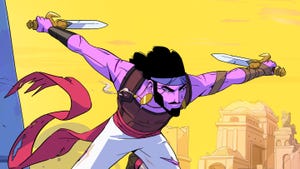
The game works in Flash, inside the web browser. How versatile did you find Flash to be as a program? Were there any noticeable limitations?

Limitations. Yeah, there were a few. It's really annoying that you can't get it to go into fullscreen mode and still use the keyboard (some kind of security reason, I think). Other than that I really think it's a case of Flash being really good for what it is. As long as you know its limits you'll be happy with what you can produce with it. You can push it if you know what you're doing but you wouldn't want to make a 3D extravaganza in Flash, pick the right tool for the job.

What are some of the differences between a collaborative work and one where you’re allowed free reign? Do you find one preferable to the other?

We generally are collaborators, at least it's always a collaboration between the two of us. But with "outsiders", I think it's better. Means you get things done. We're trying to get some of our own games done at the moment, small projects though. On a completely different realm we've also just released a CMS (Content Management System) we're pretty proud of - we're still web monkeys as well as game junkies!

What was it like making the CoinCan application for Facebook? Have the results been positive?

The CoinCan game is actually headed by some other friends of ours, amazing designer/typographers, Something Splendid, who we share a studio with. We're just doing the grunt work of getting the Flash stuff up and running for them. That said, it's been fun making an avatar system and I think it's been pretty popular. The mini-game "Catch" has had heaps of plays and I think we did well in re-inventing a very old style of game. There's going to be more mini-games to come in this project soon too.

You also do quite a bit of web design. Do you find your skills are transferable into game design?

I think the programming skills we've been honing doing game design have really paid off in how we structure our web projects, making them cleaner and slicker. It also means that doing web, whether it is design, CSS/HTML or development seems so much easier it can almost be a holiday doing it sometimes.

The way you have to think about your users when you're creating a game can sometimes be the same as when creating a website, especially if you're trying to work out how to stop them from breaking either.

As you do a lot of contract work for various clients, do you find that you are able to express yourselves in that kind of work, or are you quite restricted in what you can do?

Sometimes doing exactly what the client wants isn't such a bad thing. It teaches you to be meticulous. Then again, if a client wants something "stupid" we'll tell them.
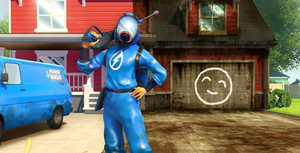
With the success of Scarygirl, are you looking to move more into game development, or will you remain a diverse company?

We'd like to do more game development, but we'll probably end up doing web sites as well. It's always just choosing the right tool for the job, or idea, or random inspiration.

Is there anything else you’d like to add?

Just a big thanks to everyone else we worked with on Scarygirl. Without all the amazing work they did on the project no one would take a second look at the game. So that's Nathan who's world and amazing artwork it is the whole reason the game exists, Luke who did the great music and SFX like a hurricane, Suren who brought life to the characters and Halo Pictures who made the intro that everyone raves about.

Time to Import Some Japanese Piggy Bank Games

For some time now, I've wanted to splurge and import one of those Japanese piggy banks (counter-productive, I know) with built-in LCD screens that display bits of a game each time you slip in a coin -- BankQuest, for instance, is an RPG that has you fighting monsters in a tower; and Ikemen Bank lets you fall in love with and choose from five different male suitors.

The only thing that's stopped me from purchasing one, other than the fact that I'm an adult with a bank account that already does a fine job of keeping my money safe, is that I don't actually have any Japanese yen coins to plop into the toys.

Those yen coins might not be necessary, though, for these little banks. In import shop NCSX's preorder listing for Full Metal Alchemist Coin Banks with an LCD that displays animations of the anime/manga characters, the site points out, "For stateside savers, please note that a standard nickel can be used in place of the JPY100 coin since the dimensions are very similar."

Looks like I'm going to have to invest in a mini Space Invaders cocktail machine now.

GameSetLinks: Marcus Versus Molyneux - The Quickening

[GameSetLinks is GameSetWatch's daily link round-up post, culling from hundreds of weblogs and outlets to compile the most interesting longform writing, links, and criticism on the art and culture of video games.]

Ah yes, the continuation of GameSetLinks goodness, this is, starting out with a pretty darn interesting Schlaghund piece on the ol' 2D vs. 3D fighter conundrum - always a tricky one, that, esp. for the purists.

Also hanging out there - PixelVixen707 continues some strangeness, the wonderful Marcus makes a Mega64 re-appearance to mystify Peter Molyneux, Waiting For Godot versus Left 4 Dead, Clover's political message oddness, and lots more.

Import expert:

Fighting games and the role of execution « schlaghund’s playground
'My personal experience has led me to the conclusion that the 2D fighting game has a much greater focus on execution, while the 3D fighting game has a slightly greater focus on strategy.'

Raph’s Website » Metaplace is now in open beta
'Yesterday was a big milestone for me. Anyone can now go to Metaplace.com and register. You get a small world for free, with full access to all the content creation tools. Lately, I’ve been describing it at “the power of Second Life, with the ease of The Sims, on the web.”'

The Lost Coin-Op: The Chi-Town Coin-Op Caper » PixelVixen707
This is getting pretty wacky - actually, here's the whole thread, for reference.

Mike Darga's Game Design Blog: The Tortoise and the Hare
'What I find so interesting about this situation is that we have two games, both somewhat niche and aiming for fans of PvP, at approximately the same number of subscribers.' Guess which two!

Mega64 » Archive » SEASON 2 BEGINS! MARCUS RETURNS WITH PETER MOLYNEUX!!
'Marcus’ Corner has returned for Season 2! Episode 201 is an interview with Fable creator Peter Molyneux.' Complete awesome.

Ludus Novus » Blog Archive » Left 4 Godot
'Like in Waiting for Godot, the Survivors of Left 4 Dead are trapped in a never-ending cycle, figurative or literal, of constant struggle.'

Fire Hose Games » Digital distribution comparison
Not actually many extra numbers in here compared to my GDC lecture, but probably a lot easier to read :P And the games per week metric is good.

Clover delivers political message minus gameplay | Fidgit
'I'm the target audience for Clover, an artsy indie game supposedly about the way 9/11 was used by the Bush Administration as an excuse to invade Iraq.'

May 20, 2009

Land Sharks Return For Interstellar Marines Trailer


To accompany the debut of its first in-game screenshot for Interstellar Marines, developer Zero Point Software also uploaded this humorous video of the "photo session" from which the shot was taken from, trotting out the game's baffling but kind of awesome enemies.

The idea of walking sharks isn't a new one, and the developer introduced them years ago in its 2006 trailer, so I'm willing to accept the mutated creatures' existence, but what are these sharks doing in outer space? Why would someone bring sharks of all creatures to space? Who does that?!

Nevertheless, it's certainly an aspect that helps Interstellar Marines stand out from other space marine shooters, as is the Denmark-based studio's AAA Indie concept, which helps fund and direct development.

Zero Point Software describes AAA Indie with this list:

  1. AAA Indie is AAA games done independently from publishers
  2. AAA Indie is the gamer and the developer, no one else
  3. AAA Indie is development with open doors, so gamers can track games in development
  4. AAA Indie lets the gamers 'vote' for the games they want to play - simply by expressing their interest
  5. AAA Indie is open for anyone with a dream a the will to deliver on that dream

As part of this program, the official Interstellar Marines site invites interested gamers to register a profile, or "enlist as a marine". Once enlisted, members can "upgrade" their marine's rank by donating anywhere from $5 to $29, earning badges indicating their level of contribution and enjoying benefits like access to higher quality files, early access to playable releases, and more.

Zero Point argues that this concept allows participants to "can get behind the scenes of the development of games they fancy" and allows titles to be "priced and distributed much more liberally" among other benefits. It has also launched a "viral initiative" through AAAindie.com with this video:

My first thought after watching the corny clip: Why would you do that to your hardwood floor? Who does that?!

Best of Member Blogs: From Cutscenes To Murder

[Showcasing highlights from sister site Gamasutra's Member Blogs,they hand out a lifetime Game Developer magazine subscription for a rant against the domination of cutscenes.]

In our weekly Best of Member Blogs column, we showcase notable pieces of writing from members of the game community who maintain Member Blogs on Gamasutra.

Member Blogs can be maintained by any registered Gamasutra user, while invitation-only Expert Blogs -- also highlighted weekly -- are written by selected development professionals.

Our favorite blog post of the week will earn its author a lifetime subscription to Gamasutra's sister publication, Game Developer magazine. (All magazine recipients outside of the United States or Canada will receive lifetime electronic subscriptions.)

We hope that our blog sections can provide useful and interesting viewpoints on our industry. For more information, check out the official posting guidelines.

This Week's Standout Member Blogs

- Putting The Cut In Cutscenes
(John Mawhorter)

For all the talk about the decreasing reliance on cutscenes and greater focus on complete gameplay immersion, there actually remain extremely few games that follow through on that philosophy. Here, John Mawhorter rails against that state of affairs. (This topic seemed to become a minor Member Blogs trend this week.)

For his effort, John will receive a lifetime subscription to Gamasutra sister publication Game Developer magazine.

- Unscripting The Scripted Event
(Jaime Kuroiwa)

Scripted sequences have a lot of power and utility in games, to convey information or provide elaborate showpieces. But Jaime Kuroiwa argues that, in the decade since Valve's influential usage of scripted sequences in Half-Life, the technique has become stagnant.

- TOJam #4 - Day 0 - Upset Bowels, Sun Battles, A Lack of Bricks
(Jim McGinley)

Everyone's favorite game event correspondent (well, my favorite anyway -- what, you don't have one?), Jim McGinley, is back with his first day of coverage of the recent TOJam #4, the fourth annual Toronto Independent Game Development Jam. This is just a pre-event warmup; more reports are promised.

- On Murderous Video Games
(Stephen Dinehart)

Why do we enjoy horror games? Stephen Dinehart takes a stab (har har) at answering that question, by delving into the psychological roots of fear, sadism, and masochism. Also, are we all just a bunch of hypocrites? Perhaps!

- Help! I Think I Peaked
(Benjamin Quintero)

Developer Benjamin Quintero reflects on whether his current status as "project lead" is an indication that he has hit a limit to his upward mobility. Does this indicate a broader trend across the industry? Might it suggest one reason why employees so often split off and create new studios? You be the judge.

Final Fantasy X Prototype's Debug Easter Eggs

A recently found and posted prototype build for Final Fantasy X (speculated to be from two months before the game's final release) offers several neat debug mode treats that you won't see on the PS2 discs that Square shipped. The shot above, for example, comes from the game's battle debug room, which lets you talk to Cactuar and load different scenarios and chapters.

The following video, recorded by Knuckles500, shows an extra cutscene with an NPC's speeding Blitzball barely missing Yuna and Rikku. Notice the sped-up version of "Otherworld", already an odd song for the series:

Knuckles500 adds that there's a lot more to be found in the prototype:

"There are TONS of debugger jokes, kinda like what you find in FFVII, except more creative. ... There's a lot of weird crap. For example, one of the programmers added a bunch of party members on this really scary looking map (not sure if it's used, or even meant to be played on) -- and if you talk to them (all female btw), they do all sorts of weird animation for you (perverted animation btw). For example, when you talk to Lulu, the camera sets on her breasts as she does her 'Battle Victory pose' and doesn't stop until you press X."

[Via Unseen 64 Forums (registration required)]

Yudo Releasing 8Bitone Synthesizer to iPhone

Japanese developed Yudo, whose previous apps include Rectools02 and Aero Guitar, revealed its newest software, 8bitone, a "Retro 8-bit Synthesizer + Sequencer", for iPhone and iPod Touch. The app is designed to allow people to use their fingertips to arrange and "simulate sounds for 8bit Personal Computer and Console Game Generator from the 80`s."

In addition to its piano roll sequencer, 8bitone's synthesizer features the following:

  • Up to 128 monophonic voices per song
  • 1 oscillator or LowBitNoise
  • LFO
  • Envelope
  • Hi-Speed Arpeggiator

You can watch a video of 8bitone in action below:

[Via True Chip Til Death]

GCG's Game Design Challenge Crowns 'Change Mario's Career' Winners

GameSetWatch sister site GameCareerGuide has posted the results of its ‘Change Mario’s Career’ game design challenge, with readers conceptualizing alternative career paths for Nintendo’s famous plumber.

The best entries include Super Mario Thief, Mario: Stuck In Time and Super Mario Barber.

The introduction for the article outlines the results:

"Science teaches us that a crushed butterfly or an errant sports almanac can sharply skew the earth's timeline, resulting in an unpredictable and dire alternate future. But what would happen to the video games industry if Nintendo's mascot character, Mario, had chosen another career?

The world knows Mario as the star of Nintendo's flagship Super Mario Bros. franchise, which began with a pair of plumbers being sucked into a drain pipe that deposited them into the platform-filled Mushroom Kingdom.

Would Mario and Luigi have embarked on similar adventures if they had chosen a different line of work? What kind of fantasy world would await Mario if he was a taxicab driver, or an accountant, or a bartender?

In its latest Game Design Challenge, Game Career Guide tasked its readers with describing Super Mario Bros. or one of its sequels in an alternate past, in which Mario chose a different career path.

Many readers submitted entries that were similar in concept to Super Mario Bros., save for a few crucial differences. Others hypothesized that Mario's job change would result in the birth of an entirely different genre, taking the games industry in a new and unexpected direction.

What follows are the best and most original entries we received. Here are our top picks:

Best Entries
Stuart Lilford, University of Wolverhampton, Super Mario Thief

Stuart Lilford reimagines Donkey Kong as a stealth-based action-puzzler, then details the sequels and spinoffs that follow. The Super Mario Kart-inspired cops-and-robbers racer is particularly noteworthy, and would likely be very fun to play.

John Healy, Mario: Stuck In Time

Healy's entry puts Mario in the role of a watchmaker's son, and envisions Super Mario Bros. as a collection-based platformer. The many subtle changes noted in the Mario series' traditional structure and mechanics make for a compelling read.

Dean Ray Johnson, Super Mario Barber

In this entry, Dean Ray Johnson replaces the Mushroom Kingdom with a series of danger-filled heads of hair. In the process, Johnson effectively argues that a simple change in career may not have had much of an impact on Mario's first platforming adventure, at least in terms of gameplay.

Honorable Mentions
Loic Ramboanasolo, Universite de Montreal, Mario the Undertaker

Max Nikolaev, Mario the Magic Pimp
Daina Corey, Student at Westwood College Online, Super Mario Brothers: Urban Legends ."

Interested readers can now read the full GameCareerGuide.com story revealing the winners - and the site will be setting a new Game Design Challenge in the near future.

Opinion: Burn Your Resume

[In a peppy opinion piece, Reset Generation/Pocket Kingdom co-creator Scott Foe waxes lyrical on the job market, ways to get hired, and approaches to presenting yourself, explaining why you should 'burn your resume' and go with network, skills, and different documentation altogether.]

i.

A medical mystery worthy of Dr. House himself, my body is incredibly resistant to any and all forms of anesthetics – why I couldn’t have come down with a much cooler mutant power, like that guy Mystery from VH1’s The Pickup Artist, is a lament for another column. Last week, I checked myself into a San Francisco medical center for out-patient surgery. Fifteen
injections and two hours in, I could still feel every little touch from every little metal instrument. “We should stop,” the doctor warned. But I just wanted to get it over with.

I should have stopped. The pain was, in a word, indescribable – in a few words, the pain was worthy of a prescription for “The World’s Largest Vicodin.” The doctor actually waved my payment. “Let’s never talk about this to anyone,” he said. “I don’t charge for torture.” Not to worry, doc: Anybody who has ever gone through what passes as games industry interview process can tell you that there are worse ways to spend your time.

I’ve heard it estimated that, at this very moment, some 12% of North American game developers are out of work. And I still say burn your resume.

ii.

It’s not that I don’t feel for the interviewers. Creating a good test for interviewing candidates is a lot like being the Dungeon Master in Dungeons and Dragons: You sit for hours, carefully preparing your castle maps, monster encounters, and clever dialog for the surprise villain that will ultimately threaten the very fabric of the Elven queen’s gown, just to have the players (the candidates) decide that instead of saving the world, they would rather go to the beach and drink Kobold Kahlúa.

Interviewer: “What’s your greatest strength?”
Candidate: “I execute shit like shit’s a mass murderer in Texas.”

Interviewer: “What’s your greatest weakness?”
Candidate: “I am a surprisingly weak interviewee: For all of my world-beater talents, people never seem to want to hire me.”

But, to be completely fair, you really can’t compare Dungeons and Dragons to the interview process. If you did compare Dungeons and Dragons to the interview process, resumes would be character sheets, and in Dungeons and Dragons, people actually read the character sheets. “Send us your resume,” is pretty-much without fail the first request that you will receive when dealing with a company’s Human Resources department.

In most cases, you cannot visit to interview without having sent a resume ahead of you: So why do we allow people to interview us without having read the resume that we sent?

iii.

Of course, The Simpsons’ Comic Book Guy might comment that, “Resumes aren’t character sheets: Job descriptions are character sheets.” Well, here’s a little tip for the Comic Book Guys of the world: The only people who answer obsessively crafted job descriptions are kids out of college and mediocre performers. Amazing talent already has a job, a job where amazing talent is kept busy with work that is both satisfying and challenging, a job where amazing talent is very, very well cared for – a job where even the masseurs have masseurs.

You might be saying to yourself, “Hey! I’m amazing talent and I’m out of work!” Well, here’s a little test for you: Can you snap your fingers to control the weather? Now that’s a talent! Talent can’t be taught: You either have it, or you don’t. The Comic Book Guys will say, “Opportunity and experience trump talent.” And I say to the Comic Book Guys that what we
really want is somebody who has talent and has also had the opportunities and experience to develop talent: That’s what makes “amazing talent.”

Too often, hiring policy dictates that if an amazing talent can’t be found, a warm body will do – to the constant and quickening degrade of the organization. To paraphrase the old venture capitalist saying, “A’s attract A’s; B’s attract J’s through K’s.” Every warm body you seat lowers the value of your company.

It baffles me as to why companies will string along the warm-bodied while holding to hopes of finding an amazing talent: When you discover a body that is warm, but not amazing, tell them, “No thanks.” It also baffles me as to why companies will string along amazing talents, with no word, for days or even weeks, all because of some dumb-colored tape on hiring.

Uncertainty disturbs the colon, resulting in nasty bouts of mud butt: You don’t want your future star performer stinking up all the chairs in your office once you finally get around to hiring him, do you? If you don’t want stinky chairs, make sure that somebody is contacting the candidates daily, letting them know where they stand until a trigger can be pulled or the gun unloaded.

Now you, with your amazing talent for algebra, might be thinking, “If amazing talent has a job where amazing talent is happy, it is impossible to hire amazing talent.” Not exactly true. Sometimes it’s the publisher, in the library, with the candlestick; sometimes amazing talent’s husband has to move and so she goes too; sometimes, for whatever reason, amazing talent is in the wind, looking for work.

Human capital is just as important a component of your business as is the amount of capital resources at your command: Which is to say, a group of ten brilliant people in an empty room will beat the market-snot out of a group of ten dumb people charged with the management of a great product. With this in mind, you should spare nothing to bring amazing talent onboard when presented with the opportunity to do so: Different people are motivated by different things, not always money, and the words, “We don’t pay in used Women’s Shoes,” should never cross your lips.

And are you seriously going to turn away amazing talent when, “We don’t have a position open at the moment”? The top organizations create a position when amazing talent becomes available – a position which will maximize the utility of amazing talent while trivializing amazing talent’s weaknesses. Earlier I mentioned that I’ve heard it estimated that 12% of game developers are out of work. Well, the AAA studios – you know who they are – are still hiring, growing organically. I posted the availability of a former co-worker, one whom I consider to be most-amazing, to a private developer forum recently, and, within one day, the big-named studios were requesting his contact information.

I’ve heard the story so many times that it has become almost as comical as my writing: “Our company has a new CEO, and we’ve all been told to read From Good to Great.” From Good to Great is a good book, but I wish these CEOs would force their employees to read something greater: Mavericks at Work, by Bill Taylor and Polly Labarre, is the best book on the subject of attracting and retaining human capital that I’ve ever read. In fact, a great deal of this section was inspired by that very book.

The authors suggest replacing your “Recruitment” with “Harassment” – make everybody in your organization responsible for identifying the amazing talent in your industry, and then stalk amazing talent with offers like some jilted-ex-lover. At the very least, should amazing talent ever find itself out of work, amazing talent will be thinking of you.

iv.

“You’re walking down the hall and BAM! One of your employees, riding down the hall on a bicycle, smacks right into you! What do you do?”

This was one of my favorite questions to ask the people that could potentially become my bosses. The answer that I was looking for is, “Why was my employee riding the bicycle indoors?’” Before acting, great managers ask, “Why?” (I’ve since found much sneakier ways of getting to, “Why?”) I’m also on the lookout for pronouns: Does the interviewer say, “I,” a lot, or does the interviewer say, “we?” There is no “I” in “team” – well, I guess there’s no, “we” in “team,” either. But the “Wii” is the best-selling console of this generation. Never, ever be afraid to throw questions at your interviewers: You’re both the Dungeon Master, and don’t you forget it.

“The problem with resumes,” says Seth Godin, a globally recognized marketing mastermind and bald man, is that they are “just another reason for somebody to reject you.” If you’re lucky enough to have your resume read by the people you are interviewing with, your luck might involve those people scanning your resume for key-words. When, when, when will companies learn that just because people list “Python” on their resume, that does not mean that those people are very good at Python. And just because somebody does not list Python on their resume does not mean that they are not amazing talent that can learn all there is to know about Python in two weeks.

The truth is that even amazing talent will not be ready to win swims in your organizational ocean without first acclimating to the weekly waters. Education in America was conceived and founded mostly during the industrial revolution to be vocational – to prepare the populace for manual labor. As we have transitioned into a knowledge-based economy, high-specialization has left us needing to learn on the job, even the amazingly talented.

Yes, even amazing talent has weaknesses – weaknesses which amazing talent is very self-aware of. But top performers don’t psyche themselves out. If you ask the Los Angeles Lakers’ Kobe Bryant what his weaknesses are, I’m sure he could recount for you every last detail from muscle memory. But I’m also sure he wouldn’t, “I’m the Black Mamba: The deadliest animal alive.” Kobe Bryant has had twenty-four fifty-plus-point games in his career, third only to Wilt Chamberlin and Michael Jordan. When Kobe misses a shot, he doesn’t stop taking shots.

And if you are going to be taking shots, you’re going to need the ball. The problem with job descriptions is that they always list what the candidate will be held responsible for, but almost never list what authority the candidate will be given, should the candidate be hired. Responsibility is the converse of authority: Political science dictates that we should not be
held responsible for something over which we have no authority. Find out what authority you will have to execute before signing on to a new position.

v.

“Don’t make a resume: I don’t want you sending it around to other companies.” This is unintentionally sound advice from a triple-A studio head – “unintentionally sound,” in that having a resume is a very bad idea. Burn your resume, but never, never stop talking to people until you are signed. Getting somebody to almost hire you is the easiest task in the world.

Social networking is all the rage these days, and yes, you can most-definitely use those weak connections in your network to tweet your way into a job. Third-party validation is an invaluable tool for finding a new position, “I’ve worked with this guy, and he’s like a suitcase nuclear device: Put him down beside a problem and then bunker up, because there will
be nothing but the problem’s shadows on the wall.”

It always amazes me that companies fail to capitalize on, or even value, those weak connections once you have been hired. Business development is not just for business developers, and having people out there, incessantly singing like angels about you and your operation, can pay off for you in very tangible ways. I was having lunch with a friend, the president of a large gaming middleware operation; he lamented the fact that his guys were not plugged-into the development community; his competitors are talking to people constantly, both through private channels, and through industry celebrity, creating a greater perceived value for their services.

“But how do I test for social network when hiring somebody?” Well, it just so happens that there is no “Huge Social Network” column on the traditional resume. Resumes are just that, traditional: They all look the same. You have your objectives, your skills, your work history, your references (which are sometimes “available upon request”), but nothing that really says who you are or what is so special about you. You know that the games that you work on have to have a zingy-something-special to succeed at market: Why should you approach marketing yourself any differently? Do you really want to get in the same marching line as the other 12% of the industry that is delivering objectives, skills, work history, and references (which are sometimes “available on request”)?

Burn your resume. Yes, you will eventually have to send something when asked, “Please send us your resume.” Just make sure that that something is truly special, something that communicates not only who you are and where you have been, but also why you are truly special. If you are thinking that there is nothing truly special about you, then you’re probably a corpse. (Ha! I got you: If you’re a corpse, and you’re reading this, then that’s something truly special: Zombies are hot right now!)

Maybe you are a bad ass Scrum Master? Include a Sprint Report. Maybe you can beat Green Grass and High Tides on expert? Include a photo of you and your Rock Band. And, if your social network is truly overwhelming, make sure that’s reflected too.

Call your something a “Curriculum Vitae,” which is a term that sounds just plain fancy, and which won’t make people on the receiving end balk when you do not send in a resume. Make sure that whatever it is that you send looks as pretty as you possibly can make it. Graphic Designers are like adulterers, in that everybody knows one: Don’t be shy about calling for help.

vi.

I can’t recommend working with recruiters: In one of my worst recruiter experiences, a co-worker listed me as a reference to a recruiter, and that same recruiter immediately called me asking if I would be interested in the job for which my co-worker was interviewing. If you are going to work with a recruiter, the only advice that I can give is to avoid working with multiple recruiters at the same time: Recruiters are like cats in that they feel they belong to the house rather than to the owners; and they hate having their toes stepped on.

I can recommend working with agents, but I stress that working with agents is in no way essential to finding a great position. One of the biggest differences between working with an agent and working with a recruiter is that an agent should be making a percentage of every penny you make from the agent’s work – this is the only way to align utilities to ensure that an agent performs for you. If you are going to sign on with an agent, make sure that you deliver, in writing, the results you expect your agent to achieve, and instruct your agent that making a binding agreement without first clearing things through you is not permitted.

Once you’ve hired an agent, bow out of any and all negotiations: If a potential suitor calls you to complain about your agent, don’t panic: It’s a negotiation tactic, called, “hitting the high hat,” and the intention is to freak you out. Have them take it up with your agent.

Agents are like dogs, in that they’ll love you if you feed them regularly. Make sure that you are on the phone with your agent at least once a week – if that time cannot be yielded, the agent is probably too busy to perform effectively for you. And beware, there are a lot of companies out there who simply will not work with you if you have an agent – the old saying goes, “To get the money you want, you have to decide whose money you don’t want.” Some agents, like IDEA's Sean Kauppinen and indie agent/dev Dave Taylor, I can get on with, though.

Don’t place your fate solely in the hands of human resources departments, recruiters, or even agents. You are ultimately responsible for feeding your mouth, and so, make sure you milk those weak social connections like a perverse dairy farmer. Send your Curriculum Vitae everywhere, even to the loud neighbor against whom you filed a noise-complaint. You never know.

[Scott Foe was creator/producer of Nokia’s critically acclaimed cross-platform game Reset Generation, and has worked on titles including Sega’s Pocket Kingdom: Own the World, the first global, massively multiplayer mobile game. Foe began his decade-long industry career as a member of the Dreamcast product development team at Sega. And, although having a resume is "a very bad idea", here's his Curriculum Vitae. It's different... honest.]

Early Footage of Project Trico

Before yesterday, very little was known about Team Ico's (Shadow of the Colossus) third, unannounced title, other than its essence being "rather close to Ico", according to director and lead designer Fumito Ueda, and an in-game image of a chain that was included with the studio's job posting for an unspecified PS3 project.

That same chain reappears in this early test footage posted by PlayStation Life, which some are reporting was initially shown off privately by Team Ico over a year ago.

Keep in mind that because of the video's age, the final product will likely look very different from what's shown here, in terms of graphical quality if not content, and the game presumably won't be advertised with this placeholder music taken from the Coen brothers' 1990 film Miller's Crossing.

If the shipped game turns out to be even half as endearing as this test clip, though. allowing players to befriend and go on adventures with an adorable griffin-like creature, you can count me in.

GameSetLinks: Overachieving In War And Peace

[GameSetLinks is GameSetWatch's daily link round-up post, culling from hundreds of weblogs and outlets to compile the most interesting longform writing, links, and criticism on the art and culture of video games.]

Woop, continuing with the GameSetLinks as the week wends on, it's time to take a wander around some of the more interesting in-depth pieces of late, starting with GSW columnist Simon Parkin's piece on game achievements at Eurogamer, discussing a startling phenomenon -- and one that didn't really exist in games until quite recently.

Also in today's bumper set of links -- Troy Goodfellow on games for foreign policy geeks, more on a recent survival horror game academic conference, Elder Game on City Of Heroes' user-generated quests gone wild, and lots more.

Goo goo ga ga:

Over-Achievers Article - Page 1 // Xbox 360 /// Eurogamer
'Of course, at their worst, Achievements seek to somehow make up for a lack of interesting in-game challenges... But at their best, they inspire us to play the game in new and interesting ways...'

Elder Game: MMO game development » User Generated Quests and the Ruby Slippers
'When City of Heroes released its user-created mission generator, it was mere hours before highly exploitative missions existed. Players quickly found the way to min-max the system, and started making quests that gave huge rewards for little effort. These are by far the most popular missions. Actually, from what I can tell, they are nearly the only missions that get used.'

Boardgames! | Daily Rodent
Wow, Rab of Consolevania has a board game review videocast that appears rather awesome.

Crispy Gamer - Feature: War and Peace and Everything in Between: 10 Games for Foreign Policy Wonks
'It wasn't long before I started thinking about games that have lessons for people interested in foreign policy. After all, politics and diplomacy have been central themes in gaming since Diplomacy, and maybe even earlier than that.' Only on Crispy, folks! Great piece, tho.

Chris' Survival Horror Quest: 'Thinking After Dark: Tidbits'
Fascinating discussion on the recent horror game academic conference in Canada - unfortunately the papers aren't available online, though many will be published soon.

Charge Shot!!!: Battle.blog – Going Solo, or Rubbing My Nose In It
Fun, eventful writing about going up against the crazies still playing Starcraft 2 competitively online.

The Brainy Gamer: OMG, girls in trouble!
'Most video games for girls send a steady flow of narrow images and self-limiting notions about how to succeed in today's culture. They reinforce all the worn-out essentialist tropes: be beautiful, be fashionable, be popular.'

ZA Critique: Bejeweled 2 | Moving Pixels | PopMatters
'The enormous amount of options and chaos going on in the average game takes time to master. Bejeweled 2 isolates the desire to manage that chaos into its purest and most accessible form.'

May 19, 2009

Nintendo Power Previews Laserdiscs Up For Auction

If you've waited years for the opportunity to offer previews for Game Boy, Super Nintendo, and Nintendo 64 releases in your own home just like toy stores used to in 1997, here's your chance!

An eBay seller has put a Nintendo Power Previews Laserdisc Update Kit up for auction, offering a Laserdisc with videos and information for games like Ken Griffey, Jr.'s Winning Run and Wave Race 64, as well as touch panels and other related items.

This particular kit was originally used for Nintendo retail kiosks in Toys R Us, and is only asking for a starting bid of $199.00. Small change for a decade-long dream, right? More photos:

[Via GameSniped]

8-Bit Prophet Album Combines Vocaloid With Chiptunes

Independent chiptune label VORC Records announced a new tribute album for TM Network for Japanese "techno-pop unit" TM Network, titled 8-bit Prophet, remixing the group's popular songs as chiptune tracks with vocals dropped in by Yamaha's singing synthesizer software.

For those of you who've yet to encounter Japan's "vocaloid" celebrities like Hatsune Miku or Kagamine Rin/Len (lucky you), the application "enables users to synthesize singing by just typing in lyrics and melody."

The album won't go on sale until June 3rd (with a digital release planned for HearJapan), but you can preview samples in the video embedded below. HearJapan also has two advance tracks for purchase.

8-bit Prophet track list:
01. Electric Prophet (K-> Remix)
02. Rainbow Rainbow (K-> Remix)
03. Be Together (K-> Remix)
04. Telephone Line (Tanikugu Remix)
05. Kiss You (K-> Remix)
06. Time Passed Me By (Kyonomori Remix)
07. Rhythm Red Beat Black (Tanikugu Remix)
08. Come On Everybody (K-> Remix)
09. Self Control (K-> Remix)
10. Still Love Her (Kyonomori Remix)
bonus. Get Wild (Saitone Remix feat. AsianDynasty)

GDC Austin Adds Indie Summit, Calls For Submissions

[We're delighted to announce that we're doing an Indie Games Summit at GDC Austin this September, and we're opening a call for lectures right now. Look for more info and first speakers in a few weeks - this should be a blast!]

Organizers of this September's GDC Austin have announced a call for submissions for the first-ever Independent Games Summit there, also revealing the Advisory Board and topics to be discussed at the two-day Summit.

Initial information about the September 15th-16th Summit is available on the GDC Austin website, with organizers noting that the Indie Games Summit will include "discussions surrounding business models and methods, promotion and marketing, deep game design techniques and inspirational case studies."

The Advisory Board for the Summit, which will be announcing its first speakers in the next few weeks, include local Austin-area independent developers Adam Saltsman (Paper Moon, Cave Story WiiWare contributor) and Brandon Boyer (editor of indie-friendly BoingBoing-affiliated game site Offworld.com).

In addition, the three main Advisory Board members of GDC San Francisco's yearly Independent Games Summit, Flashbang Studios' Matthew Wegner and Steve Swink (Minotaur China Shop) and IGF Chairman Simon Carless, are also helping to oversee the event.

The San Francisco version of the IGS -- held alongside the Independent Games Festival -- has hosted some of the most notable names in indie gaming over the previous years, from World Of Goo's Ron Carmel and Kyle Gabler through Flower's Jenova Chen, Braid's Jonathan Blow, and many more.

As the GDC Austin Indie Games Summit call for submissions page explains, organizers are looking for the following topics, spanning both smaller one and two-person indies and somewhat larger independent console and PC game developers:

- Indie Business: "How to make money, manage teams, and run a company without going insane."
- Promotion & Marketing: "How to get noticed when the "Marketing Department" = you."
- Design and Philosophy: "Deep dive into design techniques, for example: constraints, rapid prototyping, tools."
- Case Studies and Postmortems: "Inspirational talks that demonstrate what worked, what didn’t, what surprised you and made you wiser."

The submission deadline for presentation abstracts for the 2009 Indie Games Summit at Austin GDC is June 3rd at midnight PST, and more information is available on the official GDC Austin IGS website.

Bentopon

Famed bento lunch designer Anna the Red has uploaded her latest video game arrangement, this time reproducing a scene from PSP rhythm/strategy series Patapon using rice fried with ketchup (this is delicious with sliced hot dogs), broccoli, seaweed, snow peas, beef soboro, and other food.

You can see more detailed shots of the bento lunch below or on Anna's Flickr set:

Best of FingerGaming: From Peggle to Resident Evil: Degeneration

[Every week, Gamasutra sums up sister iPhone site FingerGaming's top news and reviews for Apple's nascent -- and increasingly exciting -- portable games platform, as written by editor in chief Danny Cowan and reviewers Tim Lockridge and Louise Yang.]

This week, FingerGaming highlights notable releases like Resident Evil: Degeneration, Peggle, and the Crystal Defenders sequel Vanguard Storm. Featured reviews for this week cover Shadowland: Shades of Black, Perfect Balance: Harmony, and 2XL Supercross.

- Square Enix Releases Crystal Defenders Sequel Vanguard Storm
"This follow-up is no mere expansion pack, as Vanguard Storm features greatly overhauled gameplay that is much better suited to the iPhone and iPod Touch hardware."

- Review: 2XL Supercross
"2XL Supercross is simply a beautifully rendered game, sporting slick and fluid graphics that are well beyond my expectations for the iPhone. The game's ten tracks are wonderfully designed, especially in terms of ground contours and terrain shading."

- Free App Roundup, May 9th - 15th Edition
"This week's free releases include demo editions of Pinball Dreaming and Leaf Trombone, along with free full versions of Denny's Dance Allnighter and Expedition Africa: The Game."

- Review: Shadowland: Shades of Black
"A fair deal of Shadowland's screen space is devoted to a trigger, and the controls center heavily on that trigger-driven interface. This is probably Shadowland's greatest asset: Using the trigger is much more immersive and natural than tapping the screen or pressing a button."

- Top Free Game App Downloads for the Week
"Uwe Meier's puzzler BrainTeaser has attracted a lot of attention in its first week of release, and finishes as today's most-downloaded game in the iTunes App Store."

- Review: Perfect Balance: Harmony
"Perfect Balance: Harmony is genius in its simplicity. The almost non-existent learning curve makes it a game that almost anyone — as long as they know about a little thing called gravity — can play."

- Resident Evil: Degeneration Premieres in App Store
"Capcom’s flagship survival horror franchise arrives for the iPhone with the release of Resident Evil: Degeneration, a 3D action title based upon the recently released CG-animated movie of the same name."

- Top-Selling Paid Game Apps for the Week
"Digital Goldfish's recently updated puzzler Bloons joins the App Store charts for the first time this week, finishing just behind last week's top seller Stick Wars."

- PopCap Releases iPhone Port of Peggle
"Peggle for the iPhone features 55 levels of peg-clearing action and 10 different Peggle Masters, each of which introduces new power-ups and gameplay mechanics as the game progresses."

- Review: Chippy
"In this iPhone rendition of Pang, you play a chipmunk who also happens to be an archer. In each stage, Chippy has to shoot large bouncing balls, which split into smaller bouncing balls until they disappear."

Majesco: Gardening Mama's April Sales 'Just Shy' of Chinatown Wars'

While expectations for Grand Theft Auto: Chinatown Wars's lifetime sales have brightened since NPD's April report showed little drop-off for its second month on shelves -- assuaging worries after the game moved only 89,000 copies in March, well below analyst predictions -- Majesco has taken advantage of the attention on DS game sales to point out that Gardening Mama sold nearly as much this past month as Chinatown Wars.

The New Jersey-based publisher bragged on its Twitter feed, "Mama wanted me to share with you that for the month of April, Gardening Mama was just shy of Chinatown Wars in sales! You go girl!!!"

Though one can argue that the gardening simulator released on March 31st in the U.S., so NPD's April report should be seen as the game's first month of sales, it's still an impressive feat considering Chinatown Wars' critical acclaim (Metacritic average of 94 versus Gardening Mama's 60), online buzz, $20 Best Buy sale, bigger advertising budget (Take-Two even commissioned a theme song from rappers Ghostface Killah and DOOM), and likely much bigger development budget for Rockstar Leeds and North.

Majesco did not specify how narrow the gap was between the two titles, but at least two other games separated them in April's Top 20 Software all-platform chart -- Chinatown Wars placed 18th with 74,000 units sold for the month, while Guitar Hero: Metallica (PS2) and Major League Baseball 2K9 (Xbox 360) took the 19th and 20th respectively.

On the Nintendo DS-specific Top 10 chart for April 2009, however, Gardening Mama is ranked 8th, right behind Chinatown Wars