Interview: SOE's Yanagi Talks DC Universe Online's Birth
[Wow, it's just about the last GameSetWatch post of 2008, so we go to Brandon Sheffield's formerly Gamasutra-published chat with the DC Universe Online creators - it's going to be interesting to see what SOE make of what should be a big deal for superhero underoo wearers worldwide.]
Sony Online Entertainment's upcoming DC Universe Online is a key project for the Everquest publisher, which has latterly been trying to push into more casual markets with its FreeRealms title.
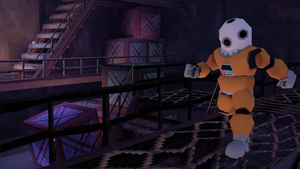
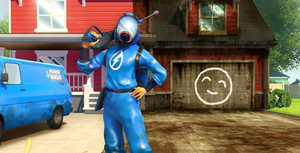
The game is a PlayStation 3 and PC MMO which will feature dozens of characters (from Batman through Superman to Lex Luthor) and settings from the DC comic book universe, as well as customizable superhero or super-villain characters created by users.
DC Universe Online is believed to be due out some time in 2009, and earlier this year, Gamasutra sat down with DCUO senior producer Wes Yanagi to talk about the project.
During the course of the chat, Yanagi discussed the contributions of venerated comic book artist and executive creative director Jim Lee, possible revenue models, and how the studio playtests and balances a game with such diverse characters and environments.
How large is the [Sony Online Austin studio] internal team now?
WY: We're above 70 folks now.
I was just talking to [DC Comics veteran and game consultant] Jim Lee, and he's been on the product since the very very beginning. How, from your perspective, does he work into the pipeline?
WY: Jim and his team, they do a really good job setting the art style and art direction of the product, as you can probably see from the videos and the things that we've shown so far.
The entire world and all the characters are very cohesive, and that's something that can be a challenge on other games without any kind of IP or any kind of art direction from someone like Jim, in which you have a bunch of different pieces that get put together, and they don't necessarily coalesce as a whole.
I know you can't say when it will be released, but how do you anticipate the entire development process? How long has it been in development so far?
WY: It's been in development for about -- I started about two and a half years ago, and I think it was a few months before I started that it officially got kicked off. So, [around that long]. [laughs]
Yeah, it's been a real long time coming, it seems. Are you going to immediately work on expansions afterward? How long do you anticipate this development tale going?
WY: We're still trying to formulate our plan on that aspect, as we're still technically in pre-alpha right now. I imagine that we'll have a portion of our team doing the live events and any kind of live content, and then we'll have a portion that will be dedicated to the expansion pack.
Do you all the customer service and support internally at SOE?
WY: Yeah, SOE has a great customer service staff, and of course, the benefit of working at SOE is there's a lot of MMOs in the pipe. And so, everything from customer service to the platform –- you know just getting the executable out to people and patching -- all that infrastructure is all in place.
How many people do you have working in those departments, if you know?
WY: I really don't know. I can't say.
I'm always curious because usually it completely dwarfs the development team.
WY: Yeah, I'd imagine.
I talked to Blizzard a year and a half ago – they probably have way more now – they had twelve hundred.
WY: Twelve hundred?! Wow, that's pretty insane. That's a lot of guys. But then they have to support ten million folks.
You must have the network infrastructure pretty down at this point, since you've had many many years to air it on this stuff. Do you anticipate any difference for this title or is it going to be using your similar network infrastructure?
WY: We have a standard infrastructure that we share across a lot of the games, and we're really leveraging a lot of that, because it's pretty robust and developed. The demos that we've been showing right now at Comic-Con or at FanFare, those demos were all running off of a client/server environment.
We've even been playtesting over between Austin and San Diego, testing independently and seeing lag to see how that affects the action combat. So far, we've been really really happy with all the results.
With Jim Lee, there's been a lot of back and forth on getting character models to look like how he wants them to look in the comics. Where is the line on what you can do -- obviously there are budgetary concerns -- and how can you really determine what you can take and what you can't?
WY: Generally speaking, we try to get the essence of what he's talking about, if at all possible. And we'll bend over backwards to get that look because that's what his style is known for and it's an awesome style that resonates with a lot of people.
Where we can draw the line is when it runs into a technical issue, where we have something where there's too much detail, or the textures might not fit with the parameters that we have or something like that. When we run into technical issues, we'll discuss that
with him and go over what our limits are. Usually, he's understanding about that and goes, “Okay, I understand,” and moves on to the next thing.
When I was talking to him and hearing him on the panel, it sounded like he's really coming from a good artistic perspective. He seems to have more of an idea of what you can do and not do, when compared to say, directors that come in and are trying to associate themselves with a game product. Have there been any challenges in terms of what is physically possible?
WY: Not really so much a challenge, I wouldn't say challenging. Jim's a really smart guy, and once we walk him through what the issues are, he picks up on it really fast. So, there really hasn't been any issues that way. Maybe some of the more arcane technical server issues might be harder for him to understand, but for the most part, he gets everything and is very accommodating in that respect.
What kind of things are you looking at for dealing with RMT -- real money trading? Is that going to even come up in the game?
WY: We've been talking about some ideas, but those things haven't been solidified yet. We're definitely going to be talking more about that in the future.
And are you guys going with a subscription or item type model?
WY: That's the same thing as with the RMT. All the business side of it we're still trying to figure out. Right now, we're focused on making our core game, making that fun and then figuring out how the business works on top of that.
You kind of have to have it figured out in advance if you're going to go with one of those models or the other, but it's okay if you can't say what it is. [laughter] Because you can't really just build the game, and then put the business model on top of it. But anyway, what do you think of the free to play model?
WY: I think that's a huge potential, especially for a more casual market. You know, just getting lots more eyes in on whatever product or whatever game.
I think so many things have happened in the past through shareware -- Wolfenstein and Doom were huge hits based on that model, and I think that there's lots of potential in that market.
SOE is trying to do that with Free Realms, as you're probably aware of, and I think that that has a huge chance of being a successful product.
I don't think a lot of teams making MMOs have used Scrum. How does Scrum work into that pipeline? Because the big thing about Scrum is that you can meet milestones easier. You don't necessarily have those same kinds of milestones in MMOs. So, how does that work?
WY: For us, the philosophy that we're taking is publishing it internally to the team. We try to take the mindset we're live already and we have our infrastructure in place earlier on where we have our daily builds. They get kicked out, you run the patcher. When you log in, it sees if there's a new build up there and puts it up there.
On an everyday basis we have playtests. All the different Scrum teams -- we have a combat team, a content team, an environment team -- they all do their playtests, and they can see what the other teams are doing, and see how their piece fits into the whole.
I think that's one of the biggest challenges that I've seen in MMOs in the past, that they're so big and they're so massive, and in traditional development processes that I've worked on in the past, you'd have all these teams working independently.
At some point, maybe a year or two between each other, between milestones, they would try to integrate everything, and things would fall apart horribly.
For us, it's really on a three week basis they have to have a demonstrable portion of the game and all the pieces have to fit. And so they're working together really closely on a day to day basis.
It sounds slightly different from the vertical slice thing, in which you make this section and then you go on. But you're a little more compartmentalized and then integrating quickly, that's how you're doing it?
WY: Yeah, so for instance, in the demo that we showed at Comic-Con this year, we built what we're calling a world event, where there's a portion of Metropolis and Brainiac's invading. That involved a lot of different teams working together to build that scenario.
The cool thing about it was that it told us a lot about how our game should be developed, or built, from a combat point of view, you know, where are the issues that come up between, say, fliers and people that are running on the ground.
The other part of it is that the environment guys were really able to push; you know, what do we want our look and feel to be for the end product? And getting all those together in one demo was huge for us.
How do you reconcile that world? You mentioned people with different powers. You got the fliers and the people on the ground. How do you build that universe and not have it break? You got people who can do a lot of different things.
If you've got Aquaman, do you have to have the sea and how do people get into the sea? You've got the air, do you have to have the ceiling past which they can't fly, and that kind of stuff. How are you dealing with those considerations?
WY: Trying not to get into specifics and generalizing that question a little bit more -- a lot of those come out of our daily playtests. We'll put in a certain power set or certain movement type, and then because we have PvP heavily developed in this game, that encourages people to almost exploit it because people are competitive in a PvP environment.
So, pretty quickly you see the exploits come up, and then we have these notices that are on our playtest machines, "Ice powers banned today" or something like that, until the designers can go back and resolve what those issues are.
Again, using agile is great because, as those issues pop up from that Scrum team's perspective, if they're focused on balancing or getting all these powers working together, that can be their highest priority that they have to deal with.
It seems like balance is one of the biggest issues in MMOs. Like you said, there will probably always be exploits, it's impossible to root them all out. It seems like it requires way more playtesting than other game types. Do you have everyone playtest?

WY: We do have everybody playtest just about every day. Our daily routine is we have our daily stand-ups in the morning. While one team is doing their stand-up, another team is in the little play pen that has all our playtest machines. There's a group, they're playing the game, one person's taking notes as people are just chiming in with comments. When they're done they do their stand-up, another group comes in and does their playtest.
I think there's a tipping point in game development where when you still have the core mechanics being built, the game isn't quite fun yet, you have to almost force people to playtest. And luckily, we've finally got to the tipping point where our core game is fun enough that we just have to schedule it and people come. So that's a good position to be in for us right now.
Yeah, you don't have to strongarm anyone anymore. A lot of MMO making companies have a tendency to use the beta as the final QA period. Do you think that's a good thing or a bad thing?
WY: I think that's fine and good from a standpoint. There's only so much that you can balance on a smaller scale with a smaller team. Even if you have like a hundred, two hundred people on a team, you can only do so much balance. Once you get a thousand, two thousand people, then the game dynamics change that much more.
The problems that I've seen on projects that I've worked on myself is that, a lot of time you spill some of your game development and feature development into your beta time frame. At that point, it's really difficult to manage between the priority of getting a feature done versus clearly a major flaw in your game that you have to address that came out of beta, or even just dealing with bugs.
Our goal is to make sure that when we get into our beta phase, that all of our features are done so we don't have that conflict between the two. If you have to redo a feature because of gameplay feedback in the beta, then that's okay, but you don't want to be building something that you knew you had to do out of time.
It seems like it's really tempting, since you know that MMOs are never done. They're never finished, so you're always developing. At the same time, when you do that, you run the risk of showing people a game like Hellgate London. The beta didn't go that well, and people weren't really feeling it. By the time the game was actually really fun, everyone had already been like, "I already played that and I didn't like it." So that's a real danger with a beta. But I guess that's where all the internal QA comes in.
WY: Exactly, exactly. And I think even internally, we want to be really sensitive to that. For us, we're playing it with the team, with our team. It's kind of our product, our baby, and so it's always “the best product ever,” and then we can keep playing on that.
But once we release it internally to other parts of SOE, we want to make sure that there's another level of polish there, so that people are excited about that and then going on to the next step of any kind of closed beta.
About the HUD and management of items and powers and things. For me, what turns me off from a lot of these games is how complex it is. There are all these icons, and I've got to remember what all the buttons do, like hotkeys. How do you figure that out, what's acceptable for people, how much they can actually stomach?
WY: I think there's a combination of things that get based on the gameplay. The game that you're building, the game that you have. I think that a lot of it is, how many decisions do you provide the player at a time.
We give more decisions on where you should be moving and how you're controlling your character because we're a much more action-based game. And strategically, what powers you fire off if you're hiding behind something, if you're picking up a bus, or if you have to dodge a bus.
And that's much different than more traditional MMOs, where it's less movement based and it's more picking a combination of powers or reacting to powers, or watching someone's health go down and then hitting the heal button, or casting the heal spell.
By that nature, since there's less movement, you have to make more decisions or give more choices through the UI or through the HUD. For us, ideally, we have a much more simpler HUD, but the much more complex decisions phase is in running.
To take it to the other extreme, if you look at a first-person shooter, there's a very, very simplistic HUD, but you make a lot of decisions in how you're aiming, whether you're going for the headshot or just trying to shoot somebody, or what weapon you're using.
Do you also try to get some outside views? I don't know if a lot of MMOs actually do playtests, like blind playtests with focus groups.
WY: Yeah, we've actually already started that. We did a couple of focus groups with our Comic-Con build before we went to Comic-Con to make sure the public would be okay with it. I was deathly afraid that our UI and controls might be too complex going in, and so we wanted to make sure that that was addressed.
We have a usability lab in San Diego, where our headquarters are, and they've been bringing people in to play the game and giving us feedback on top of that. And there's other things that we can do with heuristic evaluations and those things. So as we get more UI online we'll be running it through that.


Action games usually involve players assuming a certain profession and carrying out the task they have been assigned with - whether it is taking out bad guys, rescuing cute little creatures, saving the world from certain doom, or even stealing treasure from cave dwellers, we can guarantee that you'll be having a whale of a time doing it.
[GameSetLinks is GameSetWatch's daily link round-up post, culling from hundreds of weblogs and outlets to compile the most interesting longform writing, links, and criticism on the art and culture of video games.]
[Every week, GameSetWatch sums up sister iPhone site
[The Experimental Gameplay Sessions at GDC, organized by Jon Blow and compatriots, is often one of the highlights of the show, and packed to the gills, so we thought it would be good to highlight his call for submissions for those doing... different stuff.]
[In a new opinion piece published on big sister site
[GameSetLinks is GameSetWatch's daily link round-up post, culling from hundreds of weblogs and outlets to compile the most interesting longform writing, links, and criticism on the art and culture of video games.]
Fancy a 100-metre sprint event? Hit Benzido up. Thinking about dino racing? Get acquainted with Pixeljam Games.
[Another 365 days has passed, and in an exclusive GameSetWatch article,
As a parent, 2008 was a particularly amazing year because I was able to watch Kaz grow from being just a cute little guy we took care of to a bona fide member of the family. It’s pretty incredible to think that at the beginning of the year he didn’t know how to walk or say any real words. These days, he’s running all over the place, helps pick up his toys, uses actual words to talk, and even takes on the chore of feeding our dog Howie his dinner. It sounds funny, but Missus Raroo and I often comment that Kaz has finally become a “real person.”
On the other end of the spectrum, I was also given Endless Ocean, and I thought it was simply delightful. More of a stress reliever than anything else, Endless Ocean’s beauty is not just in its underwater setting, but in the ability it grants for players to take the experience at their own pace and freely explore on their own. There are small missions and objectives to fulfill, but essentially, all you need to worry about is swimming around and discovering the world that awaits you below the water line.
Everyone’s eyes were on LittleBigPlanet’s passing of content creation to players, but I thought Blast Works had some pretty amazing player-generated ships, enemies, and stages. One of the nicest features of the game is that it bypassed the Wii’s usual Friend Code route and instead let players select and queue up content to download via an outside website,
I was pleased to see Nintendo decided to bring over the previously Japan-only game series bit generations in a new form, namely the Art Style games for WiiWare. The games proved to be perfect for my tastes, especially considering they were $5 each and took up little space on the Wii’s internal memory. I ran out of available “blocks” to download new content months ago and having to juggle what’s available on my Wii at any given moment has been more than a little frustrating.
One of our favorite thrift stores is one we call “The Gremlin Store” because its mysterious and eclectic mix of merchandise makes it feel like finding a box containing a mogwai wouldn’t be at all out of the question. Unfortunately, I’m not good at haggling prices, and the owners of the establishment often don’t put price tags on their items, so I’ve usually left empty-handed because I don’t want to argue that Batman for the NES should be cheaper than the $13 price they’re asking. Nevertheless, it’s fun to visit from time to time to see what newly-acquired items they’ve got for sale.
Recently, Kaz has discovered Mario Kart Wii, and he and I have spent some fun evenings racing through the game’s courses. Kaz sits in my lap and grips the Wii Wheel firmly in his hands, but he doesn’t yet understand that you have to press a button to accelerate and turn the wheel to steer. That’s where I come in. I help Kaz navigate the courses while his eyes are glued to the screen in amazement. Sometimes, when we manage to win a race, he’ll stand up and gleefully dance, copying our character’s post-victory celebration animation.
No More Heroes (Nintendo Wii)
[GameSetWatch's sister console digital download info site
The early '80s arcade game that never was. Galax-E-Mail begins with the bizarre premise that you're an intergalactic e-mail delivery service (which kinda defeats the point of e-mail, don't you think?), and you're charged with guiding a flock of ships from A-B to ensure a safe delivery.
Harking back to the 1979 Sega classic
It's certainly far from the prettiest game on the Community Games service. But what CaveIn lacks in the looks department, it more than makes up for in gameplay.
Dragging the Tron light-cycles concept into 3D and into space certainly isn't a fresh idea. However, rarely has it been done with as much polish. Star Pilot may not have the brain bending nature of
This is a flawed gem amongst the Community Games, but one worthy of note, all the same.
Lying somewhere between Q? Entertainment's
The jewel in the crown of XNA puzzlefests to date, and one of the earliest games to hit the service, Duotrix still stands proud. It works due to its compulsive playability, and succeeds where many similar games fall down - actually adding something worthwhile to the block dropping genre.
A port of the homebrew DS game of the same name, Johnny Platform's Biscuit Romp is an incredibly pleasing platform/puzzle game with some fine pixel artwork.
Ultratron may already be familiar to PC gamers, since the original Windows version having been floating around the internet since 2005 -- but it's fresh out of the wrapping on the Xbox 360 Community Games service.
The well deserved winner of the DreamBuildPlay 2008 competition, if there's any justice in the world, CarneyVale Showtime will be the game that puts the Community Games on the map.
[Game development involves a lot of uncertainty -- but could inviting professionals from other walks of life help? Turbine and Disney veteran Patricia Pizer shows how an architect, a naval officer and a professional CSM have helped "serve as examples and inspiration" while working as game professionals.]
[GameSetLinks is GameSetWatch's daily link round-up post, culling from hundreds of weblogs and outlets to compile the most interesting longform writing, rants, and criticism on the art and culture of video games.]
[From now until early January, our sister site
[A little while back, Gamasutra and Game Developer's Brandon Sheffield chatted to Oddworld's Lorne Lanning about his company reboot and bringing classic Oddworld-ian titles to Steam - and here's the delightfully pleasant result.]
Even though it's Christmas week, we've still been posting some neat stuff over the past seven days -- both before and following Xmas dinner -- over at big sister site
[In this technical analysis, originally printed in
In this round-up, we highlight some of the notable jobs posted in sister site Gamasutra's
[Continuing our set of Todd Ciolek-written interviews, profiling offbeat or neglected developers and subjects for the benefit of GameSetWatch readers, here's a chat to Tilted Mill, who seem to be hunkering down and adapting to post-digital life as a PC strateg game developer in a most intriguing way.]
'Twas the night after Christmas, and all through the GameSetLinks, there were a few things still stirring, in the way of random links. Oh dear, that really is poor.
[You thought we were done with year-end
[The latest in a series of Japanese game music interviews from Jeriaska, this time he chats to classic Sega composer 
GSW: What would you say were some of the highlights of the show for you?
GSW: How did you become involved in the Shenmue project?
You know, it genuinely appears to be Christmas-time, so while I'm knocking back the eggnog, I'd like to thank all GameSetWatch readers, commenters, and contributors for the entirity of 2008.
['Homer in Silicon' is a
But in another way I found Oiligarchy compelling, and that has to do with how it works as a story -- a dark, angsty fan fiction of reality. In fiction, there are always some characters who are on the sidelines, unexplored or simply not understood by the viewpoint character.
[Still blasting with
[Wrapping up big sister site
With Xmas Day rapidly approaching, I hope GameSetWatch readers have worked out if they're naughty or nice in time for the presents to arrived (or not, as the case may be!)
['The Interactive Palette' is
Customer Service
Complete Destruction
[Every week, we sum up sister iPhone site
[Immersive realism may be the "Holy Grail" of game development, but should it be? In this opinion piece, author and designer Lewis Pulsipher argues that most players don't want "role-fulfillment," in support of the idea that strong mechanics -- and even player design awareness -- is a more suitable goal.]
Wow, we really are edging up on the holiday season, aren't we? Along the way, we've got a bumper set of GameSetLinks to unspool this week, starting out with Chuck Jordan discussing how you tell the player what to do in adventure games - always a bit of a problem, to be honest.
[Are we done with big sister site
Finishing up the weekend with the best of last week's long-form posts on
[
[As we wander into the holiday season, our buddies at GDC just announced a lot more interesting lectures for
['Chewing Pixels' is a regular GameSetWatch-exclusive column written by British games journalist and producer,
The weekend is upon us, and in between watching slightly dodgy CG whales play volleyball on the reliably chilled
[Continuing big sister site
['Bell, Game, and Candle' is a
[Every week,
[Yep, we're still going with big sister site
Well, you may have noticed a slight lack of GameSetLinks this week, and plenty of cross-posting, to boot. This is because I've been at the Global Online Game Awards in South Korea, and only just got back yesterday.
[Over at big sister site
[Our latest Japanese video game-related music interview from Jeriaska chats to a chiptune video game techno duo including quad/luvtrax and Kplecraft - who actually and coincidentally 


[The latest countdown on big sister site
[Starting out a new series of GameSetWatch interviews on buzzed about and/or overlooked games and personalities conducted by the excellent Todd Ciolek, we talk to the Grubby Games folks about their excellent Flash-based physics sim IncrediBots.]
How did you develop the game's physics engine?
[Continuing to cross-post the 'best of the year' pieces from our big sister site for GSW readers' delectation, in a year which saw the PC become his main gaming device,
[Have been enjoying my Gamasutra colleague Chris Remo's
[Another interesting interview here from Christian Nutt - this time focusing on 8-4 and their work localizing a lot of major Japanese RPGs for the West. What can be done to bring the two cultures closer together? Some ideas below...]
[Continuing big sister site
A little more GameSetLinks for the early week, starting out with Andrew Mayer's fun post about Burning Man and Fallout 3 - one of the few posts on the post-apocalypse that ties it to current day events, scarily enough.
['Diamond In The Rough' is
And Yet It Gives Me All This Stuff to Do
[In this editorial, originally printed in
So, the end of the weekend, and time to round up some of the top features posted on our network of sites, including big sister site
[Here's info on the latest issue of sister publication Game Developer magazine, complete with a 'best of postmortems' round-up - or maybe 'worst of postmortems', if that makes sense - plus some other neat stuff.]