« GameSetMicroLinks: Weekend Gigabit Round Up | Main | Guitar Hero III: Plenty Good, Or Just Not Good Enough? »

COLUMN: HDR Knowledge - Telling Stories and Realizing Worlds

[HDR Knowledge is a bi-weekly column written by Nayan Ramachandran and chronicles his hopes and wishes for the future of the industry. This week, we take a look at the past, present and future of storytelling in gaming, and how it should change in the future.]

As we progress through generation after generation of gaming history, we see a more prominent role for stories in our games. No question, some games require no story, especially those of an online nature. That does not mean that stories have no place in the genre. It’s actually quite the opposite. The more realised a game world becomes through technology and interaction, the more grounding and context a player needs.

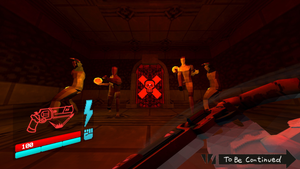
HDRKoct1601.jpg The misnomer about story, of course, is that it must be told at the player, rather than with the player. Because of technological issues (as well as limited experience with a narrative medium), cut scenes became famous in the Super Famicom and Playstation 1 eras, because of their effective nature in telling a story.

Times have changed with technology, and we have more and more original ways of telling a story. The overt cutscene method has been thrown away by many developers in favor of more immersive (and sometimes completely optional) methods. Instead of the obstrusive and invasive cutscenes, games either feature story that presents itself while the player is running about the world, such as in Valve’s Half-Life series.

The other, more prevalent story convention is the diary. While some games, such as Biohazard (Resident Evil in North America) combine the use of cutscenes and optional written diaries in their games, other game development teams took a different route: optional storytelling.

Every gamer no doubt is, or knows, a gamer that often shouts “I just want to start playing!” when a long protracted introduction begins. It’s a difficult balance as well; if the game provides too much story and slows down the action, it’s likely to lose the player’s attention. If the game provides too little story, sometimes the context of the player’s actions is so ambiguous and nonsensical that the player can either become increasingly frustrated, or lose their motivation to continue with the game.

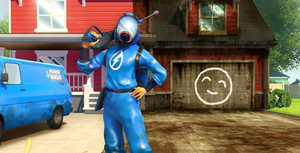
HDRKoct1602.jpg The method by which story is delivered is always in contention. Retro Studios’ Metroid Prime offered an elegant solution: players are offered a very simple and basic plot at the beginning of the game, and ample motivation to move forward and finish the game. For some, that amount of story is enough, and they play the game through in entirety without a second thought. The game’s world goes far deeper, though. Those willing to look for it can scan video monitors and other machines to receive written diary entries and experiment reports that act like patchwork pieces in a giant narrative tapestry.

Even Halo 3 offered Terminals that allowed players to delve a little more into the story’s history as an optional pilgrimage. The writing in the game’s main story was largely generic and boring, yet the secret terminal text was some of Bungie’s best writing since the original Marathon series. Why hide such painstakingly written and fantastically executed dialogue in such a devious fashion?

As a professional writer, one of the most important things to consider is audience. The game’s story has the same audience as the game itself, and as such has to adhere to certain conventions of that archetype. Halo’s audience is largely concerned with gameplay (specifically multiplayer). Players have come to expect a more action oriented game, not marred by constant narrative and science fiction diatribe. As such, while Bungie truly wanted to include long sections of well written diaries for the player to read, the vast majority of players probably probably had no desire to read any of it. That is the real shame.

Where do we draw the line on story, though? No one will get any disagreement from me concerning the statement “not all games require story.” One of my current favorite puzzle games, Yosumin, is completely devoid of story, context, and even a world. The game is just a box of colored shapes with kooky faces, and the story stops there. That does not mean that we should merely stop there with advances in inventive gaming narrative. 2K Boston’s Bioshock was a huge success because of the way it handled narrative. Most of the story was told through audio narratives that played in the corner of the screen while still letting the player explore and battle. It gave players a chance to experience the story while still enjoying a gunfight. It also offered an almost entirely real-time narrative, akin to Half-Life, only straying away from the formula in one particular instance.

HDRKoct1603.jpg While both Bioshock and Half-life offered an “amusement park ride” style narrative, driving the player through scenes with talking heads explaining the story thus far, neither game exhibited a terribly deep story. Both games had their fair share of twists, but both lacked symbolism and dramatic metaphors. Neither game needed either, but it is evidence that this style of narrative does not always work in all cases.

Japanese games almost exclusively use cutscenes; pieces of pre-rendered or real-time video that further the story through traditional film style. There is no question that cutscenes are far more disruptive to the immersive experience than the “amusement park ride,” but it gives storytellers a chance to inject drama into the story, direct the player’s eye to specific places, and largely suggest the feelings the player should be experiencing at that moment in time.

Especially in particularly harrowing or high tension situations, I actually quite like the idea of a cutscene. I see them as a reward for defeating a difficult boss or completing a specific task, and if spaced well enough, they give me a much needed chance to sit back, set the controller down, and let out a sigh of relief. The problem that lies in the use of cutscenes is that frequency. Recent Final Fantasy games are specifically at fault, especially in the early hours of the game. While later parts of the game are usually full of side quests, battles and exploration, the first ten or so hours are chockful of cutscenes, sometimes only giving 20-30 minutes of gameplay in between. This has forced many to dislike the use of cutscenes, even in games where their use is required.

The other prevalent issue with cutscenes is the inability to skip them. In games where save points and bosses can be on either side of a lengthy cutscene, it can be aggravating to have to watch the cutscene again and again after being defeated by the boss multiple times. Many games offer the ability to skip cutscenes, but some still don’t, for whatever reason.

The answer to providing a good story in a game is not as easy as I make it sound, but many have done it before, and it can be done again, and better:

1) Don’t treat the player like an idiot. If you want to include metaphor and symbolism in the story, don’t club the player over the head with its meaning, otherwise you have ruined what makes the symbolism so strong. Let it speak for itself.

2) Unclog the start of the game. Stop putting tons of cutscenes at the beginning of the game. It’s important to set the scene for the game, but try to figure out a more interactive means of doing so. Like a good book, a game’s first 15 minutes should be spent exhibiting the pacing and atmosphere that the player expects to experience for the entirety of the game.

3) Open-ended endings are fun. Try not to explain absolutely everything at the end of the game, but also don’t leave all questions completely unanswered. Leave players with the tools and clues they need to piece the mystery together, but leave enough ambiguity that will keep them guessing for years, or at least until the sequel.

4) Give us more unreliable narrators. Nothing builds mystery like experiencing a world as a character the player does not entirely trust. Not only does this allow the player to piece together the character’s true past without the use of the cliched amnesia mechanic, but it also allows players to question everything around them, and the actions of their character. Nothing is more frightening than not being able to trust yourself.

5) Provide layers of plot. Metroid Prime, Bioshock, and Halo 3 were on to something. Particularly in action-based games, provide a skeleton frame of a story for the average player who only cares about shooting people in the crotch. Along with that, provide deeper and better written story through diaries and audio that players can optionally track down during their adventure. Additional points if the player can read or listen while they explore and fight.

[Nayan Ramachandran is a dashing raconteur by day. By night, he writes his weekly blog, HDRL.]

Comments

How could you compare Bioshock's story telling style to Half-Life's? Bioshock is more like a combination of the Metroid Prime style (lots of optional audio logs that reveal deeper stories, and sometimes important plots too), whereas Half-Life is more player-interaction based, and I think there were some easily miss-able (that I missed) newspapers clippings or other informations lying around.

IMHO Bioshock's story might not have been THAT great, but I feel as though you gave it less credit than deserved.

On second thought, Bioshock's style did involve heavily on cutscenes (the main portions anyways). Apologies, I was thinking of System Shock 2...

Though the player's action and inaction are the difference between Bioshock's and HL's "cutscenes" which suggest they should be considered in separate category anyways.

Sorry I posted before I read the whole story (point 5 especially), I was exhausted and a bit irritated (since I still don't get why people say HL1/2 have great story, there were practically none, or weak at best). Please disregard my first comment, or remove it as you please. I think you made some very good points on analyzing the story-telling part of games, especially the open-endedness and layers of plot suggestions, which I believe is what the next level of gaming needs. And cutscenes should be a no-no for immersion. Let players experience everything from their own view point/action.

If the story is a tangential component of the game, isn't it debased?

The problem I see is the constant comparison to movies when analyzing stories in games. It is posited that games will reach their maximum potential when a game can pull on the player's emotional strings in the same way that a film does those of the viewer (http://www.computerandvideogames.com/article.php?id=174283). This leads developers to emulate the stories and storytelling methods they see in movies. The resultant stories, while many times compelling and well crafted, end up running parallel to instead of becoming an integral part of the game.

Would rewriting the story in Half-Life require you to change all of the game systems (weapons, vehicles, enemy a.i., etc.)? Is the gameplay even cheapened if you were to remove the story completely?

I think the answer is, no. The story is so tangential to gameplay that it could easily be transplanted or eliminated without ruining the game part of the game.

Instead of looking for ways to tell players a preconceived story, we should try to find the stories that can percolate up through gameplay. When I look at games in the future, I hope to see stories that cannot possibly be translated to film or books without considerable modification. Games must find their own voice.

You know what?... I like cutscenes. I like cinematics. I like to fight my way through a level and then sit back and watch, having earned the reward of a really nicely-made cinematic.

If I wanted to play any game where *I* was exclusively in charge of the story of my character I would only play a tabletop RPG. Either that or a multiplayer-only game (not co-op), where each game played is its own little story (though a "story" that probably has more in common with sporting events than movies).

Movie techniques of storytelling have been developed over a hundred years and are in turn based on storytelling techniques more than a thousand years old. For the game industry to think it can reinvent that is a little arrogant.

And this talk of "games finding their voice" is nonsense. The only entity that can have a voice is a person. Games are just a media.

Sam Beirne is the sole speaker of truth in the discussion thus far. The delta between gameplay and story is so large that they're practically independent of each other. Games are expressive through their mechanics. If we hope to achieve a level of emotional engagement in our players that rivals that of the best films and novels, we must do so by leveraging the thing that makes games unique: interactivity :)

I greatly enjoyed this article and I've played most of the games mentioned so I can understand what you are talking about. Video game writing is something I have considered getting into one day, and this was a fascinating read.

I do wonder though, what is your opinion of the story telling style of Bioware's games, most specifically the Knights of the Old Republic or Jade Empire?

Reply to Sam Beirne

The reason why so many games try to emulate the stylish storytelling of movies is basically three fold:

1) Movies are the closest other medium to video games in likeness, and as video games a new media for which the conventions and rules have not yet been set, past knowledge of conventions in other medias are needed.

2) Writers come from hollywood. All of the best writing talent are screen writers, hollywood film writers, not-game-writers etc etc. So the talents of people working in writing for games are founded upon movie media and not game media.

3) The difference between mechanics and story. The two cannot co-exist peacefully, one must be dominate/reliant on the other. Do you know how to make immersive gameplay reliant on story? Or immersive story reliant on gameplay? That there is a terrific task that, although games have come close (GRIM FANDANGO! Play it if you haven't already), it's a peak that is yet to be achieved.

Basically, the conventions aren't set, we ironed the kinks out of our media entirely yet... But it seems that Nayan Ramachandran is trying to lay some conventions and the like down, and deserves a reward for his efforts.

* APPLAUSE * for the game writer, and his fellows, trying to find a solid ground in an industry, that as yet sees story as only an additional 'feature' of the game.

PS: Sam, I meant this as no derogatory comment to your post, just as an advancement of your point. Appears my opinion was a tad strong though....

I think the whole world would be better off if we read Chris Crawford's book on interactive storytelling. It's hardly perfect, but it captures the problem quite nicely.

Star Control 2

Bryant: I've followed Chris Crawford for a while now, including his book; his best ideas come from getting story and game to work together - only problem is, he doesn't want to deal with the "game" half of things, being suspicious of the industry's artistic goals.

If you liked his book, I'll also recommend this webpage:

http://web.archive.org/web/20040404061317/www.channelzilch.com/doug/battle.htm

It talks about a variation of the ideas Crawford thought of, in a game called "King Of Chicago".

Wait, Bioshock lacks symbolism and dramatic metaphors? Were the chains you saw on your wrists at the start of the game just a random texture? Wasn't the game a metaphor for the repercussions of extremism? (In addition to all the issues of personal choice?)

I'm pretty anti cutscene, as I think the "reward" for defeating a boss, for example, is the actual defeat itself. Players have been conditioned to expect more, but it's time... wait, it's been time for the last 10 years to get them off the cutscenes.

The best stories are the ones I come up with while I'm playing. Give me a rich setting, give me a bunch of tools to play with, and give me some reason to go from A to B. But let me create my own epic journey.

Post a comment


If you enjoy reading GameSetWatch.com, you might also want to check out these CMP Game Group sites:

Gamasutra (the 'art and business of games'.)

Game Career Guide (for student game developers.)

Games On Deck (serving mobile game developers.)

Indie Games (for independent game players/developers.)

GamerBytes (for the latest console digital download news.)

Worlds In Motion (discussing the business of online worlds.)


Weekly Archive

GameSetWatch is an alt.video game weblog from the people who run:


Copyright © 2008 Think Services