« June 2007 | Main | August 2007 »

July 31, 2007

JayIsGames Pumps Up The 'Replay' Value

- Delighted to see that free Flash game site JayIsGames has posted the winners of its 3rd Casual Gameplay Design Competition, and it's a fine crop of freely playable titles overall, made to a 'replay' theme - the overall winner is 'Gimme Friction Baby' by Wouter Visser.

The general explanation of 'Gimme Friction Baby' is that the game is "...an unusual and unique strategy game of skill based on a very simple idea. The "replay" theme in this game is good old replay value: a challenging game with addictive qualities that will have you coming back to it time and time again." If I can be slightly less vague, the title is sorta a friction-based Puzzle Bobble involving cannoning expanding, numerically decreasing numbered balls off each other. Wow, was that less vague?

Actually, there's some interesting controversy of whether the concept of replay should be integral to the game design of the winner, or whether the game should just be very 'replayable' - ambiguous, to be sure. But what's clear to me is that JayIsGames continues to attract some of the most beautifully designed Flash games around (the last competition, based on the 'Grow' game concept, also heralded some great titles). Long may it continue. [Semi-via Waxy.]

GameSetLinks: Eyes Blur, Pac-Man Dines

- Wow, it's been pretty darn busy for me since I got back from holiday, so only now do I get a chance to do some GameSetLinks - interesting but quirkier links that we didn't want to blow up to a full post here on GameSetWatch, but are absolutely awesome in their own right. And they are:

- Pac-Man CE, Long Exposure Version: Over at The-Inbetween.com, there's a great post with long-exposure pictures of Pac-Man Championship Edition for XBLA, and as Mike Nowak notes: "I think most of them were six second exposures. Maybe ten. And yes, as I mention on the Flickr page, the idea for these is totally borrowed from Rosemarie Fiore’s long exposures." And you know, I really like the results.
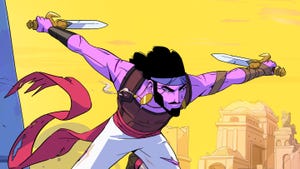
- Worst. Mag Covers. Evah: GSW's very own Kevin 'Magweasel' Gifford just wrote a fun post for IDG's Games.net rounding up the worst game mag covers ever, and since he's the don of the history of the genre, he comes up with neato, scary-ish stuff: "The twelve game-mag covers you're about to see feature the worst of the worst, the most terrifying things to ever stalk the racks. Proceed on at your own peril!"

- Deltahead's MGS2 Critique: The very 'intense' folks at Deltahead, who are still working on the Segagaga Dreamcast translation, it appears, have posted 'Driving Off the Map: A Formal Analysis of Metal Gear Solid 2', and the lyrical preface is a warm, happy, slightly obsessive place to start: "My friends breathed loudly on the floor and couch, growing stubble and dreaming. The blinds cut morning into boards of light that stacked through cold cigar smoke. If games like MGS2 were possible, I decided, then the medium was worth rediscovering."

- Gamelab Debates Wii Fit: The smart New York game designers at Gamelab (y'know, Diner Dash!) have launched a brand new company website (for which I can't find an RSS feed, ack), but as an example of the fun, readable content, two employees debate Nintendo's Wii Fit, with K. Thor Jensen commenting: "I understand that the 'lifestyle software' trend is birthed in Japan and may seem Japan-centric, but the unexpected side effect of that movement is that it's working here and it's working elsewhere." Great read.

- Super Mario: GameJew's Opera: The perceptive Dessgeega has been critiquing a fun new project: "jonathan mann’s (gamejew) super mario opera adds lyrics - voice - to the koji kondo melodies we’ve heard many times, giving us an existentialist drama about a simple man, a worker and lover, drawn by forces he cannot control toward the right side of the screen. mario’s overalls seem big on the skinny mann; his mario, who had been prepared to live out his days in peace with the princess, is ill at ease with the role that is forced upon him: hero, killer. even as he becomes increasingly aware of his place in an endlessly recurring cycle of violence."

- My Nineteenth Nervous Brickdown: The New Gamer has done some enchanting impressions of odd, obscure new DS title Nervous Brickdown, as follows: "I was skeptical that anyone could pull off a 'modern' interpretation of a Breakout/paddle-and-ball game that was engaging and original but, thanks to a litany of uniquely themed levels and an interesting mishmash of mechanics, they managed to do so in spades!" Some good theoretical comments on how the two screens interact, too.

- Area/Code Goes Shark Running: The charming Alice @ Wonderland Blog has pointed out new webgame Sharkrunners, made for Discovery Channel's Shark Week by Area/Code, and "...a persistent game of oceanic exploration and high stakes shark research. Players take on the role of marine biologists who seek to learn as much as possible about sharks through advanced observation techniques. In the game, players control their ships, but the sharks are controlled by real-world white sharks with GPS units attached to their fins." Intriguing game design, to say the least.

The History Of Activision

- Over at big sister website Gamasutra, sometime GSW columnist J.Fleming has posted an in-depth history of major publisher Activision - and, as the intro notes, the massive company now in charge of franchises from Guitar Hero to Tony Hawk and beyond: "...started with just four game developers leaving Atari in 1979."

Co-founder and Pitfall! creator David Crane gave an extensive interview for the piece, noting of just why the initial four Activision founders departed Atari: "A memo was circulated from the marketing department showing the prior year’s cartridge sales, broken down by game as a percentage of sales. The intent of the memo was to alert the game development staff to what types of games were selling well."
He continued: “This memo backfired however, as it demonstrated the value of the game designer individually. Video game design in those days was a one-man process with one person doing the creative design, the storyboards, the graphics, the music, the sound effects, every line of programming, and final play testing. So when I saw a memo that the games for which I was 100 percent responsible had generated over $20 million in revenues, I was one of the people wondering why I was working in complete anonymity for a $20,000 salary." Oh boy.

July 30, 2007

The UK Guardian On Dying In Games

- Matteo Bittanti is kind enough to point out a new UK Guardian article discussing 'Why Do We Have To Die In Games?' - a thoughtprovoking, if slightly odd question.

Here's some notable parts: "But where's the fun in endlessly replaying a level? Gamers are unequivocal: "Dying gives a game meaning", say posters on the PC Advisor forums. Markus Montola, a researcher at Tampere University in Finland, takes this further: "You have a motivation - to avoid being annoyed by dying. Motivation is what makes the game meaningful.""

What's more: "Pete Hines - vice-president at Bethesda, the developer behind the role-playing game Oblivion and its expansion pack, Shivering Isles - agrees. "Having your character die or fail is important because your actions have to have some meaning in the game, and to you... But is the death of your character the right way to give a game meaning? Peter Molyneux of Lionhead, the developer of Fable, Black & White and The Movies, says: "A fight has to cost the player something, or it loses its meaning. Previously, that cost was time and tedium [in replaying a level]. But is that the right cost?""

Molyneux goes on to suggest that we should rethink death: "Have you ever seen a film where the hero dies and dies again? The tension in an action film almost always comes from hammering a hero so hard that he almost dies - and then he leaps back up." Not entirely sure how this fits into gameplay - but it's good to see a mainstream newspaper getting so far into interesting game theory issues - the Guardian has always been fairly well-advanced that way, what with its Gamesblog.

Opinion: Sony's Worst PSN Enemy? PS1 Conversion Sloth!

- Now, this isn't a new subject, but it's one that is worth returning to - what on Earth is Sony doing with bringing PlayStation 1 games to the PS3's PlayStation Store in the West? As can be seen from the Wikipedia list, there's still a terribly sparse collection of PS1 re-releases - with only a couple of non-Sony titles available, and no regular schedule.

This has been particularly bothering me because I noticed SiliconEra has covered the latest Japanese batch of PS1 releases on PSN, posted at the end of July, and look - 14 new games, including Armored Core, King's Field, Wild Arms, the Jumping Flash sequel Robbit Mon Dieu, and more. That's 14 in one month - from a whole host of different publishers.

The month before that? There were 19 PlayStation 1 games on the Japanese PSN, including SNK titles such as Metal Slug and The King of Fighters '99, the awesomely abstract Sony title Depth, XI/Devil Dice, and others. And they have a nice monthly groove down for making a big chunk of titles available - not as cool as weekly, but it's a good start.

Anyhow, as the Japanese have spotted, having the PSN-downloadable games playable on both the PSP and PS3 for one low price ($5.99) is tremendously good for consumers. Plus, it's a really easy way for third-party companies to monetize their back catalog, because practically all they have to do is hand over the original game - emulation does the rest.

So sure, I can understand that licensed titles might be a bit trickier, but Sony - what is going on here? The only explanation I can see is that SCEJ is organized and has personnel in place to license and put out the material, and SCEA and SCEE aren't. And why? From what I've heard off the record and seen on the record, not having a central office/organization for its online endeavors has hurt Sony significantly. There are multiple overlapping offices working on various elements of Sony's online network and software, from SOE through Sony Santa Monica to Foster City and beyond.

In some ways, collaboration is tremendous, but I think a great example of how Sony's structure is leading to oddness is Sony Online licensing 6 Midway titles for PSN. Uh, why not just get Midway to do them itself, like it does for XBLA? My view is that it's because jurisdiction was unclear, and the outward-facing nature of the PlayStation Network just wasn't there in January 2007. And it'd better be there soon, and Sony had better be talking to third-party publishers about PS1 downloadable games right now, otherwise a major digital distribution advantage is rapidly being lost.

Video Games: The Danger Of The Free

- Over at his blog, Microsoft's Kim Pallister has posted an opinion piece called 'What should World of Warcraft and David Copperfield both fear?'. Apparently, that's "...someone giving away what they charge for, and tanking their business in the process" - and the piece rambles its way to some interesting insights on what's happening.

As Pallister notes: "At Casual Connect this year, there was a lot of talk about the big media companies (e.g. MTV/Viacom) coming into the space. What I don't think people grokked though, is that not only will they come in and compete for the same customers, but they may completely upset the apple cart in an effort to get those gamers interested in their IP (and thus watching the shows, buying the dolls, eating up all the Hollywood soup and washing it down with a sugary, fizzy dose of free-to-play branded MMO."

He concludes: "So the thought exercise for you (as I try to bring this in for a landing), is what do you do when your competitor's business model suddenly is "free"?" And indeed, this is the great wonder and the great potential issue on the Web and for, really, any non-console platforms.

Given that casual games are, indeed, relatively cheap to make compared to AAA-style PS3/Xbox 360 games, don't you think it's possible that many of the mainstream will get their 'fill' of games from the free Flash-based ones? Won't this be even more true as companies turn to games and virtual worlds to advertise and cross-market their products? It's certainly an interesting potential dilemma for the game biz - and one not enough people are thinking about.

July 29, 2007

Mr. Robot Gets Kotaku Game Club Treatment

- You may remember that I mentioned I'd helped pick some worthy indie titles for Kotaku's new concept, Game Club, where yep, in-depth group discussion of intriguing games are made, and Brian Crecente is indeed Oprah. Anyhow, the first Game Club Beta has been announced, and it's for Moonpod's excellent indie title Mr. Robot.

There are actually a series of posts on Kotaku going through what's happening - as is explained: "The Game Club is going to be conducted via the Internets, meaning, sadly, we won't all be meeting in Fahey's living room over coffee and crumpets to discuss the latest Game Club game. Instead, we will be meeting both on Kotaku and in our Campfire room, which is sorta like a giant chat room." There will then be a complex series of tubes and some liveblogging going on, apparently - first meeting to be next Thursday.

Oh, and there's also a good bonus: "If you do decide to join in the club [and buy the game], use the discount code: gameclub for a 40 percent discount. Make sure to enter the code in the bottom right field of the first screen." I almost think that's more of a discount than the Moonpod folks needed to offer, but hey, whatever works!

What is great about this (from my point of view) is that we're seeing indie titles included in large-scale game website discussion without the typical 'but look, the indie scene!' disclaimer - this is parity at work. And Moonpod sell a heap of copies of their title, I hope. Of course, until GameSpot, IGN, and 1UP set up indie sections or at least start reviewing games like Mr. Robot alongside their other titles, I won't be happy, but this is a tremendous step in the right direction. Kudos, Kotaku.

Opinion: The Future Of UMDs? UMDmother Knows!

- [This week, we ran an interview with Peter Dille on Gamasutra which included the Sony exec defending the UMD format, particularly commenting: "When we launched, there was a proliferation of UMD content [from the major studios], and it wasn't the best strategic fit with the demographic."

We subsequently received an email and a FedEx package from 'UMDmother', whose sons started Silver Platter, aka UMDLab, which called itself "the indie UMD label" and sold a variety of titles, including skateboard, snowboarding, and wrestling UMDs.

Looks like the label is basically dormant now, and the aforementioned 'UMDmother' is selling the current inventory via methods such as eBay. She feels strongly that, if it weren't for the glut of movies unsuitable for normal PSP players, UMD could have been something more than it currently is. And sure, this letter is in some ways a sales pitch, but it's also an impassioned and not completely implausible call for another look at UMDs. So we thought we'd reprint it here on GameSetWatch.]

"Your July 24, 2007 article with Sony's Peter Dille, defending the UMD, was brought to my attention because I am, officially, the First UMDmother.

My sons and their best friend, all industry professionals started a company 2 years ago whose philosophy was, and still is, consistent with what Peter Dille described in this article. They produced, acquired, and designed UMD videos with the PSP consumer in mind, and with the diverse abilities of the device in mind (we also have a unique infinity scroll menu), and sold them at prices that made sense. They have an extensive library of videos, with bonus footage, which unfortunately, even with a national distribution deal signed, never received the respect that they deserved.

The highest rated UMD on IGN.com's website (it's the first title you will see in bold when clicking on editors choice under UMD) is our DC Video UMD. Not from a major studio and never shown in a movie theater; it is a skateboarding video from DC Shoes that also won Best UMD at the 2006 Entertainment Media Expo DVD Awards. For that award we beat out Sin City, Wedding Crashers and the Ali G Show. . While awards and accolades are great, this company was started to bring the highest quality video content available to the PSP consumer.

Because of the early demise of the UMD movie, this company, with all of its awards was never able to get off the ground. I, a 56 year old suburban housewife and now UMDmother, found herself with an inventory of the highest rated UMD videos on the market and decided that I would, and could, sell them all.

And guess what?…Peter was right…there is a demand for these UMD videos produced with the PSP consumer in mind. I sell them on the internet, I sell to gamers, I sell to skateboarders, new school skiers, snowboarders, jiu jitsu enthusiasts. I sell to mothers as gifts, I sell to deployed US military personal.

I sell to their families living on US bases who send them overseas. I have sent our titles around the world (by the way, our UMDs are region free…we even thought that through.) I sell regularly in Canada, the UK and Australia as well as Germany, France, Finland, Spain, Switzerland, Slovakia, Russia, Sweden, Denmark, The Netherlands and Malta just to name a few.

The backlash from the glut of overpriced and inappropriate UMD movies released scared away any potential retailer before our UMDs could achieve market penetration. As the gamer consumer became insulted with the content and price of movies offered on UMD, retailers wanted nothing to do with UMD movies. What I am getting at is that I know we have exactly what the PSP owner is looking for.

I am appealing to you to get our titles the attention they deserve. Our UMDs are the perfect example of what can be done when the PSP demographic, and the PSP's many available applications are taken into consideration in the development of a UMD.

Peter Dille was clear what he thinks about the future of UMDs. It looks to me like our titles and his vision are one and the same; a perfect match. What we need now is for Sony to see their vision realized in our UMDs and give us a fighting chance."

Who Is The Real King Of Kong?

- GameSetWatch has been all over classic game doc King Of Kong since it was signed at Sundance this year, even bringing retro-hungry readers an early review of the movie, which charts the intense Donkey Kong high score rivalry between Steve Wiebe and Billy Mitchell, back in April.

The doc, which opens nationwide on August 17th, and for which there's now a 2 minute-trailer available on Apple.com, has now got a dramatic coda, since, as MTV's Stephen Totilo explains, there's a new Donkey Kong world champion, and - yes, it's still one of the movie protagonists.

MTV News' story says who that is, of course, but if you want to keep the suspense going until you watch the movie (you can deduce who was the DK World Champion in the doc from who is the champion now, if you're being cunning), then don't click through.

All I'll say is that the new champ "...made his record run two weeks ago at an unlikely venue: the '80s-themed annual meeting of the Florida Association of Mortgage Brokers in Orlando, Florida." Groovy! And there's "$10,000 to anyone who breaks his new record at the Classic Gaming Expo this weekend in Las Vegas", so who knows, it could all change again?

July 28, 2007

Why You Should Subscribe To The Stinger Report!

- My delightful colleague Brandon Sheffield has been known to extol this person's moustache virtues over at Insert Credit, but just wanted to mention that enjoyably wacky UK journo/consultant Kevin Williams now offers his The Stringer Report arcade trade newsletter for free - and here's a couple of reasons why you should subscribe immediately, if not sooner.

Firstly, we recently covered new arcade game Target Toss Pro, and Stinger notes in his latest Report: "Seen at ASI'07 the product was in uncharted waters regarding UK let alone European acceptance. [Incredible Technologies] had been advised that the connotations of the original name 'Target Toss Pro: Bags' may have different means in the UK... The Oxford English Dictionary has ‘tosser’ – defined as a term of contempt or abuse for a person; a ‘jerk’, established in 1977, and so resident in most European obscenity-checker email blockers." HAH.

The other comment in the Report which (slightly unintentionally) made me 'lol' was the following: "The Japanese factories were also represented by SEGA Amusement Europe, with a UK production cabinet of '2 Spicy' (LindBergh Red) - looking nearly identical to the Asian original cabinet aside from stronger cash box protection."

Those polite Japanese are a lot less likely to, uhm, try to pry open arcade machines, aren't they? Anyhow, The Stinger Report (previously subscription only) is much more relevant to arcade biz types, but it's good to see arcade coverage from the trade end.

COLUMN: 'Game Mag Weaseling': Mag Roundup 7/28/07

bluedragon.jpg

One of the more hum'rous editorial mistakes in recent memory arrived last week in the August issue of Play magazine, where the table-of-contents page inadvertently uses the exact same artwork (in the exact same configuration) as the advertisement right next to it. Den-chan is just as confused about it as I am.

A question that's often thrown around magazine circles is how aware the editorial department is of the advertising that's placed in each issue of the title they work on. The answer is a firm, unequivocal "it depends." Namely, it depends on the magazine in question, the way the publisher and editor-in-chief run it, and so on. In my particular case,

I'm dimly aware of the advertisers for the issue of Newtype USA I'm working on, but that's not because I'm actively searching for that info -- it's because we deal with generally the same advertisers month in and month out, so I can predict what stuff they'll be advertising each month with relative ease. That knowledge has never influenced what I write about in the mag itself, because I'm an ethical professional with a responsibility to my readers, and furthermore we're located too far away from all the game publishers to go to any of their junkets.

So how did a gaffe like this get into Play? I'm not too sure, to be honest. Any number of things could've happened -- maybe the ad was a really, really late addition and no one thought to check where it was located. But it's just a small, amusing thing in what's otherwise a superb issue, so hopefully no one at Play will be too angry at me for pointing it out.

But that's not the top story in this roundup -- not when there's eleven new US magazines to catch up on this time around. Click on for the complete spread!

Official Xbox Magazine September 2007 (Podcast)

oxmus-0709.jpg

Cover: Grand Theft Auto IV

The big news coming out of Future this month (besides scoring this absolutely lovely cover image): OXM is putting up a fee-based digital edition, complete with "exclusive demos," on Xbox Live Marketplace, as Simon wrote about earlier. I personally have mixed feelings about the idea, even though I haven't seen anything they have in store quite yet -- I'm quite excited at the idea of OXM editors in video segments doing cool stuff just like the pseudo-"lifestyle" shows all the big websites do nowadays, but I worry that it'll be a hard sell to many gamers bitter about the whole "You have to pay for demos" thing. (The top demo this month is Beautiful Katamari, by the way, which is pretty darn hot.)

Moving on to the magazine, the front's mostly occupied by a preview feature, with Fallout 3 taking point and games like Endwar and Burnout Paradise following. The GTAIV feature is a bit nicer than GI's of several months back, if only because the art's so lovely. (The text also gives peeks into the single-player missions, which -- shock -- involve a lot of driving around and shooting people. The "My Game Sucked" coverline refers to Randy Pitchford's back-page column, where he discusses the financial truth behind movie-license games and revealed his involvement in a certain 007 game.

And that's the mag, really. Future's Cell Play supplement takes up 16 pages in the middle of the book (as it does in the rest of Future's titles this month), and... well, having good game mags go down to 100 pages is disappointing enough, but then having 16 of those pages taken up by something that nobody bought the magazine to read is kind of hard to swallow. I mean it, I'm crying my eyes out as I play Katamari here.

PSM September 2007 (Podcast)

psm-0709.jpg

Cover: Grand Theft Auto IV

Pretty much the same GTAIV feature in PSM (with different screens) along with new looks at Beowulf and Condemned 2, as well as a funny EGM-style two-page piece on a psychiatrist who uses GTA as part of therapy for child patients.

But the big feature here is devoted to the magazine's 10th anniversary. I have a near-neurotic weakness for anniversary features (I still think GamePro's 200th issue was one of their shining moments), but this one isn't the best I've seen -- the brunt of it is on the history of the PlayStation, not PSM itself. And some of that history's kind of suspect, suggesting that the PC Engine and Mega CD existed in 1986 and misspelling the company name Philips in the text even though Philips' logo is on the same page. GamePro's retrospective was cool because it was packed with little in-jokey tidbits from the magazine's history...not to make unfair comparisons or anything, but.

Play August 2007

play-0708.jpg

Cover: Blue Dragon

Play's cover art is the same used by Game Informer a few months back, but I'll forgive them because (puts on "I'M AN ELITE INSIDER" cap) there isn't a great deal of hand-drawn art to work with on this title from Microsoft's end. The review/feature goes on for nine pages and includes a Sakaguchi interview, and together it's really just Play at its best -- smart and fannishly devoted. (Dave Halverson writing a two-page preview of Looney Tunes: Acme Arsenal and giving Ratatouille an 8.0 review later on is also Play at its best. In my opinion, anyway.)

Other highlights include the crossfire between Nick Rox and Casey Loe over Zelda: The Phantom Hourglass and the sheer volume of interviews this issue -- it seems like nearly every major preview this time around includes a lengthy dev talk. That's the sort of thing I like to see.

Game Informer August 2007

gi-0708.jpg

After stringing several blockbuster covers together in a row, GI turns it down a notch with Prototype, a game so far away from release that I guess this screenshot on the cover (which is aggressively brown and features the hero's left leg clipping a bit into the prone soldier) was the best among a very small pool of art. The feature inside's quite a lot nicer, though, kind of reading like a "pre-mortem" (as opposed to Game Developer's postmortems) as it explains Radical Entertainment's pedigree, the freedom allowed to them for Prototype, and what they intend to do with it. I frequently pick on GI's cover features for being too vague and filler-y, but here the writer did the smart thing by making the text as much about the guys behind the game as the game itself.

(The second feature, on Darksiders, is similar in style except devoted to a title which frankly doesn't seem quite as interesting. I always appreciate coverage of non-license non-sequels, though.)

Games for Windows: The Official Magazine August 2007 (Podcast)

gfw-0708.jpg

Cover: Gears of War

I didn't notice the box on the upper-right corner of the cover 'til now and it's had me LOL'ing for the past half minute. Bravo.

It seems like a while since GFW crept into my mailbox, and I'm glad to see it back, 'cos plainly they're giving their best on every single page. (OK, minus the Microsoft advertising section in the back. But nobody's perfect.) Features up front include bits on Fallout 3, Line Rider, Call of Duty 4's multiplayer, and video games as used in assorted medical research, and an awesome (if, sadly, completely fabricated) Seanbaby interview with an actor who made his career in FMV games. It's followed up by further bits on the World Series of Video Games, an interview with Brian Fargo (founder of Interplay), and the yearly installment of CGW/GFW's Hall of Fame, into which four new games (Dungeon Keeper, Dune II, GTAIII, Maniac Mansion) and one dev (Peter Molyneux) get inducted.

In short, a bloody ton of neat content. And we haven't even gotten to the cover feature yet, which is 14 pages of bloody screenshots and Cliffy -- two great tastes that go great together. Or the hilarious Shadowrun review. (It seems like Game Mag Weaseling favorite Sean Molloy gets to review all the bad games this issue, which makes them doubly great to read.) Or Tom and Bruce competing against each other in Peggle and Solitaire. Man, I love GFW.

PC Gamer September 2007 (Podcast)

pcgamer-0709.jpg

Cover: Space Siege

I think this is the first time a game mag's dared to put a developer's face on the cover since Computer Games did it with Sid Meier's Railroads! -- and we all know what happened to Computer Games, don't we? It's arguably well-deserved, though, since Supreme Commander was (and is) an obsession for the PC marketplace for more than a little while, and PC Gamer spends eight pages talking with Chris Taylor and trying to figure why this action RPG he's working on will be quite nice.

Otherwise, this issue of PC Gamer is pretty utilitarian, especially with its helpful look at all the game-download services available on the net right now. The mag also has an extensive number of columns in the back these days, similar to Edge in style -- Richard Garriott still leads the pack by far, but Brett Todd's monthly modding column also has a lot of neato-keen stuff to digest.

Game Developer Game Career Guide Fall 2007

gd-2007careerguide.jpg

Game Developer's annual career guide is on newsstands right now, and as always, it's quite nice if you have any interest in the subject -- basically reading like a typical Game Developer issue, except without any of the mind-bending programming or graphical topics. Highlights include articles on average salaries and how helpful being a modder is in the job search, as well as a "day in the life" type piece that chronicles the average workday for a lead programmer, art director, and designer/writer. (The programmer's the only one who seems to get home at a decent hour. I know who I'm gonna be when I grow up.)

The mag's advertising is just as alluring in places, featuring pieces from what seems like 500 different game schools and academies, including a particularly ugly one for DeVry. Hey, Houston Community College has an associate degree in gaming for artists and programmers! Screw this writing BS! I'm outta here!

Nintendo Power September 2007

np-0709.jpg

Cover: Metroid Prime 3: Corruption

I haven't heard anything further on Nintendo Power's future since Perrin revealed the title would be sold, come to think of it. Ex-OPM staffer Giancaro Varanini left NP not long after the news hit, but it seems like the rest of the gang is still there and still truckin' -- and, of course, there's no mention of any shenanigans in the magazine itself.

This issue is strong as always, if not all that unique. The features on Metroid and Smash Bros. Brawl are nice and informative, but it's the developer profile of Koji Igarashi (along with the humorous art in the Raging Rabbids 2 first look) that you'll remember in the long run.

Hardcore Gamer August 2007

hcg26.jpg

Cover: Stranglehold

HGM continues to be HGM, with lots of full-page GameFan-style previews and super text-heavy features (this time on Stranglehold, football games, and the recent Codemasters gamers' day).

I should probably note ('cos I haven't yet) that Gamecock Media has a regular column in Hardcore Gamer where the Cock himself (presumably) discusses the vagaries of launching an independent publisher what you, the reader, can do to keep them afloat. It reads kind of like advertising most months, but it still has its occasional moments.

Beckett Massive Online Gamer August/September 2007

beckettmog8.jpg

Cover: Sword of the New World

Beckett MOG has a ton of advertising this month. It's like every ongoing MMO and MMO accessory outfit (including the two-bit Korean free-to-play-but-you-gotta-pay-for-anything-useful MMORPGs) decided to place ads in the mag all at once. There's even a strategy guide for something called Tales of Pirates that I'm pretty sure was paid for, since the art design is different and it's printed on different paper stock from the rest of the magazine. If all these ads were paid for, then Beckett MOG had a pretty good month, I'd say. (If only MASSIVE/MMO Games coulda survived until it had this sort of support...)

Contentwise, it's the same as always -- long strategy bits on Sword of the New World, the LOTR expansion, and WOW, along with wordy interviews with the Warhammer and Lineage II guys. For the most part, interesting only if you've already got a vested involvement with the game(s) in question.

Beckett Spotlight: Sports Video Gamer

beckettsports02.jpg

Look at this! It's a one-off special obviously targeted at the 2 million or so Americans who line up at the store to buy Madden every year and then purchase nothing else until the next one comes out.

This issue doesn't seem to be sponsored by EA in any way, but it covers nothing but Madden, NCAA, and other EA titles for all of its 84 pages. And lord, does it cover it! There's interviews with the NCAA and Madden coverboys, several previews of Madden '08, a look back at the Madden jinx and EA Trax from past years, several pages of NFL players commenting on the game, tournament coverage, stats, strategies by team... it just goes on and on, and for gamers hungry for info but lacking the Internet, I can see the allure in a mag like this.

For the more hardcore among us, this mag is mainly a source of humor, best personified in a photo where a copy of Beckett Sports Video Gamer is poorly Photoshopped into the hands of the Titans' Paul Williams.

[Kevin Gifford breeds ferrets and runs Magweasel, a site for collectors and fans of old video-game and computer magazines. He's also an editor at Newtype USA magazine.]

Gamestar Mechanic To Steampunk Up Learning

- Terribly late on this one, but Clickable Culture's Tony Walsh has a good post explaining the upcoming Gamestar Mechanic, "...a game designed to teach game design skills within a steampunk-inspired game world", and notable because it's funded by the giant MacArthur charitable foundation as part of a larger five-year, $50 million digital media and learning initiative.

As Walsh explains: "Aimed at young people, the project is a collaboration between Gamelab (New York) and the Games, Learning, and Society Group (University of Wisconsin-Madison). Project leads include James Paul Gee (author, What Video Games Have to Teach Us About Learning and Literacy), as well as Katie Salen and Eric Zimmerman (authors, Rules of Play)."

There's now an awesome directory of Gamestar Mechanic-related posts on the MacArthur Foundation site, including (the pictured) Katie Salen overviewing the entire concept, explaining: "Gamestar Mechanic is a different kind of massively multiplayer online game experience. Players do not just take part in a game that was made for them. Instead, they create their own games to play and share, all within a larger MMO experience. The core audience is junior high school and high school students, a demographic proven to be captivated by online media creation." Really looking forward to this.

July 27, 2007

Escaping The Game Review Nightmare

- Really enjoy the pointed posts on Dan Amrich (ex-GamePro, current Official Xbox Magazine)'s Bunnyears.net blog, and the latest discusses The Escapist's recent game journalism issue, which I also found a little enduringly whiny in some parts - though overall thought-provoking, which can only be a good thing?.

It discusses the ever-sharp of tongue Penny Arcade savaging a GamesRadar review, a review assigned by Amrich, who suggests: "If there’s one problem out there I don’t feel I can fix, it’s the audience misinterpreting the nature of the medium. Reviews are not telling you what to think; they’re giving you what you need to think for yourself. It’s why city buses don’t run the Indy 500, folks: They were built for an extremely different purpose."

And how did Penny Arcade's Mike Krahulik make his grievous error? "By his own admission, Mike hasn’t built up that relationship with any reviewer or outlet, let alone GamesRadar or Cameron as an individual writer…and he’s not reading the review for consumer purchasing “buy/no buy” advice. He’s reading the review for personal validation. He already bought the game; the review he read after buying it isn’t something he agrees with, so it’s wrong." By jove, I think the cove has a point! Or does he?

GameSetNetwork: Go Naked With Elite Beats

- Aha, a spare moment, and so let's take a proper look at a few of the articles posted on GameSetWatch's sister sites over the past few days - from the normal to the Naked Brothers Band. Henceforth, onward:

- We've linked to JC Barnett's now sadly defunct Japanmanship blog a good few times on GSW, so I'm delighted to say we've run the 'Working In Japanese Game Development: The Facts' feature on Gamasutra yesterday, and as we explain, "...pseudonymous Japan-based game creator JC Barnett looks at exactly how Western developers can enter Japanese game development, with tips on how to apply, visas, savings, language prerequisites, and more."

- Our education site Game Career Guide recently put up a piece called 'Rhythm Games: Simplicity and Mass Appeal', which does a decent job of running down the genre, from Guitar Hero through Ouendan and many more - though as comments on a Sexy Videogameland post note, it skirts the original Bemani title, Beatmania. Those self same comments also remind me of a post on Elite Beat Agents and emotion that I will make... soon!

- Over at WorldsInMotion.biz, our Game Developer Research-affiliated online worlds blog run by Leigh Alexander, the Online World Atlas has now expanding significantly, with some new entries including one on Nickelodeon's Nicktropolis and Disney's Toontown, both much more potent and relevant to the game biz than you might think. Or maybe you do think they're important, in which case... good!

- Oh, and worth mentioning too is the Total Pro Golf 2 indie postmortem on Gamasutra - as we commented: "Smaller indie developers are creating more and more intriguing games, and in this Gamasutra postmortem, we learn about the creation of Wolverine Studios' sim-heavy Total Pro Golf 2 for PC, discussing both the triumphs and pitfalls faced by creator Gary Gorski while creating the community-aided title." It's a neat, ultraniche game, too.

GameSetPics: European Follies, The Final Countdown

So there was a Part 1, a Part 2 , and logically enough, Part 3, and now, rather a long time after I made it back to the States, it's time to present a final look at some of the odd and/or cool and/or fun European video games I encountered in the wilds of British (and Finnish!) retail. As follows:

The Atari-published PSP mini-game title Hot Pixel has been out in Europe for a while, and is coming to the States in September - but apparently with not nearly such a nice pixel-art cover as the Euro version, judging by the current Amazon.com box art. Eurogamer say that it's "...almost precisely Wario Ware, but without quite so much wit or charm" - but I'm still interested.


In my recent E3 round-up, I pointed out the two varieties of Buzz games finally coming to the States later this year, but as you can see, the UK already has four of them shelved very prominently in this GAME store. Actually, as the Wikipedia page explains, there's six been released already, and they're encompassing both quiz games (for the adults) and party games (for the kids). Awesome stuff, SCEE.


Nothing too out of the ordinary here, but for Magweasel fans and those wondering what game mags look like in the UK, they're still shelved prominently in many game stores, they're mainly distributed news-stand style (as opposed to the States, where more are done via often cheap subscriptions), and they've got ridiculous amounts of packed-in freebies up the wazoo. Of course, the economics are better if you can charge UKP10 ($20) for a special issue, like Edge recently did for their '100 Best Games' - but then, you have to compete with 8 zillion other puffed-up tree extracts which sell marginally decreasing amounts.


A, just a quick word on this Sega soccer sim, 'Let's Make A Soccer Team', which I think is cute because it's clearly never coming out in the States, and the title is, I believe, a literal-ish translation of the longstanding Japanese game's name. Of course, sports sims are much more popular in general in Europe, and especially soccer sims, thanks to Championship Manager, but they don't seem to have adapted too well to the rise of the console generation - diminishing returns, perhaps?


The absolute piece de resistance of the trip, I snapped this picture in Helsinki, where eating reindeer is common, it's awfully expensive for American travelers (damn you, dollar!), and a good time was had by all. This is Singstar Legendat, the Finnish-specific version of Singstar Legends, and the MobyGames profile for the game notes handily: "In Finland, this Singstar game has a different tracklisting than the regular one and half of the songs are Finnish ones, which have international hits amongst them as well, such as HIM, Rasmus and Lordi." Dude, Lordi - I even found Lordi vanilla cola on our Finnish jaunt, so you know they're 'big'. And hereby ends our European lesson.

July 26, 2007

When Gaming Headlines Go Bad - Reuters Edition

- Was flicking through Google News this morning, as many fellow journos do, I'm sure, and I saw a really interesting headline - a Reuters article saying 'Microsoft cuts Xbox 360 price to $179 in US' - look, here's a screenshot if you don't believe me.

Anyhow, as you may know, the price cut was actually for the Xbox 360's add-on HD-DVD player - and with those five free movies, too, it's actually kinda tempting. But anyhow, I just thought it was interesting that in a rush to put something up, even the mighty Reuters can goof and get the headline majorly wrong.

More interestingly, in the days of RSS, it's somewhat difficult to remove the erroneous headline from Google News, even if you can change it on your own site. (Does someone different write the headline to the actual story for some of these news agency pieces? Seem to remember something odd along those lines.)

Anyhow, the original article that the headline links to has actually been removed altogether, except for a headline that prominently notes 'CORRECTED' next to it. But there's a new article posted which fixes the headline to the somewhat more correct: 'Microsoft cuts Xbox DVD player to $179'. Hurray! But imagine if the X360 really had gone down to $179? Blimey. [Pic courtesy Reuters.]

The Aberrant Gamer: 'Sympathy for the Devil'

-[The Aberrant Gamer is a weekly, somewhat NSFW column by Leigh Alexander, dedicated to the kinks and quirks we gamers tend to keep under our hats-- those predilections and peccadilloes less commonly discussed in conventional media. NOTE: This week's column analyzes a game's plot from beginning to end; be advised it contains spoilers for those who've never played it.]

After last week’s look at symbolism in Silent Hill 2, a lot of feedback asked AG to look similarly at other Silent Hill games, and the most popular request was AG’s take on Silent Hill 4. It’s my pleasure to oblige— please keep the requests coming!

Silent Hill 4: The Room is generally considered the least popular of the series among fans. Let’s consider why this should (and shouldn’t) be the case—and, of course, we’ll visit all the deliciously twisted elements of aberrant psychology that make the Silent Hill series so compelling.

The town of Silent Hill is almost a character in and of itself in each game in the series. It advances to enshroud each protagonist—always an individual on the point of emotional crisis—in a sort of Biblical purgatory, a transient, flexible reality that calls them to account for past sins. And yet, throughout the course of the series it becomes evident that the town is more than a mirror for others; it’s got its own native history, the dark tale of a morbid cult whose disciples abused children, performed occult rituals, and disregarded the fabric of reality. We learn a little more about the over-arching story of the mysterious town in each game, and perhaps no greater quantity of history is revealed in any previous game than in Silent Hill 4.

That can only be a good thing, right?

The use of location as its own living, breathing entity is one of the series’ biggest charms, to be sure. But Silent Hill 4 introduces a new living location—the titular room, Apartment 302, belonging to one Henry Townshend, chained from the inside and from which he cannot escape, even through the windows. Though apartments feature prominently in the previous Silent Hill games, the game’s primary setting is instead the town of South Ashfield. Henry has, however, visited Silent Hill before, as is demonstrated by some rather artistic photos he’s taken and hung on his wall.

One identifying factor of Silent Hill is that it doesn’t seem that one can ever merely visit that place. Those who stumble into it by accident are often compelled back—as experienced by Harry, James, and Heather from the previous three games—when it’s time to account for the past or to play their role in the disrupted reality created by Silent Hill’s cult. The town also demonstrates that its reach extends beyond its own bounds; the summons of Limbo reached James via Mary’s ghostly letter, while in Heather’s experience the depersonalization and disruption of Silent Hill came initially to her own stomping grounds, as if it had followed her from her first experiences there.

-This makes the sight of the Silent Hill photos, and the revelation at the opening of Silent Hill 4 that Henry Townshend has visited the fatal site especially chilling. In fact, the presence of the images in the protagonist’s home (by proxy, the player’s “home”) feels like an invasion of ghosts, a rather delicious portent of future danger.

The exploration of that room is the player’s first act in the life of Henry Townshend; armed only with the knowledge that it’s his room and he can’t get out, the peaceable environment feels strangely surreal. We search the room for clues to Henry’s identity—what is his dark secret, what’s his hidden sin? But we find precious few.

One weakness in Silent Hill 4 is that Henry isn’t really the story’s protagonist; he acts as the vehicle for another sinner’s account, that of the murderer Walter Sullivan. And the “protagonist” of the story is not the infamous town of Silent Hill, but Henry’s own Room 302, once the childhood home of Sullivan and now, in his demented mind, the avatar of his estranged mother. As the unfortunate inhabitant of Room 302, Henry is almost an innocent bystander, a voiceless observer to the horror that unfolds.

This is not in and of itself such a bad device, although the purgatory-allegory feel of the previous games make it reasonable for us to expect we’ll get to trace the mysteries of another new protagonist’s madness, and somewhat disappointing for us not to. In fact, the use of the room—one’s own home, and initially one’s only safe refuge as the inexplicable horror begins steadily encroaching—is a stroke of brilliance. It’s always frightening to see Silent Hill transform, to trace the parallels between something that was tolerable by light and horrific when the dread sets in; Silent Hill 3 accomplishes this particularly well, as there are several stages of transition therein and some are deliciously severe. But to see the same gradual toxicity beginning to overwhelm our own home, to see that the horrors on the other side of the quietly moaning bathroom hole that Henry uses to travel between the worlds can follow him inside.

The disembodied ghouls that pull themselves through the walls of Henry’s bedroom, or the grim and fetid relics that hide and threaten in the corners of the living room make the sense of invasion particularly acute. Silent Hill features some theme of rather disruptive pure violation in each game—the robbery of Harry Mason’s daughter from him, the abuse of Alessa, the rape themes of Silent Hill 2, the impregnation of an unaware Heather, for example, and this stealing of your safe place by the fingers of Hell is one of the most arresting experiences in survival horror.

Similarly, in the previous Silent Hill games, the protagonist is also a violator—James’ prior bad acts, or Heather’s rage and vengefulness, for example. Here, Silent Hill 4 stays delightfully on-point. Trapped in the Room, Henry’s only connection to the world outside are the glimpses he can get of others’ business through his back windows, or in a rather pleasing turn of voyeurism, of his pretty neighbor Eileen’s bedroom through a hole in his wall.

Henry always seems vaguely disoriented, dazed. He’s locked in his room for days before the proper story begins, and treats it as a minor, if perplexing inconvenience. When he begins being haunted by the gruesome visions of murders that we later learn are part of Walter’s planned “21 Sacraments” ritual aimed at resurrecting his mother through the Room, it’s rather easy to believe that it’s Henry obliviously committing these acts—shy, unassuming, and trapped in unreality by day, a vicious killer by night.

It’s a disappointment to learn that, uncharacteristic for the game’s usual format, Henry’s a largely innocent party—as if we as players are intended to invest in a guy who essentially moved into the wrong apartment at the wrong time. The potential was there, and the shift of focus away from Silent Hill’s stable core—making the player an accuser rather than an accused, an executioner instead of the condemned—just doesn’t work.

-It should be noticed that in its pure horror elements, though, Silent Hill 4 excels, perhaps in areas where the other Silent Hill games sometimes felt irrelevant or disjointed. The cursed ghosts of Walter’s victims who dangle like corpses in the air, bearing the scars of their execution, are enormously frightening, as is the fact that they can’t really be defeated—on top of that, one must get quite near them to immobilize them. The locations are vividly gory, as is the subtle and chronic unraveling of Eileen into a mad juvenile, whimpering into the dark as the numbers that spell her end are scrawled into the flesh of her back. Of particular note is the way that the game’s puzzles were always quite directly connected to its story and action, something that wasn’t always the case in earlier games. While the palette of symbolism in previous Silent Hill games was usually tied, even if abstractly, to the protagonist’s hidden journey (like James being asked to select the innocent from a group of criminals sentenced to hang), the fact that Silent Hill 4’s puzzle imagery always directly correlates to the situation adds a certain nerve-wracking immediacy—even if it comes at the expense of the suspended-reality surrealism that characterizes the previous games more faithfully.

And the puzzles and symbols of Silent Hill 4 ring the knell of Walter’s truths, not Henry’s—if Silent Hill’s relegation to weakest in the series had to be decided by one element, that would have to be it.

Is the thing we enjoy most about the Silent Hill games, then, the chance to be sinners? Is it the accounting for crimes that inspires loyalty to this series, or is it the committing of them? Or is it our sympathy for the devil, our empathy for the traumatized and damned?

[Leigh Alexander is the editor of Worlds in Motion and writes for Destructoid, Paste, Gamasutra and her blog, Sexy Videogameland. She can be reached at leigh_alexander1 AT yahoo DOT com.]

OXM Digital To Vault Onto Xbox Live

- So, we at GSW just got delivered the September 2007 issue of Future's Official Xbox Magazine, and sure, there's a Beautiful Katamari demo on the cover-disc, but the big, major, extremely significant news is in Francesca Reyes' Letter From The Editor for the month.

Remember when our own Kevin Gifford suggested that Nintendo Power get its own Wii Channel? Well, that hasn't happened for the Wii, but Reyes reveals something rather similar for the Xbox 360: "Sometime late this month (July) we're kicking off a project on Xbox Live Marketplace called OXM Digital... Think of it as a digital digest of our mag, but with lots of exclusive interactive content, including gamer pics, themes, videos, galleries... stuff we can't do in print."

But there's more, and I suspect this bit will be the most interesting and controversial element: "And yes, OXM Digital also sports exclusive demos. Yes, demos." Reyes goes on: "Its cost? A pithy 200 Microsoft Points ($2.50)." There's lots more info about it from Senior Editor Dan Amrich in an Xbox.com forum post (scroll down), and he explains of the concept that there will be exclusive demos alongside the videos, themes, gamer pictures, etc:

"If you're a disc person, you get your disc as you always have, and the demo in question will be on there. If you are a Marketplace person, you get your download. It's whichever version works better for you, but you don't have to miss out when we get exclusive demos like Katamari Damacy or Eternal Sonata or whatever. (Corporate hat on: I cannot confirm any specific demos that will appear in OXM Digital at this time. OXMD #1 is close to release but not there yet.)"

[In the mag, Reyes goes on to explain what the OXM Digital deal means for print subscribers: "But as a reader of OXM, you're already paying money for the magazine and the disc, right? Well fear not: You'll still receive all those demos we run on OXM Digital on the disc. So if you're not on Live or choose not to use your MS Points on OXM Digital (though the suits upstairs will probably kill me for saying that) we'll still take care of you with the OXM disc."]

So what of this? I quite like the idea of having more 'exclusive' gamer pictures, etc - I've been using the Beautiful Katamari one that I unlocked off a previous OXM disc for a little while now. And compiling Future's professionally done videos, themes, and screenshot galleries for a not gigantic fee all seems reasonably sensible.

But I'm pretty sure the concept of exclusive retail game demos which even Xbox Live Gold members have to pay for - despite the fact that they're online somewhere - is going to cause a fair bit of ruckus. Still, it depends - if they were demos of titles that you wouldn't see in the U.S. otherwise (which OXM has done before with the Zegapain games) - or maybe even XNA titles (I seem to remember Sony did a similar limited-distribution thing with Yaroze games on discs in the past) then it might be more palatable - just hypothesizing here, though!

[UPDATE: The inevitable NeoGAF thread about this is actually rather positive, and Ryan from OXM pops in as well, noting: "Anyway, glad to hear most of you guys are optimistic about this. Yes, we'll have exclusive demos attached to OXMD (whether they or timed or not will be sorted out on a case-by-case basis, but odds are they'll be timed exclusives just as they've been on the OXM disc), but we're actually pretty excited about the "magazine" content as well. It's got embedded HD video on every page (in HD), themes and gamer pics for download, etc."

He adds: "In fact, my favorite part of issue #1 is the video version of our July issue's Gears of War "Epic Journey" feature, where we accompanied and filmed the Nightmare Armor Studios guys as they drove to Epic to surprise Mark Rein, CliffyB, and co. with the first replica Gears armor. If/when you download it after it goes up, that feature will be the kind of thing we'll be aiming for on a regular basis."]

July 25, 2007

GameSetNetwork: Mechner's The Prince Of Los Angeles

- Oop, this week has been hectic and I'm missing all kinds of chances to link other good stuff on Gamasutra, and Worlds In Motion, and Games On Deck, and all the other CMP Game Group sites, but here's one I wanted to do quickly - the interview with Prince Of Persia creator Jordan Mechner that we ran today on Gamasutra.

Mechner is quite fully immersed in Hollywood now, working on a Prince Of Persia movie with Jerry Bruckheimer, and he has some really interesting views on writing: "I think writing is really more of a collaborative effort, too, than what people get credit for, especially in Hollywood. The bigger question is: what is the story? What's the world of the movie, or the game? The writer's most important job -- more important than writing and choosing words and scene description -- is to provide the vision of what the thing is. It's a rare project in video games where the writer is the person who provides that vision of what this game is: why is this going to be fun to play? What's the player's experience going to be? What's the universe?"

He adds: "I think on games, the writer's role on a particular project can really vary from being almost like the old silent film writers. In silent films, they thought the writer's job was to write the words that go on the title cards. The job of actually deciding what happens in the movie was not done by the writer. It was done by the director, or the actors." So what - game writers are the Keystone Kops?

Indigo Prophecy - Where Gameplay Meets Story

- Those wacky folks at Grand Text Auto have been discussing the narrative in Indigo Prophecy, talking rather cogently about "...the relationship between gameplay and story" - there's also a second post with even more considered discussion and feedback on narrative.

Noah Wardrip-Fruin talks about David Cage's ideas in creating the intriguingly cult title: "Cage’s goals might be considered a less-risky version of the “interactive drama” vision that guides Façade: the gameplay can change the story in significant ways, but the system ensures the story retains an essential shape and pacing. In other words, the story becomes playable, rather than something that happens between moments of play."

And the end of the second post, he suggests: "The designers may want to create a moody, mysterious experience; a chaotic, free-for-all experience; an open, exploratory experience; or a tense, action-packed experience. In any case, what the game makes playable should be the elements that contribute to such an experience. The opening of Indigo Prophecy was largely like this. I await the story-focused game that continues as strongly as IP started." Thoughts?

Alex Handy Sez: 'Whither The Game Beta?'

- [The fifth in a ragged series of 'Alex Handy Sez' missives, in which the former Game Developer editor and current Gamasutra contributor riffs on something or other, focuses on the evolution of Beta versions of video games.]

For game collectors, the skies are only getting brighter. But for us journalists and some lucky collectors, there is a potentially collectible item that poses us with a quandary: What of the betas?

Let me lay the ground work here. The NES collectible market is exploding. The Atari market already proved that prototype cartridges and unreleased games are the biggest bread winners for hardcore collectors such as Frank and myself. This is understandable, as unreleased games are only around in small quantities. Smaller quantity, higher demand. Higher demand, higher prices.

For the games industry of the 70's and 80's, prototypes came in the form of big cabinets with no marquees, bare circuit boards with handwritten notes, and blank cartridges with crude nametags. Therefore, it's easy ascertain the veracity of a proposed historical artifact. Sure, I could go down to the ACCRC and pull out some old circuit-board and write "Radarscope" on it, then pawn it off on an idiot on eBay. But if any of these items comes to Sotheby's in 2084, a historian trained in the ways of Electronics could easily tell if the pin-outs were properly aligned for the equipment of the day, or if the chips are all correct, or if the cartridge has the right handwriting on it.

Point is, fakes are easier to spot in the the prototype and beta market of the early videogame period. And I have yet to see anyone offering up floppies and claiming they contain beta code for Super Mario Brothers. [EDITOR'S NOTE: Although, as Lost Levels points out, there are certainly bootleg NES carts semi-masquerading as Betas nowadays, boo!]

But in the 90's, we begin to get into a tricky spot for the beta/prototype market. With the advent of the laser-read-disc systems, we're seeing 0-barrier-to-entry fraud potential. Instead of having to construct a crude NES game from assembly then loading it onto dummy hardware, Playstation fraudsters could easily burn something onto a blank CD, then scrawl "jumpingflash release candidate 1" on it.

Fraud, however, is not my key bugaboo for the post cartridge beta/prototype/unreleased market. It is the overall effect that such potential illegitimacy has on the market for beta software as collectible. Uncertainty aside, we're now in an era when the collectability of pre-release software rapidly descends to zero due to the artifact being basically nothing but bits.

I bring all of this up because I have, in my possession, some juicy betas of years past. Working at games magazines means you'll get a hold of preview builds. Sometimes the companies want them back. Sometimes they don't. You can't sell them on eBay before, during, or immediately after the game comes on sale, as that is illegal, and most companies claim ownership of the discs in perpetuity. So you hold onto them, thinking that some day, it will be something similar to an animation cell, or a prop from a famous movie.

So what happens in the Xbox Live era? When all these systems are offering games up as a subscription service, like GameTap, what then? Are betas done for? Will anyone burn this stuff to discs any more?

And this says nothing about the actual market for the hardware on which games were built. Many years ago, working at the ACCRC (A computer recycling Center), I had the misfortune of condemning an SGI workstation to death. This workstation had come in from Electronic Arts, where, I was told, it had been used to do some of the art work for the Road Rash series. Now, that computer has been recycled. Good for the environment. But what would it have been worth at auction in 50 years?

What does the future collectible market hold for these items? Was the Dreamcast the last collectable Beta-viable platform? Is the physical entity the collectable, or is the code a part of it? What about the hardware? If so, then is there any point to archiving historic game code, or historic machines? And, my god, man! Where would we put it all!?

July 24, 2007

America's Army, The... Arcade Machine?

- Arcade Renaissance has passed along the interesting news that U.S. Government-sponsored shooter America's Army is now getting an arcade version, as part of a partnership with arcade game publisher Global VR.

According to the official press release: "Working hand-in-hand with U.S. Army Subject Matter Experts and with the full cooperation of units of the U.S. Army, the coin-operated AMERICA'S ARMY is a realistic and engaging game centered on exciting training exercises, and includes a significant amount of authentic Army videos and other information designed to immerse the player in the Army culture."

Looks like the Unreal Engine-utilizing game is probably an enhanced/tweaked lightgun-using version of the PC title, and the game's producer Mike Kruse comments: “AMERICA'S ARMY is an arcade style training game based on actual Army training exercises designed to challenge Soldiers to hone their skills. Players are rewarded for teamwork, proper use of the Rules of Engagement, accuracy, and target identification... Being a veteran myself, I can honestly report that AMERICA'S ARMY is a highly authentic depiction of Army training exercises and the Army's unique organizational culture…down to the drill sergeant who is constantly by your side to bring out the best performance from each player.” SIR YES SIR!

De La Pena Exposes Those Pesky Code Monkeys

- Over at the Kevin Smith-funded pop culture site Quick Stop Entertainment, I spotted a fun interview with Adam De La Pena discussing his G4 animated series Code Monkeys, as previously discussed on GSW.

Actually, that last GameSetWatch post even provoked a comment from Schadenfreude Interactive's Karsden, who insisted: "Note to Hollywood: We at Schadenfreude Interactive would like to get our own television show. I would like to be played by Rutger Hauer, although he is perhaps a little old." Which is possibly funnier than the interview, but not to derail things too badly...

Anyhow, I haven't watched Code Monkeys, and the Gamasutra piece on it saw our own Jane Pinckard highly not impressed with the promotion blurb, but De La Pena does at least seem like a game geek in the piece, which is endearing:

"Dave Jaffe couldn’t have been nicer. Dave literally said, “Oh, I think I have time on Saturday…I don’t know if I can do it Saturday…” The last e-mail he sent me was, “I think I’ll be in town on Saturday.” I was just working on Saturday with my friend and he just shows up and says, “Want to record now?” Uh, yeah, great, thanks for coming…Steve Wozniak was relatively easy, the Red Vs. Blue guys…they’ve been great. I mean, we’re going to have a lot of other guest stars but those are the real guest stars for us. We’re more about going after the video game designers than we are going after Molly Ringwald." Can anyone report on the quality of the show?

@Play: 'A Journey to Table Mountain, Part 1'

Roguelike column thumbnail ['@ Play' is a bi-weekly column by John Harris which discusses the history, present and future of the Roguelike dungeon exploring genre.]

Last time, we showed some scenes from the SNES Torneko Mysterious Dungeon. The screenshots came from multiple games, but I think they illustrated what the game is like nicely. This time we're going to do the same thing with Shiren the Wanderer, the second Mysterious Dungeon game, and still a high point of the series. But this isn't a pieced-together narrative from multiple games. Everything you are about to see happened in one game, and a long one at that. Think of it as being like Let's Play, but with more death!

Actually, as an experiment I started a new file and started playing from scratch to see how far I could get. I didn't have the benefit of upgraded towns, or the "helpers" you can eventually earn. I didn't have the benefit of Staves of Bufoo, an extremely useful item that not only instakills arbitrary foes but turns it into meat you can gain special powers from. And most importantly, I didn't have the use of the equipment from my cleared game; when you win, you get to keep the things you won with, making the next game much easier if you choose to use them.

For this game, I started over from turn one. I nipped by the cafe in the starting town to pick up my free Big Rice Ball, then went and did the first Fei's Problem (more on those in a later column) and got a very useful Todo Shield +2. Then I started the real game.

For the record, this isn't the first time I've tried doing something like this. Over a decade ago, playing around with the computer game Nethack, I decided to make a website devoted to the game that, using screenshots (laboriously acquired using the Alt-Print Screen key and Microsoft Paint) and Microsoft Publisher (for compositing the images together), would be kind of a visual journey through the Dungeons of Doom.

The result was, I won. It was my first victory at Nethack, too.

While I didn't win this game of Shiren the Wanderer, I did get quite far. The very act of recording one's progress through a game is apt to make one a much more careful player, and thus enable better play than usual.

Anyway, on to the game....


Torneko/Taloon is not actually very hard, the deaths I had last time notwithstanding. But Shiren now, it can be quite a challenge.

It's also a much more interesting game. While both games take inspiration, of course, from Rogue, Shiren also steals a few features from Nethack. Its got sealed rooms like Nethack's vaults, it's got in-dungeon shops that work a lot like Nethack's (down to calling guards after you if you're caught stealing), it's got an analogue for Nethack's pets in the form of the helper characters you can acquire, it has Scrolls of Genocide. It even has Blank Scrolls that you can write (and Genocide is an excellent choice in writing one).

In general, good items are better in Shiren than Torneko/Taloon, and there are a lot more of them, but the monsters and traps are likewise much more challenging and numerous. Shiren also has special levels, like occasional big rooms and set challenges, and other simularities. It is also the first Mysterious Dungeon game to have a boss, the beginning of the series' slide into the increasing RPG normality that dilutes later installments of the series, although this one at least can be taken care of instantly by a suitably ingenious player.


s0018.png

Here we are at level one. Like in Torneko, you don't begin with anything you didn't obtain in the starter town. Until you complete the main quest, you can get one free Big Rice Ball by talking to the chef in the tavern, and one free miscellaneous object by completing one of Fei's Problems. This time, the item turned out to be a Todo Shield +2, pretty good as far as defense goes, and provides perfect defense against thieves. This is one of the better objects in the game, and getting this is just about the only advantage to starting with an empty file, for it seems that the first Fei's Problem always gives this as the prize.


s0019.png

The game looks very similar to Torneko on the face of it. There's the same overlay map, the same colored dots, and the same status bar at the top of the screen. The only major difference on the face of it is the graphics. Shiren contains outdoor levels that are sometimes strikingly beautiful. At the very least they mix up the levels a lot more than Torneko's rectangular rooms.


s0020.png

Found a Katana! Not a bad weapon, although there certainly are better. Unfortunately, the best weapons are named ambiguously to English speakers. In classic roguelikes you can assume that a "two-handed sword" is going to be a very strong weapon, but here you have to guess at how strong a Dokanuki is supposed to be.


s0023.png

An Identify Scroll, eh? Well I found a bracer some time back (this game's version of rings), let's see what it is....


s0025.pngs0026.png

Oh my.

Some time back, when I wrote about Pokemon Mystery Dungeon (a distant descendent of this very game), I believe I noted there was an item that told you the location of all monsters and items on the level all the time, and that it was absurdly useful. Well, it is, and it's almost as useful in Shiren the Wanderer, enough that by finding one this early, my chances of winning have gone up considerably.

In Rogue, this ability is only available as an instant effect or as a short-term ability. Nethack characters can only get a limited version of this unless they are blind or are wearing an amulet of ESP. So by including a ring-type item that provides this ability permanently, this is one way that Shiren is easier than those games.

Why is this ability so useful? You'll find out next time, but for now note that this is why the map in all the screenshots to come have all the item and monster locations marked.


s0029.png

Gamara is watching to see what happens. In both Torneko and Shiren, this is what the game says when a thief monster fails its steal check. And because I'm wearing a Todo Shield, they will always say this.

It is generally the case in roguelikes that thief monsters leave good loot, and Shiren is not an exception. The trade-off is that Todo Shields are relatively weak, but mine's +2 enchantment makes up even for this.


s0031.png

Life Herbs increase your maximum HP by 5.

Roguelikes that trace their lineage through Hack generally retain the special ability of the healing potions in Rogue. If you drink one when you are at full hit points, you gain maximum HP. Shiren does this too, but it also contains an item that specifically increases maximum hit points.

Note that neither Torneko nor Shiren scramble herb or scroll identifications in the basic game, so finding a Life Scroll is essentially finding five free hit points lying on the dungeon floor. There is no danger from finding a bad item because they're all known at the start. The 99-level super dungeon after the main game, Fei's Final Problem, does scramble them.


s0033.png

Sorry for the digression, but... look at those graphics! Hard to believe this is randomly generated, isn't it? We've come a long way from Torneko's plain stone rectangles! Not that there aren't a lot of those in Shiren the Wanderer as well, but for now let's enjoy the sights while we can.


s0035.png

I'm in the second town, located after level 4, and in the guaranteed shop there. Unlike towns in Nethack or ADOM, Shiren's towns are perfectly safe unless the player does something to piss someone off.

Let's take a look at this shop for a second. There's a single door, a shopkeeper standing by it, a bunch of things on the floor.... Yep, if this isn't enough to convince you that the Shiren guys played a lot of Nethack then you're a lost cause. Only Nethack, and games directly inspired by Nethack, do shops this way.

There are a lot of advantages to doing this. To buy or sell something, one just picks it up or drops it, then talks to the shopkeeper. It makes theft not the business of a die roll but a logic puzzle: how do I get the stuff out the door when the shopkeeper blocks the way when I pick something up, and how do I survive the guards that appear when I make it out?

There's also a couple of other people in this shop. The guy to Shiren's right is one of the helper characters who may join in the journey if their requirements are met. This is my first play on this file and it takes several games to finish his storyline, so he won't be coming along this time. (I don't like him anyway.)


s0039.png

Another thing some towns have is a smithy who'll improve your weapon by one plus for a fee.

One possible strategy for building a nice weapon is to play through to the third town, having the weapon improved as the two smithies to be found along the way, then use whatever means can be found to have the weapon sent back to the warehouse in the first town, where the player can pick it up at the start of his next game. He can then take it through again and get it improved two more levels, and repeat.

In practice this is risky however, since there are some tough levels in the early game, and there's always the chance a means of sending the weapon back won't be found in time.


s0056.png

FIELD RAIDER

It would be wrong to assume Shiren is just a copy of Nethack; there are plenty of cool new things to amaze and confound players! Field Raiders are one such thing. A Field Raider, when he's not concentrating on beating you to a pulp, has a second mission in life: to roam the dungeon finding all items and turning them into weeds.

What is a weed good for? Not much! If you eat one it's got pitiful worth as food, and that's it. It's best to not carelessly drop things on levels Field Raiders appear on! As time passes on the level Field Raiders will eventually get to all the treasure, so it's a good idea to loot these levels quickly... just one reason that Far-sight Bracer will come in handy.


s0060.png

KIMEN-MUSHA and GHOST MUSHA

Another of the monsters that appears around this part of the game are the samurai-like Kimen-Musha. As far as monsters go they're fairly uninteresting, right up to the moment they're killed, for three turns later they reappear, coming back to life as Ghost Musha, and then the trouble begins.

First, I must explain about one of Shiren the Wanderer's coolest, and deadliest, features. Nearly all the monster types exist, not as individual species, but as ranks in a monster hierarchy. Torneko had monsters that could gain experience levels, but this happened but rarely. In Shiren the Wanderer, a monster that gains a level doesn't become numerically stronger, it promotes into a monster of the next higher rank.

Nethack has something like this; a monster that drinks a potion of Gain Level can promote to another form (so a hill orc can become an orc captain), but that's relatively uncommon. In Shiren, any time a monster kills anything, it promotes. For the most part monsters are trying to kill you, not each other, and when you die it doesn't matter what happens next. But sometimes monsters kill each other by accident, or kill one of your allies, and for most species even one promotion's difference is enough to produce a deadly opponent.

There are other ways for monsters to promote too, and that's where Ghost Musha come in. They don't attack the player, but run and find other monsters. When found, they "possess" it, which in game terms means the monster promotes. The only way to prevent this to exit the level or kill the ghost first. Ghost Musha only have four hit points, but they constantly try to flee, weapon do only hit for one point of damage, and they frequently teleport before they can be killed.


s0064.png

It's a pot! Many items in Shiren have analogues from Rogue and Nethack, but pots are the game's great innovation. Nothing like pots exists in anything other than the Mysterious Dungeon games, and other roguelikes could do well to copy them for a change.

Pots are a kind of random container. Like herbs, scrolls and bracers, there are lots of kinds of pots, and each has some effect upon the items put into it. For example, the Strengthening Pot increases the plus of equipment placed inside. But there are also bad pots; the Bottomless Pot destroys items put into it. Like the other kinds of items, the uses of pots can be figured out through deduction or the use of an Identify Scroll.

Most pots store items inside, but don't allow you to remove them easily. To get the contents, Shiren must throw the pot against a wall, causing it to shatter and spill its contents onto the dungeon floor, and all pots have limited uses.

There are also a few special types. Holding Pots have no special effect, but you can put stuff in and take stuff out freely, and so are a way around the 20 space inventory limit. Back Pots don't hold items, but if "pushed," heal the player.


s0066.png

The first step towards figuring out a pot's use is to look in. Pots never come with items hidden inside, but some pots say "Back" if you peer into them, which could mean it's a super-nice Back pot. This one says Nothing's Inside, so I know it's not that kind.


s0067.pngs0068.pngs0069.png

Hmm, a Ghost Musha got to another of his Musha friends and promoted it into a Hannya-Musha. Not only are they much more fearsome than Kimen-Musha, but if it gets promoted again it'll make a Shogun, which could easily wipe me out.


s0072.png

Fortunately I have a Dragon Herb, this game's version of Torneko's Blaze Herbs, to take care of it quickly. The defeated opponent is still a Musha though, so it'll leave another ghost. Time to head for the next level perhaps....


s0082.pngs0083.png

I found another kind of pot, and looking inside this one shows it to contain Backs. If it's a Back Pot I'm in luck, but if it really is one of those I don't want to waste any of its healings. Let's save it for later.


s0084.pngs0085.png

PEETAN

A Ghost Musha on this level found a Peetan, turning it into a Fleeing Peetan....


s0086.pngs0087.png

...and then another found it, promoting it into a Flying Peetan. This is actually probably the best monster in the area the ghosts could have possessed. Peetans are pacifistic and never attack the player, choosing instead to run away. They're good at running, for they are double-speed monsters, but if I do manage to slay one it's not bad experience, and they always leave food behind.


s0089.png

MINION OF DEATH

That egg-like thing in the screenshot is a Peetan by the way, but of more interest is the cloaked, scythe-wielding monster in front of it, a Minion of Death.

These undead beasties pack a mean punch for this phase of the game, and they move at double-speed. They don't fight at double-speed, which is good, but their movement rate means I can't just flee from it; it'll use its free move to catch up to me, then strike immediately. Escaping one require magical means, so it's usually best to kill it if possible. If one gets promoted via Ghost Musha, the resulting monster gets two moves and attacks, so I should slay it before that can happen.


s0092.png

Summit Town is the third town of the game out of five, and is home to the most involved side quests, but we're not here for the tour.


s0096.png

Summit Town doesn't get a shop until one of its side quests has been completed, which won't be for many games, but it does have a smithy.


s0109.pngs0110.png

It also has a warehouse, a place where items left remain between trips. I've got a good amount of junk lying around my pocket, so I might as well drop some of it off to pave the way for later runs. It is the nature of roguelikes that items in abundance one game will be hard to come by the next, so this way I can help to dull the sharp edges of the random number generator.


s0116.png

SKELETON MAGE

Back in the dungeon, here is one of the more interesting enemies to be found in the game. Skeleton Mages come with a magical ranged attack. The effect is random, usually bad, but one of the possible results speeds the player up for a fair number of turns. It's nothing that can be relied upon, but it is not unknown for a dire situation to suddenly turn survivable because of one of those capricious zaps.


s0121.png

Here's one of those side quests I've mentioned about. Sometimes a little girl shows up in these levels asking to be taken back to her family. If the player agrees she becomes an ally, which is not all that different from Nethack's pets, but this one doesn't attack enemies. She's stronger than she looks, but not really all that survivable. While the monsters frequently won't attack her unless they have to to get to me, if they do attack and kill her they'll get promoted and probably have me for dessert. But it is nice to have what amounts to a mobile wall following me around.


s0122.pngs0123.png

Ah, a Holding Pot! Good thing to, my pockets were getting a bit cramped.


s0124.png

A Nagamaki... is this better than my +2 Katana? I think I remember that it is, but not tremendously so. I switch to it in a little bit.


s0125.png

Why shopkeepers set up in the dungeon I don't know. They must have picked up that strategy from Mr. Asidonhopo's Money-Making Seminar. ("You will become rich within 40,000 turns or double your zorkmids back!")


s0126.png

Dungeon shops are an important source of items, actually. Rare goods appear in them much more often than in the main dungeon, and sometimes they stock very nice things indeed, like this Battle Counter shield....


s0127.png

...or, they might have mimic-like Ndubas. ("I'm not sure why Mr. Asidonhopo said I needed to have disguised monsters among my inventory, but he's the one with the fortune in gold pieces.")


s0128.png

The pot he has in stock also contains backs! To my recollection, there are only two back-containing pots in the game, so one of them must be that potent source of healing, a Back Pot. It isn't very expensive either, so lucky for me!


s0129.png

The Heaven Scroll is the game's analogue for Torneko's Bikill Scroll, and Rogue's scroll of enchant weapon. This one will go towards boosting my Nagamaki.


s0130.png

Another Todo Shield. Given the rising crime rate in the dungeon I think the shopkeeper should be wearing this instead of selling it.


s0131.png

Yes it's okay, let me pass!


s0139.png

A blank scroll is one of Shiren the Wanderer's most prized finds. In Nethack you need a magic marker to write scrolls, here you just need the paper! Can you guess what this one's going to become?


s0140.png

I knew you could. Actually you can write any eight letters onto the scroll, but only certain combinations will work. They are helpfully listed in the Info text for each scroll. By the way, dessgeega notes that the scribe function was one of the most troublesome things to implement for the patch authors, since it meant they had more work to do than just translate text strings....


s0142.png

The "Todo" in the Todo Shield stands for Thieftodo, one of those annoying item stealers I mentioned before. Of course, with that shield they are unable to even touch me, and they become essentially free items if I can catch and kill them.


s0151.png

This was a bit of a worrisome moment, a promoted Minion of Death a single space away could mean a rapid demise, but the girl is stronger than you'd think. She takes that 14 points of damage like a trooper. Remember: a level one Shiren only has 15 hit points.


s0153.png

Sometimes a defeated Skeleton Mage leaves his staff behind, but they aren't really that useful since the same flaw that sometimes hastes Shiren will sometimes work in favor of your monstrous opponents.


s0155.png

DARK OWL
These are fun opponents. They aren't difficult to kill, but as long as they're alive the room is dark. By the way, notice how I can see that Peetan in the corner, behind the message window? That's because of my Far-sight Bracer. It doesn't just affect the map, it also reveals enemies in dark areas if they're close enough to be on-screen.


s0159.png

KID TANK
There were a few tough opponents earlier that I neglected to mention. In the big outdoor areas there were the annoying Monster Daikons who sometimes throw herbs that leave the player slowed, and Monster Nigiri Beasts who can turn your possessions into Rice Balls (sometimes an affliction it's good to have). And then there were the Bowyas, archers who can attack from a distance.

Funny thing about Bowyas. When they shoot, they pay no heed to monsters in the line of fire, and so they are by far the monsters most likely to get promoted. Noticing this, the developers gave them far more promotion ranks than any other monster in the game! Most monsters have three forms, but Bowyas have six or seven, each far more deadly than the last. The Kid Tank, pictured here in its natural habitat, is just the second.

Kid Tanks are double-movement monsters, but they still only get one attack, and they have no special vision ability, so the usual way to handle them is to retreat to a corridor where they can only fire when adjacent to you, so at least they can be hit back.

Promoted Kid Tanks quickly ascend the ladder to godhood. The next rank shoots cannonballs every other turn that inflict 20 points of splash damage, and the next rank above that can fire every turn. Monsters are not immune to the cannonball explosions, so promotion is rapid at that point unless measures are taken. The highest rank, Obstinate Tank, is among the deadliest monsters in the whole game, including those that are only generated in the secret super dungeon. But none of these forms is able to see more than one space in darkness, so if you can flee into a corridor escape just may be possible.


s0167.png

PUMKOREPKIN
Another ghost monster, these guys move randomly sometimes, but that's made up for by their ability to pass through walls. If one is in a wall yet adjacent to you he can attack but you can't hit back!


s0169.pngs0170.png

A Crisis Scroll is like Shiren's version of a Get Out Of Jail Free card. When you read it, you are completely healed and all adjacent monsters are put to sleep. They also fix many status problems in the process! They are the closest thing in the game to Nethack's universal panacea, the amulet of life saving.


s0171.png

DEBUTA
This charming orc-like monster has only one special quality. He can throw rocks at the player from a distance, even if he's not in a straight line. The rocks don't hurt much, but the range is surprisingly large and they can wear you down if you don't get up to him and askS0173 him to stop with your sword.


s0173.pngs0174.png

Ah, a Bigroom Scroll.
Remember what I said before, that Shiren contains the occasional Big Room level? They're not just random. You can make one by reading these items, the result being that all the walls on the level are destroyed. This can be great when cornered, but one should then immediately head for the exit, because with no corridors around to hide in Shiren will get overwhelmed fast.

I hear that, if one is used on a level containing a shop, the result is that the shopkeeper will run to the stairs so he can block them in case you pick up his stuff....


s0176.png

HEALER RABBIT
Oh, how I hate these bunnies. By themselves they're pretty harmless, but if one finds a strong monster to fixate upon he can make it almost unbeatable, spending his turns on healing him. If one doesn't have a way to kill the rabbit or take out the dangerous monster in one turn it's best to flee.


s0182.png

Maximum hit points isn't the only malleable statistic in Shiren the Wanderer. Expansion Seeds increase your stomach size by 10%! If you eat a Rice Ball while already full, you'll receive a more modest gullet increase.


That's it for part one. Next time we'll descend deeper and slay gazes, chickens and minotaurs, find out just why that Far-sight Bracer is so useful, and we'll see a sure-fire way to steal from shops. Won't that be fun....

And finally, this is the 25th installment of @Play. I've been going at this for a year now! I haven't quite run out of things to talk about either, we still have the Seven Day Roguelike project to cover, Shiren the Wanderer's "super dungeon" and the hilariously clever way to beat it, the "Fei's Problems" section of that game, probably a handful more Nethack and ADOM columns to go... and lest I forget, I still haven't touched upon the last major roguelike, Angband, nor taken hard looks at the forgotten roguelikes at the Roguelike Restoration Project.

I challenge any of you to say this much about first-person shooters... no wait, scratch that, I'd better not.

July 23, 2007

TIGSource Finds Indie Goodness In Slaps, Real Lives

- While I attempt to select pearls from swine across the entire gamut of gaming, Derek and his compadres at The Independent Gaming Source are still doing a formidable job for solely indie games, and there's a couple of new games they've pointed out that I'm particularly taken by.

Firstly, there's info on 'Rose And Camelia', a Japanese doujin title of some craziness - as pointed out: "What can I say about Rose and Camelia other than that it’s a girl-slapping game from the creators of La Mulana!... I love how insanely creepy and awesome your opponents get as you get further. The general theme / atmosphere of this one is spot on." Awesome.

Secondly, we have info on the decidedly different 'Real Lives', which is "...a “life simulator” that puts you in the shoes of someone, somewhere in the world. Who you are, where you’re born, and to who are based on real life statistics, as well as the random events that may happen to you." Derek adds: "The game, as simple as it is, is incredibly compelling, and very sobering. In my first game, I was quite fortunate, having been born in a middle class family in Slovakia. I died at age 61 of rheumatoid arthritis as a well-to-do police captain with three healthy daughters."

[Oh, and just to prove how buzzworthy indie gaming is getting - there's a Yahoo! article on indie games that was actually the lead story on the front page of Yahoo.com on Sunday - both tipsters and my wife spotted that one, so thanks to, uhh, both of them!]

Sirlin's Playing To Win, Reading For Free

- We've previously printed an extract from game designer David Sirlin's excellent (and just slightly surreal) self help/competitive gaming book 'Playing To Win' on Gamasutra, so it's great to see that he's now made the entire thing available for free, according to a post on his site.

Sirlin explains: "It might be a good idea to link to the Playing to Win Index in the beginner section of whatever gaming community you're a part of. I know how tiring it can be to say all that stuff over and over to new (or old!) players, which is why I wrote it down in the first place." And the psychological and motivational threads in the book are indeed very well expressed for those wanting to get very good at a particular game, sport, or part or life.

Still, as he also notes: "Yes, it's all free. If you find it helpful or interesting, I hope you'll either leave a donation and/or buy a physical copy of the book, too. Writing a book--even a short one--is hard and time-consuming. If you got any value out of it and you take that extra step to support my efforts we'll call it a fair trade and it will give me some encouragement to write another book." Will that one be about Playing To Lose? [Via tipster and IC both at once!]

Chronicle Books To Chronicle (!) Mega Man, Street Fighter

- Happened to be reading the Chronicle Books blog today, and noticed a new post discussing their planned collaboration with Capcom to do detail histories of the Street Fighter and Mega Man franchises in book form in Fall 2008 - neat!

These folks also put out the 'I Am 8-Bit' book, and as assistant editor Matt Robinson explains: "It just so happens that both the Mega Man and Street Fighter franchises celebrated their twentieth anniversaries in 2007, so we’re publishing a compact “complete history” of each in Fall 2008. From napkin-scrawled idea to production to million-selling success, both series’ histories will be told in extreme detail in original text and interviews with the developers, animators, and other industry folks. We’re going to pack in tons of art, too–early concept stuff as well as memorable character sprites."

He adds: "My favorite part may be the package itself, though–these are going to be paperbacks, but they’ll come in a [pictured] partial slipcase that looks like an original Nintendo cartridge sleeve. When I first saw the sample book concept pictured here, I felt like I was transported back to 1989!" Haha, pretty neat - though obviously a bit more relevant for Mega Man than for Street Fighter, which really started in the arcade. Still, I'm sure they will work that out - and it's good to see more book publishers getting excited about games.

July 22, 2007

Little Computer People - The EP, Not The Game!

- Nope, not the classic David Crane co-designed game that preceded The Sims - rather, it's The New Gamer checking out Anthony Rother's chiptune/electro EP called 'Little Computer People - The Remixes', and it's notable because of the retro computer visual content on the disc - which they've handily put up on YouTube.

As G.Turner notes of what's exciting: "It's definitely not the videos that come with the package, as they're slightly hokey (as you can see below – especially the Rother remix, although it's one of the better executed 'video remixes' I've seen). No, what I appreciate more than [this] is the Commodore 64-specific demo included on the disc."

Mm? "The demo is based on chiptune artisan Tero's contribution, the aptly named 'Tero's C64 Remix', and it serves mostly as a self-promotional piece for Rother's Psi49Net label, flashing the latest catalogue titles [YouTube link] and contact details to Tero's beat. And while the scaled and rotated pixel art that accompanies it is mildly pointless, it's still a much more imaginative effort than just slapping a few flyers and stickers into the CD case!"

[Oh, and this new 'Chiptunesday' effort by The New Gamer, which promises to "...take a look at a piece of music that's derived at least portions of its sound from video games" every Tuesday, has also covered the Game Boy-composed Klangstabil EP called 'Sprite Storage Format'. Neat.]

COLUMN: 'Game Mag Weaseling': Me And My Pamphlet

['Game Mag Weaseling' is a weekly column by Kevin Gifford which covers video game magazines from the late '70s all the way up to right now.]

egm.jpg

In the picture above, you can see all 12 issues EGM published in 1994 (left) compared to the magazine's twelve 2006 issues (right; multi-cover variations omitted). You can just ignore that pizza box in the background, if you don't mind.

In pretty much every net discussion on game mags, the first thing someone always mentions is "EGM used to be 400 pages! Now it's a pamphlet!" I think it'd be useful to explain why, since the answer's a lot more complex than "mags aren't popular anymore. (In fact, EGM's circulation today is about double what it was when it produced its largest-size issues in 1994-95, to say nothing of Game Informer.)

One of the many problems facing game mags these days -- and, by extension, tech-oriented mags in general -- is advertising. Namely, not much of it. As a very general rule, magazines need advertising to survive far more than they need readership. Companies try to bolster the readership of their magazines (via cheap subscriptions, free bonuses, distribution to dentists' waiting rooms, and so forth) mainly so they can attract advertisers.

Having lots of readers is a good thing, of course, but when you factor in all the postage and printing costs (and, if you're an "official" magazine, licensing fees) on top of editors' salaries and all that, the $14.95 you're paying for a subscription probably isn't covering the actual cost of getting those 12 issues to your mailbox.

However, advertisers have become more and more aware over the past decade that there's way more audience on the net than off it. That's where their ad money's been going, at a consistently accelerating rate -- across all industries, online advertising is an industry that grosses over $17 billion a year these days. The result? Game magazines get fewer advertisements, which means they have to cut out pages from each issues, which means fewer pages of content.

Game mags in the US used to consistently average over 160 pages. Four years ago, that average fell to 120. Now? All the game-mag issues dated August 2007 are 100 pages except for Game Informer, which manages 112 thanks to some non-endemic advertising form Honda and Old Spice. (This, despite the fact that the price of many mags has gone up by a dollar even as they lost 20 pages.)

The problem's even worse with vanilla computer mags, which lack the dedicated, hardcore, and (most important) money-spending readership most game mags enjoy. That's partly why PC Magazine lost 38.8% of its ad pages between March '06 and March '07, one of several issues that prompted long-time EIC Jim Louderback to step down a few days back. If you're some crazy software or hardware startup, there's not much point in advertising in PC -- it's much easier to build up buzz online and capitalize on that instead of paying out X thousand dollars in the hope that someone doesn't flip right past you.

The other problem? Arguably it's the post office. They keep on raising rates! It's terrible! So magazine publishers respond by using lighter paper -- and lighter paper is smaller, thinner paper. I mentioned this last week, but EGM (among other mags) doesn't use anywhere near the quality of paper stock their 1994 issues featured, and that's a major reason why magazines seem thin nowadays -- even if EGM was 400 pages today, the mag would still be thinner than a 400-page issue from ten years ago.

That, in a nutshell, is why mags seem like pamphlets nowadays. It's also part of the reason why launching a new game mag right now seems like such a ludicrous idea. Umm... straining to end this column on a positive note... hmm, hmm, hmm...

[Kevin Gifford breeds ferrets and runs Magweasel, a site for collectors and fans of old video-game and computer magazines. He's also an editor at Newtype USA magazine.]

Kokoromi Gets Experimental, Canadian, Profiled

- Last year, we covered the Canadian collective called Kokoromi, which put on a neat experimental gamefest during the Montreal Game Summit last year - the games are viewable and mainly downloadable at their GAMMA page.

Anyhow, my esteemed CMP Game Group co-worker Jane Pinckard has pointed out, on her Game Girl Advance weblog, that Kokoromi is profiled in This Magazine this month - it's noted in the piece: "Interested participants are mostly people who work for the big developers but crave a more creative outlet. The group aims to help people develop their talents outside the nine-to-five world."

And, as Jane explains: "What I love about Kokoromi is that they explore the notion that games can be used to make art - that they are a medium for self-expression; and by that I don't mean projects like the excellent iam8bit, in which games are evoked in the service of more traditional visual arts; I mean that the gameplay itself is treated as a potential artform - that interactivity is key to the experience." Indeed - wonder if there's something coming up for Montreal this year? [UPDATE: Kokoromi's 'Fish' says in the comments: "gamma256 coming late November! details coming soon."]

July 21, 2007

Opinion: E3 2007 - The Games You Should Care About

- Well, perhaps I can't be canonical about this, but since I was out of the country for E3, I just went through the 1200+ videos (!) in the GameTrailers.com E3 section, trying to tease out some of the lesser-seen titles and events - and/or those games which make a lot more sense in video, as opposed to screenshot form! There really was both quality and diversity at this year's show, even if there weren't as many genuine reveals as previous large-scale E3 events.

Anyhow, here's the 10 or so of E3 videos that made me stop and think a little - bear in mind that they're filtered through GSW's normal indie/unconventional angles, though, and it's not like we're hating on the obviously 'accomplished' blockbusters like Halo 3, Heavenly Sword, or Mass Effect:

- Sony's Patapon for PSP, a 2D sidescrolling action-strategy title, is another one of the highly unconventional but intriguing titles that SCEJ seems to produce on a regular basis, seemingly unfettered from commercial worries somewhere within the heart of the beast. Great Flash-style art, too.

- Nintendo's Wii Fit for Wii (that's an in-person demo, also see the official trailer) is obvious, but continues Nintendo's trend of finding naturalistic ways to control onscreen action. And they've done it again - the concept makes a lot more sense when you see people playing and enjoying it (or faux-enjoying it, in the case of the official trailer!)

- - Q Games' Pixeljunk Racers for PS3 we've already mentioned, but the gameplay trailer for the top-down Championship Sprint-style PSN game gives a much better hint as to the gameplay, which I _think_ is based around lane-changing and acceleration rather than steering. If so, neat idea from Dylan Cuthbert and those other Japanese mavericks.

- Relentless/Sony's Buzz! The Mega Quiz for PS2 is the first in Sony's smash European quiz series to have a planned debut in the States - as GameStop has both it and Buzz Jr. Jungle Party scheduled for an October release in North America. But honestly, SCEA, haven't you dropped the ball a bit titanically here? All of SCEE's casually oriented PS2 games (SingStar, Buzz) could have been much more forcefully localized and released in the States months/years ago - and now Microsoft is debuting Scene It? with packed-in controllers that look awfully Buzz-like. Doh.

- SCEJ's Echochrome for PS3/PSP (below) is another powerfully interesting title from Sony Japan, this time for PSP and PlayStation Network, and concentrating on using visual illusions to create puzzle gameplay, not a million miles away from the Super Paper Mario/Crush paradigm. The Escher-esque art and inspiration is alluring, and it's another example of how Sony is doing great first/second party work from a quirkier point of view.

- - 5th Cell/THQ's Drawn To Life for DS has been shown for a while, but I got a much better sense of it from this trailer. And it's... I'm not sure, interesting but ultimately a little disappointing for me, since I thought that the drawing elements were a little better integrated into gameplay. As it is, it's exciting to have created the main character through a neat art package, but it's largely cosmetic, and the actual gameplay seems a little 'generic SNES platformer'. Still, we'll see!

- EA LA/Electronic Arts' Blocks for Wii is the first fruit of the much-publicized Steven Spielberg collaboration, and while it's not the one everyone is waiting for (the Doug Church collaboration that's trying for true emotional depth), it's an... interesting concept that doesn't immediately scream 'from the guy who bought you Jaws!' Either Spielberg's detachment from the game business has helped him come up with something original, or it's going to be a bit of an oddity - and I'm not convinced by the visual presentation, thus far. Still, I'm interested.

Finally, one of the things that stirred me the most of the videos wasn't actual game footage, but Steven Van Zandt's appearance to discuss Harmonix's Rock Band, for which he is serving as the Chair for the Advisory Board for song choice. Van Zandt is a trailblazer for rock music of any era through his Underground Garage radio show, quite apart from his history with Springsteen, of course. His comments are notable because he's a genuine fan and expert who talks eloquently about why the Guitar Hero/Rock Band movement is great for the music biz, as well as gamers. I think he's right, since I'm excited to buy the playable version of Who's Next, for example, even though I would probably never purchase the album standalone. Sorry, Neversoft, but how much cooler is that than Slash?

[Ah, and not to leave them out, here's three bonus trailers for games that I care about, but you all know about Namco's Beautiful Katamari for Xbox 360, still interesting enough sans Takahashi, Jon Mak's Everyday Shooter for PS3, and Blue Tongue/THQ's De Blob for Wii, as adapted from the IGF Student Showcase winner with some aplomb.]

Controlling The Future With New Game Styles

- I keep returning to the positively baleful-looking Nayan Ramachandran's blog HDR Lying, and his latest excellent editorial, from the Japanese-based school teacher and gaming acolyte, is called 'Controlling the Future: Touching the Game Space in the Coming Generation'.

The introduction explains: "The fight to create the new innovative control method for the future of video games has never been so heated as it is right now. With Nintendo introducing the DS in 2005 [EDIT: As noted by JVM in the comments, Holiday 2004 in most territories], and then the Wii in last year’s final months, developers are starting to wrap their heads around new ways to control and interact with the games they create."

However, as Nayan goes on to note: "The dangerous future we face is one that’s already starting the rear its ugly head. Companies see the success of the Wii, and port Playstation 2 and PSP games to the console, slap on gimmicky gestural control, and push it into the market. Others make games for the DS, and instead of designing the game with the DS’ capabilities in mind, add useless second screen functionality, or touch screen control that either does not fully work, or is completely unnecessary."

A fair comment indeed - anyone got good examples of hideously stuck-on gestural/stylus controls for Nintendo format games?

Robotology Gives Us Game Physics 101 Tutorial

- The folks at N creator Metanet Software have been posting some absolutely fascinating, uber-technical blog pieces recently, and the latest is an in-depth look at creating the physics for their upcoming title Robotology, posted in two parts.

It's explained of their plans to create a suitable complex physics system for their indie title: "Thankfully, Mare came up with a fantastic plan: rather than scrambling about randomly, we would make a list of technologies which were known to solve the problems we were facing, and then systematically try to implement each one until we found something that worked. If nothing worked, we would revise our design to fit with whatever our technology could handle. The genius of this plan, amazingly, was that it was a plan: a nice, simple recipe for accomplishing a goal."

You should be aware that it then goes into insane detail about different ways to set up game physics solvers, but come on, the second post has insane paragraphs like this: "The point is, “Jakobsen + Stick-Based Rigid Bodies + SomeFantasticMagicGoesHere” was an oft-pursued, ever-elusive goal around here, which led to a few successes; aside from Jamie’s method, we also had some success implementing an alternate method of collision response (the method in (1a) only works for triangles, not for sticks) based on an obscure thesis written by Jeroen Wagenaar — who worked with Jakobsen on his method." What's not to like?

July 20, 2007

The Chemistry Of Game Design

- So, I contacted Daniel Cook of the excellent Lost Garden blog a few weeks back and asked him if he'd start writing for Gamasutra, and the second fruit of his labor, called 'The Chemistry Of Game Design' is up now.

Cook, who has previously worked with Epic Games, Anark and Microsoft, also contributed 'The Circle of Life: An Analysis of the Game Product Lifecycle' to us a few weeks back, and this new article has a fascinating hook:

"Every time I sit down with a finely crafted title such as Tetris or Super Mario Brothers, I catch hints of a concise and clearly defined structure behind the gameplay. It is my belief that a highly mechanical and predictable heart, built on the foundation of basic human psychology, beats at the core of every single successful game. What would happen if we codified those systems and turned them into a practical technique for designing games?"

Cook goes on to suggest a concept of 'skill chains', strung together to understand better how a player interacts with a game, concluding: "As a tool, I’ve found that skill chain diagrams dramatically improve my understanding of how a game works, where it fails and where there are clear opportunities for improvement." So... how scientific should game design get?

Takahashi's New Game Stretches Into View

- I believe I was somewhere over the Atlantic Ocean when this was announced, so excuse the slowness, but Keita Takahashi's new PS3 game, Nobi Nobi Boy, has been revealed, and... well, we know almost nothing about the new one from the Katamari Damacy dapper don, hurrah!

As Kotaku's [EDIT: Michael McWhertor, woops!] notes: "The game, which is loosely translated at "Stretchy Stretchy Boy" or machine translated as "Unrestricted Boy", doesn't have a release date, nor did Namco Bandai reveal the game's genre. Given Takahashi's creativity, I'm going to assume that Nobi Nobi Boy will probably not adhere to any currently known genre."

Another report on the title, which was revealed at Sony's PlayStation Premiere event, comes from GameSpot, which notes: "The game is apparently still in its early stages of development, but the audience was shown a concept video where a very long and squiggly, green caterpillar-like character wriggled around very naturally through the screen for 30 seconds. [Namco Bandai exec] Unozawa explained that Takahashi has been thinking about the Nobinobi Boy game concept for the past two years, but it couldn't have become a reality without the physics calculation capabilities of the PS3." I'm intrigued already - though I wish they'd stop flogging the 'physics only possible with the Cell!' angle just a tad.

GameSetHelp: Anyone Attending Develop, Leipzig?

- Well, the last call for Gamasutra correspondents went spectacularly well, since we got a Korean writer, Japan-based developer, and some Casual Connect coverage out of it. So it's time for another call for help, this one European-based.

There's a couple of conferences coming up that we will be getting some coverage at, thanks to our European columnist Jon Jordan, but we could do with further write-ups from (especially notes from sessions that we shape into articles!)

These are next week's Develop Conference in Brighton, and August's GCDC event in Leipzig, which runs alongside the Games Convention there. Oh, and EIEF, come to that. You can get a press pass if you cover for us, obviously.

You don't have to be a super skilled writer, necessarily, to help us out (though full write-ups are glady accepted to!) - just an efficient notetaker who can email us in decent time, and send over decent summaries and quotes from the main sessions. Rewards for interested parties include magazine subscriptions, actual cash money, and, if you're really lucky, a Gizmondo poster featuring Colors. Mail us at editors@gamesetwatch.com if you can help out.

July 19, 2007

Weather? It's In The Game!

- Unlikely press releases are a staple of GameSetWatch, of course, and here's both an odd and cute one: "Yesterday was the highly anticipated release of NCAA Football ’08 by EA Sports--- and now the game play is more realistic than ever thanks to The Weather Channel Interactive."

Oh yeah? "As you consider a product review or update your coverage of this release, you should note that the latest version of this college football video game uses up to the minute information from The Weather Channel Interactive (TWCI) to reflect accurate, real-time weather conditions at NCAA stadiums."

"For instance, if a winter storm threatens the Northeast, the Eagles of Boston College will play through the snow. Hurricane threatens Florida? See how the Gators field goal kicker deals with 50 mph winds. Through a deal with EA Sports, the sporting division of Electronic Arts, The Weather Channel will provide real-time weather to the game via the Internet."

That's actually kinda fun. Here's more specifics: "TWCI provides a custom weather data feed to EA Sports for each stadium location. Every time a player with a live Internet connection loads a new game, they have the option to choose real-time weather from TWCI. The video game will then use the current conditions at the selected stadium to create the weather experience for that game." I think lots more games would benefit from real-time weather - suggestions?

Column: The Aberrant Gamer - 'Sundering the Mind'

-[The Aberrant Gamer is a weekly, somewhat NSFW column by Leigh Alexander, dedicated to the kinks and quirks we gamers tend to keep under our hats-- those predilections and peccadilloes less commonly discussed in conventional media. NOTE: This week's column analyzes a game's plot from beginning to end; be advised it contains spoilers for those who've never played it.]

Konami’s survival-horror bacchanal Silent Hill 2 relies on dynamics of aberrant psychology as its most pivotal element. All of the Silent Hill games do, to some extent—but entering the mind of a man in his own private Hell has never been so stark, so unsettling, or so delightful as it is with protagonist James Sunderland. We’re introduced to James in the opening, when he receives a letter from his deceased wife, Mary—supposedly dead of fatal illness three years prior, summoning him to the town of Silent Hill, where she’ll be waiting in their “special place”, a hotel room where they once vacationed together.

Of course, this is illogical. The town of Silent Hill, its crumbling borders preventing escape, its evolving scenery defying reason, plays the role of a biblical Limbo in these games; the protagonists are inserted into the disorienting nightmare to confront symbols of their inner darkness. Mary’s impossible invitation, then—via a letter whose writing grows fainter, fading as the story progresses—is more of an invitation from James’ subconscious to explore the events of his past. We know—though we hope against hope—that Mary just can’t really be waiting for us in Silent Hill.

But could James, who feels himself a grieving widower, truthfully be a mercy killer? Or is it something even worse?

This column has touched before on the ways that any conflict, any symbology, any thematic element in games (or anywhere else, for that matter), when broken down into its simplest parts, will in its reflection of human nature fall squarely into one of two camps. The fundamentals of existence; sex and death. And the most effective, engaging games tend to balance both elements handily. Blood-explosive slaughterhouse violence in games tends to feel hollow after a while, whereas games that are little more than interactive skin mags feel cheap. It takes the artful arrangement of both, supported by a plausible network of human psychology, to truly compel a player-- and the ways in which Silent Hill 2 accomplishes this balancing act is worthy of examination.

As obscured in layered drama (much of it open to interpretation) as the fictional town of Silent Hill is in white fog, James’ actual nature and motivations are highly open to interpretation. Analyzing the symbolism that appears with pitch-perfect thematic consistency throughout the entire game, however, the deliciously twisted realities, like the clamor of madness from every dark corner of the game’s world, are impossible to ignore. Examine the symbols, and the truth floats to the surface—and so, Silent Hill 2 might be one of those few well-woven game stories in which the worst ending is actually the most appropriate one.

The twisted symbolism of Silent Hill 2 tells the story’s true throughline more directly than its action. The game’s varnish of dread comes as much from the effective sexual symbols as it does from the meting out of death and the fear thereof. It’s the violence, of course, that’s overt in a survival-horror game, but the characterization of James is actually completed in these slightly more subtle elements.

-Take, for example, the infamous Silent Hill nurses. These faceless, bloody-smocked and stilted white dolls appear in some form in every incarnation of Silent Hill-- which makes sense, considering that a hospital is significantly involved in each story. The nurses hold particular significance depending on the context—as avatars for Lisa Garland, drug-addled on White Claudia and nurse of the unfortunate Alessa, in Silent Hill 1, or holding similar significance for Silent Hill 3’s Heather-as-counterpart, fated to be impregnated with a god. The most compelling thing about the locations of Silent Hill is that, at the same time they resemble the dark fringes around a particular location, they are an accurate reflection of the hero’s most aberrant mind. For James, then, the medical staff might simply be reminders of his numb vigils at Mary’s fetid sickroom.

They might—if not for the particular variations Silent Hill 2 takes on their appearance. In cap and apron, stockings, and an impractical mini-dress, they’re more like fetishistic symbols than memories of real nurses. As shambling, moaning aggressors, they’re representative of the deeply repressed sexual frustration experienced by a man losing his young wife, and his objectification of women in general—a theme supported by the appearance of Maria, a scantily-clad, self-centered and manipulative identical doppelgänger of Mary. In every purr, in every unsubtle flirtation, every flick-roll of her hips, she reminds James that she’s everything Mary never was.

Silent Hill 2’s supporting characters perhaps offer much clearer thematic support for James’ madness, Examined individually, they could be seen each to represent some specific facet of James’ conflicting emotions. We meet fat Eddie Dombrowski, who kills to empower himself, when he’s vomiting his self-disgust in an apartment bathroom. Angela Orosco, who seems psychologically arrested in childhood, presents the face of a woman damaged by her father’s sexual appetites—and wants to kill herself, torn by guilt and rage. The scene in which James must rescue Angela from the monster that terrifies her is ripe with rather graphic symbolism—the player battles a hulking shape that resembles a man bent over a small bed, while surreal-looking sphincters open and close on the wall all around them. Only the child Laura, who, as confounding as she is, is an innocent—seems to come from outside of James, acting as a guide of sorts in the fog-shrouded purgatory.

And she hates him.

-Some of the first enemies James confronts resemble piecemeal jointed mannequins, naked, shiny and flesh-toned, jerking as they move. But while they may be composed of human parts, they’re not even complete mannequins—instead, they appear to be two hips fastened end-to-end, thighs splayed. In one of Silent Hill’s apartments, your light might fall on a dark corner where a whole, faceless mannequin stands, wearing Mary’s clothes.

The mannequins appear fairly early in the game, and the immediate onslaught of these telltale monsters is like a sudden break with reality—and for James, one could theorize that might be exactly what’s happening, thrusting him into a white-edged limbo state deep inside the self, wherein he has the opportunity to confront the truth about himself and his deeds.

Perhaps it’s not a matter of choice; perhaps it’s simply that the truth won’t be denied any longer and breaks free, howling angrily into the rift in his psyche.

The most infamous of all Silent Hill 2’s creatures is the blood-colored Pyramid Head, face obscured by a massive three-sided helmet. On first meeting him, we see the behemoth commit what appears to be the act of rape on one of the hip-and-thigh dolls as it kicks and squirms. Neither of the objects being shown are human, nor is it viscerally graphic, but it’s one of the most disturbing scenes in video game history, ensconcing the blade-dragging, faceless monster as a fan favorite among all game villains. It should be noted that Pyramid Head rarely confronts James—in one chilling moment, he stands on the other side of a metal fence, just watching. Waiting, like a judge.

But he kills Maria, James’ fictitious illusion of his wife —ruthlessly and repeatedly, allowing James to viscerally re-experience (perhaps, masochistically) his torment and guilt.

Pyramid Head is completely invulnerable to James’ attacks until he recognizes his weakness—and kills Maria himself, one more time. She’s lying, necrotic and immobile on her back, and calling James’ name softly, with that familiar voice. The story’s been well engineered to make Maria repellent to the player by this point—she’s a ghost, a hallucination of madness, a manipulative woman, a tease, or a monster herself. We’re glad to kill her.

Which is exactly how James must have felt when he smothered Mary with a pillow.

It’s revealed that Mary’s last days were spent being self-centered and difficult, even abusive towards James, and that her illness had become repulsive. But it’s never indicated either way whether James’ swift retribution was an act of mercy for a woman who was no longer herself, or the cold strike of resentment, frustration, disgust, unsatisfied sexual appetite. It’s here we find that Mary’s original letter of invitation—to meet her in a hotel room, no less—was nothing more than a blank paper, something James imagined all along.

Interestingly, Silent Hill 2’s climactic confrontation is against two Pyramid Heads, making a triad of creatures whose nature as victim or aggressor isn’t clear. Eventually, the two Pyramid Heads self-impale, destroying themselves, and leaving behind one egg each that can be used to unlock the door to the final area. Both red eggs are identical, but bearing synonymous names—“rust-colored” and “blood-colored”, and the fact that it doesn’t matter which you take suggests that victim or murderer, James’ fate is the same.

The “bad” ending, called “In Water,” is stunningly easy to come by, provoked almost by the natural course of playing the story—for example, examining certain objects, like Angela’s knife or a murderer’s diary, or attempting to conserve healing supplies. After reading Mary’s farewell letter, James ends up in his car at the bottom of a lake, consumed by madness and ready to “be together” with Mary again. The fact that a player will achieve this ending simply for exploring the world and its objects thoroughly-- as any good gamer is wont to do-- is very telling.

There's no real happy ending to this story, but even a good ending wouldn’t be appropriate. While it is possible, to some degree, to play through the game in a way that allows James to come to terms with what he’s done, it feels much more wholly a story to let James run a more fatal course—and this is due entirely to the environmental symbolism, the pervasive suggestions of James’ inner perversion, torment, shame, and grief, drawing the image of a man who perhaps was once a loving husband, but who’s since spiraled into madness. The true genius of Silent Hill 2 is that it often feels, just for a while, like it’s taking us with him.

The History Of (Meier's Own Brand Of) Civilization

- Something incredibly GSW-able over at big sister site Gamasutra is Benj Edwards' comprehensive history of classic Microprose strategy game Civilization, which is the latest in the series profiling the Digital Game Canon titles, and spoke in depth to both Sid Meier and Bruce Shelley about the seminal title.

As Edwards notes in his intro: "Few games are as addictively fun and as infinitely re-playable as Civilization, a turn-based historical strategy game where a player single-handedly guides the development of a civilization over the course of millennia, from the stone age to the space age... Civilization's designer, Sid Meier, somehow distilled, condensed, and codified the rules of humanity's post-agriculture development into a three-megabyte IBM PC computer game, with shockingly good results."

And actually, due to a slight layout error, you also get a separate in-depth Sid Meier interview within the same article (it was meant to be a separate feature for a later date, woops!), with some further excellent historical information, including this on the genesis and germination of Civilization itself:

"I think we were really impressed with Railroad Tycoon, how you could have a game that included an economic component -- actually building something, actually operating the trains, and some competition with other rail barons. We were ready to try a game that combined a lot of different pieces in an interesting way: the diplomacy, the economics, the military, and the building. Putting all that together was, I think, really where the fun of Civilization appeared. You were doing all these different things, and you felt you were this great leader."

July 18, 2007

Why Has Dungeon Maker Slipped Your Mind?

- Over at the Game Design Advance blog, which is actually an NYU class weblog, apparently, there's a long, fun post extolling PSP game Dungeon Maker: Hunting Ground, which sneaked out late last month to mixed reviews and almost total obscurity, but looks like it's worth checking out.

He explains of the XSeed-published title: "Have there been any other games which involve building your own levels, piece-by-piece, and then stalking through them yourself to hunt for monsters and treasures, Gauntlet-style? I think not. Sure, there’s been titles like Molyneux’s Dungeon Keeper which allowed players to design levels and attract bait NPCs, but they didn’t allow you to actually jump in and roam around those levels yourself." [Feel free to point some out now, of course.]

He also has some interesting comments about how Grand Theft Auto could benefit from the game's concepts (!): "After riding along with Dungeon Maker for a month, I think that the Rockstar people could learn a lesson or two from this game, albeit in small ways– if you’re going to build a criminal empire, after all, wouldn’t it be fun to actually build a few things for real? I mean, you’re in organized crime, for crying out loud!... Crime can be a big boost to a city’s economy (just look at Miami in the 80’s), so wouldn’t it be interesting if you could try to legitimize yourself as a kind of Donald Trump and erect skyscrapers across the landscape?"

GameSetPic: Boom Boom Rocket's Nod To London's Skyline

Now here's a nice piece of randomness that's related to the Pogo.com and Bizarre Creations-developed Xbox Live Arcade title Boom Boom Rocket, and a particular piece of architecture in it.

Anyhow, as you play the game, you may have spotted a particularly weird elongated egg-shaped building as part of the skyline that you fly around while doing your rhythm action. (Try as I might, I can't find a picture or video online that shows it clearly - if anyone can, please mention it in comments!) Anyhow, as I was wandering around London last week, I spotted the very same building, or an approximation thereof:

Well known to Londoners, the building is called 30 St. Mary Axe, aka 'The Gherkin', and "..is 180 m (590 ft) tall, making it the second-tallest building in the City of London, after Tower 42, and the sixth-tallest in London as a whole." Although developers Bizarre Creations are located in the North of England, they obviously decided it would be a nice shape to reference. It really does feel a bit War Of The Worlds, incidentally, like a gigantic alien egg has landed in London. [Ta to Jon, I think he mentioned this first?]

Oh, and while we're talking about game references to, uhh, 'The Gherkin', Wikipedia also mentions: "The PlayStation 2 game The Getaway 2: Black Monday used the building as the fictional headquarters of the Skobel Group, and it is featured prominently in the game."

[UPDATE]: A tip of the hat to Edelman/Microsoft's Arne Meyer, who went above and beyond the call of duty by locating and screen-capturing the virtual building in question, as seen in Boom Boom Rocket for Xbox Live Arcade. Obviously, it's surrounded by bigger skyscrapers than the real-life version, but you get the general idea, yay:

Crawford's Storytron Zooming Towards 'Reality'

- Indygamer was kind enough to point out that Chris Crawford's much-fabled new Storytron system has gone Beta, albeit with some bug-hacking still in progress.

As blogger Paul Eres notes: "For those not familiar with Chris Crawford, he founded the GDC, wrote the first book on game design, and created successful games for early personal computers, the Atari 2600, and the Mac, only to eventually leave game development for the more experimental enterprise of interactive storytelling."

Eres adds: "Storytron may be difficult to understand. And, lacking a significantly sized demo storyworld it's hard for the casual observer to see what makes this engine any different from real-time multiple choice games like Masq, but I think it's something to keep an eye on or even play around with."

I think the point here is meant to be a Web 2.0-ish creation and exchange of stories in a much more fluid and complex manner, and it'll be interesting to see if it's possible, given the tortuous history of the project. Looks like many bugs are still being worked on.

Why Aren't There More Good Bad Games?

- Over at Wired, Clive Thompson's latest column is called 'These Games Are So Bad, It's Not Funny', and it examines a rather interesting question: "Why isn't there such a thing as "B game" -- a game so bad it's good?"

He explains: "Certainly, the phenomenon exists in every other form of entertainment. Everyone loves B movies -- films that are so atrociously acted and scripted that they become perversely enjoyable. There's also plenty of B television. (For two seasons I religiously followed Pam Anderson's show V.I.P., mostly for the odd joy of tallying up the clichés and acting so wooden it was nearly Brechtian.)"

But no such luck for games? Thompson thinks: "B games don't exist because a game isn't something you watch; it's something you do. It's impossible to distance yourself from the badness." Hm... actually, Clive, I propose that there's an equivalent, and it's the relatively playable game that has a gorgeously stereotypical concept/plot.

For me, this is particularly the case for European-developed games using American urban themes - for example, Remedy's Max Payne series and the fabled Colors for Gizmondo (which yes, we've played). Opinions?

July 17, 2007

Seattle Weekly Takes On Game Testing

- The alt.weekly still tends to produce some of the best longform journalism around, and the Game QA Blog is kind enough to point to a new Seattle Weekly article looking in-depth at video game testing, thanks to a reporter who signed up as a tester - and it's an awesome piece.

As the reporter explains: "The "dream job" of being a video game tester may sound like a way to get paid for doing exactly what you'd choose to do in the middle of the afternoon on your own living-room sofa, but the reality is very different. To find out how different, I spent a couple of weeks at Volt [aka VMC], a Redmond company that is the country's largest independent video game tester. Hundreds of testers work at Nintendo and Microsoft during crunch times. More than 50 smaller Seattle-area video game developers—like Surreal, Valve, and Zipper—employ anywhere from five to 20 testers each. But when it's time to contract out some of the most grunt-worthy testing tasks, companies call Volt."

So, there's no gigantic revelations in there, but some great on-the-ground info - from personal portraits of the folks involved, info on the current wages ($8.25 per hour for the lowest level VMC testers) to the swift turnover and the relatively draconian enforcement tactics of the company. Oh, and, of course, the fact that testing games really isn't that fun, a lot of the time.

Actually, we've covered testing as a route into the game biz on our GameCareerGuide.com educational site, and it's definitely an increasingly rough slog through the ranks nowadays. It's especially difficult, in my opinion, to get a leg up to development at places like VMC, where game development doesn't happen in-house. But it's possible, FWIW. Anyhow, great article.

Inside The Street Fighter/Poker Crossover

- The world of professional poker is fascinating at the best of times, and there's been crossover into poker from other geek worlds before - David Kushner's excellent book Jonny Magic & The Card Shark Kids is subtitled "How a Gang of Geeks Beat the Odds and Stormed Las Vegas", and deals with Magic: The Gathering players' poker success.

But now Shoryuken.com is trumpeting large that fighting game player Hevad 'Rain' Khan has made the final table at the gigantic World Series Of Poker in Las Vegas. Looks like Khan has played both fighting games and Starcraft at high levels, actually - one report indicates he was clocked playing Starcraft at 500 apm's (actions per minute), and he plays 26 tables at once in online poker.

Also, there's a great quote from Khan in an MSNBC article: "We’ve kind of found a way to mold our adolescence of thriving through video game competition into poker. So it’s competitive, but we can still be kids and we can still live our lives, kind of be animals in a way. At the same time we can make so much money that we can become independent."

Mind you, poker site Bodog thinks the video game angle is less interesting than the craziness angle: "Khan's skill is the least interesting thing about him. The real story here seems to be that Khan is insane. He recently knocked out Adam White to take the chip lead. As soon as he won the hand he screamed and put his chair on his head and said, "Do you like my new hat? Does it look good?"" Either way, there's probably some good articles/books in this.

July 16, 2007

Game Criticism - Is Scoring Accuracy A Good Thing?

- Over at the New York Times, Seth Schiesel asks an interesting question about game criticism, given that a UBS survey reveals the relatively unsurprising fact that "top-rated games sell a lot more copies than bad ones."

What he asks, simply enough, is that "...if you look at film and popular music, for instance, there is almost no correlation between what critics say and what the public buy" - so therefore: "Are gamers actually more discerning than consumers of other media? Or is it just that game critics have more in common with game players than film and music reviewers do with the unwashed masses? And is this good or bad for the creative health of video games?"

This is a massively complex question, well-researched by the NYT writer, and I think the most interesting part of it is this comment from Schiesel: "It is worth pointing out that the only game among last year’s Top 10 sellers with a Metacritic score less than 80 was Brain Age, the mental-exercise software from Nintendo meant to appeal to users much older than the typical gamer."

So, does it look like the 'blind spot' for game reviewers (where the audience's enjoyment far outstrips critical reception) is casual games? I rather think so - especially given that a lot of major PC casual games don't even get reviewed by the majority of critics.

The Escapist Redesigns... Closer To Reality?

- Time to point out some changes at The Escapist, where Julianne Greer has announced another major site redesign as part of the site's two-year anniversary - following a 2006 redesign which further de-emphasized the PDF-styled magazine layout, which never really caught on with advertisers (or enough readers to attract advertisers).

What's particularly fascinating for me is to see The Escapist's high-end print attitude to online production, complete with multiple dedicated artists and more edit/copy edit passes than we do for the magazine, hit a bit of a brick wall - here's a post from The Escapist's producer noting: "Working 'outside the box' was very difficult. We noticed it immediately in our production costs, dedicated manpower, and difficulty getting sponsors."

Given that the site is paying $250 per 1000 words for features from external contributors, has published 1 million words so far (!), and has a fairly large amount of in-house editors, art staff, etc, you can work out why the change was made. (For added reference, a recent comment by Alex Macris also reveals The Escapist's ad rates: "You can purchase a skyscraper, medium rectangle, or leaderboard for about $3-$6 per thousand views. One of the large interstitial ads costs $2,000 per issue.")

Mind you, I think parent company the Themis Group is broadly on the right track now, mixing up longer features in more web-friendly formats with news (wonder if they're still spending as much on production?) But I have to admit to being a bit irked by the borderline holier-than-thou 'we're saving the industry through our QUALITY' attitude, when The Escapist was clearly bleeding money. So what - it's 'outside the box', not needlessly extravagant? I guess they can spend their money how they want, though!

What I would love to see is more quality longform game journalism on the Web. So I'm not sure why it's easy for me to get baited by The Escapist. Possibly because there are still too many slightly pretentious, borderline rambling pieces, and too many writers allowed to get away with too much in the name of satisfying their own (often prodigous) virtuousity? And the weekly themed format is still deluging me with many similarly themed articles, when I want to read perhaps one of them.

Having said all that, I'd better end with highlighting two recent Escapist articles I enjoyed. Firstly, Jason Della Rocca does some genuine, good analysis on internal vs. external IP, although again, I find it needlessly judgmental against licensed IP, especially for someone running an industry association which should be fairly evenhanded. A good mix of licensed and original IP will ensure that major publishers don't crash and burn - see Majesco's near-death for a great example of why this is the case.

Secondly, Allen Varney is the most consistently readable and smart of all The Escapists' contributors, despite some controversy - and is at least straightforward, for pity's sake - and his interview with Magic The Gathering creator Richard Garfield is a model of well-researched rigor. Bravo, that man - more of this, please!

Dr Who Video Game? Just Say Yes!

- MattG at Press The Buttons is completely right when he gleefully proclaims 'What This Country Really Needs, Right Now, Is A Doctor Who Game' - and really, this is true for any country you might happen to be in at this precise moment in time.

He further explains: "I'd love to see a modern console game focusing around the Tenth Doctor (as this generation of the character is known) and his human traveling companions. The game could use a new story crafted with the aid of the show's prolific writers or re-enact memorable moments from previous episodes. Either is fine just as long as I get to face down a Dalek or dodge the Toclafane. Better yet, how about a Nintendo Wii-specific version that casts the Wii remote itself as the Doctor's trusty sonic screwdriver."

Heartily agreed - unfortunately, the show (which is currently on the Sci Fi Channel in the U.S., in the early process of its third revitalized season) just isn't big enough in North America to persuade a major player to sign up and make the game - though some lower-end PS2 games have been made just to appeal to European audiences, of course.

But I've been wondering for a while - why not consider XBLA/PSN games based on the license, if they're developed by the BBC itself or a close associate? That way, licensing costs wouldn't be prohibitive and we'd still get some kind of video game in which Daleks hover up stairs. Oh my.

July 15, 2007

GameSetNetwork: Tumultuous E3 Terribilism

- One more poke at the E3 coverage then, since the Gamasutra folks updated their coverage later on Friday night with some more decent exclusive stories from the whirlwind media conf in Los Angeles:

- Sony exec Peter Dille caused quite a stir by going on the offensive against Microsoft in a Gamasutra interview excerpt: "With the Xbox 360 you’ve got an inconsistent design, some have a hard drive, some don’t, and none of them have Blu-Ray, and the HD-DVD will be out of business in a matter of months. Is this a 10 year product? And by the way, it doesn’t even work." Blimey.

- We then spoke to Microsoft's Peter Moore, who obviously didn't want to get too far into the contretemps, but did note of the next-gen optical disc battle: "I was just looking at HD-DVD numbers over the weekend, and I think Toshiba may have an opinion about that... Of course, the fact that Sony has an economic interest in making sure that it’s dead is interesting. I think his comments will be read with interest by folks in the European Union, and looking at the tactics the Blu-Ray Forum has been using to ensure that retailers do things their way." Some v. interesting hints on unfair competition in here.

- Another neat story was Blizzard's Frank Pearce confirming a third title in development - apart from World Of Warcraft and Starcraft II, that is. Don't often get concrete staff numbers, either: "In terms of development staff it’s probably around 350. World of Warcraft is about 135 people, 40 for Starcraft II, 40 for team 3, our cinematics team is about 85 guys." There's rampant speculation that the third project is Diablo III and will be announced at BlizzCon, but who knows?

- Ah, and just to finish up the Gamecock weirdness, we covered their Death Of E3 funeral procession, which "...wound its way from the Santa Monica pier to Venice Beach, Calif. The procession was complete with drums, a horn section, a Chinese dragon, and masked performers on stilts." They're certainly never boring!

[Many thanks to Gamasutra staffers Brandon Sheffield and Jason Dobson for doing a fine job of chasing these up, and Brandon Boyer for co-ordinating the coverage and only losing around 50% of his hair in the process.]

COLUMN: 'Game Mag Weaseling': Mag Roundup 7/14/07

['Game Mag Weaseling' is a weekly column by Kevin Gifford which covers video game magazines from the late '70s all the way up to right now.]

edge177.jpg

Considering that four US magazines have folded this year (or in Tips & Tricks' case, downsized into a basically automated codes mag), I'm faced with fewer titles to cover on a biweekly basis. As a result, I think it's about time I started covering the UK's Edge in these little mag roundups, since I buy it every month and there's an official US subscription distributor -- one that, depending on how the exchange rates run, actually allows colonists to buy Edge for cheaper than the Brits can get it.

At its core, Edge isn't much different from US mags. There's news and columns up front, previews and features in the middle, reviews in the rear, and screw-around stuff in the way-back (in Edge's case, dev profiles/classifieds, letters, and retro coverage). Certainly the way that it approached game coverage was revolutionary when it launched in 1993 (back when EGM was still 85% previews and strategy guides), but nowadays pretty much every US mag has taken on an Edge-style mix of serious industry newsmongering and hard-hitting game coverage.

So why is Edge worth importing? I'd argue that it's a combination of design and writing. US magazines have improved their visual look vastly over the past few years, but Edge still has a simple, clear look that makes each page immediately enticing. This, coupled with a robust page count (130 pages every issue), nice thick paper, and Edge's traditional lack of back-cover advertising, make the magazine look proud on your father's coffee table, rather than the toilet racks many game mags end up lurking around in. The text, meanwhile, is also great -- its complete and total uniformity in style (there are no bylines anywhere) means that if you can dig its intellectual, sometimes dry feel, then you're guaranteed to enjoy anything written in the mag, no matter what it's about. (I've always thought that people who think Edge is pretentious should go back and read GameFan from around 1995 forward. Now that's pretention, and without the writing talent to back it up either.)

Edge is hardly a perfect magazine. Their copy editing isn't flawless. They published a piece on Saboteur this month that extols the WWII action game's unique use of color, but does a very poor job illustrating the tricks in the accompanying screenshots (GamePro, of all mags, performs far better in its own Saboteur feature). However, there's still no other magazine out there that takes such a deliberately intellectual-yet-casual approach to game coverage, and for that alone I think it's important.

Anyway, click on to read about all the US mags of the past two weeks -- all very good mags in the own right, too, I hasten to add.

Electronic Gaming Monthly August 2007 (Podcast)

egm-0708.jpg

Cover: Soulcalibur 4

I could write a whole column on the future of Ziff Davis Media (and I may just, someday, once I have some whiskey and Dr. Pepper in me). For now, though, I think it should be said that subjectively, I think EGM uses the cheapest paper out of any US game mag these days save for Beckett Massive Online Gamer. All the American game magazines I cover this installment are 100 pages in length, but EGM's thin and not-very-glossy pages make the magazine noticeably thinner when you compare them all. EGM also has the smallest page size (the same height as OXM and GamePro and so on, but about two millimeters off in width), and the thin paper coupled with EGM's primarily white color scheme makes bleed-through (text and graphics from one page being visible on the flip side) noticeable almost everywhere you turn. Why should the top magazine in the US content-wise have to feel cheaper than GamePro?

Speaking of content, this month starts out with a piece on video-game violence studies and the flaws that show up in how they're conducted. It's classic EGM, with a very serious main text that has quotes from sociologists coupled with a bit of silliness, like a sidebar featuring professional gamers seeing how well their skills apply to a real-life gun range. Besides that and the 14 pages of fighting-game coverage (10 on Soulcalibur 4), nothing in the mag is over 2 pages in length, making for a very tightly-packed issue.

It may be my imagination, but increasingly the back section of EGM is getting a lot more interesting. Seanbaby is still funny (which is amazing, considering he's been EGM's bad-games editor for about five years now), and Jeremy Parish's retro stuff is getting a lot more enticing to read now that it's more theme-oriented and less focused on this or that game. In this issue there's also a two-page picture with 21 references to random video games that you're meant to guess at -- pretty funny, but difficult.

GamePro August 2007

gpl2-0708.jpg

Cover: Fall preview guide

This cover falls dangerously close to GamePro's bad old days of putting about 40 game characters on the front page and using the Photoshop glow effect on all of them, but the colors are all nice and coordinated, and overall it's not a bad effect.

A four-page preview of Saboteur is arguably the nicest game coverage this month, though, going to show what you can accomplish when you've got good assets on your side (something GamePro does amazingly well, actually). The magazine's near-obsession with "numbers" features is also hard to ignore this issue, which includes the 52 most important games of all time (No. 1 is GTA3), the 3 upcoming games to die for, the 12 upcoming games that "break all the rules" (the main preview feature), the top 5 stories at gamepro.com, and 8 reasons why the Xbox 360 Elite is dumb, along with the "The 9" capsule-preview department. Statisticians love GamePro, no doubt.

Tips & Tricks August 2007

tt-0708.jpg

Cover: Transformers

This is the 150th issue of Tips & Tricks, but also sadly the next to last -- made even worse thanks to EIC Bill Kunkel's bold announcement this issue of tipstricks.com's official opening. That's pretty rough, there.

Still, the articles are quite nice, kicking off with four pages on the coolest arcades in America (apparently they still exist) and keeping it real in the "Games on Film" column with an interview with Zack Ward, the guy playing the hero in Uwe Boll's Postal movie. Wow! (There's also interviews with assorted Square developers that are among the most text-laden pages I've ever seen in T&T.)

Official Xbox Magazine August 2007 (Podcast)

oxmus-0708-1.jpg   oxmus-0708-2.jpg

Cover: BioShock (subscriber), The Bourne Conspiracy (newsstand)

This is the first OXM split-cover I can think of, and also the first Future subscriber/newsstand split cover since they experimented with it on PSM for a while last year. I'd argue that neither cover game lends a particularly strong and enticing image to the magazine (not knowing anything about Bourne, the newsstand cover is just some white dude staring at me as far as I can tell), but the internals are hot as always, with each page seemingly packed with content.

For deep-thinkers, though, the mag may be most worth buying for "Gone Too Soon?", a piece by Dean Takahashi discussing whether Microsoft scuttled the original Xbox too quickly, not to mention an in-game sponsorship investigation that's basically the same as the one Computer Games published earlier this year but is still a heck of a lot more interesting.

[Kevin Gifford breeds ferrets and runs Magweasel, a site for collectors and fans of old video-game and computer magazines. He's also an editor at Newtype USA magazine.]

Holy Crap, It's The Captains Of The Chess Team!

- We mentioned them tangentially when referencing a write-up of Richard Garriott's IGDA party the other week, but I've just spotted that the video game-staffed band for the day, Captains Of The Chess Team, have a fresh new website.

A Kotaku write-up of the event references the band further, noting (and I'm adding some game biz references here): "The band is a spontaneous game-industry ensemble consisting of famous audio guru George [EDIT: 'The Fat Man' - forgot to mention!] Sanger, [industry newbie Troupe Gammage] on keyboard, [Midway Austin] game designer Josh Hamrick on drums, [Sanger associate] Linda Law on bass, guitar by [former Accolade sound guy] W. Scott Snyder, and fronted by Midway Austin's audio director, Marc Schaefgen."

What's more, according to Kotaku: "The set list included Safety Dance, a rousing performance of Video Killed the Radio Star, the ever popular Numa Numa (originally "Dragostea din tei"), and the Star Wars-centric parody Yoda."" There's even some song clips available on the Chess Team website.

In addition, there's good news for those going to CMP's very own Austin GDC: "Our next gigs will be in Austin during the Austin GDC... On Tuesday, September 4, 2007, the Captains will be playing a fund raiser for the UT Center for American History Games Archive. And some time during the conference we will be playing a conference-related party." Awesome - more game industry bands, plz.

July 14, 2007

Opinion: Xbox Live Arcade Vs. PlayStation Network - The E3 Showdown?

There were so many game announcements this week at E3 that you might have gone a little dizzy, but one of the things that GSW tends to get especially interested in are the smaller, sometimes indie-r downloadable games - both for Xbox Live Arcade on the Xbox 360 and the PlayStation Network for the PS3.

So what info sneaked out there for E3, and which line-up is looking more enticing from the PSN to the XBLA? [Disclaimer: I'm still the Chairman of the IGF, but I love all parties equally here.] Here's a quick round-up for the E3 shellshocked:

- Xbox Live Arcade - Thanks to XBLArcade.com for keeping up in fine style and listing the XBLA titles shown by Microsoft during their E3 press conference - there's also a YouTube version of the video available.

That full countdown: "Bomberman Live!, Undertow [pictured], Sonic the Hedgehog, WarWorld, Sensible World of Soccer, Hexic 2, Geon, Wing Commander: Arena, Every Extend Extra Extreme, Feeding Frenzy 2: Shipwreck Showdown, Track & Field, Golden Axe, Spyglass Board Games, Space Giraffe, Super Puzzle Fighter II Turbo HD Remix, Word Puzzle, Marathon: Durandal, Poker Smash, Switchball, Tetris Splash, Puzzle Quest: Challenge of the Warlords, Boku Sudoku." Now, that's obviously not everything out there or in development, but it's a not insignificant 22 games, many of which are keenly awaited.

Advantages? There are plenty of genuine indie titles sprinkled in there, some even self-published by the developer (let's have more of that if at all possible!) There's a large amount of titles and some really wonderful diversity in genres (puzzle, retro, shooter) that get relatively short shrift in the console retail market right now.

Disadvantages? There aren't that many 'experimental' or very out-there new IPs out there - not many of the games would really be considered to be super-innovative, because they're very much built to connect with existing genres and markets. Now, I don't think that's _totally_ fair, and I'll probably be buying the majority of these XBLA games (wallet, ouch), but I hope people can see what I mean, abstractly.

- PlayStation Network: Obviously, some higher-profile titles such as Wipeout HD, Warhawk, and SOCOM Confrontation are due out on download for PS3 this year as well. But Gamasutra's own Brandon Boyer did a nice little round-up post on the vaguely 'indie-r', more bite-sized titles, pointing out: "Various yet unannounced PlayStation Network downloadable titles have recently been revealed, including the Pontifex-esque Elefunk [pictured], a racing title in Q-Games's Pixel Junk series, the IGF award winning Everyday Shooter, and more."

Poking around, I found that QJ.net has the best round-up with screenshots and press details on the 8 smaller titles announced - including Part 1 (with Blast Factor: Advanced Research, Nucleus, Pixel Junk, and Super Stardust HD) and Part 2 (with Everyday Shooter, Go! Sports Ski, High Velocity Bowling, and PAIN.)

Advantages? There are certainly some more mundane titles, from bowling to skiing, but there are some handpicked nuggets of innovation, obviously partly funded by Sony (Everyday Shooter, PAIN, Elefunk), which spark a good bit of excitement. And though the games do fit into existing genres, in some cases, they seem a little more diverse than XBLA's in terms of exploring little-seen corners - particularly the physics games (including LittleBigPlanet, too). This is because Sony is funding them and assuming some or most of the risk - with a particular wish to show off the PS3 hardware.

Disadvantages? Almost all these exhibited titles are first-party or 'second-party', there aren't that many of them, and it looks like the third-party titles are still being given the runaround in terms of publicity and ease of appearance on PSN. And that's a major shame - Sony needs to get its external submissions and publicity infrastructure in place for PSN games it's not so closely associated with. And fast.

Conclusion

Well, in pure dollar amounts, I'm pretty sure I'll personally be spending much more on Xbox Live Arcade than on PlayStation Network over the next 6 months or so. But equal amounts of my most-awaited digital download titles, as announced at E3, are on PlayStation 3 compared to Xbox 360 - and that's a little bit of a surprise, even to me.

And in the end, I still think this is what Microsoft is missing in its XBLA line-up - the ability to step up and fund some riskier, more abstract games for digital download - the 'fl0w' effect, if you will. Right now, Microsoft is only self-developing and significantly funding its own XBLA titles through Carbonated Games for hardware/Xbox Live feature showcasing, and I'm not sure that's quite the right move. (Some earlier indie XBLA titles had low-profile flecks of Microsoft funding in them, but if they're doing it now, they're being even quieter about it than before.)

In fact, there are plenty of amazing games out there whose creators just can't afford to develop it for console. While third-party publishers are stepping up to bridge the gap, it's more often the case that publishers are snapping up near-complete titles for XBLA which have less risk in the genre (see: Switchball), rather than those titles that take a bit of a conceptual leap and require more work to be brought to console (see: Everyday Shooter).

Or, of course, Microsoft, you can wait for the market to bring you those more innovative titles - but don't be surprised if Sony (and Nintendo?) nick them all first - the indie game market on consoles may just be starting to get competitive, in terms of exclusivity.

The Return Of The Return Of Consolevania

- The rather fun Subatomic Brainfreeze was kind enough to point out that the boys at game 'TV' show Consolevania are back in down with the first part of their third season - we've covered them before with their indie special.

As enthusiastic blogger David Cabrera explains: "If you don't know what is, that's okay. There is time for you to learn. Consolevania is very simply the best internet/TV series ever to revolve around videogames. A typical Consolevania episode is an erratic mix of offbeat, rambling, and charmingly enthusastic game reviews and goofy videogame sketch comedy, brought to us by a gang of lovable Scots."

Aha, and some examples, too: "Whether the boys are challenging game developers to a friendly fistfight, pimping consoles, or simply overencumbered, they never, ever fail to make me smile like a jackass. This show is good for you, good for your health. Now that you've seen some it, you no longer have an excuse. You are now a regular Consolevania viewer. Deal?" They are, in fact, a lot of fun. So go look.

GameSetQ: Game Developer Postmortem Angles?

- Over at Joe Ludwig's ProgrammerJoe.com, he makes some interesting comments about Game Developer magazine's postmortems, in which he dissects some of the frequently-listed complaints in our magazine's monthly game analyses.

Ludwig specifically says: "The trouble is that there are so many disciplines at work on a game that the top 5 bullet points are never specific enough to actually benefit anyone. It’s all well and good to say that you should have a well-scoped schedule with plenty of time for iteration and tools, but actually pulling that off is much more difficult. The postmortems never go into specifics on HOW because they are only 5 pages long."

There have, in the past, been some postmortems focusing on subsets of the whole game - Jamie Fristrom wrote one on Spider-Man 2's web-swinging effects, for one. But we tend to find that a lot of games don't have a particular 'special' feature like that to hang the entire postmortem on.

Plus, I've found that postmortems such as Alex Seropian on Stubbs The Zombie do end up focusing in on unique facets of development, despite being a generalized postmortem - in that case, the relatively pioneering development structure the team used, and how well it worked out.

So... what should we do? Should we ask creators to focus on, say, just the code of a particular game, or the art? Or do you folks enjoy the more wide-ranging postmortems as it? Comments welcome - specifically on the best ways to focus postmortems, if you think that's the right way to go.

July 13, 2007

How Many Roguelikes? Why Subgenres Rock

- So, Rogue Temple continues to do a sterling job of rounding up the dungeon crawler (as also illuminated by our very own John H. here at GSW), and there's a couple of new posts worth checking.

Firstly, there are some amazing stats on Roguelikes - with when and how often they are updated. Among other things, there's the following in the original post: "It seems last year's low number was a bit of an anomoly as things have perked up this year with 66 roguelikes being updated in the last year." Wow - if just this tiny genre has over 60 active projects, it further shows the massive size of the gaming zooniverse.

Also, the blog points to a nice, comprehensive article called 'Rogue Like Treasure', and counting down the entire history of the genre from a basic but helpful point of view - in case you were wondering what the whole hardcore-ish fuss was about?

Ubisoft's DeLoura To Forge Edugaming Path

- Worth pointing out, since he's somewhat of a friend to GSW and the CMP Game Group alike - Mark DeLoura has announced his departure from Ubisoft, where he was a technical director at their SF studio, and it looks like he's going to start concentrating on a pretty interesting and relevant niche in gaming.

He explained on his blog: "I left Ubisoft about two weeks ago to pursue a long-held interest of mine. I've always wanted to work on marrying together game design methodology and technology with education. As an industry, we have become so good at creating compelling experiences for people, even experiences so entertaining that people become addicted to them. What I've always wondered is, why we can't we use those same techniques to create fun educational experiences for people?"

DeLoura is someone to watch, since he previously worked five years at Nintendo of America, and five years at Sony Computer Entertainment America - as head of developer relations. He was also editor-in-chief of our very own Game Developer magazine, and comments of his new challenge: "If I as a game developer can create a fun experience that motivates someone to spend hour after hour learning how to operate inside the world I have created, why can't I use those same techniques to create a fun experience that motivates someone to spend hour after hour learning, say, Spanish?" A worthy concept!

GameSetNetwork: E3's Splendiforous Fruits

- Though I do happen to be out of the country right now, my compadres at Gamasutra are doing an awesome job of covering the E3 Media Summit, including a whole bunch of in-person reports. Here's a few neat and random ones to seize upon:

- Nintendo's ineffable Shigeru Miyamoto had a small group Q&A earlier today, and we sat in. Funniest/scariest comment, on the Wii Balance Board peripheral? "[Miyamoto] mentioned that the Balance Board may need to be redesigned for America, if focus-testing dictates. “We’re certainly thinking about making it American-size for America,” he offered. “We may need to super-size it. We’ve been focus-testing Reggie!”"

- Wideload's Alex Seropian mentioned that he's developing an Xbox Live Arcade game, in addition to the Gamecock-published political party game (!) Hail To The Chimp - explaining: "We have twenty people now. We actually have two teams - one’s doing Hail to the Chimp, which is the Stubbs team with a couple more people of it, and we have a real small team doing games for digital download."

- Nintendo's Eiji Aonuma was also discussing his work on Zelda: Phantom Hourglass, and to that end: "Gamasutra inquired as to whether he would be translating off directorial work for the long-term, sticking with his producer role, and if he was interested in working on properties above and beyond Zelda. “This time I worked really closely with the director of the game,” said Aonuma, “and I feel I could work in that capacity, but it depends on how the title progresses.” As to the second point, he stated “I’d love to work on a new title, as original games have been a constant theme for me.”"

- Appropriate silliness to end, and I admit this is my 'tabloid' headline, 'Gamecock's Wilson Ticketed For Chicken Mask Infraction'. According to people 'on the ground': ""The guy asked me what I was doing," said Wilson. "I said I'm driving, what do you think? I actually got stopped twice, and I got a ticket the second time because they thought I had disobeyed the other cop - but he never told me to take the mask off.""

Obviously, we have a whole bunch more high-end interviews from E3 that we'll be spooling out over the next few weeks, after all the insanity has died down. And hurrah to that!

July 12, 2007

Arcadia Counts Down Japan's Top Arcade Titles

- The Japanese arcade game scene continues to be fascinating, even if it's basically not reproducable outside that territory, and Arcade Renaissance has grabbed the latest Arcadia Magazine-compiled arcade game charts from Japan - most interesting.

As they note: "The following rankings are separated between the top 10 generic cabinets and the top 10 dedicated cabinets" - ie machines that you just put new JAMMA boards in, or those which have very custom controls and livery and therefore require a standalone arcade machine - and it's fascinating to see Arc System Works' 2D fighter Guilty Gear XX Accent Core atop the generic charts.

Also notable near the top of the generics - 2D fighter Melty Blood Act Cadenza Version B2, which was, after all, originally based on amateur dojin software. Heh, and Mah-jongg Fight Club 5 ("The first rule of....") is atop the dedicated charts, followed by so many Bemani titles that your eyes might bleed.

[Incidentally, I once spoke to a representative of Arcadia Magazine publisher Enterbrain and randomly enquired about the possibility of licensing the mag for the West. She just about fell off of her chair in amusement, given the VERY selective nature of the mag! However, I wonder if selected 'official' books based on Enterbrain arcade guides might go down well with the super-hardcore?]

GameSetQ: Game Developer Research Asks For Game Outsourcing Facts

- So, as you might have guessed, outsourcing of asset creation for the game industry is starting to become a big deal - when I visited Shanghai in 2006, it was pretty startling to see the significant amount of art assets for games already being created there.

But how far has it gone, and how much will outsourcing expand in the game biz? At Game Developer Research, we're working with Chinese research specialist Niko Partners to complete a research paper about Chinese outsourcing - and we'll do our own wider survey in 2008, most likely.

We're not advocating for outsourcing one way or the other, incidentally - just documenting. And we need your help, if you work at a game developer and are involved with outsourced asset/code creation as an executive. As we explain:

"If eligible as an executive looking at/carrying out outsourcing, you are invited to take five minutes to complete the 2007 Game Development Outsourcing in China Survey. The information you provide is critical to the market research being collected on China as a resource for the outsourced development of games."

"This survey is anonymous in that none of the information presented will be associated with any individuals or companies. The data will be used in a market research study authored by Niko Partners in association with Game Developers Research to track the growth of outsourced development of games in China."

"In appreciation of your time and effort, your name will be entered into a drawing to win a complimentary Classic Pass to the 2008 Game Developers Conference (February 18-22, 2008 in San Francisco - Approximate Value = $995) when we receive your completed survey."

The Aberrant Gamer: 'Yume Miru Kusuri: Falling in Love with Crazy Girls'

[The Aberrant Gamer is a weekly, somewhat NSFW column by Leigh Alexander, dedicated to the kinks and quirks we gamers tend to keep under our hats-- those predilections and peccadilloes less commonly discussed in conventional media. Hentai gaming, fantasy fanfics, twisted psychology and notes from the dark side—we'll expose, discuss and enjoy the delicious underbelly of our beloved gaming universe.]

-As we’ve discussed before, the click-through, plot-branched story game is the most common format in the genre; you could almost think of many H-games more as interactive novels than games. Verbose and prosaic, it almost seems counter-intuitive to make the player sit through all that story, when one would assume that what they really want is to get to the “good stuff.”

Designers of these games seem to be aware of this, and so the plot devices that most normally appear tend to be cheap and easy shortcuts; the games need characters on the verge of revelation, with sex as the catalyst to catharsis. In so drawing them, designers kill two birds with one stone—they don’t have to make players wait too long, and they can draw depth of emotion in the story (or at least, so endeavor) at the same time.

As a result, the “troubled teen” is a conventional archetype. These novella-like H-games regularly feature young girls with emotional problems or deep-seated issues. Sensibly, from the standpoint of creating an erotic game, they’re prone to dangerous, impulsive or inexplicable behavior—like having wild relations with a boy they hardly know, conveniently enough. Sometimes, the girl characters are outright mentally unstable, straddling the line between salvation and madness.

You, of course, are the one who must rescue them. Indeed, should you reject their advances, the fragile things’ very lives could be on your hands.

In Yume Miru Kusuri (Peach Princess, 2006), you’re a high school boy (who, like all of the other game characters, is implausibly “20 years old”) navigating the complex nature of the feminine through relationships with girls in class. The setting is strongly established—the art, done by the fantastic Kiyotaka Haimura, is exceptional, and as an appreciated deviation from the usual harsh synthesizer headache, the music is rather nice, too. Plenty of sunsets over cityscapes and schoolrooms washed in watercolor, and the characters look refreshingly lovely, too.

The school-focused environment is a familiar H-game setting. Often, this is a logical matter of near-fetishism—young babes, pleated skirts and sexual curiosity, of course—but Yume Miru Kusuri’s unique in that it takes a step outside the two-dimensional, to make the entire high school experience pivotal to the story.

-Also unusual about Yume Miru Kusuri is the fact that, to achieve positive endings, you essentially have to choose one girl relatively early in the game to take the journey with. This is a pleasantly uncommon departure from the usual buffet-style storyline; Yume Miru Kusuri actually features three distinct plot threads surrounding each of the story’s leading ladies. While there is a significant expository portion in the game during which Kouhei, the protagonist, has the opportunity to familiarize himself to some extent with each one, the game will actually end without so much as a credit roll if you don’t eventually start demonstrating a preference.

Distinct characterization, beautiful, nostalgic art, and high school relationships with gravely troubled girls in a story especially prosaic even for its genre—the setting’s ripe for an afterschool special, in both the ironic and literal senses of the term.

The three females of the game are each compelling and strange from Kouhei’s initial distance from them, capturing the filter of mystery through which teenage boys view all beautiful girls. Eventually, Kouhei’s involvement with whichever one the player’s choices indicate becomes inextricable, and he gets closer to the demons driving them.

-Mizuki Kirimiya is the beautiful, regal student council President, admired from afar by many students. When Kouhei’s singled out by Kirimiya to help out with the student council’s workload, however, he gradually comes to learn that perhaps her admirable façade is exactly that—an untruth, a cover for deep insecurity and downright dangerous manipulative behavior. Then, there’s Aeka Shiraki, a fragile little thing who’s picked on in class, but never stops smiling—even when Kouhei comes to know just how severe the abuse she endures really is, coupled with the instability of her home life, and the gravity those emotional wounds bring to bear on the girl’s well-being. Finally, the bizarre “Cat Sidhe Nekoko,” a strange girl who eats out of the garbage and believes she’s a fairy. Is she a mental patient, a drug addict, or is it actually possible she’s the displaced denizen of an imaginary world?

Though the game isn’t exactly sparing in the sex scenes despite the bulky, involved story, what’s most unusual is the encouragement of monogamy and the relationship that sexual interaction with these girls actually maintains to the protagonist’s emotional involvement with them. It doesn’t attempt to be a straight-up love story, like many games do—and somehow seems less superficial for that fact. These characters all have serious problems, and the game doesn’t trivialize that.

-If played with the optimal choices, each girl will have the opportunity to learn about herself and reverse her beeline for tragedy, through Kouhei’s love and support—and, of course, through the miraculous healing power of sex with him. After all, Yume Miru Kusuri may be somewhat unconventional, but it’s still an H-game. But at the same time, the game doesn’t take the common but deprecating step of endowing your protagonist—generally an ordinary line-drawing of a horny guy—with some kind of undeserved omnipotence. Kouhei’s an H-game hero with a conscience and a spirit, as he wrestles with the ways in which his involvement with these girls might affect his relationship to his peer group and his place in a family he’s never quite felt he belonged.

In that way, Yume Miru Kusuri is a journey of growth both for Kouhei and his female partner, tapping into age-appropriate pain and fears. Age-appropriate, but often unusually severe—expect Kouhei to end up in the hospital more than once. Still, despite raging hormones (which are actually an occasional source of conflict for Kouhei) and plenty of gratuitous CG too salve them, the game actually manages to pull off a one-girl, emotionally grounded story and treat it with a measure of respect. Y’know—kind of like a real relationship.

Monogamy and emotional connection—in an H-game? Who’d have thought?

[Special thanks to JList for providing us the game for review in this column—you can download a playable demo or purchase Yume Miru Kusuri at their site, as well as check out additional art, sound files, wallpaper and a movie of the game.]

[Leigh Alexander is the editor of Worlds in Motion and writes for Destructoid, Paste, and her blog, Sexy Videogameland. She can be reached at leigh_alexander1 AT yahoo DOT com.]

July 11, 2007

Everyday Shooter Signed By Sony, Springs To PSN

- Now this is worth picking out of the E3 insanity - N'Gai Croal has the scoop that Jon Mak's IGF multi-award winning Everyday Shooter has been picked up by Sony for the PlayStation 3, and a Playstation Network release later in 2007.

Croal also has an email interview with Mak which is plenty of fun - hardly hyping PS3's tech on its own terms, for one: "The technology in EveryDay Shooter is old. The collision systems are based on algorithms from the 90s, and the graphics/sound technology is based on techniques from years ago. But those technologies/techniques are still incredibly powerful/expressive!"

Anyhow, it's probably not an understatement to say that the Independent Games Festival is one of the reasons why Everyday Shooter became relatively well-known, and I've chatted to Jon quite a bit about the game and his game making, so it's wonderful to see it picked up for a big stage. 1080p and widescreen, to boot!

[Oh, and also IGF-related - Australian newspaper The Age did an IGF-related article recently, coinciding with the ACMI show, and while I'm not sure the writer is totally on board with today's admittedly hardcore-ish indie scene, he's reassuringly Kent Brockman-like - 'This reporter remembers when...' etc, and that's pretty fun.]

The Game Design Kiss Of Death

- Turns out Kyle Gabler and his buddies at 2D Boy, whom we've previously covered here on GSW, have birthed a blog, and there's a new post, 'The Game Design Kiss of Death (or, I hurt you because I love you)', which takes a smart look at art and games.

Gabler laments: "Here’s the problem: I’ve noticed it’s really hard to create a subjectively judged project like a game or music or whatever of high quality if I actually care about it. If I don’t care at all, it’s really easy. What a cruel joke." So sure, it's somewhat about 'writer's block', here.

But it's also about getting so close to something that you have no idea whether it's any good or not. Gabler ends: "What small easy thing can I change to totally change but not change the game so I can play it again for the first time with a fresh perspective? I think I might know of one solution, and it’s the only one I’ve found so I sure hope it works: DISTRACTION." Fun, interesting post - but is he right? [Via Kloonigames]

GameSetPics: British Gaming 'Gems', Pt. 3

Following on from Part 2 and Part 1, it's time to present a little more randomness from the British video game retail scene - where there are plenty of interesting oddities (and indeed, high quality games!) that you don't get to see in North America. Here goes:

Though it finally got released in North America in late 2006, with two iterations of the series now available, the Singstar franchise has been blasting Europe and Australia since 2004, with eight PS2 versions thus far. It definitely works a lot better for the post-pub crowd, mind you, and even the U.S. tracklist feels a bit Anglophile (probably one of the reasons it hasn't stood out), but it's a shame we didn't get more iterations outside Europe. (There are even regional variations within Europe, btw!)


Nintendo's Touch! Generations brand, showcasing its top casual and 'mainstream' focused titles, "..was launched in Europe on June 9, 2006 with the release of Dr. Kawashima's Brain Training: How Old Is Your Brain?", according to Wikipedia. The brand is mentioned but not really pushed THAT hard in the States, so I thought it was fascinating to see, in HMV in South London, an entire Touch! Generations-branded rack of games.


While here, I have discovered something quite wonderful - a number of the British-specific UMDs are actually Region 0, which means they will play on American PSPs. Sure, UMDs are hardly 'cool', but Series 1 of surreally awesome The Mighty Boosh definitely is, and HMV were clearing out the double-disc UMD for UKP5 ($10), so I picked one up for myself and fellow Gama editor Brandon Boyer. They also have League Of Gentlemen Series 1 and various other Brit shows (even a little Doctor Who!) on UMD. So obscurists, feast now.

Fun! I think we'll have one more of these before I run out of pictures - and depending on whether there's any fun game stores in Finland, there may even be more, tragically.

July 10, 2007

Washington Post Explores Video Game Junkets

- This is actually from last week (hey, holidays!), but it's well worth checking out - a Washington Post article called 'An Inside Play To Sway Video Gamers', which looks again at the issues of who pays their way to video game editor days, and so on.

Some key passages: "In his career as a game reviewer, [PC Jeux reviewer] Ghislain Masson has been to Russia twice, and once to Chernobyl for a promotion of a computer game set in that area's nuclear meltdown zone. His other junkets include trips to India paid for by Microsoft and a five-day extravaganza in Las Vegas funded by Midway." The recent Bethesda press day for Fallout 3 was also referenced, with writer Mike Musgrove noting: "Although a few attendees paid their own way, most did not." So... what does this mean?

I've been pretty defensive about this in the past, and I think I still am - the actuality of people's writing is not affected by this, but perhaps the fact that journos actually turn up means that the content is featured a little more prominently? There was at least one example of this after the Fallout 3 preview, I felt. Yet I didn't feel any of the coverage itself was biased - just the fact that it occurred. Is that crossing the line?

But a favorite recent GSW-posted comment on the freebies issue that I wholeheartedly agree with came from Jim Rossignol, who comments: "I don't know about press trips, but I'd argue that most games journalists don't get enough free games. As Gillen routinely points out (being both a music and games journalist) if you're a music reviewer every label worth its turntable is going to be sending you their promo materials. Ludicrously, it's often a struggle to get anything at all out of games PRs. I recently worked full time on PC Gamer UK and tried to get hold of a bunch of games from different publishers for a wide-ranging test feature, and less than half of the PRs I contacted bothered to send out the games they represented. I routinely buy games because it's less hassle then trying to get PRs to send them to me."

WorldsInMotion.biz Pokes At Trion World, Entropia

- Our newly launched, Game Developer Research-run online worlds blog WorldsInMotion.biz is exploring some interesting ground with its interview with Trion World's Lars Buttler, as the firm raises $30 million from investors including Time Warner, Universal, and Bertelsmann.

Buttler's working with Jon Van Caneghem of Might & Magic fame on this, and one mystery has been exactly what Trion World's products will be - online world, game, in between? He spills the beans some more, though, explaining: "Every channel is a large-scale gameworld. Some of the channels we built completely in-house, and others, we just publish what third parties have built. It's the classic Electronic Arts or Activision model applied to a completely different experience."

In addition, it's noted: "Buttler says the product on the very first channel-- what he likens to a television pilot-- is already built, will be announced by the end of this year, and available to the consumer by next year. He's hesitant to provide too many early details, but allows that, "at its core, it will be a large-scale game. But it will be a large-scale game that has a tremendous amount of elements of social networks, and it will be a game that will evolve almost like a TV show evolves."" Sounds... still a little vague, but interesting?

[In addition, the site has been expanding its Online World Atlas by looking at Entropia Universe (pictured), a distinctly in-depth world with some pretty hardcore users: "When I got ready to leave, my mentor asked where I was living. I replied and asked in kind for the same info, wondering if my focused knight custodian was interested in making friends at last. Turns out he needed to know my time zone, so that he could know when to expect me back. I gave him my best estimate; "I'll be here another 7 or 8 hours," he told me."]

Can Real-Time Feedback Improve The Text Adventure?

- At his Game Tycoon blog, David Edery has been mulling the possible evolution of the text parser, with particular reference to some recent stunt/experimental applications that use text input for interactive purposes.

Edery notes: "Those of you who played text-input adventure games back in the day (King’s Quest, Leisure Suit Larry, etc) will recall how fun it could be to test the limits of the game designer’s imagination by experimenting with language commands. It was thrilling when you tried something “unusual” or “outrageous” (in your mind) and yet the game responded appropriately."

He continues: "But text-input has returned in the form of viral marketing gimmicks like the Subservient Chicken campaign, and in IM bots like Spleak, which capture the imagination in part by encouraging users to test the limits of the designer’s vision and resources via text input", asking: "What does this teach us about how language processing can be reabsorbed back into the world of games?"

So - how about it? Is this the way back for text adventures, or an evolution of the genre? For one, Edery suggests: "Today, you can monitor user queries, capture the most common (unhandled) queries and create new content on the fly to address them." Where would we go from here?

July 9, 2007

@Play: Taloon's Mystery Dungeon, In Great Detail

['@ Play' is a bi-weekly column by John Harris which discusses the history, present and future of the Roguelike dungeon exploring genre.]


t1.png
Here is Taloon, making his way through the first level of the Mystery Dungeon. His objective is the Happiness Box around level 27. Let's follow him along for a while, shall we?

[Note: As far as @Play columns go, this one, which deals with a playthrough of the SNES prototype Roguelike dungeon crawler Taloon's Mystery Dungeon, is unusually long and graphics intensive, but I think it gives a good sense of the kind of strategy needed in a game like this.]

First off, take notice of the blue silhouette overlayed on the screen. This is the automap. It can be turned on and off from the menus.

Since only a very small portion of the dungeon will fit on one screen, this provides an alternative to being able to see the whole layout in Rogue. Monsters that are in Taloon's range of sight, even if they don't appear on the main screen, show up as red dots. Items are blue dots, and the stairs to the next level appear as a tiny blue box.

Next, see the light-colored circle around our hero? That is the range of his vision. As you can see, walls and corridors are visible beyond that range, but monsters are only visible if they're within that circle. Here Taloon is in a dark corridor and you can only see a single space around, but in a room the circle expands to the edges of its walls.

At the top of the screen is the status line. "1 Fl" is the dungeon level he's on, "Lv 1" is his experience level, then there's his hit points displayed both as a number and a life bar, and finally the gold he's carrying. In this game, as in Rogue, money is just a score. Nothing can be purchased with it.

There's some other status info as well, including "Belly," which is how full Taloon's stomach is, and "Strength," which is actually physical strength. Those show up on another status window that appears when Taloon stands still, or when the player opens up the action menu. We'll see those soon enough.


t2.png
Here you can see a room. A slime, eternal mascot of the Dragon Quest games, is over to the left. Notice how you can also see it on the map as a red dot?


t3.png
Killing it was enough to get Taloon to level 2. His maximum hit points went up to 22. Like in other roguelikes, and like D&D, the number of maximum hit points gained is random. He got seven this time, which isn't bad.


t4.png
Here's what he's carrying. There can be up to two pages of stuff. The Big Bread is starting rations, enough to fill his stomach to capacity once. The Identify scroll and Bronze Shield +2 were found laying around. Equipping the shield was a risk, since it could have had a minus instead of a plus, and be cursed. I could have read the scroll to find out if was cursed before wearing it, but that would have used up the scroll. Generally, it is better to use Identify scrolls on magic items than equipment unless the player has a surplus of them. And among items, it's usually better to identify rings first, followed by wands. So far, herbs (the game's analogue for potions) and scrolls are not randomly scrambled in the game. Once the player escapes with the Happiness Box, further forays into the dungeon will have more items scrambled.


t5.png
This is actually from a different game, since I died soon after that last pic. Notice that Taloon's maximum hit points are different. Here, we're on dungeon level 2. Entering a new level is always a bit of a risk because there could be a difficult monster right by the stairs, so it's usually good to be free of any easily-solvable conditions before going down. Notice also that Taloon is carrying a sword here. He found a Gold Sword +1 elsewhere on level 1. While it isn't a terribly good weapon, it is worth some extra score if brought back to the surface, and it is rustproof.


t6.png
By later on the same level, I've found these things. Having a shield and sword at this point is pretty nice. Unlike Rogue, Taloon begins the game with no equipment. Until he finds something on the floor, he must rely on his fists for weapons, and his comical pinstriped shirt for protection.

The other stuff he's carrying is mostly useful. The best is the Bang scroll, which does moderate damage to all enemies in the room. If it's used in a corridor, it'll only harm enemies in the eight spaces around him. The Muddle herb is better thrown than consumed; that way, it'll confuse the enemy instead of Taloon. (Confusion here, as in other roguelikes, translates to moving randomly most of the time and not being able to control what you attack.) The Eyedrop herb cures bad eyesight, but that's a fairly rare condition. Finally the Eavesdrop scroll shows the locations of all monsters on the automap until the player leaves the level. It doesn't reveal which monsters they are; the player will have to figure that out for himself, or go to them and see.


t7.png
A bit later still. Now I'm on level 3, and luckily the stairs to 4 are in the same room.

Here is the dilemma. I could dive, going to the next level right away. I'd save lots of food this way, and have no risk of dying here, but I'd miss out on the treasure and experience. Some of the treasure on this floor could be food.

Each roguelike has a different level of food rarity. The Mysterious Dungeon games tend to lean towards Rogue's "hard" scarcity, meaning, it's important to conserve food because the only reliable way to get more is to explore more rooms. The player must explore to find more food, but he'll be doing some exploration regardless. Does one dive when he can, or go out of his way to check every room? What I do is explore complete levels unless approaching starvation, in which case I dive. If you are carrying a goal item like the Happiness Box, all normal food consumption stops!


t8.png
I've gotten to experience level 4 by now, and I encounter my first Magician.

Magicians are a troublesome enemy in this game. If they're in melee range, they could either attack for a bit of damage, but not really much, or they could put Taloon to sleep. That would be very bad.

If Taloon is put to sleep he'll be stuck until he wakes up naturally. Most of the time, the Magician will have killed him by then. Magicians are like the Ice Monsters, or Floating Eyes, of this game: they seem harmless at first, but they can prove fatal.

On the other hand, Magicians are the first type of monster in the game that could drop random items when killed, and are worth 12 experience points each. They're often generated asleep, and compared to other monsters are fairly difficult to wake up. If you can kill one from a distance they are worth it in the early game, but it is a very bad idea to fight one in melee, even if you're of a high level.


t11.png
On level 5 I finally eat that bread I've been saving. Big Bread completely fills Taloon's stomach, so there is an advantage to waiting as long as possible before eating it. However, if the player waits until he's starving (losing hit points each turn from lack of food) he might end up encountering a monster that must be taken care of on a turn he'd like to eat. It's best to put off eating when you can, but not to the point where it could become an eat-or-fight situation.


t12.png
Later on the level I find a Magician and a Drakee, and I tackle the Magician by blinding it, with a thrown Blinding herb. For the monsters, being blind is about the same as being confused. There's still a chance the Magician could attack me each turn instead of one of the seven other spaces around him, and if he did that he could choose to cast sleep instead of hit, but the odds are against it. I'm not too concerned about the Drakee because they are like Rogue's bats: they often move randomly instead of chasing the player, and they're pretty weak anyway.


t13.png


t14.png
Oops! I decided to take care of the Drakee first, and in the process of moving stumbled on a gas trap! If I hadn't blinded the Magician I'd be in trouble here. Fortunately, the chances that he could find me before I woke up were slim.

Unfortunately, soon after that I died to a Mummy whose strength I woefully underestimated. Moving on to the next game....


t19.png
Another good haul for level 2. Of special interest is the Chestnut staff, which is unidentified, the Clairvoyant scroll, which shows item locations on the level, the Antidote herb, which restores lost strength back up to maximum, and the Strength seed, which increases strength by one point.

Strength seeds and Antidote herbs are analogous to potions of gain strength and restore strength in Rogue. It is best to eat a Strength seed when the player is at maximum strength, because then it'll also raise the player's max strength by one. Then, if a later monster strikes and drains strength, the next antidote will restore to the new maximum. But sometimes Antidotes aren't easy to find, and if the player's strength gets really low, he might have to consume strength seeds just to remain viable.

Also in the inventory here is some normal Bread. Although the message reported upon eating it is that it fills Taloon's belly, in fact, it only fills it by 50% of capacity.

Here's a question: which is better to eat first, Big Bread or normal Bread? The answer is normal Bread, because the player's inventory capacity in this game is limited. The types of bread fill Taloon's stomach by different amounts, but they both take up the same amount of inventory space. Thus, it is best to use up the least valuable item first. That'll free up a spot for other treasure sooner, while keeping the extra 50% of food for later.


t26.png
This, if you can arrange it, is the best way to handle Magicians: kill them with arrows. (You don't need to find a bow. Apparently, Taloon carries one at all times.) You can either select them and choose Fire, or you can equip the arrows and fire them off with the L button. The later is recommended in cases where no enemies are around, but if near an awake foe and with no arrows equipped, it's better to Fire them, as equipping an object uses a turn.


t29.png
Ah, the Magician dropped an Onyx ring! Things are looking up. It's best to identify these babies before putting them on.


t30.png
Level 5, not bad at all.


t32.png
Notice that Taloon is carrying Big Bread, normal Bread, and Moldy Bread. He's also carrying an Antidote.

Eating Moldy Bread fills up the stomach all the way, but does a little damage and drains a point of strength in the process. One can undo the drain with an Antidote, but Mushroom enemies might drain it again. Eating an Antidote cures all strength loss, so the player is usually better off using it as late as possible.


t36.png
Except in the case where he's already low on strength. If Taloon is already going to use the Antidote, he might as well wait until he's starving, then eat the Moldy Bread and taking the strength drain. Then he can eat the Antidote and undo both the original loss and the point from the mold.


t35.png
A Bikill scroll increases the strength of the player's weapon by one plus. It also uncurses it in the process. Unfortunately, in this game I've yet to find a weapon!


t37.png
Taloon may have reached level 6, but take a look around him.... Yikes! How did this happen?

The monsters here are Liclicks. When one takes damage, there's a chance that it could split, resulting in a second monster with as many hit points as the original had. Further, the new monster is also capable of diving! I got careless and hit one a few times, and I was soon mobbed.

But with a little thought, I was able to salvage the situation. You see, monsters cannot attack diagonally in corridors like this. I can't attack diagonally here either, but that's okay. The idea is to reduce the number of monsters pounding away at those goofy pinstripes at once.

Also, notice how the Liclick south of Talon isn't facing him? That's because I had thrown a Confuse herb at him. Not only are there only two monsters that can hurt me, but that one can only attack one turn in eight. And Liclicks can only multiply if there are empty spaces nearby into which to divide. In a corridor, those fill up quickly.


t38.png
Even so, discretion is the better part of valor. Especially when they got me down to 9 hit points so quickly. Time for the next level I think....


t40.png
Sometimes it's best to let sleeping monsters lie. There are two reasons not to disturb this Magician. First, he's a Magician, and we already know to be careful with them. Second, he's taking his nap in front of the room's entrance, blocking that Liclick! This is a case where the small chance of treasure in that last room up there is probably not worth the danger of waking up the Magician and having to deal with two dangerous opponents.


t52.png
Alas, shortly after that I stumbled upon a gas trap, and that allowed another Mummy to end that trip in to the Mystery Dungeon. I never even got to find out what that Onyx ring was. Ah, but the next game... the next game went very well indeed.


u5.png
For starters, I found a Mirror shield on level 2. They're rustproof, quite strong, and this one turned out to be +2.


u7.png
And using an Upper scroll got it to +3!


u27.png


u28.png
A short while I found a Leather shield. They're weaker than Mirror shields, but they're also rustproof. They can be quite useful because one quirk of the Mysterious Dungeon games is that, for some reason unknown to me, as long as you have a Leather shield equipped, your food consumption is lowered. Very interesting indeed.


u36.png


u37.png
This game I had very bad luck with rings. I found three, and they were all Adornment, which in roguelike-ese means "worthless."


u42.png
On level 7 I start meeting Derangers. They get that name because the first Dragon Warrior game they appeared in, they had a confusion spell that could cause your party members attack each other, so the English localization team gave these lumpy wizards that name. But it's misleading here; the special power Derangers have in this game is to teleport you randomly. (Still, one might think it makes more sense than calling them Quantum Mechanics.)

But still, things are going pretty well, and it looks like I'll be able to win bef—


u43.png
Sweet merciful heavens, a monster lair!

Take a look at that room on the map. Look at all of those red dots! This doesn't look good.

There's also plenty of treasure in monster lairs (they're this game's version of Rogue's zoos), but surviving the opposition to use them is not a trivial problem.

Times like this, the best thing to do is STOP AND THINK. There is a very good reason roguelikes are not real-time games.

Let's look at the monsters. Hm, there's a Mummy among them, on the far right edge of the screen. With my Mirror Shield +3 they're a lot less dangerous than the last two games, but he's not the only monster to worry about. There's an archer in there too, and a Mushroom, and several monsters off-screen. Haven't found any solutions yet....

Well, none of the monsters are adjacent yet. May there's something in inventory that'll help out....


u44.png
Ah! I have two Bang scrolls! Oh boy, this is going to be awesome....


u46.png

u47.png

u48.png

Remember, Bang scrolls damage all monsters in the room. It's not huge damage, but at this level it's significant. It's like they were made to take care of mid-level lairs like this one. I've clipped about 20 pages of damage messages here.


u72.png
After reading both scrolls, it's just me and the loot. Woo-hoo!

Notice what I was able to do because I didn't panic? (Well, not paniced much, I've been killed many times by zoos and lairs before.) Standard procedure in lair situations is to retreat into the hallway and take the monsters on one at a time, but then the Bang scrolls would have been far less effective, and they probably would have worn me down.


u76.png
Ah, a Dragon Sword! The hardest monsters in the game are green dragons, and Dragon Swords to extra damage against them. Lots of good luck, I hope it holds.


u77.png
An unknown wand and an Identify scroll. Let's have a look.


u78.png
A Seal Wand. This disables the special ability of any monster you wave it at. Magicians lose their sleep spell, thieves can't steal or teleport, and dragons can't breathe fire. Very useful when used at the right moment.


v5.png
Here, we see the importance of keeping "escapes," ways out of arbitrary danger. Taking on this Wyvern in hand-to-hand has proven a bad idea, and with only 6 hit points left I probably won't survive another round. Let's have a look at my stuff.


v6.png
A Blaze herb will do nicely.


v7.png
Blaze herbs do tremendous damage! Almost every enemy in the game will die to one, but they only work at melee range, if you're facing your opponent, and they only affect one monster. Thus, they are best saved for emergency use.


v24.png
On level 10 I found the safe that is the subgoal for the dungeon. If you die when carrying a safe, instead of losing half your gold you get to keep all of it. Gold taken out of the dungeon improves the state of the town (the "outer game"), so it helps to build up its amenities faster.


v33.png
This enemy is called a Lethal Armor. It's hard not to get spooked by that name. But I'm doing pretty well, and I've got enough general escapes handy, so I'm going to take a risk and use-test a wand.


v35.png
The wand made the Lethal Armor not attack me next turn, but face a random direction. Ah, a wand that causes confusion, those are called "Chaos wands," aren't they?


v36.png


v37.png


v38.png
We should make a note of that. Using the "Name" command, we can label all items of a specific type with a reminder of its use.


v42.png
That Mirror Shield I've been building up pays off. Horks (similar to Rust Monsters/Aquators in Rogue) do no hit point damage, but lower the enchantment on your shield by one point... if it's not immune. Other shields can be protected by reading a Plating scroll.


v57.png
Oh no, another monster lair! The quality of monster in this one is much greater than the last. Wyverns are still giving me trouble, and there are also Stone Hulks in here. There's even a Metal Babble in the lot. This is a serious test.


v58.png
But I have a plan. Take a look at the map and notice how the monsters are arranged. I ran back into the long hallway I had emerged from, and all the monsters followed me in.


v60.png
After consuming an Elixir herb to get my health back up, I notice that I have a supply of Silver arrows! They aren't equipped, but as stated before, I can save a turn in an emergency by firing them from their item menu.

Silver arrows are unique in that they don't stop with the first monster hit. They continue in a line, damaging all monsters in their path. They even go through walls!

This means that, if a Silver arrow misses, it can't be retrieved and reused, since they always leave the map. But clearing monster lairs is no time to skimp on the resources. Fire away!


v74.png
It worked! There's so much loot in here that I have to make some hard choices about what I can take out of this place. Still, that's the kind of decision I like to make!


v78.png
Argh... this lair also has a good number of traps in it. Mine traps remove half your hit points and destroy any adjacent items!

Monster lairs are good places to check for traps. In these games, the way to do this is to swing your weapon into a space where a trap might be. Note that items cannot be on the same space as a trap, so as long as I only step on spaces that held loot, I'll be okay.


w6.png
A new enemy type, Ice Sloths. Hm, I don't remember how to handle these. They're asleep at least. I've got a lot of resources at hand though, let's see if I can kill them.


w7.png
This is bad... they all work up at once, and despite being sloths they're actually double-speed! I probably won't be able to make it back to the corridor at this rate. This is no time to skimp on the resources, let's get out of here!


w8.png
Ah, an Outside scroll. That should do the trick. Here goes...


w9.png
...whua?


w10.png
WHAT?! I escaped the dungeon?!


end2.png
WHAT THE HELL?!?!


end3.png
Ah, I remember now.

There exist, in the game, two items with confusing names. There is the Outside Scroll, which I used and which teleported me out of the dungeon, and the Return Herb, which teleports me elsewhere on the current level. Notice the names! Both are legacies, like the lump wizards being named Deranger, of the American holdover names from the localization of the Dragon Quest spells. I assumed that the Return herb was the exit item (as in "return to the surface") and that Outside scrolls would teleport (as in "outside the room"). Alas, I was mistaken.

Ah well, I didn't really want to spoil the ending for all you folks anyway.


end4.png
Yeah honey, go to hell.


end5.png


end6.png

EDIT:
I was originally mistaken as to the level of the Happiness Box.
Thanks to dessgeega for the reminder that the translation I played was made by Magic Destiny, with an unofficial release by necrosaro. Here's the romhacking.net entry on the translation.

Inside N+'s Sublime User-Created Levels

- Over at Metanet Software, they've just announced the winners of the N+ level competition, in which a bunch of level-designers have contributed some pretty cool levels for the DS, the PSP, and the XBLA versions of the game.

Firstly, I want to say that it's very cool that the Metanet folks (currently working on Robotology) are getting so much user-created content (from their gigantic online following) into the console versions of the game. This is a great precedent to make - helped by the fact that it's so easy to make N levels.

Over at their blog, the Metanetters have been discussing the 'unique levels for each SKU' concept - here's what they think: "Anyway, there doesn’t really seem to be a down side to having each game come with unique levels — unless for some reason you become obsessed with the thought that somewhere out there are levels you haven’t played. Waiting. Out there. Alone."

GameSetPics: British Gaming 'Gems', Part 2

So, following the first in the series in which, rather than quizzing EA about Spielberg's latest (pah, breaking news!), we wander around some British video game stores taking pictures of obscure games, we're getting on with some more randomness, as follows:

In the States, it's still incredibly hard to find a Nintendo Wii in stock, and I sense it's been the same in England until very recently, because I saw several signs at stores here in London triumphantly proclaiming that the Wii was available again - this one outside an HMV. Nintendo's worldwide success continues, then.


Sony Computer Entertainment Europe continues to do an amazing job of making European punters happy with casual-focused games, firstly with the EyeToy titles, and more recently, the Singstar karaoke series. Singstar finally made it to the States recently, and the Buzz! quiz/mini-game series is another set of games that SCEA is being slow to pick up on. Here's a recent one, Buzz! Junior: Robo Jam, kiddie-focused and doing a great casual-spanning job.


Yet more SCEE bounty, this time a series of city guides for the PSP - a really cool idea which again targets the casual. Is it my imagination, or does SCEE understand the concept of the wider market so much better than the other Sony divisions? Or is there just something different with the U.S. market that makes it less willing or able to 'get' concepts like Buzz!, Singstar, and these guides?

Anyhow, stay tuned for a couple more in this series, including a look at Touch Generations' advertising in the UK and a UMD title that you'll never ever see outside of Europe. Fun!

July 8, 2007

Let's Play Takes On Dwarf Fortress

- We've previously mentioned the now greatly expanded Let's Play archives, and now Rob 'Xemu' Fermier points out a newish addition rounding up SomethingAwful's collaborative play session on the completely insane ASCII RPG Dwarf Fortress.

Xemu grins over it: " It's a succession game of DF from the Something Awful forums, and I was literally falling over laughing reading it on my laptop over the 4th. Of course, trying to explain to my wife what a "Dwarf Fortress" is and why an internet thread about it is the funniest thing ever is not easy, even when explaining to a fairly tech- and game- savvy woman like Elise is."

Incidentally, I just found the Dwarf Fortress Wiki, and it includes a really handy explanation of the slightly complex overall concept: "Dwarf Fortress is an ASCII game which includes both a roguelike adventure mode and a city management mode similar to Dungeon Keeper. Before you play either mode, though, you must generate a world to play in, which persists until you create a new one."

'Might Have Been' - Kingdom Grandprix

I refuse to write it as '8ing.'[“Might Have Been” is a kinda bi-weekly column by Todd Ciolek that explores the ways in which promising games, characters, and concepts failed. This week’s edition looks at Eighting/Raizing's Kingdom Grandprix, released for the arcade in 1994 and for the Saturn in 1996.]

Shooters had it tough in the mid-‘90s. At the decade’s start, games like Raiden, Gradius, Gate of Thunder, R-Type, Axelay, M.U.S.H.A commanded so much attention that they actually helped sell systems, but the years that followed saw shoot-‘em-ups thoroughly humbled. By 1994, American publishers seldom bothered translating them, critics disdained them as uniform and repetitive anachronisms, and the Japanese shooter scene was already shrinking into the niche it is today. And within that niche, developers found the space to experiment.

The original Mahou Daisakusen was a standard enough arcade shooter, and one of the first created by Eighting/Raizing. The two-in-one development house had a history with the genre, though, being staffed in part by former programmers from Compile, the creators of Spriggan, M.U.S.H.A., Aleste and other acclaimed “shmups.” (How I hate that term, and how I wish I knew why.) Yet Mahou didn’t quite stand out as much as the Aleste series had. Eighting/Raizing decided that its 1994 sequel needed a gimmick, and it found one by becoming something rarely seen: a 2-D racing shooter.

A MOSQUITO, MY LIBIDOAttitude for Gains

Eighting/Raizing didn’t have to change much to make a racer. Kingdom Grandprix (or Shippu Mahou Daisakusen, as it was known in Japan) still resembles a standard vertically scrolling shooter. Yet instead of one or two fighter jets, eight characters take off from the starting line, jockeying for position while blasting pawn enemies, dodging bullets, and arriving at an end-of-level boss.

Like Mahou Daisakusen before it, Kingdom Grandprix presents a world heavy on fantasy trappings, with just enough steampunk technology so that cannons, gyrocopters, and skull-faced gunships can float alongside castles, dragons, and cloaked, wraithlike mages. The game’s shakily translated prologue explains how the eight-contestant race celebrates the end of a vicious “Goburigan” war, and how the winner earns whatever he or she might desire.

Those eight selectable entrants include a sorceress who dreams of pop-idol stardom, a gung-ho mercenary human, a samurai dragon called Miyamoto, a steam-powered robot in search of a girlfriend, a hideous rat-bastard wizard, a goblin overlord, a dimensionally displaced Earth kid, and a rather large pixie named Nirvana, who the game, showing a colloquial ignorance rarely found outside of SNK localizations, describes as a “Huge Fairy.” Each character has distinct projectiles and bombs, though anyone serious about winning should go straight for Miyamoto.

LET'S ASS KICK TOGETHER.Eighting/Raizing/Shooting/Racing

Promising as it may seem at first, the racing element is little more than a distraction. Characters gain speed by lingering near the uppermost third of the screen or by holding down the shot button (which prevents you from actually firing), and it's strategic only to a certain point. Winning a race is largely a matter of chance, and even if you try to speed through a level, it’s easy to get hung up fighting the obligatory stage boss, which all of the computer-controlled racers can zoom right past. It’s too easy to lose your place, and God help you if you’re shot down.

It’s much more fun to ignore the racing entirely and concentrate on the impressive shooter beneath it. Showing off the same inventive, detail-rich design that made Compile’s Aleste series so fun, Kingdom Grandprix’s an enjoyable twitch-fest, full of interesting stage layouts and backdrops.

It’s impossible to see everything in one go, as you’ll choose a different route after every stage, leading to several unique paths and game-closing bosses. Multiple trips are the best way to take in all the sights: lizards jut their heads out of swamp-alley walls, gigantic saw blades whirr inside castle passages, and a floating vampire boss refills his health by devouring one of his tiny sprite servants.

The obligatory nod to Giger.'Had' Indeed

Of course, ignoring the race cuts down your score and your chances of seeing a character’s decent ending (after which you'll be told "thank you very much it is had to play at this time"). Shooter fans are notorious for placing points above all else, but Kingdom Grandprix’s endings are amusing bonuses for those devoted enough not to credit-feed their way through the whole thing. The game’s English text, full of bizarre phrases and the occasional coherent line, almost makes it worth the trouble.

Perhaps the racing element didn't sit well with arcade goers. When Kingdom Grandprix got an only-in-Japan Saturn port in 1996, it actually offered a special mode that stripped away the racing theme. Eighting/Raizing clearly wasn’t interested in pursuing the idea, either. Their subsequent shooters, from the impressive Soukyugurentai to the routine Battle Garegga, weren’t so daring in their innovations.

When the company returned to the Mahou Daisakusen series with 2000’s Dimahoo (arguably their best work), there was no racing to be found. And there probably won't be any more racer-shooters from them. Eighting/Raizing has seemingly abandoned the genre completely at this point, busying themselves instead with licensed anime fighting games.

It's hard to imagine Kingdom Grandprix's ideas catching on and spawning a subset of racing shooters, but the game's an interesting footnote. In a genre often validly criticized for recycling the same concepts, it's a true curiosity, even if its one unique idea doesn’t quite work. And it’s still one to try, as both a solid twitch-game and a glimpse of one shooter developer’s attempt at something different, if not necessarily better.

Ethan Haas Was Right, JJ Abrams Was Flash-y

- My colleague Brandon Boyer was nice enough to point out JayIsGames' review of a freshly launched web game that's been causing quizzical looks around the Internet.

As Jay explains: "A new puzzle game with a distinct ARG smell recently popped on the scene without much known about what it is or who is behind it. Ethan Haas Was Right is a mysterious Flash-based website that presents a series of 5 unique puzzles, some original and some rehashed versions of classic puzzle games. Interspersed between the puzzles are video segments containing clues as to the origin and meaning of it all."

Well, turns out it may be related to a new JJ Abrams movie, sometimes named 'Cloverfield', that just started production, ComingSoon.net reckons: "The Hollywood Reporter has also learned that filming began in New York in mid-June. The cast includes Michael Stahl-David ("The Black Donnellys"), Odet Jasmin, Mike Vogel (Supercross) and Lizzy Kaplan ("The Class")."

Indeed, a recent H&G Summit talk with Jesse Alexander, who has worked with Abrams extensively, reveals the Alias and Lost creator's love of the cross-media play, video games, and the ARG: "Yeah, that was part of what we wanted to make. [Earlier JJ Abrams-created show] Alias came out in 2001, the same time that Neil Young was doing [early subscription-based ARG] Majestic. That was very inspiring to us. His keynote at GDC where he talked about that, was similar to us with Alias, in terms of serialized narrative." Most interesting.

July 7, 2007

GameSetPics: British Gaming 'Gems', Part 1

Well, not sure if you would consider all of these games and sights to be gems, but the dedicated video game aficianado knows that there are some European-only games, covers, and oddities that you won't see in North America - so here, in three variably interesting installments, are some of the things I ran into in South London today:

It's pretty unlikely that Little Britain: The Game will ever come out in the States - and, in fact, it's got absolutely terrible reviews - but the actual TV show that it's based on can be scabrously funny at times.


Here's another one that hasn't made it to the U.S. - and might not ever. The game has had an interesting history, too, originally being made as the last title from Core Design before Rebellion bought the assets and the developer. Eurogamer don't think it's very good though, also lecturing on the differences between free running and parkour.


We'll look at a whole rack of magazines later, but it's interesting to note that Future's Official PlayStation 3 Magazine actually has a packed-in Blu-Ray disc in the UK - pretty surprising if youre used to the Yank game market, given that the U.S. Official PlayStation Magazine has closed down. Demos on the disc include Ninja Gaiden Sigma, Ridge Racer 7, and Motorstorm - so nothing too exciting, esp. compared to digitally downloadable versions.


The Game Boy Advance version of The Behemoth's IGF award-winning Alien Hominid, developed by Tuna Technologies, has only been released in Europe and Australia. Oh, hey, and the Sensible Software veteran Stoo Cambridge worked on the conversion, too - neat. That's all for now - more randomness soon.

On Kongregate And The Future Of Indie Gaming

- Over at his always solid Hollywood Reporter column, Paul Hyman has been discussing indie game site Kongregate.com, with comments on the neat Flash game portal from the site's founder Jim Greer, Manifesto's Greg Costikyan, and myself.

While I love the site, I'm cited expressing a little skepticism on long-time monetization for the site: "I don't know how much Kongregate.com is making from ads... but, for the developers who supply the content, I'm pretty certain that revenue is pretty incremental compared to what one might make selling individual games at $20 a pop. From an independent game advocate's point of view, I do wonder whether giving away games for free will ever make people enough money to live on."

However, don't get me wrong, for game makers who just want to have fun, get noticed in the biz, and make personal art - and those who want to make free Flash games that might turn people on to other paid games - Kongregate (alongside Newgrounds) have a great, swift, easy YouTube-ish angle that encourages a massive variety of games.

In addition Kongregate is looking at alternate monetization ideas, including micro-transactions, according to Greer ("We're considering working with our best developers to create exclusive games for us... which may include a few free maps and then we'd charge $2 or $3 to unlock an additional 10 maps.") This is a really interesting angle to make things even more viable, I think.

What Makes You Tick? Great Indie Adventure Games

- Those LucasArts loons at The International House Of Mojo have been kind enough to point out a great-looking new freeware PC graphical adventure called 'What Makes You Tick?.

As the 'About' page handily explains: "“What Makes You Tick?” is a freeware adventure game by Matt Kempke, that was created using the LASSIE Engine. WMYT is a homage to the classic adventure games like “Monkey Island”, “Indiana Jones and the Fate of Atlantis” or “The Dig”, but still it tells its very own story in its very own style. The game was developed over one and a half years and finally released in May 2007."

There's a neat interview with Matt on the Lassie site too - and it seems like the adventure is fairly refreshingly highbrow, in a PD-borrowing stylee: "The game was inspired by "The Sandman" ("Der Sandmann"), a story written in 1817 by ETA Hoffman. The basic idea that always fascinated me about the story was later changed in the game, but some names and motives remain." Nice art, too.

July 6, 2007

GameSetNetwork: From Suda To Runescape

- Still wandering around the United Kingdom on holiday, here (look for some fun game-related posts on that in due course), but my compadres at the CMP Game Group are still working hard, ahead of next week's E3 insanity, and here's a few highlights from this week's posts:

- Suda Talks Design: Brandon Sheffield has an exceptional interview with Suda51 up as a feature today, and there's some interesting discussion from the Grasshopper Manufacture head guy on the challenges of 'open' games in there: "When there's a high degree of freedom, people will eventually get tired of being free. You lose the sense of having a goal. It's a given that there's a story, a purpose in life. In the same way, without a storyline, the player gradually loses his or her meaning of existence in that created space. I think this is somewhat close to reality."

- Worlds In Motion Hits Runescape: Our new online worlds blog WorldsInMotion.biz seems to be starting off really well, and Leigh has added to the Online World Atlas by covering Jagex's browser-based MMO Runescape, which recently reached 1 million subscribers - incredibly impressive for its low profile. And she notes, despitea somewhat clunky reputation: "One of the most charming things about RuneScape is its overt wholesomeness. It's a world ruled by kindly NPC wizards and friendly milliners, with sheep that say "Baa!" and resources you can pick freely."

- Chili Con... Carnage?: Also recently posted is a fun postmortem for Deadline Games' Chili Con Carnage, an over-the-top PSP title that's somewhat based on earlier PS2 game Total Overdose. My favorite bit: "As a funny side note I can tell you that the team was so dedicated that once when I came back from vacation they had made an entirely Danish version of the game, complete with voiceovers and whatnot, all in their own time. They had had so much fun doing it that the whole experience was a great morale booster. Unfortunately the Danish version didn’t make it into the final game as the QA time needed wasn’t scheduled and budgeted for."

- Santiago Feels the Fl0w: Another smaller Q&A at Gamasutra chats to Thatgamecompany's Kellee Santiago on a multitude of topics, including some interesting insight into what they're doing next: "We get some royalties off of it, but we're in a three-game deal with Sony for PlayStation Network. In that way, no, we don't see a direct impact, because we already have two more games lined up for them. But they tell me it's the number one PlayStation Network game right now."

Sega GameWorks Gets Sassy With 'Ctrl Alt Eat'

- Honestly, nobody else runs Sega GameWorks press releases any more, so we might as well, if only to make Zorg happy. The bad news? The release is de-emphasizing the game playing and emphasizing the food choices. Oh well! Here goes:

"Sega Entertainment USA, Inc. is ready to compete in the casual dining arena. The company, which operates five different restaurant concepts nationally inside its GameWorks chain of entertainment locations, is confident that their restaurants can compete with other casual dining establishments."

"“We determined our stake in casual dining was not sharp enough,” said Ben Kitay, President / COO of Sega Entertainment USA Inc., “We needed to elevate the dining experience, let more people know about it, and deliver unmatched quality and guest service.” The company is now positioning the chain with “Hungry For More”. “You have to remember why we are doing this” said Kitay, “while we have never really been just an arcade, we haven’t really fully leveraged our restaurant strength. We have great food product and no one knows about it!” The positioning implies food, but Kitay listened to the obvious consumer trend – “Consumers want more from life, more from their every day, and more from their entertainment and dining experience – we have that!”"

Wait, there's more! "In January, GameWorks tested an internal program called “Sauce It To Me”. Featuring 13 new menu items with signature sauces, guests were able to choose a number of items that fit their taste profile. “We have had a great response”, said Pat Hart, Senior Vice President, Operations. “You see it in a number of casual dining chains, and there is a reason for that. We are all giving guests the power to choose, the power to decide. They like that power. They are more in control of their dining experience, and with our environment and entertainment experience, we provide more.”"

And: "Next up for the Sega Entertainment chain, “Ctrl Alt Eat”, a lunch program to be tested in California beginning July 2nd. The program is targeted at lunch professionals and will feature a menu that is entirely new to the GameWorks brand, designed to “restart” the consumer’s day... the menu will feature Panini’s, grilled sandwiches, noodle bowls and salads. The items were constructed to meet the needs of today’s lunch market - fast, healthy and re-nourishing. After the initial test period, GameWorks will launch the program in the remaining 12 venues across the United States."

“Ctrl-Alt-EAT is a new avenue for us to compete in the lunch business. Traditionally, we have always done the majority of our business on weekends,” Manny stated. “The food on this menu is incredible. Business professionals looking for a fast, healthy and unique menu will find it at our restaurants.”

Finally: "This push in to the casual dining segment at the restaurants within GameWorks is just the start for Sega Entertainment. In July, SEUI will unveil their new concept, World Sports Grille. Opening first in Detroit, Michigan inside GameWorks at the Great Lakes Crossing Mall, and then in August, downtown Seattle GameWorks, the World Sports Grille is poised to be a home run for adults, families and sports fans alike. “We wanted to create the ultimate sports grille”, Kitay said. “We will have games from around the world and games from around the block – with the best food and entertainment you can’t find anywhere else."

So... more emphasis on sports bar, and less on arcade, despite some rebirthing hints based around Mushiking and Love & Berry last year, then. Though to be fair, sister firm Sega Amusements USA is still pushing the arcade product to North America - including Love & Berry, though I've never seen it in an American location. Anyone? That's the way the cookie crumbles!

Ten Reasons Why Computer Games Are Not Games

- Michael Samyn at art-gamer firm Tale Of Tales is a gifted rhetoricist (if, indeed, that's a word!), and a recent thought-provoking screed from him on the Tale Of Tales Blog is named 'Ten reasons why computer games are not games' - so yes, it's kind of a list article, but bear with us.

Samyn explains: "Computer game is a misnomer. Sure, historically computer games have been electronic renderings of game concepts. And certainly a lot of developers of interactive entertainment insist on exploring game design as the basis of their work. That’s all very interesting, but in the mean time, computer games have evolved into a medium of their own."

In fact, he argues: "So rather than dwelling on the things that computer games have in common with traditional games, we, at Tale of Tales, prefer to explore what is different about them, what makes computer games unique. We believe that only the exploitation of these unique properties will lead to the maturity of the medium."

There then follow a bunch of interesting concepts - I'll pick just one, 'Players as authors', and you can click through to read the rest and start the inevitable argument: "Traditional games have strict rules. Because of this strictness, you can predict all possible outcomes of any game, based solely on analysis of the rules. Computer games, on the other hand, are much less predictable. While many of them still contain rules (although their strictness is fading with each generation), these rules tend to create options rather than diminish them. So much so that a player can play a game in ways that surprise even its creator."

July 5, 2007

Reviving Adventures? HDR Lying Is On The Case!

- Over at HDR Lying, there's a smart new editorial called 'Missing Adventure: A case for the revival of the adventure genre', which makes some very cogent points about the genre, starting out:

"There’s no question that the adventure genre needs to make a return, and this may be the best time for its revival. Gyakuten Saiban is increasing in popularity, and the impending release of the third and fourth installments as well as titles like Hotel Dusk and Lost in Blue on DS might be exactly what the genre needs in this critical time. What can the industry to facilitate the genre’s revival? It might be more complicated than we think."

In fact, Phoenix Wright is where blogger Nayan Ramachandran is pinning his hopes, as he purrs: "If we were to use past games as examples of where to take the genre, what better place to look than at the most successful modern adventure game: Gyakuten Saiban? While the game is a murder mystery like many, the game takes the unique attorney stance, making the game unique in its own right. Why not set games in unusual environments, like hospitals, or schools? Additionally, offer gameplay that is not necessarily a murder mystery, or even a mystery of any kind. Such change is just crazy enough to work."

For me, I think there's an important point somewhere in the maze that some of the old adventure game was simply a narrative-driven game - and that's been integrated into today's action adventure games, from Half-Life 2 to Tomb Raider and beyond. In other words, the adventure game was a building block to making more mature narrative in any of today's games. And actually, I find Phoenix Wright rather frustratingly trial and error in places, which is exactly the issue that adventure games of old had. Opinions?

Dance Dance Revolution... Not So Interactive DVD Game?

- Joel Reed Parker's Game Of The Blog is beloved to me because he has a very similar sense of the weird to me when it comes to games, and a recent round-up post unearths a gem, the Dance Dance Revolution DVD game.

As he points out gleefully: "When showing this to a friend, he was sadly optimistic, saying that DVD technology could handle a game of DDR using the remote to enter the steps. When I showed him a review that stated "The 2 mats that go with this game do NOT attach to anything that scores you - they just go on the floor by themselves." and "it's a little like step aerobics on a flat surface", I think a little piece inside of him died."

Parker also just posted a guide to the 'PD' movies inside The Darkness, since the game "...contains full length movies, music videos and cartoons that play on the televisions throughout the game." And, as a commenter rightly points out, imho: "Except the [Sonny Chiba] Street Fighter stuff is probably not public domain regardless of cheap DVD companies treating it as such. If I was putting out a high profile videogame, I wouldn't risk it."

The Aberrant Gamer: 'The Maid's Story: Control Issues'

[The Aberrant Gamer is a weekly, somewhat NSFW column by Leigh Alexander, dedicated to the kinks and quirks we gamers tend to keep under our hats-- those predilections and peccadilloes less commonly discussed in conventional media. Hentai gaming, fantasy fanfics, twisted psychology and notes from the dark side—we'll expose, discuss and enjoy the delicious underbelly of our beloved gaming universe.]

-When we think of Hentai games, we usually think of traditional “bishoujo” dating sims, the click-through stories with occasional plot branches and interruptions for a few still sexual images. The range beyond that is somewhat limited, largely because attempts to introduce other game elements often feel misplaced or awkward. There are simplistic strip poker-style card games, with progressively undressed women in the background, and more than a few fighting games that—except for the ability to punch off your female opponent’s clothing, possibly some erotic CG as a reward for victory—play pretty much like any 2D brawler.

The dialogue-tree story format is so prevalent because it’s safe, but it turns many off to the genre. Hard for people to sit through verbose text box after text box, automatically clicking, during what’s supposed to be their—let’s call it “intimate leisure time.” These games are often called simulators, but with a limited number of choices and possible outcomes, and almost entirely static imagery, the player becomes more a passive viewer than a real-time orchestrator of any actual action—so it’s somewhat of a misnomer.

But what if a sex game really were a sim? What would it look like if the player had flexible objectives, a variety of elements to manage at once—and complete control?

One man, three young girls, plus sex, plus total control. The game’s called The Maid’s Story (JAST USA 1997), and depending on your point of view, it’s either very hot, or utterly creepy.

It’s not uncommon for Hentai game stories to begin with a sudden stroke of implausible luck—a sorority has just moved into your apartment house, or you’ve suddenly awoken from a strange dream to find yourself the only man in a land of nymphomaniacs. The Maid’s Story doesn’t break any ground here—you play a student down on his luck, suddenly given the opportunity to take charge of a training school for maids.

Teaching then how to scrub under the toilet rim and white-glove testing their furniture polishing? Not so much. The game takes great liberty with the definition of “maid,” skewing, predictably, toward the fetishistic. These gals aren’t just learning to become fastidious domestics, but must receive training in “night service” also—hands-on sex ed with a dose of humility instruction so heaping it’s more like humiliation.

-You’re responsible for three new students—Hitomi, the clumsy blonde, Sanae, the bratty redhead, and Azusa, the raven-haired sophisticate whose endowments could have rescued the Titanic. You manage their schedule, decide what they’ll learn each day, and can either encourage or scold them as they go about their daily business. During the day, you can observe and interact with your trainees in a cross-section view of the house, and watch their statistics. When night falls, you choose a girl for a little alone time, during which you get a close-up view and some options to choose from as you perform some one-on-one instruction in her bedroom duties.

Like any training-raising sim, the girls—and the household chores—have stats to consider. Whether you praise or scold a girl, or whether you buy her gifts, affects her fondness for you, and the girls can tire out—particularly if your night service was too arduous or you attempted to force her to do something too ambitious for her current level of expertise.

-Bizarrely, all the girls have entered your instructional program of their own accord—Hitomi aspires to become an excellent maid, and Azusa actually ran away from home. Sanae has rationalized that your ministrations will train her to become a better wife. Everyone’s aware of what they’re getting into, and everyone’s consenting—no problem, right?

It’s not quite that simple. In many cases, the more you treat the girls as objects, the better they’ll like you and the more available they’ll become. The gifts you can buy them range from the charming—like sweets—to the obscene; embarrassing devices you can use on them during night service, for example. Some of the things you can do sexually—and must do, if you want to train them successfully—are unusually left-of-center even for this genre, faintly unsettling when you consider that while the game toes the line by claiming all the girls are 18, Hitomi looks like a young teen and Sanae—whose options for advanced night service are especially degrading-- looks very nearly child-like.

Moreover, as the in-game days progress, you and your girls will eventually receive visitors—usually distasteful-looking businessman types ready to test out the maids’ skills. If your maid is not well-trained, she’ll bungle the service. Given that they’re so unfortunately sweet-looking, the sight of one of your trusting trainees weeping with tea spilled all over her is heartbreakingly gratuitous. One potential visitor is your lascivious, gold-digging blonde ex-girlfriend, Itsuki, who will "vent her jealousy” on the new little ladies in your life.

-If you’ve taken care with your maids, at the end of the game (you’ve got 90 in-game days) one of the maids will, of course, become the love of your life. Though you can also get back together with cruel Itsuki, depending on some of your choices, receiving the love of a girl you’ve consistently abused, demeaned and forced is actually a common convention in h-games. Perhaps it’s not so surprising; fans of certain schools of S&M will tell you that, between consenting individuals, that sort of dynamic is erotic, even fun, and helps to deepen an emotional bond. But the power game in The Maid’s Story extends beyond sex.

When you look at it a little deeper, the wish fulfillment seems to be not in the sex act, but in the player’s status. A down-on-his-luck nobody suddenly becomes the ultimate authority in a house of difficult girls, and his ex-girlfriend comes scraping back for attention. Not one, but three girls now look to you to decide what kind of woman they’ll be. It’s an empowering vengeance act, these unusually fierce taboos and this rather callous humiliation; a forcible re-assertion of power by a man over four (including Itsuki) opaque, manipulative women.

And, as a sim, it’s not too bad. It’s actually rather challenging and involved, sexual interaction aside. And realistic, too—if the girls don’t do laundry, they’ll have to go without clothing. If they don’t cook, they starve, as spiders take up residence in your kitchen. With all this detail (even in a decade-old game), it’s quite easy to feel like you really are the man in control of this entire operation. And that’s exactly the point.

[Leigh Alexander is the editor of Worlds in Motion and writes for Destructoid, Paste, and her blog, Sexy Videogameland. She can be reached at leigh_alexander1 AT yahoo DOT com.]

July 4, 2007

IGF Finalist Switchball Bounds Out Of Gates, To XBLA?

- Thanks to GSW reader Joachim Froholt for tipping us the wink that previous IGF finalist "...Switchball has finally been released for the PC." He references the blurb for the Marble Blast vs. Marble Madness-ish title from Swedish developers Atomic Elbow:

"Today Atomic Elbow's first title Switchball was Released! The game is now available for download. The game won the Swedish Game Awards 2005 and has been nominated for IGF 2006 in the technical excellence class. We hope you enjoy playing the game as much as we've enjoyed developing it since the project started in tiny Kramfors 2004."

And indeed, the PC version is published by Sierra Online, and our tipster points out, from an XBLArcade.com post, that the game has been rated for Xbox 360 by the German USK ratings board, and thus, an XBLA version seems very likely - esp. because Sierra has picked up a bunch of Xbox Live Arcade titles from independent developers recently (and "the PC-version has Xbox-like achievements").

Froholt concludes: "This game is really awesome, with some of the most gorgeous graphics I've ever seen [YouTube PC trailer] and great physics. It's not getting any publicity, though (kind of typical with PC-releases, sadly, the moment it's announced for the XBLA everyone will probably start talking about it)". He's right, sadly, but honestly, XBLA is such a great congregation point for easy download and play on your TV of games like this, which aren't particularly suited for mouse and keyboard. Still, we're talking about the PC version now! Kinda!

Producers Of The Round Table Say 'Ni' To Scheduling

- We've linked the Gameproducer.net website here on GSW a few times, so I'm really delighted with the first Gamasutra feature in collaboration with them, a multi-person Q&A named 'Producers Of The Round Table - Practical Scheduling For Games'.

GP.net's Juuso Hietalahti helped us round up some really top-notch game producers, including Robbie Edwards, Senior Producer at Red Storm Entertainment/Ubisoft, Peter O'Brien, Producer at Bizarre Creations, Harvard Bonin, Senior Producer last at Electronic Arts, Adrian Crook, Producer at Relic Entertainment, and Frank Rogan, Producer at Gas Powered Games - and we asked them some detailed and practical questions about how exactly you complete game projects on time and on budget.

Again, not to toot our own horn, I think this level of detail and granularity on the game production process is rarely discussed in public, for example Frank Rogan on the tricky issue of task dependencies (the artist can't place X objects in levels because the code hasn't finished Y tool in time): "Dependencies are best dealt with by forward-looking and planning in the pre-production phase. Problems with dependencies are usually the result of communication breakdowns, which is why functional teams exist in the first place – each team has representatives from different disciplines, to bird dog those issues before they become problems."

There's another few thousand words in greater depth than this, so go check it out if you want more insight into just what goes into the making of today's bigger-budget console and PC titles - and it turns out there's an awful lot, as increasingly complexity makes laser-like task planning vital.

Kloonigames Vs. The Amazing Flying Brothers

- [NOTE: GSW is actually 'on holiday' starting with this post, but all this means is that you'll see the esoteric links spread out a bit as I post a few days ahead at a time - and less in-depth posts. Unless I get bored! Expect normal service to resume July 19th or so.]

Pretty much every freeware PC game that Petri Purho makes over at Kloonigames is worth covering, and following the much-drooled over Crayon Physics, he's now debuted The Amazing Flying Brothers, in which logically enough, "...You play as the infamous flying brothers as they try to perform the flying trapeze act."

Interestingly, this is a basically a one-button game (though it uses the mouse button as well), and as Petri explains: "Only left mouse button is needed. Click it to release your grip. Try to aim for the other swing. Hold left mouse button down to accelerate or to slow down. If you press down, when going down you’ll accelerate. If you press down when going up, you’ll slow down."

Some good comments, both positive and negative, from 'Graham J' in the comments: "The ridiculous bonuses were great as usual. I realize you want to shy away from this, but I love it, in any game. Rolling bonuses have always made me happy.... Too many times I felt like I “almost made it”. Obviously, falling is a big part of this game, but I’d say 1 out of 2 falls, I felt like I planned the jump right, and JUST MISSED. Perhaps if there was a slight gravity towards the beams, or something? Or if he had longer arms?" Whatever the case, for $0, this is a good deal.

July 3, 2007

Wanted: LA, Seattle, Regional, Korean Gamasutra Correspondents?

- So, although our two-time Webby Award winning site Gamasutra is certainly one of the most diverse game websites in terms of amount of correspondents (I'm guessing we have easily 30+ different writers contributing each month), we still have a couple of holes in our portfolio of regional correspondents - maybe GameSetWatch readers or their friends can help out? Here's what we're after:

- There are sometimes press events and smaller conferences in Los Angeles that we don't have time to send our full-time folks (located in San Francisco and Chicago) to. Would be nice to have someone L.A. based we could ping under these circumstances.

- Ditto for Seattle, for example for the upcoming Casual Connect Seattle conference, which we'd love to get someone to cover. But most of our in-house correspondents will be shellshocked, following the close combat experience that will be the E3 Media Summit - thus we turn to you!

- If there are other regional conferences which you happen to be close to, then feel free to ping us at the relevant time. For example, Portland natives, we genuinely would like to cover the Christian Game Developers Conference, but we probably wouldn't send someone up there just to do it. We also might want some help for the Montreal Game Summit this year. (We have New York, Austin, and San Diego _fairly_ well covered.)

- Finally, a couple of long-time wants. Firstly, we've never been able to find an English-speaking journalist based in South Korea who can write eloquently about the game scene over there. We'd want at least a couple of features and maybe regular dispatches, since the ecosystem there is absolutely fascinating. Secondly, we've had mixed luck in grabbing a regular Japanese correspondent, especially one who has press contacts and time to interview Japanese developers (though we have decent coverage from our Japanese-speaking staffers like Brandon Sheffield, when we let him out of his cage!)

We're really looking for people who've written professionally before, and can provide a couple of examples of their writing - ideally in the game space, though knowledge of games is all that really matters here. Punctuality and succinctness are also very important - WiFi and laptops rule the day in today's scoop-heavy society. All of these opportunities are on a freelance, event by event basic, obviously. Send all pitches via editors@gamesetwatch.com and we'll pass it on from there, eh?

Weirdness: Tumiki Fighters, BSD, And Majesco?

- So you may have heard that Majesco is releasing Wii-exclusive title Blast Works, a Budcat Creations-developed product which, as we noted on Gamasutra, is "...a port of Kenta Cho's PC side-scrolling shooter Tumiki Fighters", a great free title from one of the dojin shooter masters.

But what's really odd is that the original Majesco press release for the title completely fails to mention Cho or Tumiki Fighters anywhere. The2Bears has a follow-up post on this which helps explain just why, translating a Japanese-language post on Kenta Cho's weblog as follows:

"Looks like Majesco’s press release is out. Earlier, Majesco and Budcat asked whether it was okay to port Tumiki Fighters to the Wii, and since there should be something in the BSD License about replying ‘feel free to do as you please’, it looks like they’re really going to push through with it…"

So, this is... strange, to say the least. BSD licenses, as Wikipedia explains, "...have few restrictions compared to other free software licenses such as the GNU GPL or even the default restrictions provided by copyright, putting it relatively closer to the public domain." And that's what Tumiki Fighters was released under.

Therefore, it looks like technically, Majesco and Budcat only have to adhere to these rules to release a new version of Cho's game on Wii: "Redistributions in binary form must reproduce the [a] copyright notice, this list of conditions and the following disclaimer in the documentation and/or other materials provided with the distribution... Neither the name of the nor the names of its contributors may be used to endorse or promote products derived from this software without specific prior written permission."

Presumably this last reason is why Kenta Cho's name is nowhere to be seen on the Majesco release. In another recent interview with Generation Gamerz, Cho confirms: "I'd received an offer of porting TUMIKI Fighters to Wii from Majesco and Budcat and I replied [they could] feel free to use it under the BSD license." So he was definitely aware of this impending conversion.

Anyhow, while Majesco don't have to mention Cho, and he may not want any money or input into this Wii version, I personally think it would be only fair if his name was somewhere in the credits - 'Based on an original concept by...', or similar. I submitted some questions to Majesco through their PR agency to see if they intend to do this, and will update this post with any comments from them.

[UPDATE: Interestingly, Majesco's press release on its E3 line-up specifically states that Blast Works is "...developed by Budcat Creations and based on the popular Tumiki Fighters online game." Good to see them crediting it. In addition, Majesco's PR rep replied to my questioning: "We actually won't be accommodating interviewing for Blast Works until the game ships this fall."]

Kuju's Chemistry Lets Us Play Bunsen and Beaker

So, my old employer Kuju Entertainment, best known for games like Battalion Wars for Gamecube and Crush for PSP, has been rebranding its various UK studios under slightly wacky new names, in order to better describe and differentiate the kind of games they make. And it's an interesting idea.

Actually, I remember some earlier branding efforts in the late '90s, when the company was called Simis - at one point, Glass Ghost was an alternate name for the company, actually. Anyhow, earlier this year, Crush developer Kuju Brighton became Zoe Mode, a personification of a casual/mainstream oriented, innovative worldview, or just a girl with her tongue sticking out, depending on who you believe.

And just the other week, Kuju Sheffield morphed into Chemistry, a new, kinda techy brand - the owners announced that they were "...at the same time giving the studio more autonomy as it specializes in games created using Epic’s Unreal Engine." And the folks at Kuju sent us something fun to celebrate the rebranding:

In the immortal words of Rolf Harris - can you tell what it is yet?


Yep, it's a volumetric flask with the Chemistry logo/URL on it.


Studio and/or image rebranding like this is something that fellow UK developer Blitz Games has also been experimenting with - they created the Volatile Games division to get away from their family-friendly image, in order to do titles such as (the not very well-received, woops!) Reservoir Dogs. In Kuju's case, it's a bit cleaner, though - branding each studio separately as a specialist in a particular technology or game style.

Anyhow, I believe Jon Jordan is going to be interviewing the Chemistry folks for his Euro Vision Gamasutra column in the near future, so it'll be interesting to see what they think about the name change. In the meantime, Photoshop fiends can feel free to try to undistort the reflection of me in the Chemistry [EDIT: volumetric flask, thanks maybecca!] to work out whether I have any clothes on.

July 2, 2007

2007 Independent Games Summit: Telltale Talks Episodic Gaming

- We've previously run two of these videos - Matt Wegner on physics and the Gastronaut-ies (!) on 'Small Arms' for XBLA, but we're continuing to put online key lectures from the Independent Games Summit, the IGF-affiliated event that took place for the first time at Game Developers Conference 2007 at the Moscone Center in San Francisco, on March 5th and 6th, 2007. (We'll do the Summit again in 2008.)

So we're putting video of the 2007 Independent Games Summit online "for free, in the spirit of sharing, and to help the indie community understand and better itself", and the third IGS 2007 lecture to go up is Dave Grossman & Kevin Bruner of Telltale Games (you know, the Sam & Max guys!), discussing 'Episodic Gaming For Indies'. Here's a direct Google Video link for the lecture, plus a downloadable .MP4 version and an embedded version:

Lots of good stuff in this one, particularly regarding how on earth you can really release a six-part episodic game in monthly chunks - without getting your schedules wrapped round your neck and expiring. Also, I enjoy Dave Grossman's abstract wit. Whatever that means!

Here's the original session description: "Telltale's CTO and design lead talk about their experiences as an indie developing the Sam & Max and Bone series as PC episodic titles, explaining what the company learnt and what other indies should know about the pros and cons of episodic gaming."

Casual Game Cloning - Inside A Successful Experiment

- Via firstly Kim Pallister and secondly Jim Greer comes a fascinating post by the creator of 'Generic Defense Game', a free Flash game that's currently available on Kongregate.com, and is spectacularly popular.

The premise that creator PsychoGoldfish started with is fascinating: "The experiment was to create a game in a genre that has been completely over-saturated with carbon copy games, and distribute it to see how much money and popularity I could exploit from it. I wanted a game that would both mock this type of game, but would also make no pretenses at being original in any way. And so the concept of ‘generic’ defense game was born."

And it was scarily successful - a front page Digg, featured on all the major casual Flash game sites, etc. But PsychoGoldfish is worried about what his experiment shows: "Today, everyone from high-school kids to seasoned veterans, are whipping off generic games (not just in the defense genre) because the big commercial sites will dish out $500 or so, for pretty much anything that works (and even some things that don’t)."

He continues: "The casual players tend to stick to these commercialized sites, because they brand all the games they sponsor to the degree that the players feel these sites are where all the games are coming from. For many casual players… these are the only sites they check for new games. This is great for these sites, as they build strong user bases, and stronger revenue streams. This is good for the developers because they can earn sponsorships without having to put fourth a great deal of effort. This is bad for the industry because the quality content is being buried by the quantity content."

Interestingly, PsychoGoldfish compares the current situation to the death of the Atari in the early '80s - allegedly overwhelmed by a gigantic batch of mediocre titles - and charges: "This experiment has completely validated that it pays more to make a bunch of generic games, then it does to push the envelope."

Of course, it's interesting that the Defense genre, for which there are now a whole heap of games, was directly 'inspired' by an existing Warcraft III mod, which itself had progenitors in Starcraft, I've been told - others may have a better lineage that this. Whatever the case, Defense games are the equivalent of the new Diner Dash for the free Flash-game community, and it's startling to see the results, with clones being so darn easy to make.

Announcing Our New Online Worlds Blog, WorldsInMotion.biz

- This is the project we've been keeping under wraps for a couple of weeks, and can now reveal - the CMP Game Group is delighted to announce the launch of online worlds blog WorldsInMotion.biz, a Game Developer Research-related venture that's going to look at where games, interaction, and multiplayer worlds meet online.

The weblog, which is being run by Gamasutra and GameSetWatch writer Leigh Alexander, has been set up because "...the staff at Game Developer Research will be launching multiple reports on the state and future of online worlds over the next few months." The blog will report on virtual worlds as we compile information on this increasingly important market.

So why does it matter? Isn't that Second Life awfully overhyped? What gamers care about those dinky little online play applications? Well, I think a recent Gamasutra interview with Raph Koster explains a lot of the reason why we should care, as follows:

"Consider the statistics. Webkinz, 2.5 million uniques in December; you buy a plush toy. Runescape: we still don't think of Runescape as being part of our industry, but it's probably the most popular MMO in the world, more popular than WoW. Toontown is up to more than 2.5 million uniques now. We never talk about Toontown because it's web deployed. Then of course there’s was Club Penguin, with 4.5 million uniques in December alone...When you compare the numbers, all of those are larger than the number two MMO in the western world, every single one of them. So yeah, I think people are missing something."

So we'll be covering the rapidly expanding area where games and online worlds interact, and we've also set up an Online World Atlas where we'll be profiling a lot of these Web apps that game industry folks may not be so familiar with.

What do they do? How do they work? So far we've looked at Club Penguin and at the longstanding Habbo Hotel (check out the Transformers ads in the 'Target Lounge' for an example of big brands at work there), and we'll be covering about two more worlds per week for as long as it takes to bring everyone up to date. Oh, and here's the WorldsInMotion.biz RSS feed, for the lazy.

July 1, 2007

Game Developers And Overtime: The Inner Bits

- Not sure whether this was directly inspired by GSW's recent post about EA_Spouse and the new Game Developer magazine, but the 'Inner Bits' blog, written by an anonymous game developer, has posted three detailed posts on the state of overtime in today's game business.

The first Inner Bits post takes a perhaps overly bleak, but somewhat realistic look at the problem: "The immediate and obvious reason for this reprehensible practice comes from the fact that businesses suffer no direct cost associated to it... Arguing that unpaid overtime is morally wrong is inherently futile in a capitalistic world. Video game companies are in the business to generate profit and please shareholders."

Moving on, the second post is entitled 'Overtime: The Employer Perspective', and hammers the point home further: "Ideally, management will bring a game in on time, on-target feature wise, with no amount of overtime. Although most industry veterans know that this ideal is rarely achieved, we argue that in order for the industry to truly mature, this ideal needs to become the industry standard, the rule rather than the exception."

Finally, a third post named 'Why We Don't Fight Back' lays it out in black and white, concluding: "So, who is to blame? Companies are guilty of using shady moral tactics to squeeze as much work from employees, but at the end of the day, employees are effectively responsible for their own wellbeing, and the hours they choose to work." All very thought-provoking.

GameSetLinks: July 1st, 2007

- Advance warning - you may find GSW slowing down a little bit next week, starting around Wednesday, since I'm off on holiday to my native England and then Finland/Estonia (and no, I'm not going to see Remedy, we're just going there for fun to hang with the Moomins.) In the mean time, here's a full set of link weirdness:

Avatar Alter Egos, In Book Form: The U.S. version of the 'Alter Ego' book is out - and it presents "...the phenomenon of the contemporary avatar - the virtual characters gamers choose and design to engage in 3D worlds online... Portraits of gamers from the United States, Europe, China, and Korea (including leading figures of the gaming world) are paired with digital images of their alter egos." Unlikeliest real-life avatar alter ego pictured above.

- GameTappity-Tap Revelations: It was pointed out to me this week that SomethingAwful's 'GameTap Megathread' is the best single informational location for what's going on at Turner's 'all you can eat' subscription site. And yes, they added Cyan's The Manhole this week, as well as the continuing golden shower of Neo Geo goodness. Also, our former colleague Frank Cifaldi hinted at some new titles in a very... Frank-ish way on the GameTap forums. Yay.

- A Little More RePlay: Gamasutra news/layout guy Jason Dobson picked up some RePlay magazines in the same eBay batch I did, and has done a fun feature analyzing the ones he got over at Snackbar Games, covering a multitude of topics concerning the arcade game biz back in 1987. And honestly, could that PlayChoice 10 ad be any cooler?

- Game Journalist? It's Not An E3!: Not that I mention things just because Kyle Orland tells me, but the IGJA's Not An E3 party is absolutely not taking place on July 10th, and journalists who want to hang out and talk smack and non-smack about the new-style E3 festivities should absolutely not not turn up. Oh, I guess that's turn up! The last one had both Dean Takahashi and Brian Crecente in attendance, and no black holes swallowed up LA, so that's a mark of its quality.

- Seriously... Games?: I believe Ian Bogost is going to address this article in his next column for Gama, but Slate ran a story called 'The Trouble With Serious Video Games' this week, and it makes the interesting point: "In taking the fun out of video games, companies like Persuasive make them less alluring to people who love games and more alluring to people who don't. Your boss, for example." Games with social messages aren't always meant to be Bejeweled-style addictive, of course, but...

- Virt Hits Contra 4 Running: I've known Jake 'Virt' Kaufman from way back in .MOD scene days, so it's awesome to hear his virtuoso game music insanity paying off - he's doing the soundtrack to Contra 4, working with his old buddies at Wayforward, with whom he did the Shantae GBC soundtrack. Considering his skill at updating old NES-style tunes (as showcased at the IGF finalists party at GDC this year), this is likely to be sublimeness personified. [EDIT: Ah, Kotaku points out some in-game footage, with music, even, in a 1UP preview.]

- Lazyweb: Kennedy Vs. Darwinia: Having recently been introduced to the 'genius' of Kennedy's 'Your Mama' video, which, yes, has an absolutely terrible Halo machinima version, too, I realized that the ridiculous disco ball virtual landscape in the official video (starts at about 0:50) looks quite a lot like Introversion's Darwinia. So c'mon, Introversion, modders, somebody, do a version of Darwinia starring Kennedy. You can replace the little green stick men with, uhhhm, MILFs. Wow, what an awful Lazyweb request - let's draw a veil over this entire post, quick.

COLUMN: 'Game Mag Weaseling': Mag Roundup 6/30/07

['Game Mag Weaseling' is a weekly column by Kevin Gifford which covers video game magazines from the late '70s all the way up to right now - this week's column clarifies shutdown specifics for Tips & Tricks magazine and offers a new possibility for the takeover of Nintendo Power's publishing rights.]

tt-0707.jpg

As has been widely reported online, Larry Flynt Publishing's Tips & Tricks is shutting down... at least, in the form we have it now. According to the staffers I talked to, September will be the last issue of the 13-year-old title; however, LFP will continue to publish T&T Codebooks in a bimonthly format for as long as they're profitable. All of T&T's editors have been laid off, but some will continue to work on the Codebooks as freelancers.

The sudden-but-not-all-that-unexpected closure of T&T apparently stems from a drop in sales and ad revenue over the past few months, a trend that recent incremental redesigns and new features weren't able to reverse. It marks the fourth US game-mag folding in six months after OPM, Computer Games and Beckett Spotlight: Cheat Codes (yes, I count that as a magazine), with little sign of new launches happening anytime soon.

Recently I've wondered if the greatest threat facing video-game print media isn't rising costs, the Internet, or a jaded readership. Instead, it may be the magazines' own sense of momentum, and the resulting reluctance on the publishers' end to make major changes, lest the gamble fails to pay off. I know T&T's staff over the years to be a smart and talented lot, but I wonder if T&T is a good example of this.

It's been clear for almost a decade now that online was where people will go for video-game help, but the magazine didn't make an honest, all-out effort to revamp itself until last year. I don't think that's because the editors were lazy bums -- I'm sure they wanted to chuck the old T&T and put as much stuff as they could into whatever new title resulted. Instead, I think Mr. Flynt and the other publishing highers-up didn't want change because change brings the unfamiliar, and it's hard to write a sales projection based on the unfamilar.

Ultimately, it should serve as warning to other publications that failing to adapt to the times will be the doom of your title. Sometimes I wonder if the British approach to game mags -- lots of new titles instead of just a few, all with runs of over 100 issues -- is healthier, serving to keep ideas fresh in the industry. But that's speculation for another time.

In the meantime, click on to read all about the new US mags of the past two weeks.

Nintendo Power August 2007

np-0708.jpg

Cover: Soul Calibur Legends

An interesting parallel to T&T's fate is the hot rumor going around town these days about Nintendo Power's future. If word can be trusted (and lord knows that no one ever spreads unsubstantiated lies in the video-game business), Prima Games is the main candidate for taking up the NP name these days. I don't know how the magazine would fit into that rumor; presumably Prima's chief interests would lie in being the official publisher of all Nintendo's strategy guides. Further news as events warrant, I suppose.

Anyway, this month's Soul Calibur Legends features is long, text-heavy, and rather Game Informer-like in style, which is novel to find in Nintendo Power. The rest of the magazine isn't too exciting, it being a pretty slow period for Wii stuff right now, though there are interviews aplenty as always (including with Itagaki, the Contra 4 folks and Eiji Aonuma. Also, holy cow, the Contra 4 poster is awesome. It's very obvious that whoever drew it took their cues from 80s-era US game-cover art; anyone around back then will crack a smile when they see this.

Play July 2007

play-0707.jpg

Cover: Naruto: Rise of a Ninja

Here's a cover that is right up Play's alley, and they run with the game for what seems like eight hundred pages, all filled with exciting art and screenshots of the little orange guy running around and jumping on trees. In classic Play fashion, it's followed soon after by a page on Looney Tunes: Acme Arsenal, something you most assuredly won't find anywhere else.

One thing I found odd: why two pages on Sony Gamer's Day and one on Tecmo's press event? Those things happened ages ago and online media covered them just fine. At least the spread on the StarCraft II Seoul event had some nice pictures and commentary.

PC Gamer August 2007 (Podcast)

pcgamer-0708.jpg

Cover: StarCraft II

I love the coverlines on this issue. "What You Won't Find Online". "Think you can't return opened games? WRONG!" That's classic Future stuff there, and I like it.

But the first question that comes to mind: From a late-June standpoint, why should we care what PC Gamer thought about StarCraft II back in mid-May? Mainly, it seems to be some new screens and an exhaustive description of all the units and such announced so far, as well as extensive developer commentary. It's a nice read, but two other pieces caught my interest more: a new column by Richard Garriott about the idea of MMOs hitting the mainstream, and the "return opened games" piece by EIC Greg Vederman. (It involves complaining about the in-game EULAs, and it meets with mild to moderate success depending on the company.)

PSM August 2007 (Podcast)

psm-0708.jpg

Cover: The Darkness

Can't say I care much about the cover subject, but two features inside -- one on PSP hacking, the other pitting three writers against each other to get the best PS2 used-game lot for $100 -- seems to indicate PSM following in the footsteps of OXM and doing more original theme-based features.

[Kevin Gifford breeds ferrets and runs Magweasel, a site for collectors and fans of old video-game and computer magazines. He's also an editor at Newtype USA magazine.]


If you enjoy reading GameSetWatch.com, you might also want to check out these CMP Game Group sites:

Gamasutra (the 'art and business of games'.)

Game Career Guide (for student game developers.)

Indie Games (for independent game players/developers.)

Finger Gaming (news, reviews, and analysis on iPhone and iPod Touch games.)

GamerBytes (for the latest console digital download news.)

Worlds In Motion (discussing the business of online worlds.)


GameSetWatch [Twitter / RSS feed] is an alt.video game weblog from the people who run:


Copyright © 2009 Think Services